
REVIEW · WALKING TOURS
Oslo: Private Walking Tour
Oslo reveals itself on foot. This private two-hour walk links the city’s grand old buildings with its sharp modern edge, from the Royal Palace and Parliament to the Opera House and Akershus Fortress. I like the compact route and the chance to ask a guide about daily life, local history, and the city’s unusual architecture as you go.
I also like the choice of guides and languages. English, Spanish, French, German, Italian, and Norwegian are available, and guides such as Amanda, Anya, Inger, and Tine have earned praise for warmth, clear explanations, and adjusting the pace for families. The main caution is price: at $461 per group up to one person, this is expensive for a two-hour city walk unless you are sharing the cost with a larger private party.
In This Review
- Key points before you book
- Why this short walk works well in Oslo
- Starting beside the Nobel Peace Center and Aker Brygge
- City Hall and the Nobel Peace Prize connection
- National Theatre, University Square, and the Royal Palace
- Karl Johans gate and the Norwegian Parliament
- Akershus Fortress above the Oslo Fjord
- Christiania Torv, Bank Square, and the old city center
- The Oslo Opera House and the modern waterfront
- What private guiding adds to the experience
- Is $461 good value for two hours?
- Timing, meeting point, and practical advice
- Who should book this Oslo walk?
- FAQ
- How long does the Oslo private walking tour last?
- Where does the tour begin?
- Where does the tour finish?
- Is this a private tour?
- Which languages are available?
- What landmarks are included?
- Does the tour include entry inside the buildings?
- Can I climb the Oslo Opera House?
- What should I bring?
- Is traffic noise a problem?
- How much does the tour cost?
- Can I cancel for a refund?
- Do I have to pay when I book?
Key points before you book
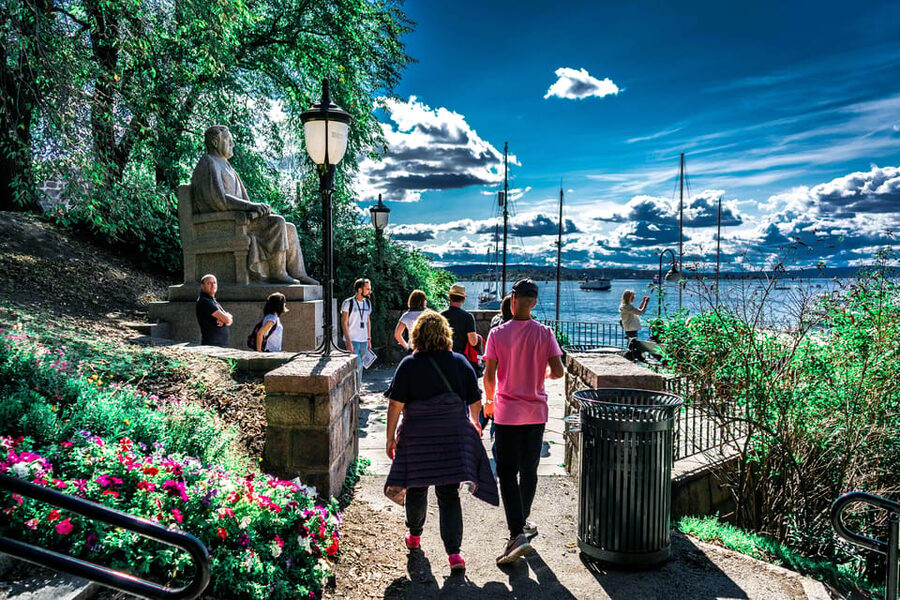
- Starts by the Nobel Peace Center: The meeting point puts you beside Aker Brygge, Oslo Harbour, and the fjord from the first minutes.
- Covers Oslo’s essential center: You pass City Hall, the National Theatre, Royal Palace, Karl Johans gate, Parliament, Akershus Fortress, and the Opera House.
- Private format means questions are welcome: You can shape the conversation around architecture, history, local life, or a family’s needs.
- The route mixes old and new Oslo: Medieval fortress walls and Christiania Torv meet the sleek Opera House and newer harbor district.
- Two hours is useful but brisk: You see a lot from outside, but this is not a museum-entry tour.
- Finish near Langkaia: The tour ends at Langkaia 1, close to the Opera House area and the waterfront.
Why this short walk works well in Oslo
Oslo can feel spread out when you first arrive. The city center is manageable on foot, but its sights belong to different chapters of the city. One street brings you to royal Norway. The next brings a modern concert hall, a fjord view, or a fortress with centuries of military history.
This tour gives you a quick framework. You begin at the Nobel Peace Center, follow the central streets, reach Akershus Fortress, and finish near the Opera House. I like that order because it moves from the harbor toward the city’s historic core, then returns you to Oslo’s newer waterfront.
The guide is not simply pointing at buildings. The tour’s story begins with Oslo’s Viking-era roots and continues to the rebuilding ordered by King Christian IV after a major fire in the 1600s. Christian IV moved the city rather than rebuilding it in the same place, a decision that helped shape the central area you see today.
That historical thread gives the walk more purpose. You are not just collecting photographs of official buildings. You are watching Oslo shift from fortified royal town to modern Nordic capital.
More Walking Tours in Oslo
- Oslo: Best of Oslo Walking Tour
★ 4.5 · 458 reviews - Oslo: Guided Walking Tour of Central Oslo
★ 4.7 · 438 reviews - Oslo: Historic Myths & Legends Evening Walking Tour
★ 4.8 · 408 reviews
Starting beside the Nobel Peace Center and Aker Brygge
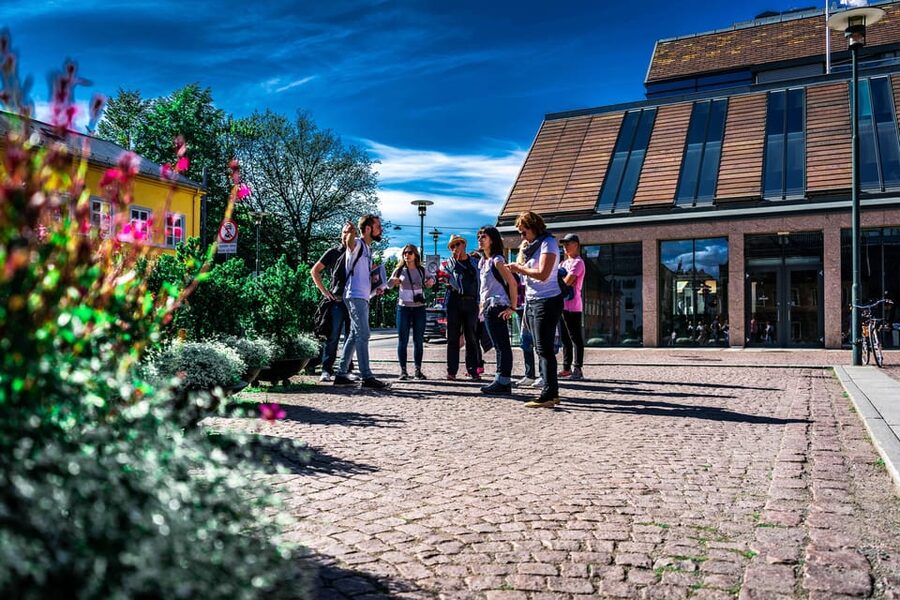
Meet your guide outside the entrance to the Nobel Peace Center at Brynjulf Bulls plass 1. The guide is expected to arrive about 10 minutes before departure and will carry a sign with the local partner’s name.
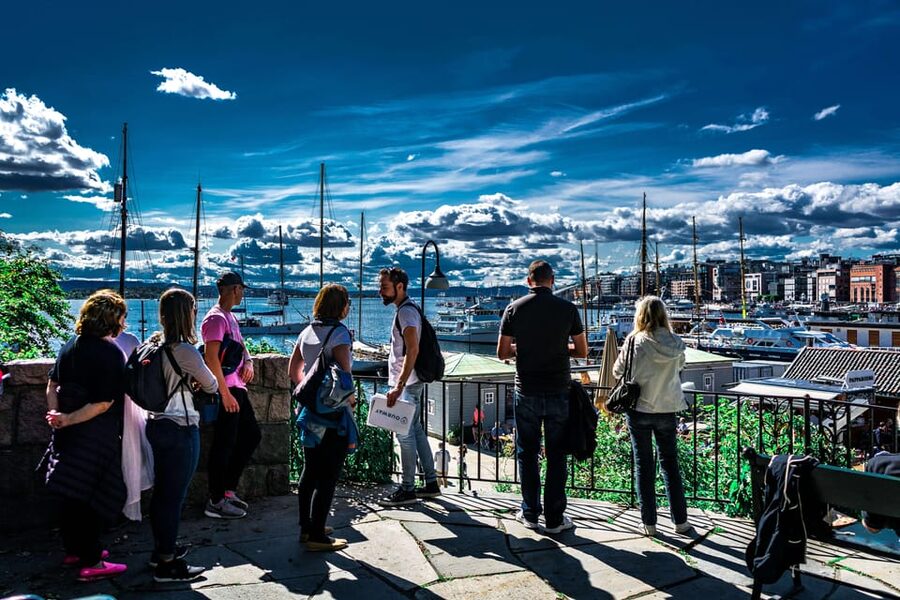
The opening area is a good choice. The Nobel Peace Center gives the tour a clear landmark, while nearby Aker Brygge offers views across Oslo Harbour and the fjord. You begin with water, open space, and modern buildings before heading into the denser center.
You will see the outside of the Nobel Peace Center, but the tour does not include a museum visit. The same is true of most stops along the route. This is primarily an outdoor sightseeing walk, so you should book it for orientation, stories, and architecture rather than indoor exhibits.
City Hall and the Nobel Peace Prize connection
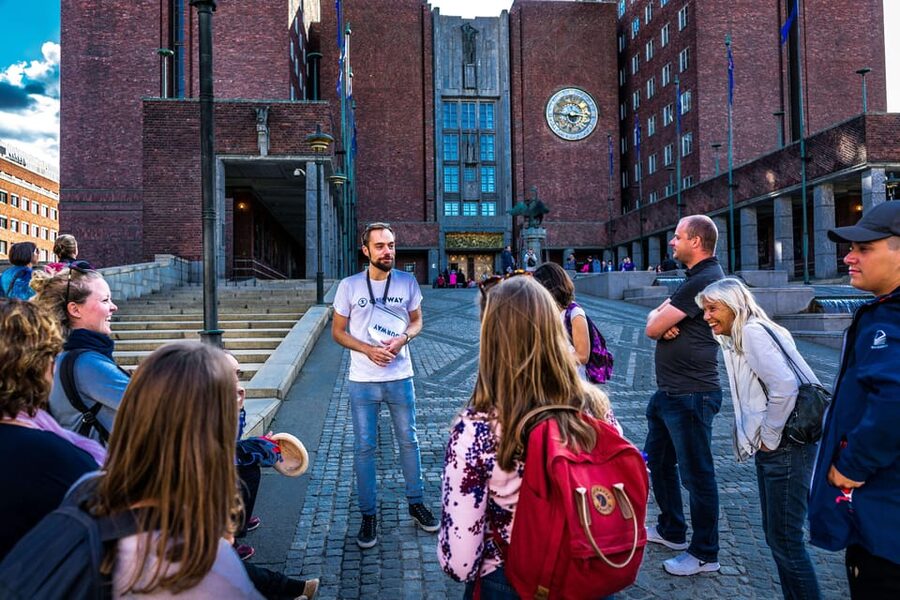
Oslo City Hall is one of the tour’s most meaningful stops. Its brick exterior and strong, block-like form give it a serious public character, but the building also has a direct link to one of the world’s best-known international awards.
The Nobel Peace Prize ceremony takes place at City Hall. Your guide can place that event within the city’s wider civic life, helping you understand why this building matters beyond its size and design.
This stop also gives you a useful pause before the walk heads into the center. City traffic can be noisy, and the tour description makes clear that surrounding road noise is unavoidable for much of the route. If you want quiet commentary, stay close to your guide and ask for a repeat when a bus or car passes.
National Theatre, University Square, and the Royal Palace
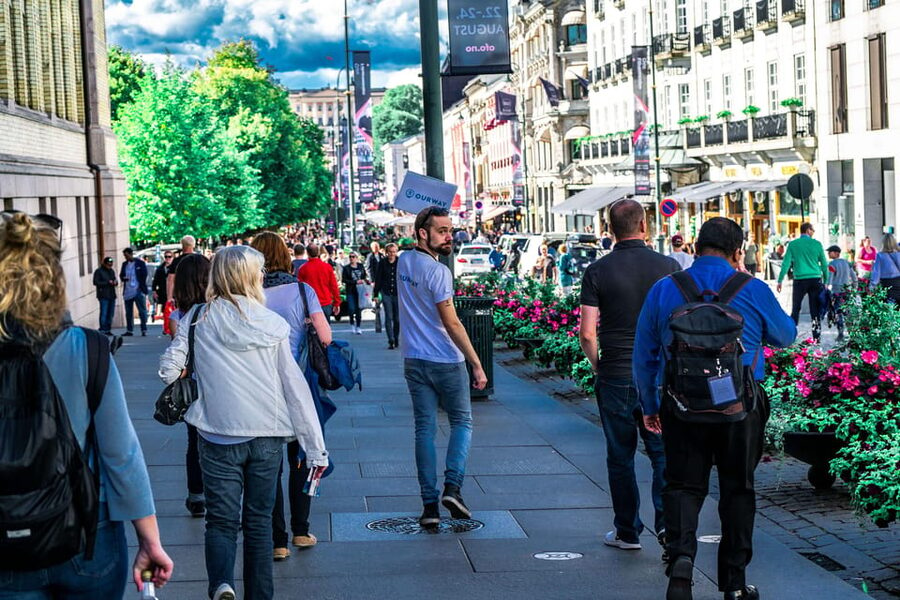
The National Theatre introduces a more formal side of Oslo. You pass the building rather than attend a performance, but its setting helps show how the city’s cultural institutions sit close to government and royal landmarks.
The route continues through University Square and toward the Royal Palace. These stops make sense together. You move through a central ceremonial area where education, the arts, and the monarchy all meet.
The Royal Palace is a major photo stop, but do not expect a palace interior visit during this walk. The value here is the setting and the explanation of how the palace fits into modern Norway. A private guide can also answer the questions that come to mind as you look at the building, its grounds, and the surrounding avenues.
Families may appreciate this section because the sights arrive one after another without requiring an indoor attention span. Inger, one of the guides, received particular praise for paying close attention to children during a tour for six adults and four children. That does not guarantee the same guide, but it is a useful sign for families choosing a private format.
A completely different kind of day:
- Oslo: Scenic Fjord Cruise with Audio Guide Commentary
★ 4.5 · 5,375 reviews - Oslo Nature Walks: Island Hopping Tour
★ 4.8 · 2,713 reviews - Oslo: 100% Electric Oslofjord Sightseeing Cruise
★ 4.4 · 2,041 reviews - Oslo: Fjord Evening Cruise with Shrimp Buffet
★ 4.5 · 1,956 reviews
Karl Johans gate and the Norwegian Parliament
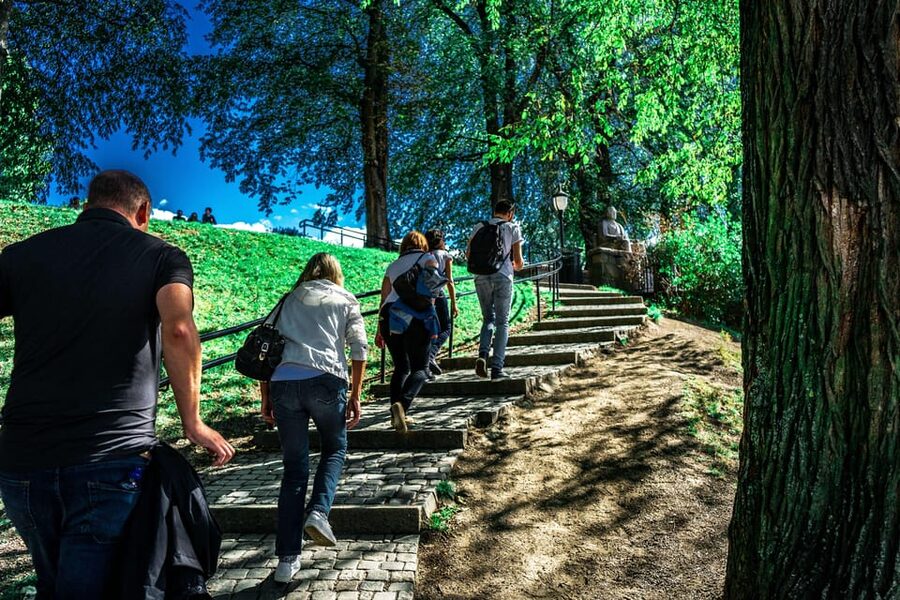
Karl Johans gate is Oslo’s main shopping street and one of the best places to understand the shape of the city center. The street links several important buildings, so it is more than a place for shops and cafés. It acts as a central public route between the palace area and the political heart of town.
The Norwegian Parliament is another exterior stop. Your guide can explain the role of the building and point out details you might otherwise pass without noticing. I find this kind of stop most useful when you want context rather than a long lecture. You see where national decisions are made, then continue walking through the same streets used by residents.
This part of the route may feel less picturesque than the fortress or fjord. That is not a flaw. It is the working center of Oslo, and the traffic, shops, offices, and public buildings give you a better sense of the city as a place where people live, not just a collection of sights.
Akershus Fortress above the Oslo Fjord
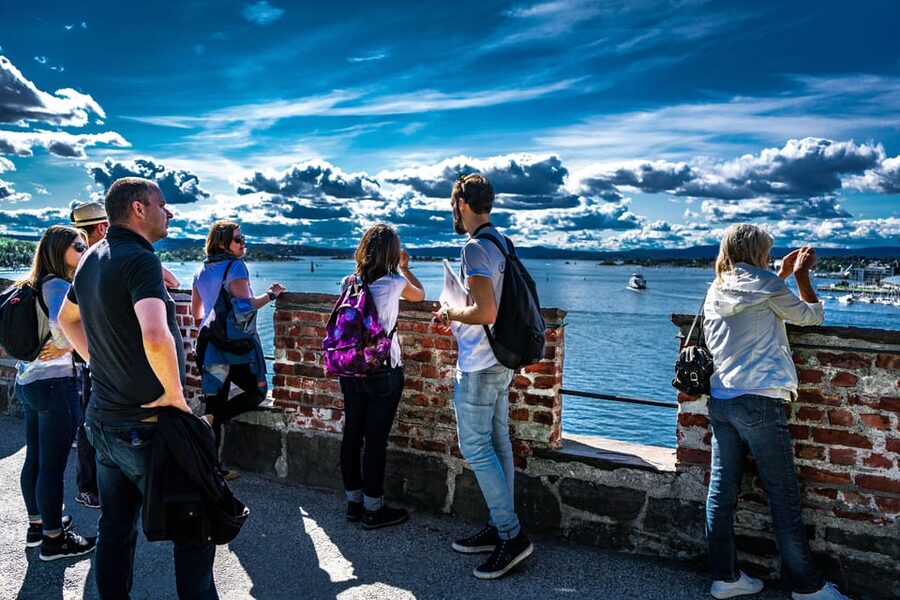
Akershus Fortress is the tour’s strongest historical setting. The complex overlooks the Oslo Fjord and gives you a change of pace from the central streets. Here, stone, defensive walls, and elevated views replace shopping avenues and government buildings.
The fortress connects directly to Oslo’s older role as a defended city. The visit is listed as sightseeing, so the precise amount of time inside the grounds can vary. Do not assume that the tour includes every interior room or a full fortress museum visit.
Still, even an exterior look is worthwhile. The location helps you read Oslo geographically. From the fortress, the harbor and waterfront are easier to understand, and the city’s modern development becomes part of the same view as its older defenses.
Wear shoes with good support. The tour is only two hours, but it includes continuous walking through central streets and the fortress area. Weather-appropriate clothing matters in Oslo, where a cool or wet day can make an otherwise easy walk feel tiring.
Christiania Torv, Bank Square, and the old city center
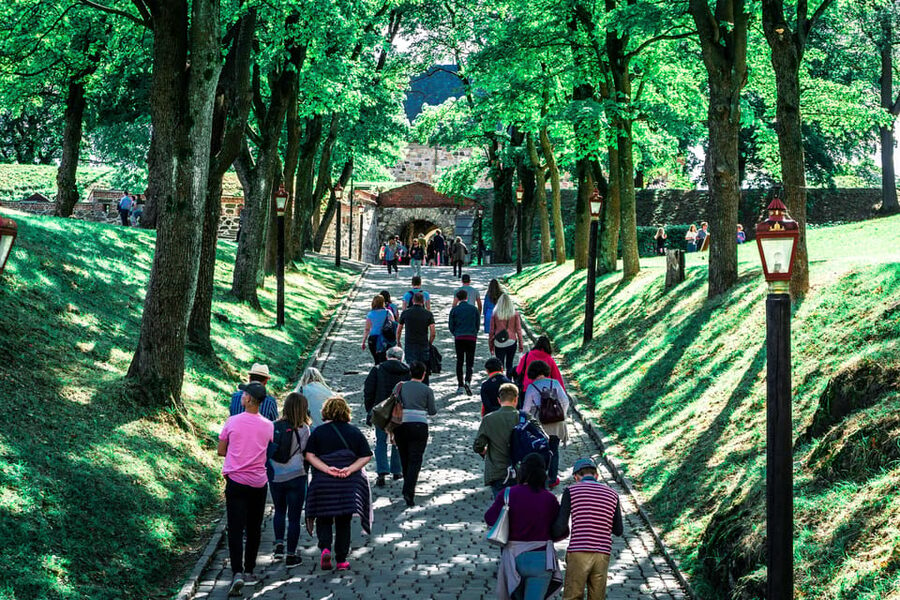
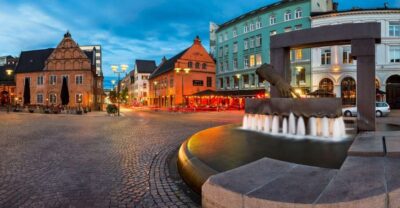
Christiania Torv and Bank Square add another layer to the city’s past. These are not the most famous names on the route, which is exactly why I value their inclusion. They help fill in the spaces between the headline sights and connect the story of Christian IV’s rebuilt city with the streets you are walking today.
The Oslo Stock Exchange brings the tour back to the city’s commercial life. Together, these stops show three sides of central Oslo: political power, historic town planning, and business.
Your guide’s storytelling matters most here. The buildings may not mean much if you only glance at them, but a short explanation can turn a square into a clue about how Oslo developed. Amanda has been praised for answering questions carefully and giving useful information about the city and local life without overwhelming the group.
The Oslo Opera House and the modern waterfront
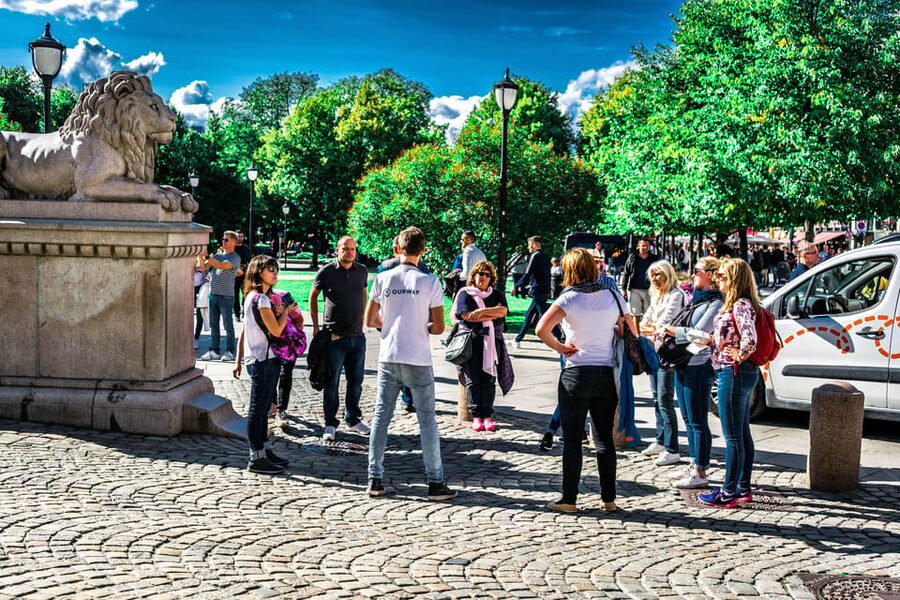
The Oslo Opera House is the tour’s most playful architectural stop. Its sloping exterior can look like an iceberg rising from the harbor, though you can walk on the roof rather than simply admire it from a distance.
The building is part of a newer waterfront district that feels very different from Akershus Fortress and Christiania Torv. This contrast is one of the tour’s best features. Within two hours, you move from royal and military Oslo to a bold public building designed for contemporary city life.
The tour finishes at Langkaia 1, 0150 Oslo, near the Opera House. You are encouraged to climb to the top of the Opera House after the guided portion, and that is a smart way to extend the experience. The roof offers a closer look at the building’s design and a fresh view across the harbor.
Behind the Opera House, you may also see urban farming. It is a small but telling detail. Oslo is not presented only as a cold northern capital with old stone buildings. The city is also trying new ideas in food, public space, and waterfront development.
What private guiding adds to the experience
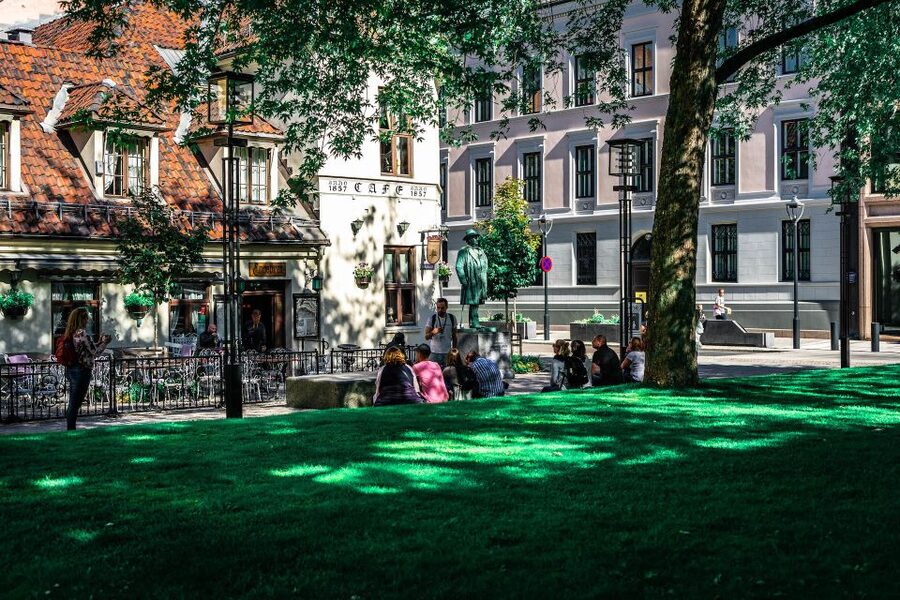
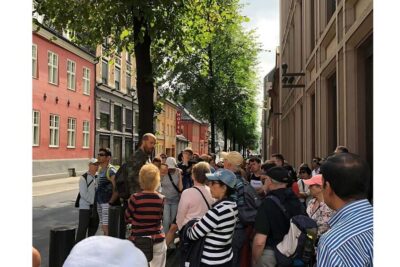
The private format is the main reason to consider this tour over a standard group walk. You can ask why a building matters, how Oslo’s history connects to present-day life, or which places deserve more of your limited time.
You also avoid being tied to a large group’s pace. That matters if you have children, want frequent photo stops, or prefer a quicker walk. Inger’s attention to children shows how this format can work for a mixed-age group, while Anya has been praised for creating a friendly start to a first stay in Oslo.
The available languages are another practical advantage: English, Spanish, French, German, Italian, and Norwegian. Confirm your preferred language and starting time when booking, since the tour operates at scheduled times and availability needs to be checked.
The guide can be the difference between a merely adequate walk and a memorable one. The strongest feedback has focused on kindness, clear explanations, and the ability to bring Oslo to life. Tine was praised for showing lesser-known corners, including a future-focused library, while Amanda has been singled out for warmth and thoughtful answers.
Is $461 good value for two hours?
The price requires a close look. $461 per group up to one person is a steep rate if you are alone and comparing it with a shared walking tour or a self-guided route. Oslo’s center is relatively easy to explore with a map, and many of the landmarks are visible from public streets.
The calculation changes if you are booking for a private group and splitting the cost among several people. A family or small party may find the price easier to justify because you get a dedicated guide, a set route, and the ability to ask questions throughout.
You are paying for access to a person’s time, not admission tickets. No interior visits or transport are included, and most stops are brief exterior sightseeing points. I would choose this tour when time is tight, when you want a local guide in your own language, or when several people can share the group price.
If you have a full day and enjoy planning your own route, the value is less convincing. You could walk the central sights independently and spend your money on a museum or another activity. The high rating of 4.8 from 87 ratings suggests strong satisfaction overall, but one direct criticism focused on the cost for a simple walk. That concern is fair.
Timing, meeting point, and practical advice
Allow the full two hours and arrive early at the Nobel Peace Center. Look for the guide holding a sign with the local partner’s name. Since the route ends at Langkaia 1 rather than returning to the start, think about what you want to do afterward.
The Opera House is the natural next stop if you still have energy. You can climb its roof after the tour, examine the building more closely, and continue exploring the waterfront.
Wear comfortable shoes and dress for the weather. Bring a layer that can handle wind or rain, especially because the walk includes open harbor areas and outdoor stops.
Traffic noise is the main practical drawback. Much of the walk takes place in central Oslo, so commentary may be interrupted by cars and buses. The private setup helps because you can stay close to the guide and ask questions, but this is not a quiet woodland stroll.
Who should book this Oslo walk?
I would recommend it most to first-time visitors with only an afternoon or a short stay. You see the central landmarks quickly, learn how the old and new parts of Oslo connect, and finish with a strong view of the fjord and Opera House.
Families can benefit from the private pace, especially if children need questions answered or occasional pauses. The multilingual guide choice also makes this useful for international groups who want more than a brief English overview.
I would think twice if you are traveling alone on a tight budget. The route is good, but the cost is hard to defend for one person unless the convenience and personal attention are especially important to you.
Book it if you want a focused introduction and a guide who can respond to your interests. Skip it if you prefer museums, independent wandering, or a lower-cost way to see the same central exteriors.
FAQ
How long does the Oslo private walking tour last?
The tour lasts two hours.
Where does the tour begin?
It begins outside the entrance to the Nobel Peace Center at Brynjulf Bulls plass 1.
Where does the tour finish?
The tour finishes at Langkaia 1, 0150 Oslo, Norway, near the Oslo Opera House area.
Is this a private tour?
Yes. It is a private guided walking tour for a private group.
Which languages are available?
The tour is available in Spanish, English, French, German, Italian, and Norwegian.
What landmarks are included?
The route includes the Nobel Peace Center, Oslo City Hall, the National Theatre, Royal Palace, Karl Johans gate, Norwegian Parliament, Akershus Fortress, Christiania Torv, Bank Square, Oslo Stock Exchange, and Oslo Opera House.
Does the tour include entry inside the buildings?
The provided details describe sightseeing at the landmarks and do not include admission to building interiors.
Can I climb the Oslo Opera House?
You can climb to the top of the Opera House after the guided tour.
What should I bring?
Bring comfortable shoes and clothing suited to the weather.
Is traffic noise a problem?
Most of the tour takes place in central Oslo, so surrounding traffic noise is unavoidable.
How much does the tour cost?
The listed price is $461 per group up to one person.
Can I cancel for a refund?
You can cancel up to 24 hours in advance for a full refund.
Do I have to pay when I book?
The reserve-now, pay-later option lets you book without paying immediately.
Just added in Oslo
- Oslo Winter Highlights Bike Tour★ 5.0 · 36 reviews
- 4 hours Best View of the Oslofjord Winter Edition★ 4.0 · 15 reviews
- The Ultimate Study of the Human Form at Vigeland’s Sculpture Park with a Local★ 4.0 · 14 reviews
- Unknown war. Oslo and Norway during 1940-45★ 5.0 · 74 reviews
- Top of Oslo Snowshoe Tour★ 5.0 · 2 reviews
- The Scenic Roadtrip, Oslo to Bergen via Flam & the Fjords★ 5.0 · 25 reviews
- The Viking Planet Museum – Mini Group (4 adults)★ 4.0 · 16 reviews
- The Oslo Beer Adventure★ 4.5 · 11 reviews
Walking Tours, compared.
Past & Present Small Group Guided Walking Tour
Read our review →
Walking Tour in Bergen of the Past and Present
Read our review →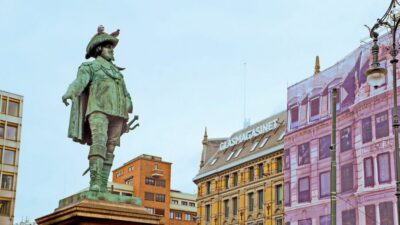
Browse the lists this tour appears in