
REVIEW · OSLO TOURS
Unknown war. Oslo and Norway during 1940-45
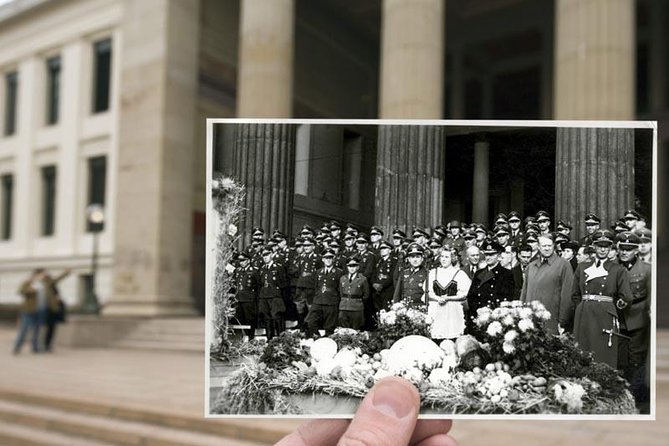
Oslo’s wartime story hides in plain sight. This private 2.5-hour walk connects the city center with Norway’s occupation during 1940 to 1945, using historic photographs to show how familiar streets looked during the war. I especially like the guide’s use of images taken at the exact places you visit, and the way the private format lets your group shape the pace and focus.
I also like that the route ends at Akershus Fortress, near the Norway’s Resistance Museum, making this a useful companion to a museum visit. The main consideration is weather: this is an outdoor walking tour, and rain or cold can make it harder to hear the guide while moving between stops.
In This Review
- Key points about the Oslo WWII walking tour
- Seeing Oslo through the years 1940 to 1945
- Starting at the Royal Palace
- Karl Johans Gate and the city’s public face
- Parliament and the questions of power
- Stortorvet, a square with room for everyday stories
- University Square and the role of institutions
- Nationaltheatret and the Gunnar Sønsteby monument
- Walking into Akershus Fortress
- Why the period photographs matter
- Private pacing and the $307.50 price
- Weather, walking, and hearing the guide
- Who will get the most from this tour?
- Booking, timing, and cancellation details
- Should you book this Oslo WWII tour?
- FAQ
- Where does the tour begin?
- Where does the tour end?
- How long does the tour last?
- How many people can join the private tour?
- What language is offered?
- Is admission to the attractions included?
- Is the tour available every day?
- What happens if bad weather cancels the tour?
Key points about the Oslo WWII walking tour
- Period photos at present-day locations: Compare wartime images with the buildings and streets around you.
- A private tour for up to five people: Your group receives the guide’s full attention, with room for questions and adjustments.
- A city tour with a clear historical focus: See the Royal Palace, Parliament, University Square, Nationaltheatret, and Akershus Fortress through the lens of occupation and resistance.
- A strong guide-led experience: Rami is praised for his detailed storytelling, calm presentation, and flexible approach.
- A useful finish near the Resistance Museum: The final stop gives you an easy next step if you want more on Norway’s wartime story.
- Best value with a full group: At $307.50 per group, five people pay about $61.50 each before any separate admission costs.
Seeing Oslo through the years 1940 to 1945
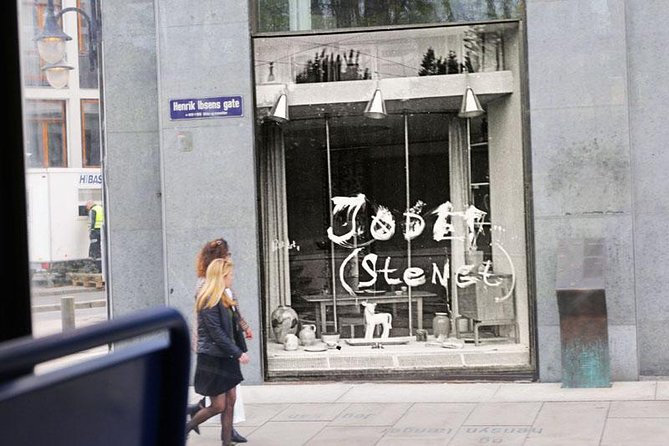
This is not a general introduction to Oslo with a few wartime facts added at the end. The occupation is the organizing idea from start to finish. You walk through the historical center while the guide explains how the city functioned under German control, how ordinary people experienced the period, and how resistance figures fit into the larger story.
The strongest feature is the collection of historic photographs used along the route. You do not simply hear that something happened in a certain part of town. You can look at an old image, then compare it with the street or building in front of you. That simple act gives the tour a clear sense of place.
Guide Rami receives especially high praise for bringing together several layers of the subject: the German occupation, Norwegian resistance, daily life, Norwegian culture, and the country’s role in the war. His presentation is described as factual and balanced rather than theatrical. That matters with a difficult subject, since the best tour gives you room to think instead of pushing you toward a ready-made emotion.
The route is also a pleasant way to get your bearings in central Oslo. You will move from Karl Johans Gate toward Akershus Fortress, passing major civic and cultural landmarks along the way. The war story gives these familiar sights a sharper purpose.
A few more options to weigh up in Oslo
- Oslo: Scenic Fjord Cruise with Audio Guide Commentary
★ 4.5 · 5,375 reviews - Oslo Nature Walks: Island Hopping Tour
★ 4.8 · 2,713 reviews - Oslo: 100% Electric Oslofjord Sightseeing Cruise
★ 4.4 · 2,041 reviews
Starting at the Royal Palace
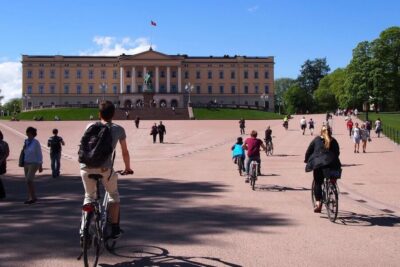
The tour begins at the Karl Johan monument near the Royal Palace. The palace stop is listed for about 10 minutes, and it serves as a fitting opening point for a story about occupation, government, and national identity.
You should expect the focus to be on the palace area and its wartime connections rather than an interior palace visit. Admission is not included, and the experience is built as an outdoor walk. If you are hoping to tour the palace rooms, that would be a separate plan.
This first stop is useful because it places the war story in the heart of Oslo’s public life. You are not starting at a remote museum or a single memorial. You are starting among the buildings and spaces that still shape the modern capital.
Karl Johans Gate and the city’s public face
From the palace, the route continues along Karl Johans Gate. The itinerary describes several locations here as connected with World War II, so this part is less about one single attraction and more about reading the street as a historical setting.
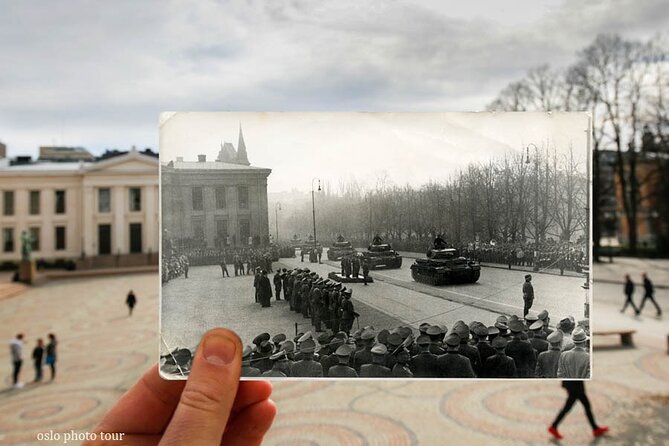
Karl Johans Gate is an easy place to walk, but it can also be visually busy. A private guide helps you avoid simply strolling past important places without noticing them. Rami’s use of period photographs is particularly helpful here, since the images place wartime events against the same urban backdrop you see today.
I would pay close attention to the guide’s explanation of how public spaces changed meaning during the occupation. The value is not only in learning names and dates. It is in understanding how government buildings, streets, squares, and cultural institutions became part of everyday wartime life.
The listed stop lasts about 10 minutes, but the whole walk lasts much longer. The schedule appears to identify the main anchors rather than suggest that you will spend only 70 minutes outdoors. Walking time, explanations, questions, and photo comparisons fill out the 2.5-hour experience.
Parliament and the questions of power
The Norwegian Parliament is the next named stop. Like the Royal Palace, it is not simply a photo opportunity. It gives the guide a place to discuss authority, national decision-making, and the political side of the occupation.
Admission is not included, although the tour does not require an indoor visit here. That keeps the experience focused and avoids turning the walk into a string of ticketed attractions. You are looking at the city from the outside, with the guide supplying the context.
This is one of the places where a private tour can work better than a large group walk. You can stop to ask for clarification about Norway’s wartime government, resistance activity, or the effect of occupation on ordinary residents. Several comments about the guide point to his ability to adapt explanations to the group’s interests.
A completely different kind of day:
- Oslo: Fjord Evening Cruise with Shrimp Buffet
★ 4.5 · 1,956 reviews - Oslo: 3-Hour Highlights Bike Tour
★ 4.8 · 1,609 reviews - Oslo: 24 or 48-Hour Hop-On Hop-Off Sightseeing Bus Ticket
★ 4.1 · 1,470 reviews - Oslo: Guided Sightseeing Fjord Cruise on Premium Silent Boat
★ 4.7 · 1,390 reviews
Stortorvet, a square with room for everyday stories
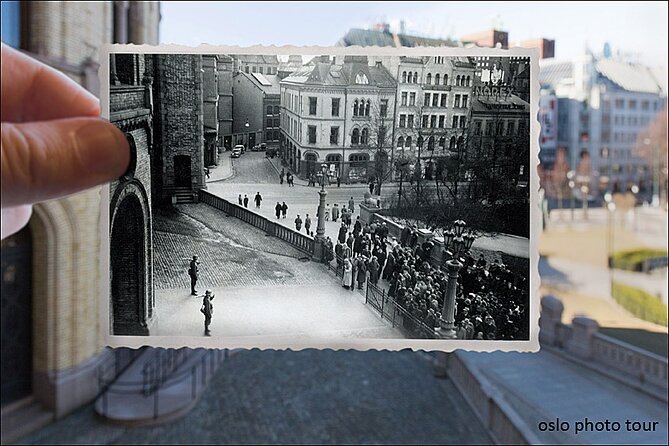
The route then reaches Stortorvet, the central market square. The stop is listed as free, and it gives the walk a more open public space after the formal setting of Parliament.
This is a good location for the human side of the story. The tour is not limited to military movements or famous leaders. It also addresses what life was like for people living in Oslo during the occupation. That attention to daily experience is one of the most praised parts of Rami’s approach.
You might find this section especially useful if your knowledge of Norway in World War II is limited. The tour does not assume that you already know the whole story. It builds the setting as you go, using photographs and explanations rather than a dense lecture.
University Square and the role of institutions
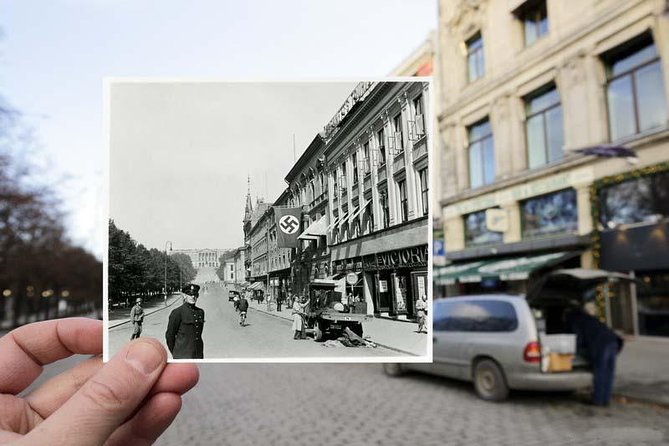
The University of Oslo’s Faculty of Law at University Square is another important stop. It adds an academic and civic setting to the route, showing that the tour is interested in more than military sites.
The square is listed as a free stop, and again, the experience is primarily outdoors. The guide’s period images help connect the present-day university area with the wartime period. Seeing a familiar building in an older photograph can make a broad historical subject feel more precise.
This part may appeal to people who want to understand how occupation affected public institutions and civic life. It also breaks up the walk nicely. You move between political, commercial, cultural, and academic spaces instead of staying around one fortress for the entire tour.
Nationaltheatret and the Gunnar Sønsteby monument
At Nationaltheatret, the tour includes the Gunnar Sønsteby monument. This is one of the clearest links to Norway’s resistance movement on the route.
The theater area adds a cultural setting, while the monument gives the guide a specific resistance figure and memorial point to discuss. The stop is listed for about 10 minutes, but you should expect the guide’s explanation and questions to determine the exact pace.
Rami’s private photographs are valuable here because they show how resistance stories connect to real streets and buildings. The guide is not asking you to picture an abstract past. You are standing in the same city and looking at visual evidence of how it appeared during the war.
For history enthusiasts, this may be one of the most rewarding sections. For people who are less focused on military history, the personal stories and memorial setting can make the subject easier to follow.
Walking into Akershus Fortress
The tour ends at Akershus Castle and Fortress. This is the route’s most substantial historic setting, and it gives the walk a strong finish rather than leaving you at an ordinary street corner.
The fortress stop is listed for about 10 minutes, with admission not included. The tour ends at the fortress near the Norway’s Resistance Museum. That location matters for planning: if you want to visit the museum, you can use the walking tour as background before going inside, or arrange the museum for another part of your day.
A fortress visit can easily become the main event, but here it functions as the closing chapter of a city walk. You arrive with the streets, institutions, photographs, and resistance stories already in mind. That progression makes the end feel earned.
If you have limited time in Oslo, finishing at Akershus is practical. The route begins near the Royal Palace and ends at a major historic site, so you cover a useful slice of central Oslo on foot while following one clear theme.
Why the period photographs matter
A guide can tell you that a building mattered during the war. A photograph taken there makes the information easier to grasp.
The repeated praise for Rami’s photos is justified by the way they support the walk. They are not just decoration or a slideshow added at the end. They help you compare the past and present at the same location. Several comments describe this as the feature that made the occupation feel immediate and understandable.
The photos also help if you are not a specialist. World War II history can become a long list of places, dates, and organizations. Matching an old image with a current view gives you something concrete to remember.
I would still expect the tour to be guide-led rather than museum-like. You are walking, listening, and looking at images in the open air. If you need a quiet indoor setting or extensive written displays, the Resistance Museum may suit you better, or work well after this tour.
Private pacing and the $307.50 price
The price is $307.50 per group of up to five people. For a couple, that is a fairly serious spend. For five people, the cost works out to about $61.50 each, which is more reasonable for a 2.5-hour private tour with a specialist focus.
The main value comes from the private format. Only your group takes part, so you can ask questions without waiting for a large group to catch up. The itinerary can also be adjusted around your interests and comfort, within the tour’s available time.
That flexibility has proved useful for people arriving by cruise or trying to fit several Oslo sights into one day. Rami is described as helpful with timing and willing to adapt the route to the group. Still, you should be clear about your priorities when booking. A private tour is best value when you use the chance to ask questions and shape the experience, not when you simply follow the guide silently.
The advertised duration is approximately 2 hours and 30 minutes. The named stops are each shown as about 10 minutes, but that does not represent the complete time spent on the tour. Walking between them and discussing the places along the way are central parts of the experience.
Weather, walking, and hearing the guide
This is an outdoor experience, and good weather is required. If poor weather cancels the tour, you are offered another date or a full refund. You should still check the forecast and dress for Oslo’s changeable conditions.
Rain can affect more than comfort. One comment points out that it became difficult for older family members to understand everything while walking in wet weather, although the guide clarified points and answered questions. If someone in your group has trouble hearing while moving, tell the guide early and ask for pauses at suitable spots.
An umbrella is a sensible backup, but waterproof shoes and a warm layer may matter just as much. The tour requires walking through the city center and around the fortress area, so comfortable footwear is important. The supplied details indicate that most people can participate, and service animals are allowed.
Who will get the most from this tour?
This is a particularly good choice for:
- People who want a focused introduction to Norway during World War II.
- History fans who enjoy resistance stories, occupation history, and visual evidence.
- Families or small groups who want to ask questions at their own pace.
- Cruise passengers with a limited window in Oslo.
- Visitors planning to see the Norway’s Resistance Museum at Akershus Fortress.
- Anyone who wants a city walk with more substance than a basic sightseeing route.
You do not need to be a specialist. Several comments describe the tour as engaging even for people who did not consider themselves serious history fans. The guide’s storytelling and photos give the subject a human scale.
I would be more cautious if your priority is indoor sightseeing, extensive palace access, or a tour with no fixed historical theme. This walk is about occupation-era Oslo first, with general sightseeing as a useful bonus.
Booking, timing, and cancellation details
The tour is offered in English with a mobile ticket. It is commonly booked well ahead, with an average booking time of about 77 days in advance, so I would not leave it until the last moment if your Oslo schedule is fixed.
The listed operating window is Monday through Thursday, from 9:00 a.m. to 4:00 p.m., covering the stated dates through December 8, 2026. Confirmation is sent within 48 hours, subject to availability.
You can cancel for a full refund up to 24 hours before the start time. Changes or cancellations made inside that 24-hour period are not accepted for a refund. The tour also requires a minimum number of participants, so a cancellation by the provider for that reason brings an alternative date or experience, or a full refund.
Should you book this Oslo WWII tour?
Book it if you want to understand Oslo through the occupation, not merely check off its main sights. The combination of Rami’s focused explanations, private photographs, resistance stories, and central walking route gives the tour a clear purpose.
For the best value, bring a group of up to five and pair the walk with the Norway’s Resistance Museum at Akershus Fortress. If you are booking for two, the price is harder to justify, but the private attention and flexible itinerary may still make sense for committed history fans or visitors with limited time.
My practical advice is simple: reserve early, wear weatherproof clothing, allow the full 2.5 hours, and tell the guide what you most want to learn. If that sounds like your kind of Oslo experience, this is a thoughtful and unusually focused way to see the city.
FAQ
Where does the tour begin?
It begins at the Karl Johan monument, near the Royal Palace in central Oslo.
Where does the tour end?
The tour ends at Akershus Fortress, near the Norway’s Resistance Museum.
How long does the tour last?
The tour lasts approximately 2 hours and 30 minutes.
How many people can join the private tour?
Up to five people can participate in one private group.
What language is offered?
The tour is offered in English.
Is admission to the attractions included?
Admission tickets are not included for the Royal Palace, Parliament, Nationaltheatret, or Akershus Fortress. The Stortorvet and University Square stops are listed as free.
Is the tour available every day?
The stated operating hours are Monday through Thursday, from 9:00 a.m. to 4:00 p.m., during the listed operating period.
What happens if bad weather cancels the tour?
You are offered a different date or a full refund if the experience is canceled because of poor weather.
Just added in Oslo
- Oslo Winter Highlights Bike Tour★ 5.0 · 36 reviews
- 4 hours Best View of the Oslofjord Winter Edition★ 4.0 · 15 reviews
- The Ultimate Study of the Human Form at Vigeland’s Sculpture Park with a Local★ 4.0 · 14 reviews
- Top of Oslo Snowshoe Tour★ 5.0 · 2 reviews
- The Scenic Roadtrip, Oslo to Bergen via Flam & the Fjords★ 5.0 · 25 reviews
- The Viking Planet Museum – Mini Group (4 adults)★ 4.0 · 16 reviews
- The Oslo Beer Adventure★ 4.5 · 11 reviews
- The Ultimate Norwegian Skiing Experience★ 5.0 · 16 reviews
Oslo Tours, compared.

Scenic Fjord Cruise with Audio Guide Commentary
Read our review →
Guided Sightseeing Fjord Cruise on Premium Silent Boat
Read our review →
Browse the lists this tour appears in