
REVIEW · WALKING TOURS
Walking Tour in Bergen of the Past and Present
Bergen’s best stories unfold on foot. This two-hour walk links the old fortress, medieval Bryggen, wooden hillside streets, and modern food culture, giving you a useful first look at the city without rushing from one landmark to the next. I especially like the small maximum of 16 people and the local guides, including Jeff, Janine, Dane, Emma, Anaïs, Magda, Neil, and Erik, who bring different stories and local tips to the route.
I also like the way the tour moves beyond standard sightseeing. You hear about royal power and Hanseatic trade, then shift to Norwegian taxes, housing, work, food, and hiking habits. The main drawback is that this is an outdoor walking tour only. You do not enter Håkon’s Hall, St. Mary’s Church, or the wooden buildings of Bryggen, and the route includes uneven cobblestones and an uphill section.
In This Review
- Key points before you book
- Why this is a smart first look at Bergen
- Starting at Bergen Fortress and the royal past
- Bryggen, where trade shaped the city
- St. Mary’s Church and a pause in medieval Bergen
- Climbing toward Fjellsiden and everyday Norwegian life
- Passing the funicular station without taking the ride
- Skostredet and Bergen’s present-day food culture
- Finishing by the fish market and tourist office
- How much walking and what to wear
- Is $33.47 a fair price?
- Who will enjoy this walk most?
- Should you book Walking Tour in Bergen of the Past and Present?
- FAQ
- How long is the Walking Tour in Bergen of the Past and Present?
- What language is the tour offered in?
- Where does the tour begin?
- Where does the tour end?
- Does the tour enter Håkon’s Hall?
- Does the tour go inside the Bryggen buildings?
- Is the funicular ride included?
- How many people can join the tour?
- Can I cancel for a full refund?
Key points before you book
- Bergen Fortress begins the story: Learn why this site once mattered when Bergen was Norway’s capital.
- Bryggen gets real context: The walk explains how German merchants and the Hanseatic League ran trade along the wharf.
- The second hour feels local: Fjellsiden brings practical talk about daily life, costs, food, work, and Norwegian habits.
- No funicular ride is included: You pass the station, then can return later for your own ride or hike.
- The route ends near the fish market: You finish by the tourist office, well placed for lunch, sightseeing, or onward transport.
- Strong value at $33.47: For a small English-language group and two hours of guiding, the price is reasonable, especially early in your stay.
Why this is a smart first look at Bergen
Bergen can feel compact on a map but layered in person. The harbor, fortress, old wharf, hillside homes, restaurants, and market each tell a different part of the city’s story. This walk connects them in a sensible order, so you are not just collecting photographs. You learn why each area matters.
The first half focuses on history. The second half turns toward present-day Bergen. That division works well. You get the essential background, then hear how the city functions now. A guide may explain local food, working habits, taxes, housing costs, and the national love of outdoor life. Those details help you understand Norway as a place where people live, not simply a beautiful stop on a cruise itinerary.
The guides also appear to shape the feel of the walk. Jeff is praised for clear explanations, thoughtful answers, and restaurant advice. Dane brings humor and explains why historical events mattered, not just when they happened. Janine is described as attentive and engaging, while Emma is praised for mixing current facts with local history. Anaïs has been especially helpful with food and shop suggestions.
That range is worth noting. You are not buying a rigid audio guide with a person reading dates from a script. The route depends somewhat on the guide’s interests, which can make the walk feel personal. It also means the exact selection of side streets and stories may vary.
More Walking Tours in Bergen
- Bergen: Past & Present Small Group Guided Walking Tour
★ 4.9 · 1,609 reviews - City Walking Tour – Bergen On Foot
★ 5.0 · 436 reviews - Bergen: Sightseeing Walking Tour with Ferry Ride
★ 4.9 · 296 reviews
Starting at Bergen Fortress and the royal past
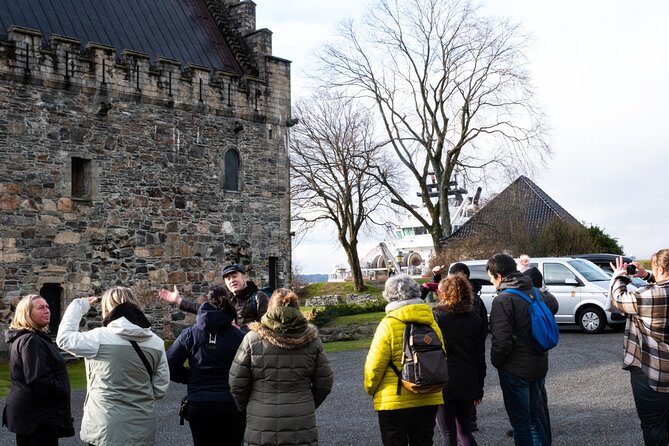
The meeting point is Bradbenken 1, a short walk from public transportation. The tour opens at Bergen Fortress, a fitting place to begin because this was once the site of the royal palace when Bergen served as Norway’s capital.
That opening gives the city a useful change of scale. You are not starting with a pretty row of houses and a pile of dates. You are starting with power. The guide explains what Bergen meant when kings, courts, and national authority were based here.
From the fortress, you pass Håkon’s Hall, the major surviving part of the medieval palace complex. The building connects Bergen to the period when Norway was an independent country, before later unions with Denmark and Sweden shaped its political story.
You do not enter Håkon’s Hall. It is a museum with a separate admission charge, so the visit remains outside. That keeps the tour affordable, but it also matters if you hoped for an interior visit. Plan to return on your own if the building is a priority.
The fortress can rarely close for a private event. If that happens, the opening portion may be affected. It is a small practical risk, but worth remembering if you have only a few hours in Bergen.
Bryggen, where trade shaped the city
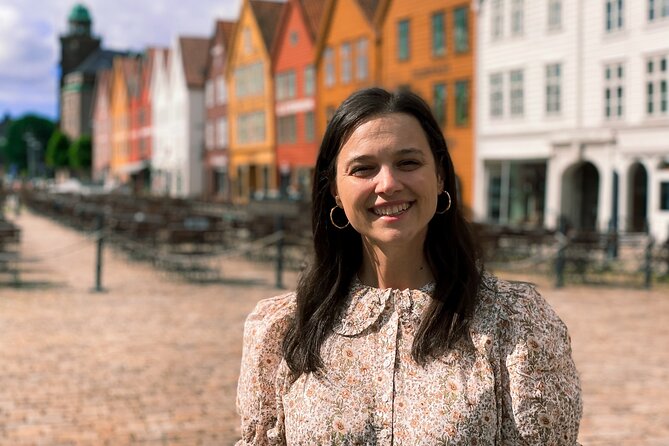
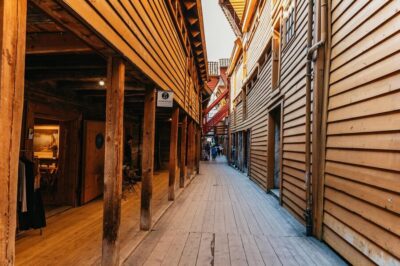
From the fortress, the walk heads toward Bryggen Hanseatic Wharf. This is the tour’s most familiar sight and one of Bergen’s essential stops. The narrow wooden lanes and colorful waterfront buildings are easy to admire on your own, but the guide adds the reason they exist.
Bryggen grew through trade, especially under the Hanseatic League, a powerful network of German merchants. The walk explains how these merchants organized their business, how trade was managed, and how the wharf operated as a working commercial district.
That context changes the way you see the buildings. The leaning timber fronts are not just a postcard backdrop. They belonged to a system of warehouses, offices, living quarters, and trade connections. For roughly a thousand years, merchants used this part of Bergen to exchange goods and build fortunes.
The tour spends about 40 minutes around Bryggen, with no admission fee. You remain outside and do not enter the buildings. Today, the interiors are used by shops and small businesses rather than functioning as one large museum complex.
That limitation is easy to understand, but it should be clear before you book. If your goal is to explore museum interiors, this is not the right experience by itself. If you want a good explanation of the wharf, its merchants, and its role in Bergen’s growth, the stop earns its time.
Allow yourself a few minutes to look down the side passages. The best part of Bryggen is often not the front row beside the harbor. It is the compressed feel of the wooden lanes and the sense that the district was built for work before it became a major attraction.
St. Mary’s Church and a pause in medieval Bergen
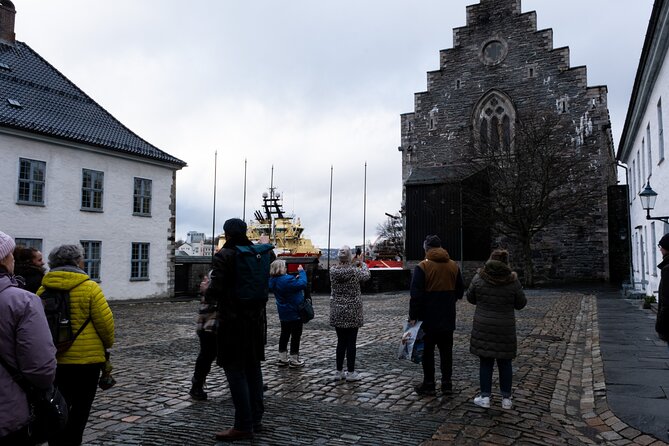
The route continues to St. Mary’s Church, the oldest surviving building in Bergen. Built in the 12th century, it still functions as a church today.
You do not go inside because admission is separate. Even from outside, the church gives the historical part of the tour a strong final stop. After the royal fortress and the commercial wharf, it represents another side of medieval life: worship, community, and a building that has continued to serve its original purpose.
This section is also a good reminder that Bergen’s history is not confined to one famous street. The city’s past appears in civic buildings, churches, trade routes, and ordinary residential lanes. A guide can help you connect those pieces as you walk.
A completely different kind of day:
- From Bergen: The Original Fjord Cruise to Mostraumen
★ 4.7 · 8,440 reviews - Bergen: Mostraumen Fjord & Waterfall Cruise
★ 4.6 · 2,990 reviews - Bergen: City Tour on Foot
★ 4.9 · 1,327 reviews - Bergen: Viking Village, Nærøyfjord Cruise & Flåm Railway
★ 4.8 · 1,047 reviews
Climbing toward Fjellsiden and everyday Norwegian life
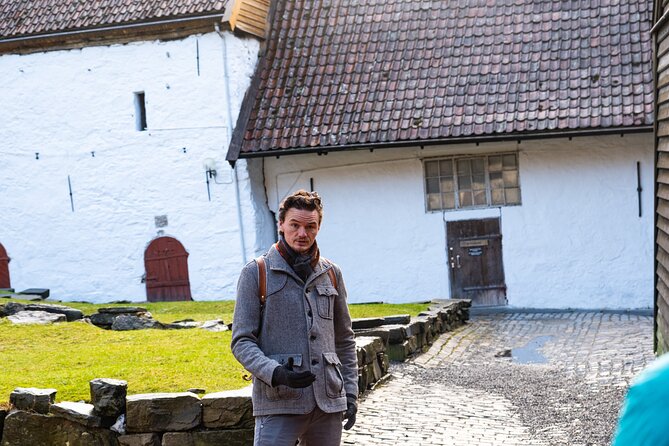
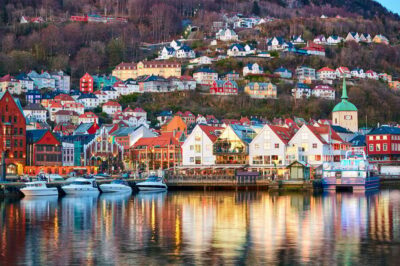
After the main historical stops, the route heads uphill into Fjellsiden. This is a well-preserved area of wooden houses, and it brings a welcome shift in mood. Instead of grand institutions and international commerce, you see a residential district and talk about ordinary life in Norway.
The climb is manageable only if you are comfortable with moderate physical activity. The route includes an uphill section, and Bergen’s old streets can have uneven cobblestones. Wear shoes with a steady sole, and do not treat this as a flat harbor promenade.
This is where the tour seems most different from a standard city overview. The guide may discuss what people eat, when they work, what homes cost, and how taxes affect daily life. These subjects are practical, sometimes surprising, and far more useful than another list of royal names.
The route through Fjellsiden depends on the guide and their interests. That flexibility is a plus if you enjoy local details and less obvious streets. It is less useful if you expect every departure to follow an identical path. You may see a slightly different selection of lanes or hear different examples depending on who leads your group.
Several guides also offer suggestions for restaurants, cafés, and places to visit after the walk. That advice can save you from choosing dinner by looking at the first menu you pass. Keep a note on your phone, since the recommendations may be one of the most useful parts of the final conversation.
Passing the funicular station without taking the ride
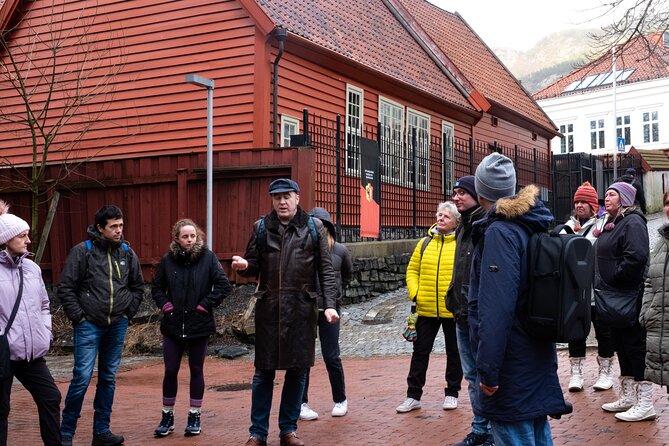
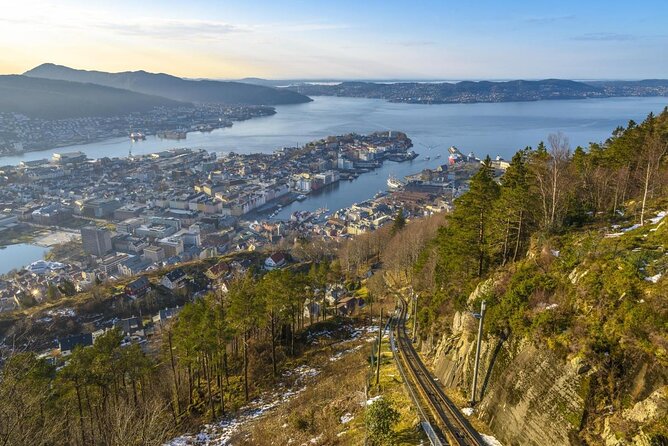
The walk passes the funicular station so you know where it is. The guide uses this moment to explain Norway’s hiking culture and the importance of outdoor life.
You do not ride the funicular as part of the tour. Adding the ride would take about an extra hour and cost 150 NOK. That may sound like a missed opportunity, but there is a practical reason for leaving it out: you can choose your own time to go up.
You might want to ride for the sunset, spend more time at the top, or use the area as the start of a hike. Taking the funicular during a tightly timed walking tour would give you less freedom. The guide’s approach lets you learn how it works, then decide later.
If the view from above is high on your Bergen list, plan a separate visit. Do not assume this tour includes it because the station appears on the route.
Skostredet and Bergen’s present-day food culture
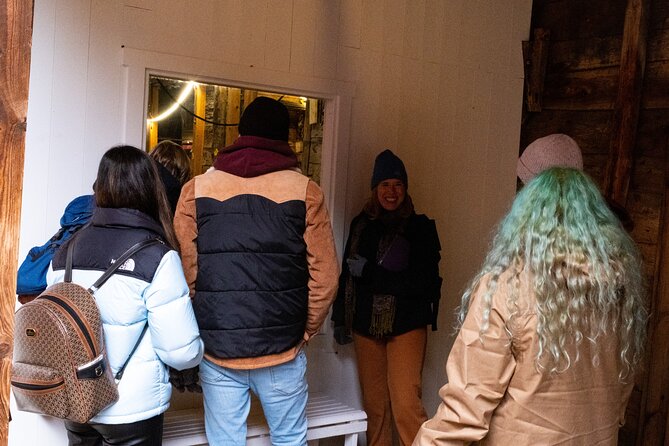
The final part turns toward modern Bergen along Skostredet, a popular restaurant street in the old town center. The walk spends about 20 minutes discussing current Bergen and local food culture, with around 10 minutes specifically listed for Skostredet.
Bergen is recognized as a UNESCO City of Gastronomy, so this is more than a quick restaurant district walk. The guide connects food to the city’s identity and can point you toward places suited to your interests. The exact recommendations vary by guide, but food advice comes up often in the tour experience.
This is a good place to ask direct questions. If you want seafood, coffee, a casual meal, or something more local, say so. Guides such as Emma, Jeff, and Anaïs have been praised for useful food suggestions, and one guide even pointed out a coffee stop that became a memorable part of the walk.
Do not expect a tasting menu or included snack. The tour discusses food culture rather than providing food. That keeps the $33.47 price low, but you should budget separately for any meal or drink you choose afterward.
Finishing by the fish market and tourist office
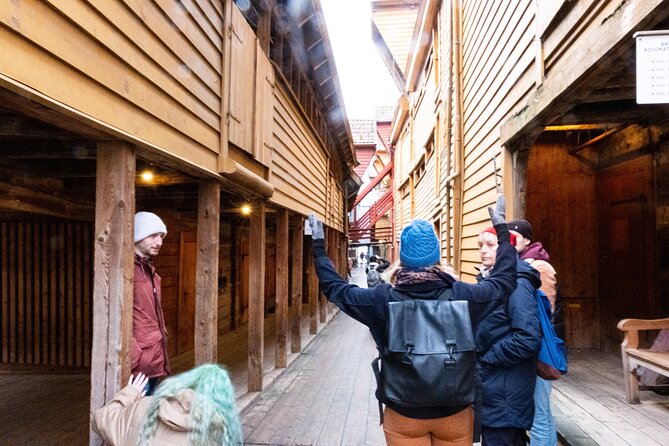
The walk ends outside Bergen’s fish market and tourist office at Vågsallmenningen 2. This is a convenient finish. You are close to the harbor, central streets, food options, and local visitor information.
The ending also makes the tour easy to fit into a short stay. You can continue sightseeing, stop for lunch, ask the tourist office about another attraction, or return to the funicular later. If you are visiting from a cruise ship, the central finish can be especially useful, though you still need to allow enough time to return to your ship.
The fish market itself is listed as a short final stop, not a guided food tasting. Think of it as a useful orientation point rather than the main event.
How much walking and what to wear
The tour lasts about two hours and requires moderate physical fitness. You should expect city walking, cobblestones, and an uphill stretch into Fjellsiden.
Comfortable shoes matter more than fashionable shoes here. Bergen’s weather can change quickly, and the experience requires good weather. If poor weather causes cancellation, you receive the choice of another date or a full refund.
The walk is outdoors, and there are no included building visits where you can warm up or dry off. Bring a rain layer and dress in practical layers. The tour is not described as wheelchair accessible, so anyone with mobility concerns should ask the provider before booking, especially because of the hill and uneven streets.
Service animals are allowed. The group maximum is 16 people, which is small enough for questions without guaranteeing a private tour. Some departures may be especially intimate, and one reported booking had just one participant with a guide.
Is $33.47 a fair price?
At $33.47 per person, this is a fair price for a two-hour guided introduction to Bergen. You receive an authorized guide, an outdoor walk through Bergen Fortress and Bryggen, and local advice without added tour fees.
The value comes from the connections. You could photograph the fortress, Bryggen, St. Mary’s Church, and the fish market on your own. The guide’s job is to explain how royal power, trade, residential life, outdoor habits, and food culture fit together.
The price is less attractive if you want entry to museums or a funicular ride included. Those costs are separate, and the tour does not try to hide that. You are paying for interpretation and orientation, not admissions.
Because the tour is often booked about 38 days ahead, reserve early if your Bergen dates are fixed. The 99 percent recommendation rate and 4.9 rating from 1,575 reviews suggest dependable satisfaction, though no rating replaces checking the physical demands and outdoor format against your own plans.
Who will enjoy this walk most?
I would choose this tour for a first visit, especially if you want to understand Bergen before exploring independently. It is also useful on a short stay because the route covers the main historic areas and ends in the center.
It suits you if you enjoy asking questions, learning how locals live, and getting restaurant ideas from a guide. The English-language format and small group size help keep the conversation clear and personal.
It may not suit you if you want long museum visits, a funicular ride, a food tasting, or a completely flat route. Repeat visitors may still enjoy it as a refresher, but people focused only on Bryggen could choose a shorter, more specialized walk.
Book it early in your stay if possible. Then use the rest of your time to enter Håkon’s Hall or St. Mary’s Church, ride the funicular, hike, and test the food suggestions.
Should you book Walking Tour in Bergen of the Past and Present?
Yes, if you want a well-paced introduction with both history and present-day local life. The strongest feature is the balance: Bergen’s medieval power and Hanseatic trade receive real attention, but the tour does not stop there. You also hear about housing, taxes, work, food, and hiking, subjects that help the city make sense.
I would book it for the first morning or afternoon of a Bergen stay, then use the guide’s recommendations to plan the next day. Just bring good shoes, accept that all stops are outdoors, and set aside separate time and money for the museums and funicular.
FAQ
How long is the Walking Tour in Bergen of the Past and Present?
The tour lasts approximately two hours.
What language is the tour offered in?
The tour is offered in English and led by an authorized guide.
Where does the tour begin?
It begins at Bradbenken 1, 5003 Bergen, Norway, near public transportation.
Where does the tour end?
It ends at Vågsallmenningen 2, 5014 Bergen, Norway, close to the Bergen tourist office and fish market.
Does the tour enter Håkon’s Hall?
No. Håkon’s Hall is a museum with a separate admission fee, and the tour visits it from the outside.
Does the tour go inside the Bryggen buildings?
No. The Bryggen buildings are used by shops and small businesses today, and the walking tour remains outdoors.
Is the funicular ride included?
No. The tour passes the funicular station but does not take the funicular. A ride would add about an hour and cost 150 NOK.
How many people can join the tour?
The maximum group size is 16 people.
Can I cancel for a full refund?
Yes. You must cancel at least 24 hours before the local start time for a full refund. Poor-weather or minimum-group cancellations offer a different date or a full refund.
Just added in Bergen
- Walking tour: Medieval Spirit of Bergen + sweet Arctic gifts★ 5.0 · 17 reviews
- Bergen : Private Waterfalls and Wonders Tour in Norway★ 5.0 · 6 reviews
- Walking Tour of Central Bergen★ 5.0 · 46 reviews
- Walk with a Witch in 16th Century Bergen: A Self-Guided Fictional Tour★ 4.5 · 12 reviews
- Mountain Bike – Voss Storålsen★ 5.0 · 13 reviews
- Three-summit hike in Bergen★ 5.0 · 3 reviews
- 2-Day Round Trip from Bergen: THE GRAND SOGNEFJORD – fjords, waterfalls, glacier★ 5.0 · 4 reviews
- Bergen: Private Full-Day Roundtrip to Hardangerfjord with cruise★ 5.0 · 20 reviews
Walking Tours, compared.
Past & Present Small Group Guided Walking Tour
Read our review →


Central Oslo Guided Walking Tour with Local Guide
Read our review →Browse the lists this tour appears in