
REVIEW · WALKING TOURS
Bergen: Past & Present Small Group Guided Walking Tour
Bergen’s story is written in its streets. I like this tour for its clear path from Bergenhus Fortress and medieval Norway to the Hanseatic wharf, and for its turn into quiet residential lanes where daily life matters as much as old stones. I also like the practical restaurant, café, museum, and photo tips offered along the way. The main drawback is the walking itself: uneven cobbles, uphill sections, and weather that does not politely wait for sightseeing plans.
The small group format makes a real difference. You have room to ask questions, and guides such as Jeff, Janine, Magda, Eirik, Serena, and Anais have been praised for making the past easy to follow without losing the human details. At $26 per person for two hours, this is a strong-value introduction, though people with mobility impairments may find the route unsuitable.
In This Review
- Key points at a glance
- Why this two-hour walk works so well
- Starting at Bergenhus Fortress
- Reading Bergen’s trade story at Bryggen
- Leaving the postcard streets for Wesenbergsmauet
- Uphill views near Fjellgaten
- Fløibanen without assuming a ride
- Skostredet and the everyday side of Bergen
- The guides make the difference
- Price, timing, and who gets the best value
- What to bring for Bergen’s weather
- Should you book the Bergen Past and Present tour?
- FAQ
- How long is the Bergen Past and Present walking tour?
- How much does the tour cost?
- What languages are available?
- Where does the tour start?
- Where does the tour finish?
- Does the tour include museum or building admission?
- Do I need to bring an umbrella?
- Does the tour run if it rains?
- Is the route suitable for people with mobility impairments?
- Can I cancel for a full refund?
Key points at a glance
- History with a useful timeline: Follow Bergen from medieval power center to Danish, Swedish, and German occupation.
- Bryggen beyond the postcard: Walk the old wooden lanes and learn how the Hanseatic League shaped the city.
- A local view of modern Bergen: Hear about housing, work, leisure, rain, food, and neighborhood life today.
- Small groups encourage questions: The group is limited partly because the route passes through residential areas.
- Good first-day tour: Guides offer ideas for cafés, restaurants, museums, shopping, and further sightseeing.
- Come prepared for weather: The tour runs in rain and cold, and an umbrella is specifically recommended.
Why this two-hour walk works so well
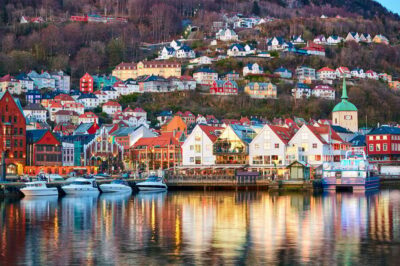
Bergen can look simple at first glance. You have the harbor, the colorful buildings of Bryggen, a mountain rising behind town, and a compact center that seems easy to cover alone. But the city’s meaning is not always obvious from the outside. A wooden alley may reveal centuries of trade. A fortress may explain Norway’s medieval politics. A quiet lane may show you how Bergen feels when cruise groups and day trippers have moved on.
This tour connects those pieces in a sensible order. The first hour focuses on history, beginning at Bergenhus Fortress and moving toward Bryggen. The second hour shifts to present-day life in the neighborhoods around the wharf. That structure prevents the walk from becoming a string of disconnected dates and monuments.
I especially like the balance between famous sights and less obvious streets. You see the places you came to Bergen for, but you also get a sense of how the city is lived in. Guides are authorized to operate in Bergen and are local residents, so the tour aims to explain the city from inside rather than simply recite labels.
The pace is designed for stopping, listening, taking pictures, and asking questions. A group of about 10 people was described as comfortable, with enough space for everyone to stay together. Group size can vary, but the company limits numbers because part of the route passes through a residential area.
More Walking Tours in Bergen
- Walking Tour in Bergen of the Past and Present
★ 5.0 · 1,575 reviews - City Walking Tour – Bergen On Foot
★ 5.0 · 436 reviews - Bergen: Sightseeing Walking Tour with Ferry Ride
★ 4.9 · 296 reviews
Starting at Bergenhus Fortress
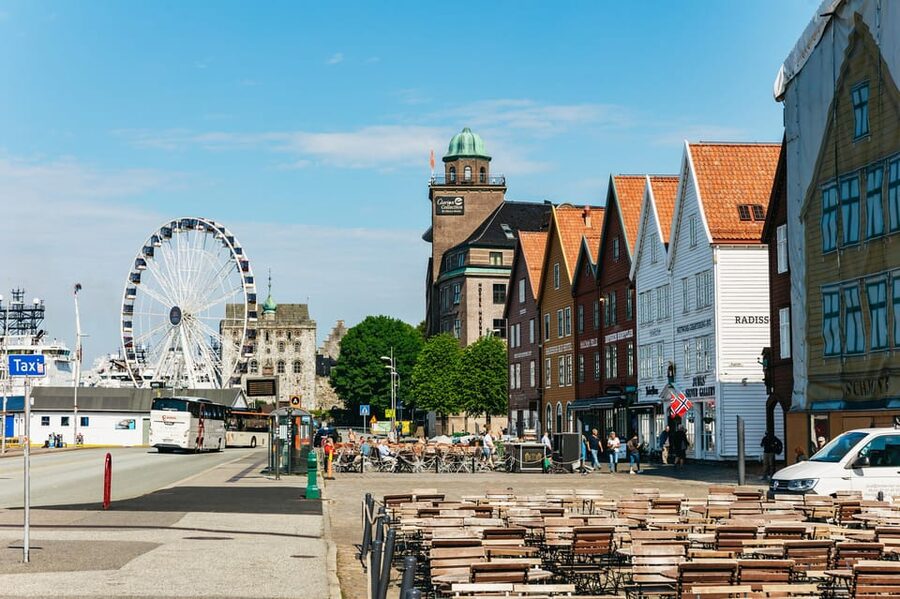
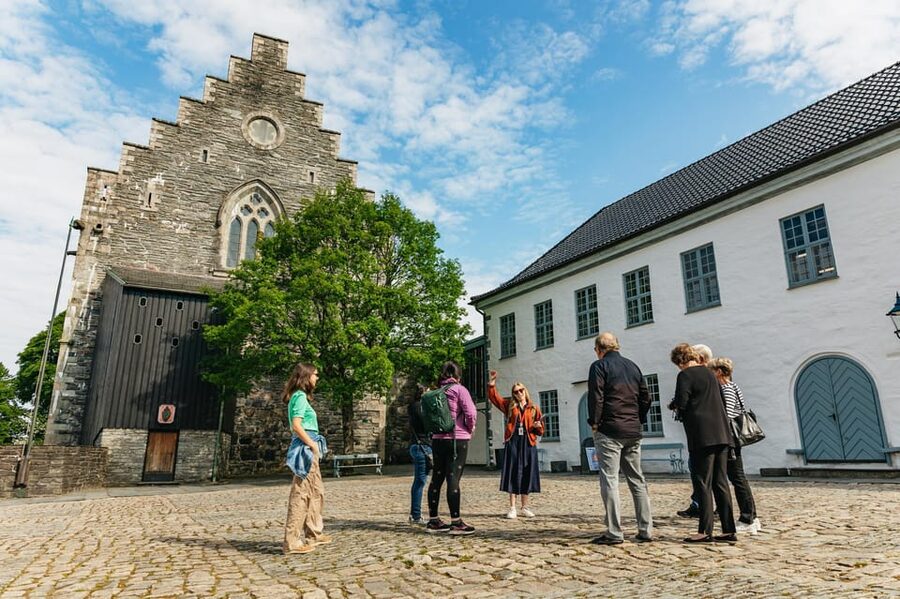
The tour begins at the listed meeting point near Bradbenken, with the exact starting location depending on the option booked. From there, the route reaches Bergenhus Fortress, where roughly 30 minutes are spent with the guide.
This is the right place to begin because Bergen’s medieval importance is easy to miss if you only see the harbor. The fortress recalls a period when Bergen was an important political center and briefly served as Norway’s capital. Your guide introduces King Håkon Håkonsson and the construction of the fortress, placing Bergen within the wider European power struggles of the Middle Ages.
One memorable detail is tied to Bergen’s famously wet reputation. The first historic description of the city as rainy comes from the account of King Håkon’s coronation. That small detail helps turn an abstract lesson into a story you can remember, especially if the clouds are doing their usual work overhead.
The fortress also gives the guide a way to move beyond medieval Norway. You hear about Norway’s periods under Denmark and Sweden, as well as the German occupation during the Second World War. The tour also explains how the fortress is used today, connecting its earlier military and royal roles with modern Bergen.
You do not need to pay for a museum entrance or go inside buildings for this experience. The focus is on the outdoor setting and the guide’s explanation. That keeps the tour moving, but anyone hoping for an extended interior visit should plan separate museum time.
Reading Bergen’s trade story at Bryggen
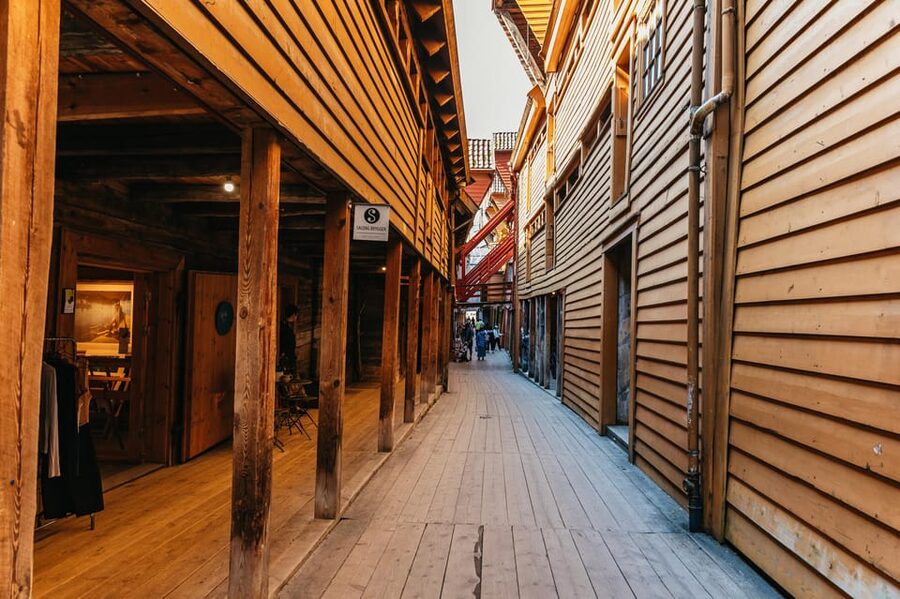
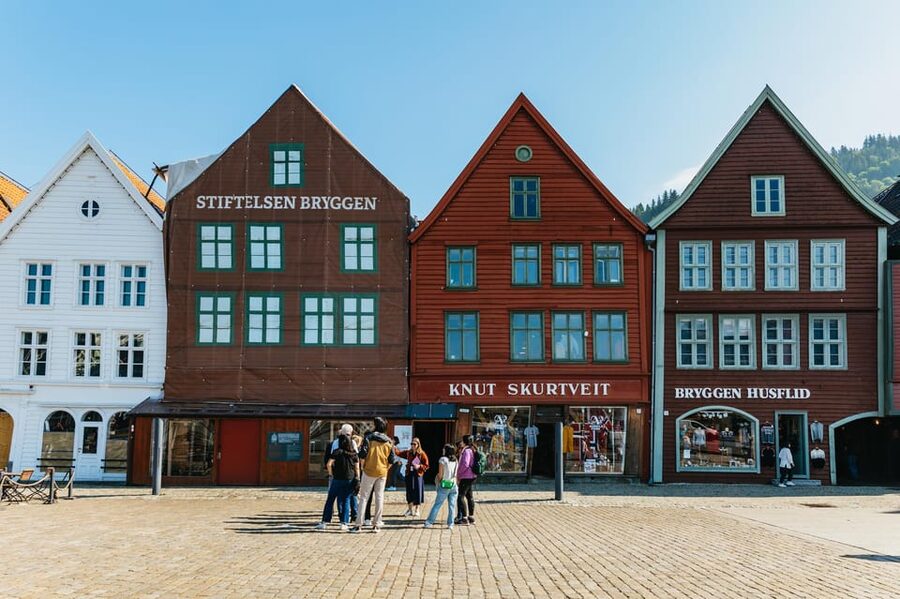
From the fortress, the route continues to Bryggen, Bergen’s UNESCO World Heritage Site. The stop includes time for photographs, guided explanation, and walking through the area.
Bryggen is often reduced to its famous row of painted wooden facades. The tour gives those buildings a larger purpose. Bergen grew because of trade, and the wharf became a working center tied to shipping, fish, merchants, and international business. The guide explains why the city was founded here and how trade helped it grow.
The Hanseatic League receives special attention. This German trading organization operated in Bergen for around 400 years, leaving a strong mark on the wharf and the city’s commercial life. Walking through the roughly 300-year-old alleys makes the story easier to picture. The narrow passages are not just attractive backdrops. They show how work, storage, movement, and business once fit into a tight wooden district.
You may hear about less polished parts of Bergen’s past, too. One stop can touch on the older areas associated with prostitution, an unusual but useful reminder that the wharf was a working neighborhood rather than a decorative exhibit. That sort of detail gives the city’s past more texture without turning the tour into a lecture.
The historical section finishes near St. Mary’s Church, Bergen’s oldest building. Even if you do not enter, its place in the route helps complete the basic timeline: medieval power, international trade, religious life, and the city that grew around them.
Leaving the postcard streets for Wesenbergsmauet
The character of the tour changes after Bryggen. Instead of staying with Bergen’s most photographed sights, the guide leads you into the neighborhood around the wharf.
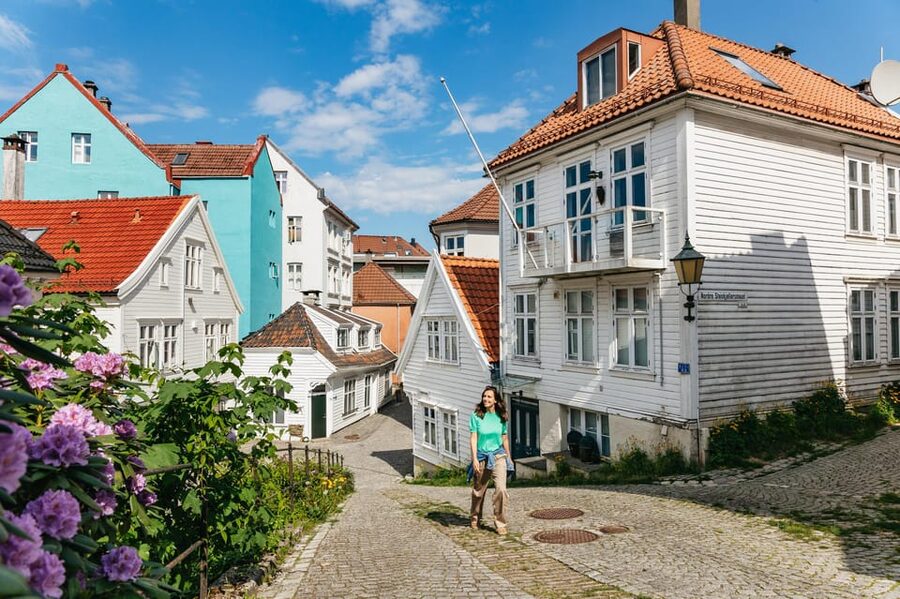
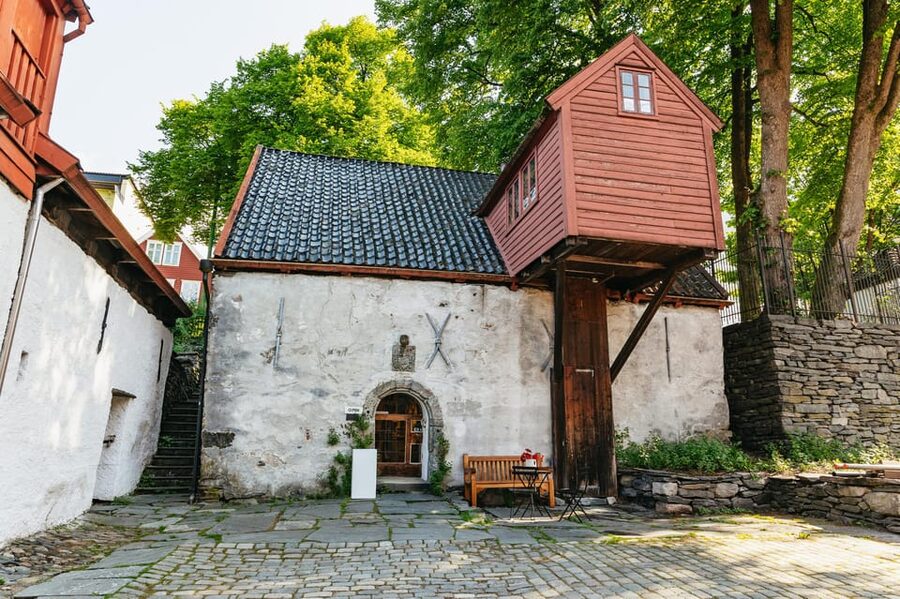
Wesenbergsmauet 16 is listed as a stop for photographs, a visit, and guided commentary, with about 15 minutes here. The importance of this part is not a single grand monument. It is the chance to see the smaller scale of Bergen, including residential streets and old lanes that can be easy to miss when you follow the main route.
The guide chooses parts of this section based on personal interests and local experience. That means the exact feel may depend on who leads your walk, but it also keeps the route connected to real local knowledge. You might hear about housing prices, work, what people do for fun, or how residents manage the rain.
This is where the tour becomes more useful for the rest of your stay. Instead of only telling you what Bergen used to be, the guide helps you understand how the city operates now. It is also a good moment to ask direct questions about neighborhoods, food, shopping, and activities.
A completely different kind of day:
- From Bergen: The Original Fjord Cruise to Mostraumen
★ 4.7 · 8,440 reviews - Bergen: Mostraumen Fjord & Waterfall Cruise
★ 4.6 · 2,990 reviews - Bergen: City Tour on Foot
★ 4.9 · 1,327 reviews - Bergen: Viking Village, Nærøyfjord Cruise & Flåm Railway
★ 4.8 · 1,047 reviews
Uphill views near Fjellgaten
The route continues to Fjellgaten 2, another roughly 15-minute stop for photos and local commentary. There are uphill sections on the walk, and this is one of the details you should take seriously when deciding if the tour suits you.
The reward is a more picturesque view of the city. The tour description identifies this neighborhood as one of Bergen’s most scenic areas, and the stop gives you a different angle on the streets and surrounding setting than the harbor provides.
Still, the route is not a flat promenade. Uneven cobblestones and uphill walking require steady footing. In winter, ice can add another concern. One guide, Magda, was praised for taking care around icy conditions, while another guide found shelter from cold winds for the group. Those details suggest that the guides respond to conditions, but they cannot remove the basic demands of the terrain.
Wear shoes with good grip. Bring an umbrella, and expect the tour to continue in poor weather. Bergen’s rain is part of the local story, but it is less charming when your socks are wet.
Fløibanen without assuming a ride
Fløibanen appears later in the route as a 15-minute guided stop and photo opportunity. It is important to understand what is included: the tour information does not say that your ticket includes a ride on the funicular.
That makes this stop useful for orientation and photographs rather than a separate transport excursion. Your guide can place Fløibanen within Bergen’s sightseeing pattern and help you understand how it fits with independent plans. If you want to ride it, treat that as a separate activity and check the current operating details yourself.
This is a good example of why the tour works best as an introduction. It helps you decide what deserves more time after the walk. You can return to a favorite area, visit a museum, take the funicular, or simply follow a food recommendation with a clearer sense of where you are.
Skostredet and the everyday side of Bergen
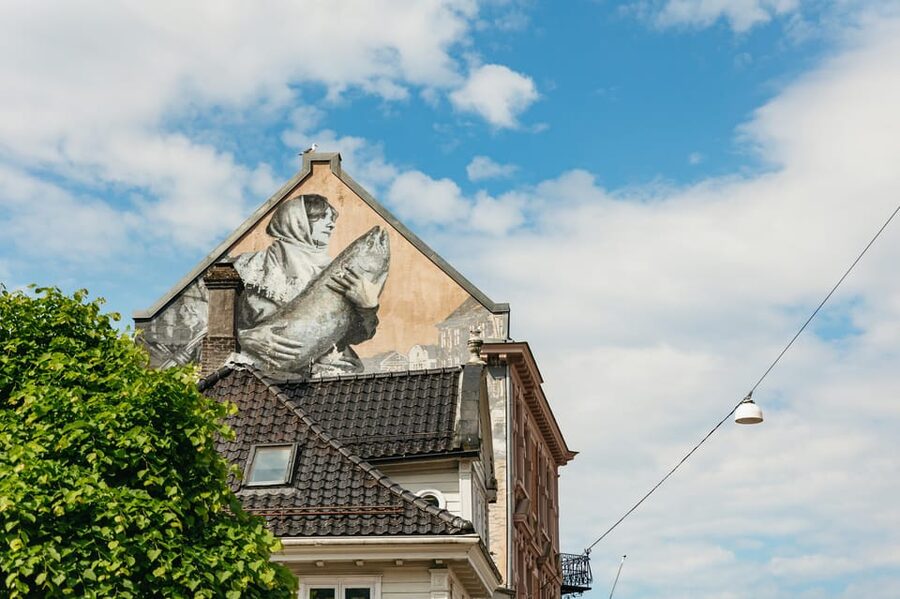
The final named stop is Skostredet, again with time for a visit, photographs, and explanation. The route then finishes near Strandkaien and the fish market.
Skostredet is especially useful for the tour’s modern focus. The guide points out favorite cafés and restaurants and may explain how locals use the area. Food advice comes up repeatedly in the praise for guides, with recommendations for coffee, lunch, dinner, local dishes, and places such as Pingvinen.
The value here is practical rather than ceremonial. You finish with a short list of places to try, not just a pile of historical facts. Guides have also offered ideas for museums, shopping, and other things to do, which can help you plan the rest of your time.
The finish near the fish market is convenient if you want to continue exploring the harbor area. It also gives you a chance to act on the guide’s advice right away, though the tour does not include food, drinks, or museum entry.
The guides make the difference
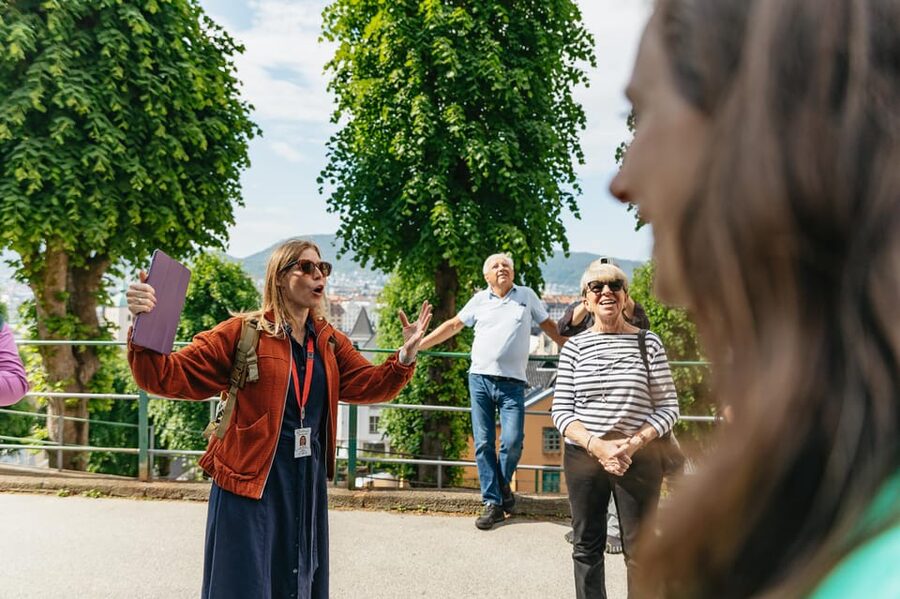
The most consistently praised part of this experience is the guiding. Jeff is often described as friendly, professional, funny, and full of useful information. Janine receives similar praise for her warmth, clear explanations, and local food advice. Magda is noted for humor, helpfulness, and care in cold or icy weather.
Eirik has been praised for linking Bergen’s past and present, while Serena is described as personable and especially helpful for planning the rest of a stay. Anais is noted for setting the city’s history within a wider European context and for giving the walk a clear point of view. Neal, Dane, Emma, and other guides are also described as engaging and prepared.
That range matters because your guide shapes the tone. The shared strengths are clear: strong English, friendly conversation, answers to unusual questions, and stories that keep the walk from feeling dry. German tours are also available.
You should ask questions. The company deliberately keeps groups small so you can do that, and the second half is built around conversation about modern life. Ask about restaurants, museums, neighborhoods, weather, costs, and what to do next. You will get more from the tour if you treat it as a two-way exchange rather than a speech.
Price, timing, and who gets the best value
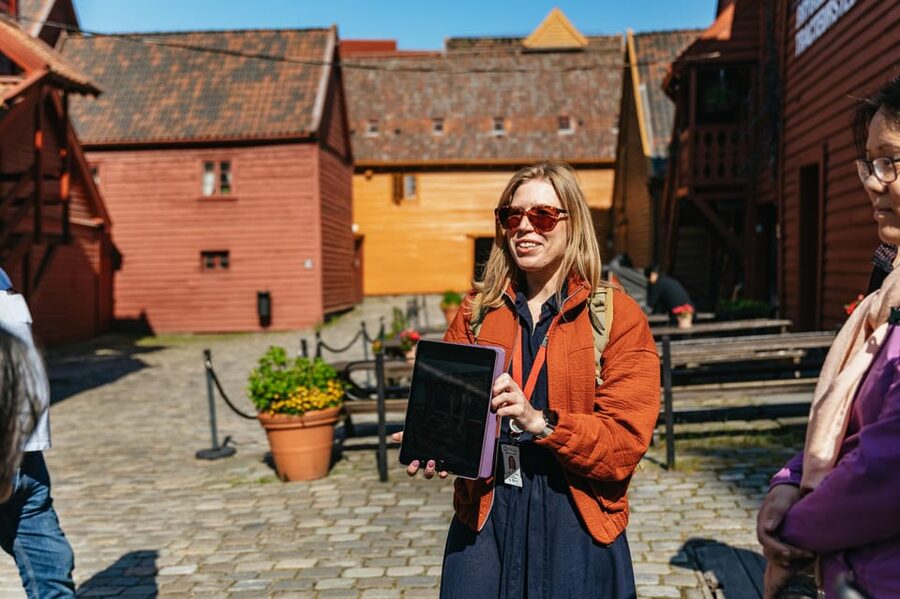
At $26 per person, the tour offers good value for a two-hour introduction to Bergen. You are paying for a licensed guide, the walking tour, and all tour fees. There are no extra museum or building entrance costs because interior admission is not needed.
The value is strongest if you are new to Bergen, have only a short stay, or want help deciding how to spend the next day or two. A guide can give you context in two hours that would take much longer to assemble alone. The restaurant and café suggestions can also save you from choosing at random in an expensive city.
I would book it near the start of your stay if possible. Several guides have given advice that helps shape later plans, and the route introduces both the main historic sights and quieter areas.
The tour is less suitable if you dislike walking, need step-free access, or want a long indoor history presentation. It is specifically not suitable for people with mobility impairments. There are cobbled paths and hills, and the tour runs regardless of weather.
Free cancellation is available up to 24 hours before the start for a full refund. You can also reserve and pay later, which helps if your Bergen plans are tied to a cruise schedule or changing weather forecast.
What to bring for Bergen’s weather
Pack for conditions rather than for the calendar. Bring an umbrella, wear comfortable shoes with grip, and use layers that can handle wind and rain.
The tour goes ahead in wet weather. A December group reportedly walked through pouring rain and still found the local stories worthwhile, but that should not be read as a reason to arrive unprepared. Cold wind, rain, uneven cobbles, and uphill stretches can make two hours feel longer.
The guides may look for shelter when conditions are rough, but outdoor walking remains the core activity. Check the forecast before leaving your hotel and allow extra time to reach the meeting point if the weather slows you down.
Should you book the Bergen Past and Present tour?
Book this walk if you want Bergen explained, not merely photographed. It is particularly good for first-time visitors, short stays, cruise passengers with a free morning, history fans, and anyone who wants local suggestions for food and further sightseeing.
The strongest reason to choose it is the combination of fortress history, Hanseatic trade, residential lanes, and present-day life in one compact route. The strongest reason to skip it is physical: this is not a flat, sheltered stroll.
At $26, the price is fair, the route covers a lot, and the guides appear to bring real personality to the experience. Bring an umbrella, keep your questions ready, and take the tour early in your Bergen visit if you want its advice to shape the rest of your time.
FAQ
How long is the Bergen Past and Present walking tour?
The tour lasts two hours.
How much does the tour cost?
The listed price is $26 per person.
What languages are available?
The tour is offered in English and German.
Where does the tour start?
There are two starting location options, and the meeting point may vary depending on the option booked. One listed location is Bradbenken 1 at Norsildmel AS.
Where does the tour finish?
The listed drop-off locations are Strandkaien 1A and the fish market in Bergen.
Does the tour include museum or building admission?
No. Entrance into museums and buildings is not included, and it is not needed for the walking tour.
Do I need to bring an umbrella?
Yes. An umbrella is specifically recommended because the tour operates in all weather.
Does the tour run if it rains?
Yes. The tour takes place regardless of the weather.
Is the route suitable for people with mobility impairments?
No. The tour is not suitable for people with mobility impairments. You will walk on uneven cobblestones and encounter some uphill sections.
Can I cancel for a full refund?
Yes. You can cancel up to 24 hours in advance for a full refund. You can also reserve your place and pay later.
Just added in Bergen
- Walking tour: Medieval Spirit of Bergen + sweet Arctic gifts★ 5.0 · 17 reviews
- Bergen : Private Waterfalls and Wonders Tour in Norway★ 5.0 · 6 reviews
- Walking Tour of Central Bergen★ 5.0 · 46 reviews
- Walk with a Witch in 16th Century Bergen: A Self-Guided Fictional Tour★ 4.5 · 12 reviews
- Mountain Bike – Voss Storålsen★ 5.0 · 13 reviews
- Three-summit hike in Bergen★ 5.0 · 3 reviews
- 2-Day Round Trip from Bergen: THE GRAND SOGNEFJORD – fjords, waterfalls, glacier★ 5.0 · 4 reviews
- Local food tasting & Excursion with a city view from the top 4pax★ 5.0 · 2 reviews
Walking Tours, compared.

Walking Tour in Bergen of the Past and Present
Read our review →


Central Oslo Guided Walking Tour with Local Guide
Read our review →Browse the lists this tour appears in