
REVIEW · WALKING TOURS
Oslo: Best of Oslo Walking Tour
Oslo gets easier once you know its story. This two-hour walk links the city’s grand civic buildings, old Christiania quarter, waterfront, and royal center in one tidy route. I like the clear introduction to Oslo’s changing identity, including its former names and the reason it is called the Tiger City. I also like the practical local advice, from museum ideas to café suggestions such as W.B. Samson’s cinnamon buns.
The main tradeoff is simple: you pass many sights rather than enter them. At $38, the tour makes good sense as a first-day orientation, but less so if you want long visits inside the Opera House, Akershus Fortress, or Oslo City Hall. Winter weather and uncleared snow can also make the walk hard for wheelchair users.
In This Review
- Key points at a glance
- Why this two-hour walk works well in Oslo
- Starting near the Nobel Peace Center or University Aula
- Karl Johan Street, Paleet, and the Norwegian Parliament
- Oslo Bazaars, GlasMagasinet, and the Cathedral
- The Opera House, Langkaia, and the modern waterfront
- Kvadraturen and Christiania Torv
- Akershus Fortress and the Oslo City Hall area
- Aker Brygge and Tjuvholmen: Oslo’s newer face
- What the guide adds to the experience
- Price, pace, and practical value at $38
- The included audio app for exploring later
- Who should book the Best of Oslo walk?
- FAQ
- How long does the Best of Oslo Walking Tour last?
- What languages are available?
- Where does the English tour meet?
- Where does the German tour meet?
- Where does the tour finish?
- Are attraction admissions included?
- Is public transportation included?
- How do I access the sightseeing app?
Key points at a glance
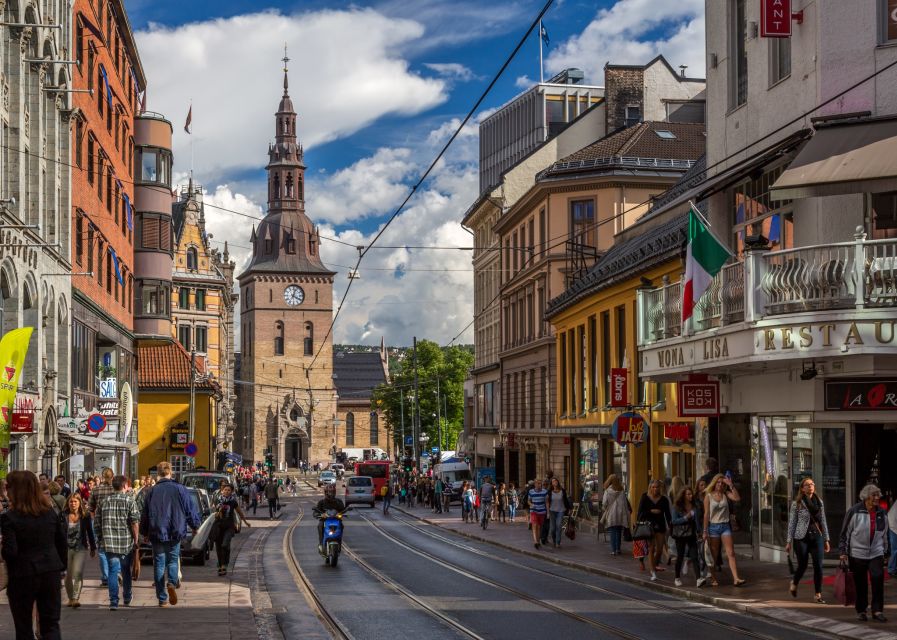
- Christiania explains modern Oslo: Hear why the capital changed its name and where its original center stood.
- The route covers both old and new Oslo: Move from Parliament and Karl Johan Street to the Opera House, waterfront sauna, and Tjuvholmen.
- The Nobel Peace Center is a useful meeting landmark: German tours begin here, while English tours meet near the P.A. Munch statue at University Aula.
- Guides make the difference: Amelia, Anastasia, Olaf, Oliver, Judit, Csilla, and others have earned praise for warm delivery, humor, and helpful answers.
- The route is mostly a city orientation: You see major buildings from outside, with no attraction admissions included.
- The app extends the experience: Scan the QR code on your voucher for an audio-guided route covering more neighborhoods and sights.
Why this two-hour walk works well in Oslo
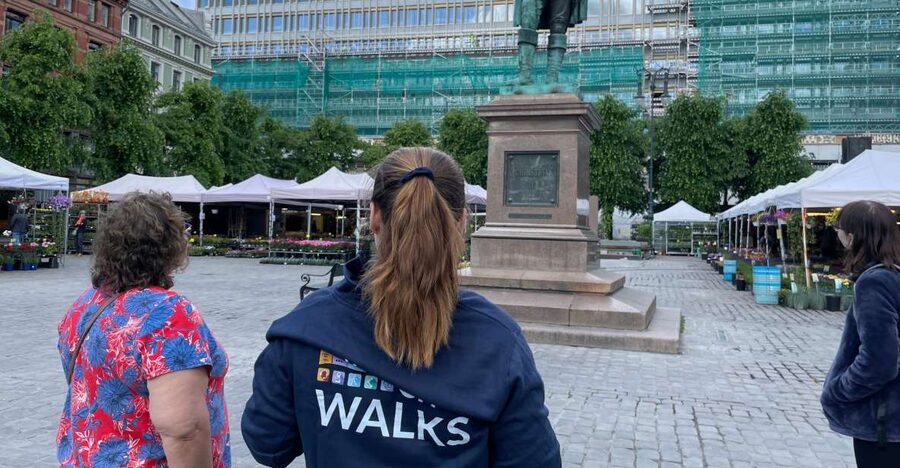
Oslo is compact in the central area, but its sights do not all tell the same story. The city has royal buildings, government offices, medieval traces, modern design, museums, parks, and a busy waterfront. A first-time visitor can easily walk past all of these without understanding how they fit together.
This tour gives you that framework. You begin near the Nobel Peace Center or University Aula, depending on the language you choose, then cross the central districts before ending back near Universitetsplassen or the Nobel Peace Center. The route is built around short stops and outdoor explanations, so you keep moving without spending the entire morning inside one building.
I would book it early in an Oslo stay. You can use the guide’s recommendations to decide which museums, cafés, restaurants, bars, and waterfront areas deserve more of your time afterward. Several participants found the tour especially useful on their first full day, and that timing makes sense.
The route also has a useful mix of past and present. You get old city squares and church buildings, then modern waterfront architecture and the alternative feel of Aker Brygge and Tjuvholmen. That contrast is one of the best reasons to choose this walk instead of a tour focused only on monuments.
More Walking Tours in Oslo
- Oslo: Guided Walking Tour of Central Oslo
★ 4.7 · 438 reviews - Oslo: Historic Myths & Legends Evening Walking Tour
★ 4.8 · 408 reviews - Taste of Oslo Walking Tour
★ 4.5 · 282 reviews
Starting near the Nobel Peace Center or University Aula
The meeting point depends on your booking and language. For the English tour, meet near the statue of P.A. Munch by the entrance to the Faculty of Law building at University Aula, Karl Johan Street 47. For the German tour, meet at the Nobel Peace Center at Brynjulf Bulls plass 1.
Arrive about five minutes early. That small buffer matters in a city walk because the group may move on quickly, and one participant had to catch up after arriving at the wrong place. Check your voucher carefully before setting out, especially if you are navigating from a hotel or railway station.
The Nobel Peace Center is more than a meeting point. It introduces one of Oslo’s unusual civic roles: the Nobel Peace Prize is awarded here, making it the only Nobel award presented outside Sweden. The tour explains the prize and its place in Norwegian public life, rather than treating the building as just another photo stop.
University Aula puts you close to the formal heart of the city. From here, the route moves toward Karl Johan Street and the royal and political buildings that make Oslo’s center easy to read.
Karl Johan Street, Paleet, and the Norwegian Parliament
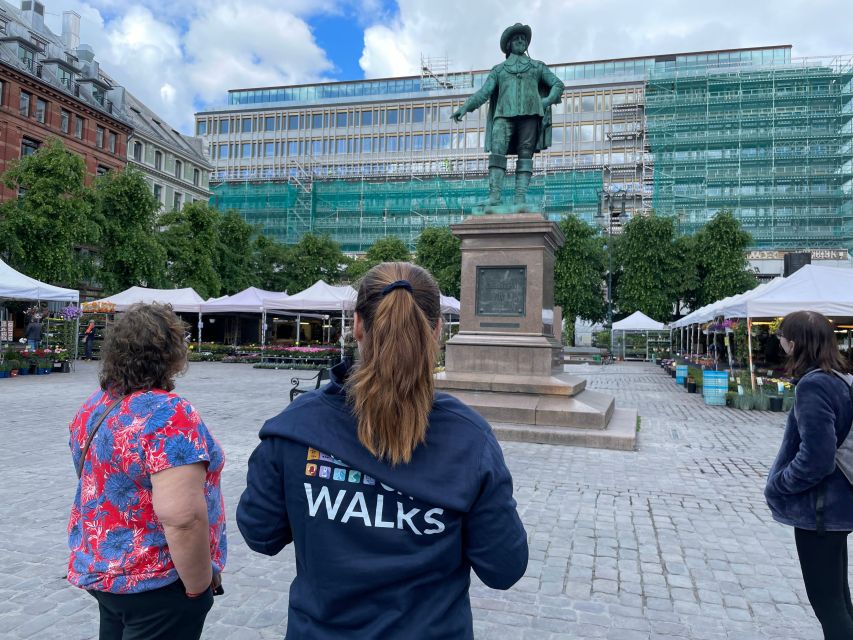
Karl Johan Street is Oslo’s main ceremonial road. Along the way, you pass Paleet, the Grand Hotel, the Norwegian Parliament, the National Theater, and the University of Oslo. These are not random stops. Together, they show how Norway presents its monarchy, government, culture, and public life along one central axis.
The Grand Hotel is closely tied to the Nobel Peace Prize ceremony. The Parliament, known as the Storting, gives you a chance to hear how Norway’s government works. The guide also adds the kind of context that makes a building worth remembering, including political shifts, cultural customs, and details about how people live in Norway.
The best part of this section is the commentary. Several guides have been praised for explaining complicated history in an easy format, without reducing everything to dates. Olaf, Anastasia, Oliver, Amelia, and Judit were singled out for clear English, humor, and useful answers. A guide who can respond to questions about government, culture, and daily life is more valuable here than someone who simply recites a script.
You pass Karl Johan’s monument and the National Theater before reaching more commercial and religious landmarks. Keep your eyes up. The tour is intended to orient you, so you will not stop at every storefront or spend time browsing inside Paleet.
Oslo Bazaars, GlasMagasinet, and the Cathedral
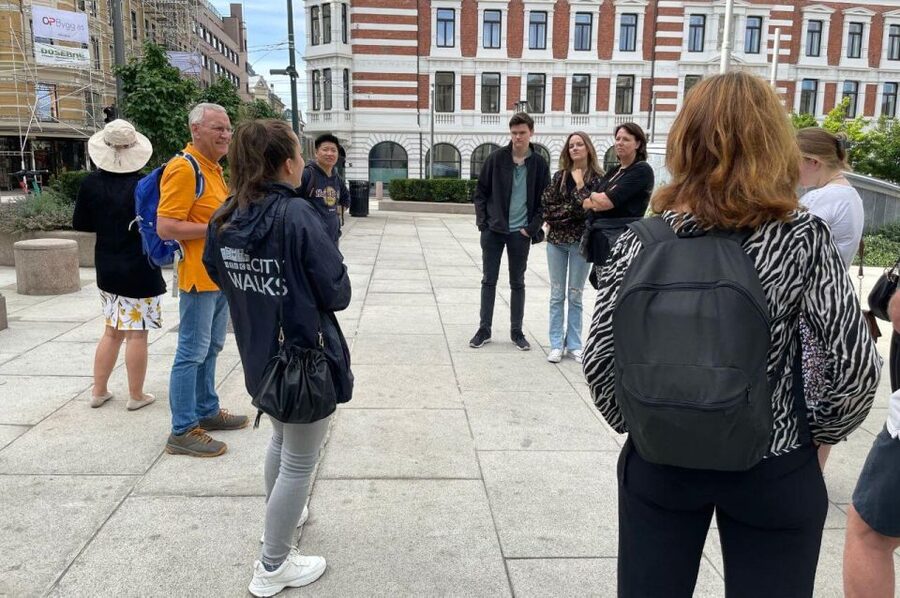
The Oslo Bazaars and GlasMagasinet Stortorvet shift the mood from grand avenue to everyday city center. These stops help you see where shopping, meeting, and local routines fit into the historic core.
Oslo Cathedral sits nearby. It gives the walk a clear religious and civic marker, and the surrounding streets make a useful break from the broad sweep of Karl Johan Street. You pass Stortorvet Gjestgiveri as well, another reminder that this central area is not just for sightseeing. It is still part of the city’s working social life.
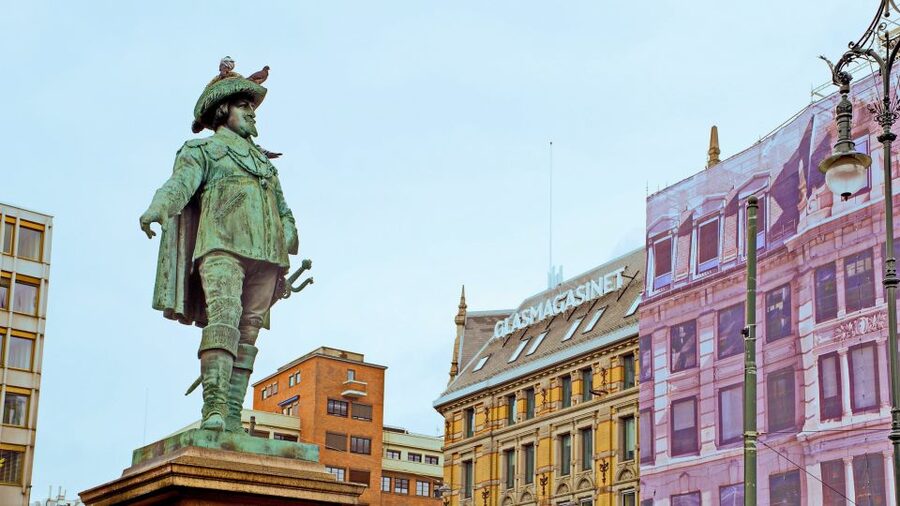
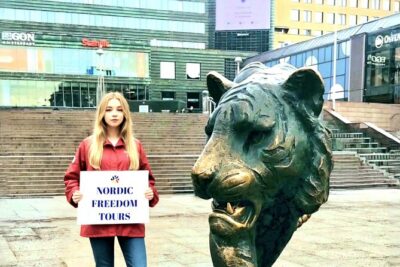
The Fire Tower and Tiger Sculpture add smaller, more visual moments to the route. The Tiger Sculpture connects with Oslo’s nickname as the Tiger City. The guide explains why that nickname exists, giving the sculpture more meaning than it would have on its own.
This section suits you if you enjoy stories tied to ordinary streets. The tour does not pretend every stop is a major museum. Instead, it shows how shops, squares, churches, public art, and restaurants occupy the same compact center.
A completely different kind of day:
- Oslo: Scenic Fjord Cruise with Audio Guide Commentary
★ 4.5 · 5,375 reviews - Oslo Nature Walks: Island Hopping Tour
★ 4.8 · 2,713 reviews - Oslo: 100% Electric Oslofjord Sightseeing Cruise
★ 4.4 · 2,041 reviews - Oslo: Fjord Evening Cruise with Shrimp Buffet
★ 4.5 · 1,956 reviews
The Opera House, Langkaia, and the modern waterfront
The Norwegian Opera House offers one of the city’s clearest examples of modern architecture. It rises from the waterfront like a pale, sloping form, and the tour treats it as a symbolic part of Oslo’s newer identity.
You pass the Opera House rather than enter it. That distinction is important. The stop lets you admire the building and hear about its role in the city, but admission, performances, and interior exploration are not included.
Near Langkaia, you pass KOK Oslo Sauna. This is a distinctly Oslo sight: a public waterfront sauna connected to the city’s relationship with the sea and outdoor life. Again, it is an exterior stop, but it gives the route a more current feel than a standard old-town walk.
The waterfront stretch also helps explain Oslo’s growth. You move away from the formal center and toward areas shaped by newer development, public access, food, and leisure. If you enjoy architecture and city planning, this may be one of the most useful parts of the tour.
Kvadraturen and Christiania Torv
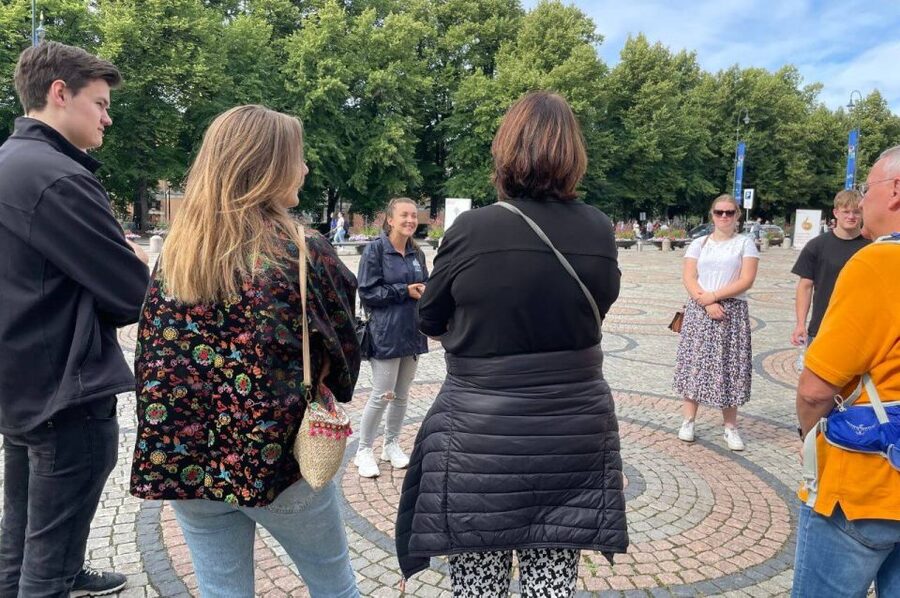
Kvadraturen is the historical center that gives the tour its strongest sense of time. Christiania Torv sits at the heart of this story. Here, you learn about the original city center and why Oslo has changed its name several times over roughly 300 years.
The name Christiania points to the city’s rebuilding and royal connections after fire. The guide uses the square to explain how the capital shifted and grew. This is the point where the city’s history becomes more than a list of old buildings. Streets, names, and public spaces reveal the choices that shaped modern Oslo.
You also pass the Gamle rådhus, or Old Town Hall, and Anatomigården. These details reward close attention. They may not be as famous as the Opera House or Royal Palace, but they help you picture earlier Oslo.
I would pay special attention here if you like urban history. The square and nearby streets make the changing capital easier to understand than a quick visit to one isolated historic building. The limitation is that the tour moves at a set pace, so you may want to return later for photographs or a slower look.
Akershus Fortress and the Oslo City Hall area
Akershus Fortress gives the walk a strong medieval and military reference point. You pass the grounds as part of the route, learning how the fortress fits into Oslo’s story and waterfront position.
Do not expect a full fortress visit. Entry to attractions is not included, and the walk does not promise an interior tour. If Akershus is high on your list, treat this stop as an introduction and return separately when you have time.
The route then reaches Oslo City Hall and the Ceremony Pier. City Hall is one of the city’s most important public buildings, and the Ceremony Pier connects with the Nobel Peace Prize setting. This part of the walk ties together government, public ceremony, and the waterfront.
The guide’s role matters most here. The best commentary connects architecture with Norwegian people and institutions. Several participants praised guides for adding personal explanations and cultural context, not just names and construction dates. That style helps you remember what you saw later.
Aker Brygge and Tjuvholmen: Oslo’s newer face
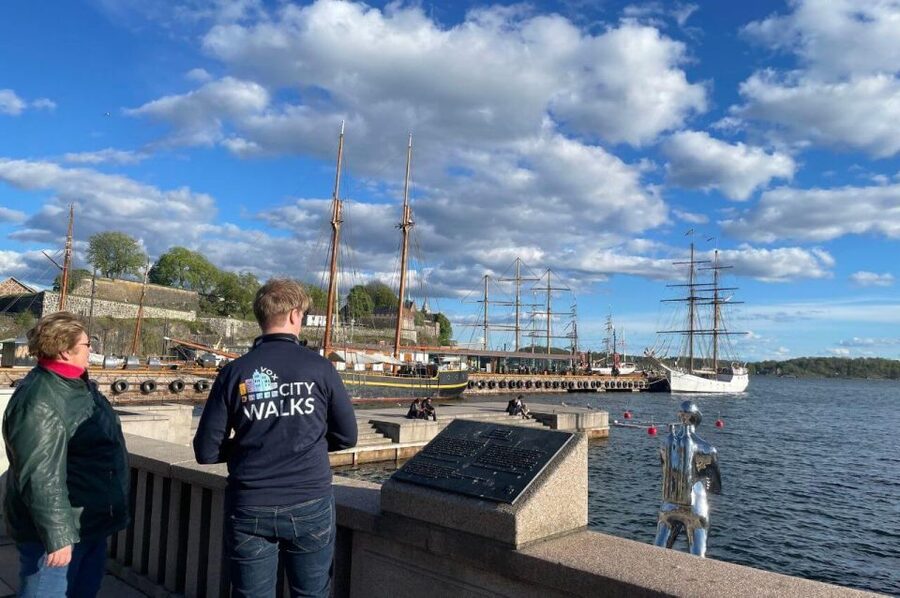
Aker Brygge is described as an alternative quarter, and it gives the tour a change of pace. You find restaurants, bars, waterfront paths, and modern city life rather than only formal monuments.
Tjuvholmen continues that newer mood. The tour passes through the district without turning it into a shopping stop, so you can judge where you might want to return for a meal or evening walk. The guide may also point out places worth considering after the tour.
This is where the route feels most useful for planning the rest of your visit. Historic sights tell you what Oslo was. Aker Brygge and Tjuvholmen show how the city spends time now.
Still, keep the limits in mind. Two hours cannot give you a full meal, museum visit, or long waterfront pause. If you want to explore these districts properly, note your favorite spots and come back after the guided walk.
What the guide adds to the experience
The strongest pattern in the feedback is the quality of the guides. Amelia is repeatedly described as friendly, clear, and responsive. Anastasia is praised for storytelling and a good sense of humor. Olaf brings stories and practical recommendations, while Oliver is valued for his warmth and local advice.
Other guides, including Judit, Judith, Csilla, Minji, Emilia, Marija, and Ihor, have also been praised for making history easy to follow. One guide provided an earpiece for a group of 13, which helped everyone hear. That is worth noting because outdoor city tours can become frustrating when people at the back miss half the explanation.
The guides also adjust to weather. Tours have continued through rain, hail, snow, and cold conditions, with participants still finding the explanations worthwhile. You should dress for the forecast rather than assume the tour will be canceled because the weather turns rough.
The English guides have received especially strong praise for fluency. German is also available, but you need to select your language at checkout and go to the correct meeting point.
Price, pace, and practical value at $38
At $38 per person, this is not Oslo’s cheapest way to walk around. You can visit many central streets on your own for nothing. The value comes from the guide’s storytelling, efficient route, and ability to answer questions.
I think the price is fair if you use the tour as a planning tool. In two hours, you see the main center, old Christiania, the fortress area, City Hall, and both major waterfront quarters. You also get recommendations for cafés, museums, restaurants, and later walks.
The price is harder to justify if you prefer slow photography, shopping, or entering buildings. The tour passes most sights, and admission tickets plus transportation are extra. It is best for orientation, not for checking off every interior.
The walk is described as reasonably flat and easy in normal conditions. Winter changes that calculation. Snow and uncleared sidewalks caused difficulty for one wheelchair user, who had to leave early. If mobility is a concern, contact the provider before booking and check current conditions.
The included audio app for exploring later
Scan the QR code on your voucher to access the sightseeing app. It adds an audio-guided route beyond the live walk, with stops such as Frogner Stadion, Trinity Church, Grensen, Aamodt Bridge, the Norwegian Parliament, and Karl Johan’s monument.
This is a useful extra because the live route cannot cover every part of central Oslo. You can use the app later when you want a self-guided outing at your own pace. It also gives the $38 price more weight, since the experience does not end when the guide says goodbye.
The app is not a substitute for the live guide. It cannot answer questions or adjust the pace, but it can help you continue exploring without paying for another organized tour. Download it soon after the walk while the landmarks are still familiar.
Who should book the Best of Oslo walk?
I would choose this tour if you are visiting Oslo for the first time, have only a short stay, or want a useful first morning before selecting museums and restaurants. It also suits history fans and people who want cultural context rather than a string of photo stops.
Families and mixed-age groups may appreciate the short duration, though weather and walking surfaces still matter. The tour can also work well for solo visitors who want a social start without committing to a full-day activity.
I would skip it if you have already explored central Oslo in detail or mainly want to enter attractions. In that case, spend the $38 on a specific museum or return to Akershus Fortress and the Opera House with more time.
Book the Best of Oslo Walking Tour when you want a clear, lively map of the capital in two hours. Choose an early date in your stay, wear good shoes, arrive at the right meeting point, and keep the rest of the day open for the places that catch your eye.
FAQ
How long does the Best of Oslo Walking Tour last?
The guided walking tour lasts approximately two hours. Starting times vary, so check availability when booking.
What languages are available?
The live guide speaks English or German. Select your preferred language at checkout.
Where does the English tour meet?
The English tour meets near the statue of P.A. Munch by the Faculty of Law building entrance at University Aula, Karl Johan Street 47.
Where does the German tour meet?
The German tour meets at the Nobel Peace Center at Brynjulf Bulls plass 1.
Where does the tour finish?
The listed drop-off options are Universitetsplassen and the Nobel Peace Center.
Are attraction admissions included?
No. The tour passes attractions from outside, and entry tickets are not included.
Is public transportation included?
No. Public transportation tickets are not included in the $38 price.
How do I access the sightseeing app?
Scan the QR code on your voucher to access the sightseeing app and its audio-guided routes.
Just added in Oslo
- Oslo Winter Highlights Bike Tour★ 5.0 · 36 reviews
- 4 hours Best View of the Oslofjord Winter Edition★ 4.0 · 15 reviews
- The Ultimate Study of the Human Form at Vigeland’s Sculpture Park with a Local★ 4.0 · 14 reviews
- Unknown war. Oslo and Norway during 1940-45★ 5.0 · 74 reviews
- Top of Oslo Snowshoe Tour★ 5.0 · 2 reviews
- The Scenic Roadtrip, Oslo to Bergen via Flam & the Fjords★ 5.0 · 25 reviews
- The Viking Planet Museum – Mini Group (4 adults)★ 4.0 · 16 reviews
- The Oslo Beer Adventure★ 4.5 · 11 reviews
Walking Tours, compared.
Past & Present Small Group Guided Walking Tour
Read our review →
Walking Tour in Bergen of the Past and Present
Read our review →
Central Oslo Guided Walking Tour with Local Guide
Read our review →Browse the lists this tour appears in