
REVIEW · WALKING TOURS
Oslo City Walks: Historic River Walk
Oslo’s story follows the river. This two-hour walk along Akerselva links nature, industry, food, and city life in a way that ordinary sightseeing often misses. I like the contrast between old industrial Grønland and the leafy river corridor, and I like the stop at Mathallen, where you can explore Oslo’s food scene at your own pace. The main drawback is simple: food and transport cost extra, and two hours is not long enough for a slow, detailed visit at every stop.
The route is a good choice if you want more than central Oslo streets and grand buildings. The guide adds context that helps the waterfalls, bridges, parks, and old working areas make sense. Still, this is a walking tour, not a food tour or a major museum visit, so wear proper shoes and come ready to keep moving.
In This Review
- Key points to know before you go
- Why Akerselva gives Oslo a different face
- Starting at Oslo S and finding your guide
- Grønland and the city’s industrial transformation
- Beier Bridge and the sound of falling water
- Crossing the Fairytale Bridge
- Green paths and the return of a living river
- Mathallen, Oslo’s food stop
- What the $52 price gets you
- Who should book this Akerselva walk
- Practical advice for a smoother walk
- Should you book the Historic River Walk?
- FAQ
- Where does the Oslo Historic River Walk meet?
- What time does the tour start?
- How long does the tour last?
- What languages are available?
- Is food at Mathallen included?
- What should I wear?
Key points to know before you go
- Akerselva is the main attraction: The river gives you a mix of greenery, waterfalls, paths, and urban scenery.
- Grønland shows Oslo’s industrial change: You see how an old working district has become part of the city’s cultural and recreational life.
- Mathallen adds a food stop: You can browse Norwegian and international specialties, but purchases are not included.
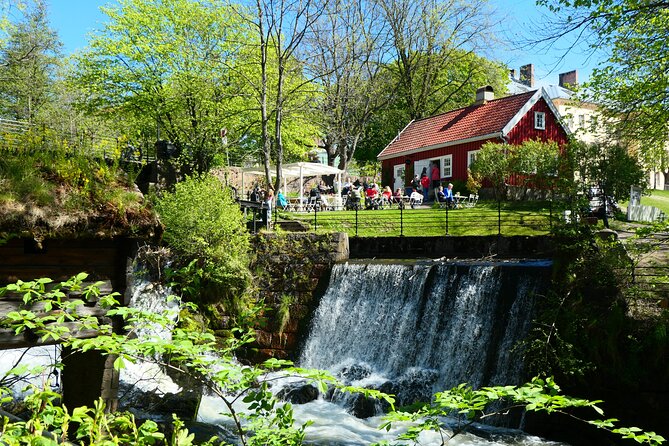
- Beier Bridge has an impressive waterfall: It is one of the most memorable natural sights on the route.
- The Fairytale Bridge adds character: This crossing brings a playful touch to an otherwise history-focused walk.
- The meeting point is easy to find: Meet in front of the Oslo Visitor Center inside Østbanehallen at Oslo S.
Why Akerselva gives Oslo a different face
Many first visits to Oslo focus on museums, the harbor, and the royal center. Those are worthwhile, but Akerselva shows another side of the capital. The river cuts through the city and acts as a green corridor, with paths, parks, water, and remnants of industry along its banks.
I like this route because it does not treat nature and history as separate subjects. The river made industry possible, then suffered from that development, and later benefited from environmental work. As you walk, the setting helps you see how Oslo changed instead of simply hearing a list of dates.
The walk also gives you a useful sense of scale. Oslo can feel spread out when you look at a map, but the river connects several different areas in a clear line. You move from the city center toward Grønland and onward into a calmer setting without needing a bus or tram.
That said, the route is not designed as a strenuous hike. The pace is a guided city walk lasting about two hours. You should still expect steady walking, outdoor conditions, and paths that call for sensible footwear.
More History Tours in Oslo
- Oslo: Historic Myths & Legends Evening Walking Tour
★ 4.8 · 408 reviews - Oslo: History, Art and Secrets Tour
★ 4.7 · 62 reviews - Oslo City Walks – Historic River Walk
★ 5.0 · 31 reviews
Starting at Oslo S and finding your guide
The tour begins at 14:00 from Oslo S. Your meeting point is in front of the Oslo Visitor Center, located inside Østbanehallen at Jernbanetorget 1, 0154 Oslo.
This is a practical starting point, especially if you have just arrived by train or are staying near the center. Østbanehallen is a busy transport and food hall, so give yourself time to find the visitor center rather than rushing in at the last moment. Arriving 10 minutes early is required.
The guide is an authorized Oslo guide, and that matters here. Akerselva is easy enough to follow, but the meaning of the route is less obvious without explanation. A good guide connects the river to Oslo’s industrial growth, environmental work, and modern city life.
The guide service is available in English or Norwegian. There is no listed transport included, but the walk itself begins at the central rail station. That keeps the logistics simple. You do not need to arrange a separate transfer to reach the start.
Grønland and the city’s industrial transformation
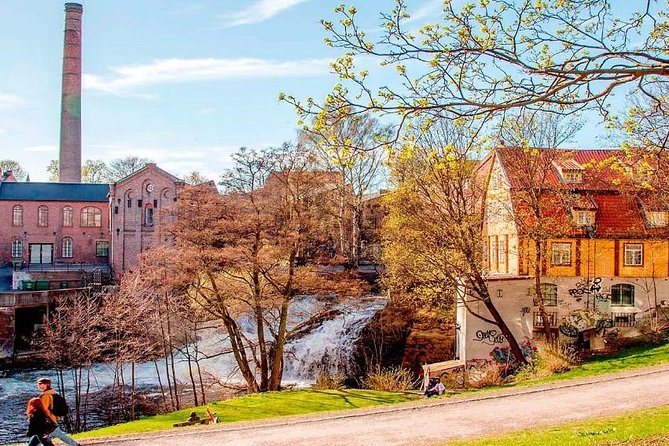
One of the most useful parts of the route is the view of Grønland. The area was once tied closely to industry, while today it is part of Oslo’s active cultural and recreational scene.
You may know Grønland mainly as a central neighborhood with shops, food, and busy streets. This walk gives you a different frame. The guide helps explain how the district fits into the larger story of Akerselva and Norway’s industrial development.
That context is valuable because industrial history can be hard to picture from a modern street. Buildings and public spaces may look ordinary until you understand what the river powered and how the area functioned. Here, the changing surroundings do much of the teaching.
I especially like the contrast between the hard-working past and the present-day use of the river corridor. It is not a polished historical display. Instead, you see a living part of Oslo that has changed use over time.
The tradeoff is that the tour does not promise access to industrial interiors or a museum collection. You will learn through the guide and the outdoor setting. If you want detailed architecture or extended time inside historic buildings, you may need to add another activity later.
Beier Bridge and the sound of falling water
The waterfall at Beier Bridge is one of the route’s strongest visual moments. Akerselva is not just a narrow stream beside a path. At this point, moving water gives the walk energy and helps explain why the river mattered to industry.
A waterfall is also a useful reminder that Oslo’s urban story was shaped by natural features. The water brought practical power, but today it also creates one of the walk’s most attractive views.
You should keep your camera ready, but do not expect a long photography stop to be guaranteed. The tour lasts two hours, and the guide needs to maintain the route. If you like taking many careful photos, you may want to return on your own after the walk.
The river’s recovery is another important part of this stop. Akerselva once suffered from pollution linked to industrial use. Environmental work has helped turn it into a living ecosystem with plant and animal life. That change gives the scenery more meaning than a simple pretty riverside view.
More Walking Tours in Oslo
- Oslo: Best of Oslo Walking Tour
★ 4.5 · 458 reviews - Oslo: Guided Walking Tour of Central Oslo
★ 4.7 · 438 reviews - Taste of Oslo Walking Tour
★ 4.5 · 282 reviews - Central Oslo Guided Walking Tour with Local Guide
★ 4.5 · 278 reviews
Crossing the Fairytale Bridge
The Fairytale Bridge adds a lighter note to the walk. Its name suggests something more playful than the industrial story surrounding it, and crossing it helps break up the historical material with a memorable landmark.
This is the kind of place that works well on a short city tour. You get a clear visual marker, a pleasant crossing, and another way to experience the river rather than only walking beside it.
I would not plan the entire tour around the bridge alone. Its value comes from the way it fits into the route, linking the river’s green spaces with the city’s cultural character. The guide can give the setting a stronger sense of place than you would get from a quick crossing on your own.
As with Beier Bridge, the experience depends on the weather. Oslo’s river paths are outdoors, and rain or cold can change how much you enjoy a stop. Dress for the forecast rather than relying on the calendar.
Green paths and the return of a living river
The green sections are where the tour slows down in mood, even if the walking pace stays steady. Parks and nature paths run along Akerselva, giving you a break from the harder urban edges of Grønland.
This is the part I would value most after a busy day of museums and central streets. You get open air, running water, and a sense of space without leaving Oslo. The route makes it clear that nature is not far away from the city center.
The environmental story adds a practical lesson. Akerselva has gone from a polluted industrial river to a healthier ecosystem through extensive restoration work. You can see how a city’s choices affect its water and public spaces, then how those spaces can be repaired.
Do not expect a wilderness walk. This is still an urban river route, and the appeal comes from the blend of nature and city life. If you want a remote forest excursion, this is not the right product. If you want a calm outdoor route with a strong local story, it fits well.
Mathallen, Oslo’s food stop
The tour includes a stop at Mathallen, one of Oslo’s main food destinations. It offers Norwegian and international delicacies, so you can browse a range of flavors and products in one place.
Mathallen is a smart addition to the route. After seeing the river’s industrial past, you get a modern example of how Oslo uses former working areas for food, culture, and leisure. It also gives you a chance to make the walk personal. You can look around, choose something to eat, or simply enjoy the atmosphere.
Food is not included in the $52 price, so plan for extra spending if you want to sample anything. That is both a strength and a limitation. You are not forced into a set tasting menu, but the total cost can rise quickly if you arrive hungry.
The available time at Mathallen may also be limited by the walking schedule. Treat it as a guided stop rather than a full food crawl. If Mathallen is a major reason for booking, consider returning later for a longer visit.
What the $52 price gets you
At $52 per person, this is not the cheapest way to walk beside Akerselva. The value depends on how much you want interpretation rather than simply scenery.
You are paying for an authorized guide, a structured two-hour route, and the connection between places that might otherwise feel unrelated. The guide explains the industrial past, the river’s pollution and recovery, the role of Grønland, and the shift toward modern public spaces.
I think the price makes the most sense for a first-time visitor who wants orientation. You can walk parts of Akerselva alone, but you may not understand why the river matters or know which bridges and viewpoints to seek out.
The price is less convincing if you only want a casual stroll or plan to spend most of your time eating at Mathallen. There is no food included, no transport included, and no mention of entry to attractions. You are buying guiding and local context.
A high rating from four verified bookings points to consistent satisfaction, though that is a small sample. The praise focuses on the guide’s kindness, commitment, sympathy, and competence. That is important because the guide is the heart of this experience. One short comment specifically praised the guide’s kindness, while another called the walk very interesting and recommended it strongly.
Who should book this Akerselva walk
I would recommend it to several types of visitors:
- First-time Oslo visitors who want an overview beyond the main center.
- History-minded walkers interested in Norway’s industrial development.
- Food lovers who want an introduction to Mathallen without booking a separate food tour.
- Nature fans who prefer an urban river path to a formal museum.
- Short-stay visitors who need a compact two-hour activity.
- Independent explorers who want ideas for places to revisit alone.
Families may also enjoy the waterfalls, bridges, and changing scenery, though the tour is still a guided walk rather than a special children’s program. Anyone with limited walking ability should check the route details directly before booking, since no accessibility information is provided.
You should skip it if you dislike walking outdoors, want a major indoor attraction, or need a tour built around food tastings. It is also not the best choice for someone who wants a long, unhurried visit at Mathallen.
Practical advice for a smoother walk
Wear good walking shoes. That is not just routine advice: the experience is built around a river route, parks, and nature paths, and comfortable footwear will make the two hours easier.
Dress for the weather. Oslo conditions can change, and the tour does not move into indoor spaces for the entire route. A waterproof outer layer is sensible in wet weather, while warm layers matter on cooler days.
Arrive 10 minutes early at the Oslo Visitor Center. The center is inside Østbanehallen, so the station’s size and activity can add a few minutes to your search.
Bring a little extra money if you want food at Mathallen. The tour price covers the guided walk only. There is no transport or food included.
The starting time is 14:00, but availability should be checked when booking. You can cancel up to 24 hours before departure for a full refund, and the reserve-now, pay-later option keeps your plans flexible.
Should you book the Historic River Walk?
Book this tour if you want Oslo explained through water, work, and public life. The route offers more substance than a simple scenic walk, while the scenery keeps the history from becoming a lecture.
I see it as especially good value early in a trip. The guide can help you understand Grønland, Akerselva, Beier Bridge, the Fairytale Bridge, and Mathallen, then you can decide which places deserve a longer return visit.
Skip it if your priority is a dedicated food experience, a museum, or a completely free self-guided stroll. For most visitors who enjoy walking and want a less obvious side of Oslo, though, the $52 cost buys useful local insight, memorable river views, and a clear picture of how the capital grew and changed.
FAQ
Where does the Oslo Historic River Walk meet?
Meet your guide in front of the Oslo Visitor Center inside Østbanehallen at Jernbanetorget 1, 0154 Oslo.
What time does the tour start?
The walk starts at 14:00. Check availability when booking because starting times can vary.
How long does the tour last?
The tour lasts approximately two hours.
What languages are available?
The live guide speaks English or Norwegian.
Is food at Mathallen included?
No. Food is not included, so you pay separately for anything you choose to purchase at Mathallen.
What should I wear?
Wear good walking shoes and dress according to the weather. Arrive at the meeting point 10 minutes early.
Just added in Oslo
- Oslo Winter Highlights Bike Tour★ 5.0 · 36 reviews
- 4 hours Best View of the Oslofjord Winter Edition★ 4.0 · 15 reviews
- The Ultimate Study of the Human Form at Vigeland’s Sculpture Park with a Local★ 4.0 · 14 reviews
- Unknown war. Oslo and Norway during 1940-45★ 5.0 · 74 reviews
- Top of Oslo Snowshoe Tour★ 5.0 · 2 reviews
- The Scenic Roadtrip, Oslo to Bergen via Flam & the Fjords★ 5.0 · 25 reviews
- The Viking Planet Museum – Mini Group (4 adults)★ 4.0 · 16 reviews
- The Oslo Beer Adventure★ 4.5 · 11 reviews
Walking Tours, compared.
Past & Present Small Group Guided Walking Tour
Read our review →
Walking Tour in Bergen of the Past and Present
Read our review →

Browse the lists this tour appears in