
REVIEW · WALKING TOURS
Oslo: City Highlights Walking Tour
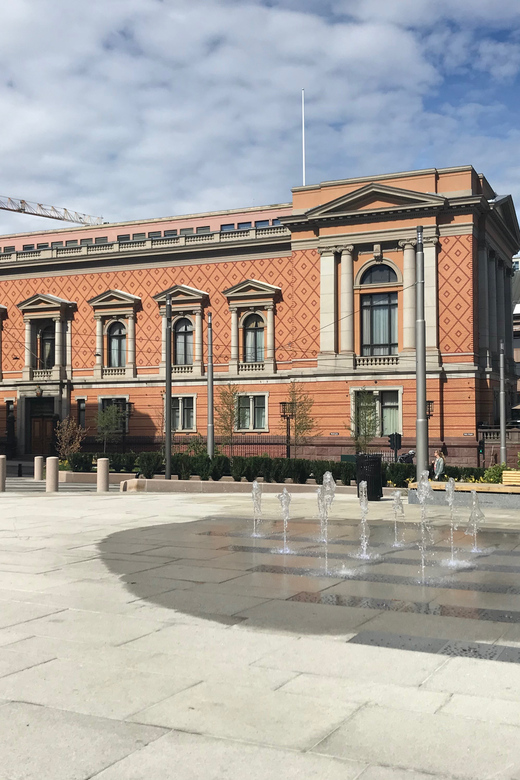
Oslo reveals itself one street at a time. This two-hour German-language walk links the Nobel Peace Center, Akershus Fortress, Christiania Torv, and the Opera House, then heads up Karl Johan Street toward the Royal Palace. I like the clear sweep of the route, from medieval Oslo to its modern waterfront, and I like that the guides add everyday Norwegian culture, government, language, and city life to the usual landmarks. The main tradeoff is simple: you cover a lot of ground in two hours, so stops are brief and the tour requires a moderate amount of walking.
The $37 price is fair if you are new to Oslo and want your bearings quickly, especially if you have only one day in town. The tour is conducted in German, and guides such as Emily, Anna Marie, Maria, and Olav have been praised for their energy, warmth, and command of local history. Plan for changing weather, though. The walk generally continues in rain, snow, and cold, except during severe storms.
In This Review
- Key points to know before you book
- Why this route works for a first look at Oslo
- Akershus Fortress and Oslo’s medieval beginning
- Christiania Torv and the compact Kvadraturen district
- The Oslo Opera House beside the fjord
- Karl Johan Street, Oslo Cathedral, and Parliament
- National Theater, University Aula, and the Royal Palace view
- The German-language guiding experience
- Walking pace, weather, and comfort
- Is $37 a fair price for two hours?
- Who should book this Oslo walking tour?
- Final verdict: book it for context and direction
- FAQ
- Where does the Oslo City Highlights Walking Tour meet?
- How long does the walking tour last?
- What language is the tour conducted in?
- What landmarks are included on the route?
- Is the tour wheelchair accessible?
- Does the tour operate in bad weather?
- Can I cancel the booking for a refund?
Key points to know before you book
- A city story told in two eras: You move from Akershus Fortress and the old Kvadraturen street plan to the sleek Oslo Opera House.
- A strong first-day choice: The route gives you a useful map of central Oslo and helps you decide where to spend more time later.
- German is the only listed tour language: This matters if you want detailed explanations without relying on English.
- Guides add more than dates and buildings: Expect discussion of Norwegian culture, language, government, and the country’s ties with Denmark and Sweden.
- Weather is part of the experience: The walk operates in ordinary rain, snow, and cold, so dress for the forecast.
- Allow time for photographs: The guide covers plenty of ground, and one past participant felt the pace left too little time for pictures.
Why this route works for a first look at Oslo
Oslo can feel spread out at first. The central streets, fjordfront, old fortress, royal quarter, and newer cultural buildings each tell a different part of the city’s story. This walking tour connects them on foot, giving you a practical sense of direction that is hard to get from isolated museum visits.
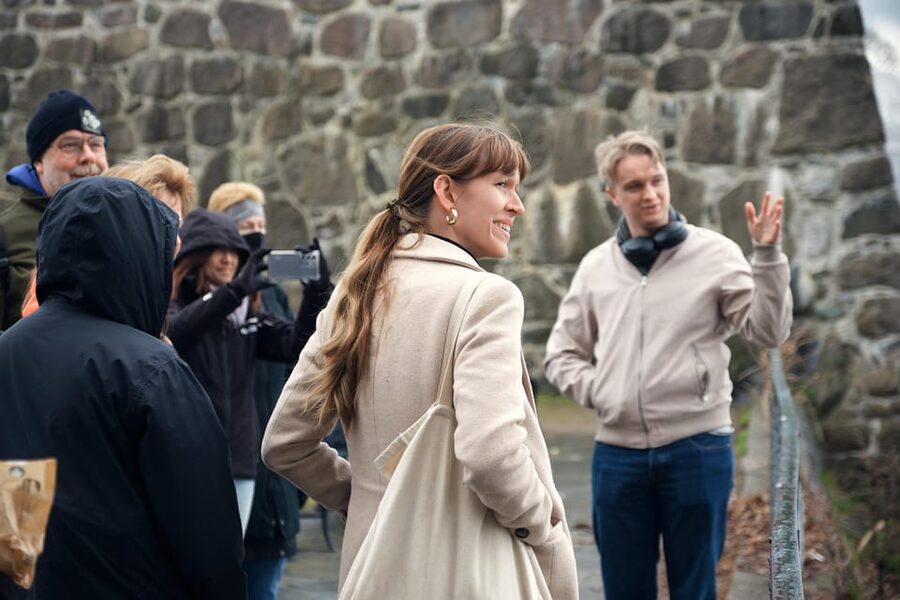
You begin near the entrance to the Nobel Peace Center. That is a useful meeting point because it sits between the waterfront, the old city center, and the government and palace areas. Arrive with the entrance clearly in view, since a major downtown location can still be confusing when you are looking for a guide rather than a building.
The route is especially useful for a short Oslo stay. Laura, who had only one day in the city, found that the walk helped her judge which places deserved a longer visit. That is exactly the value of a city highlights tour: you get a first reading of Oslo before spending your limited sightseeing time.
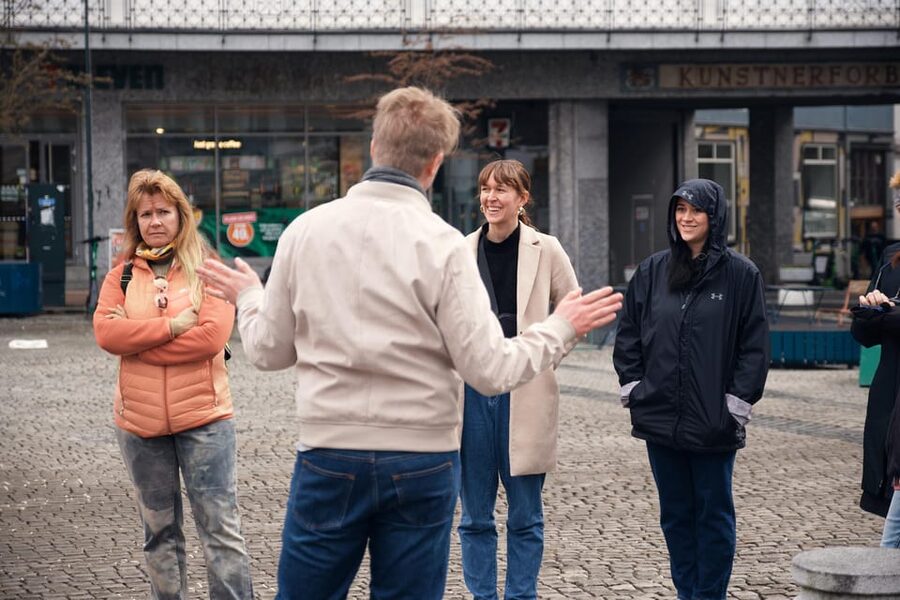
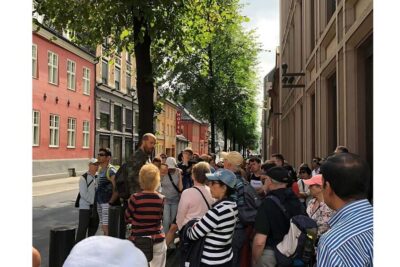
The pace is steady. You are not simply standing at one landmark for a long lecture, and you are not riding past the city in a vehicle. You walk between sites, hear the connections, and see how the old and new parts fit together.
More Walking Tours in Oslo
- Oslo: Best of Oslo Walking Tour
★ 4.5 · 458 reviews - Oslo: Guided Walking Tour of Central Oslo
★ 4.7 · 438 reviews - Oslo: Historic Myths & Legends Evening Walking Tour
★ 4.8 · 408 reviews
Akershus Fortress and Oslo’s medieval beginning
Akershus Fortress gives the tour its strongest early sense of place. The complex points back to Oslo’s medieval beginnings and helps explain why the waterfront mattered to the city’s growth and defense. From here, the city feels less like a modern capital and more like a settlement shaped by the fjord and the need to control access.
Expect an exterior-focused introduction rather than a full fortress visit. The tour passes by the imposing walls and uses them as a starting point for Oslo’s early story. If you want to explore every courtyard, museum, or interior space, save that for another visit and return after the walk.
This is one of the places where a guide adds real value. A wall can look impressive on its own, but a short explanation about Oslo’s medieval origins gives it purpose. Tao, who received a private tour because he was the only person booked that day, especially appreciated learning how the city developed from the Viking period to the present.
The fortress also makes a good photo stop, but do not expect unlimited time. If you want a picture without feeling rushed, take it as the guide finishes speaking, or ask politely if you can pause for a moment. That small bit of planning matters on a route with several major stops.
Christiania Torv and the compact Kvadraturen district
From the fortress, the walk continues toward Christiania Torv and Kvadraturen, the old street area tied to Oslo’s original city layout. This part of the tour is less about one grand building and more about understanding the shape of the city.
Christiania Torv helps explain Oslo’s development after earlier parts of the city changed and expanded. Kvadraturen’s planned streets offer a useful contrast with the newer areas along the fjord. You begin to see Oslo not as a collection of separate sights, but as a city rebuilt, reorganized, and extended over time.
I like this section because it slows down the usual rush toward famous buildings. Many quick city walks focus only on postcard views. Here, the street plan itself becomes part of the story. You get a better idea of how central Oslo is arranged, which helps when you later walk around on your own.
The guide may also bring in Norway’s connections with Denmark and Sweden, as well as the languages used in Norway. Those details help explain why Norwegian identity and public life cannot be reduced to a few royal buildings and fjord views.
The Oslo Opera House beside the fjord
The Oslo Opera House provides the route’s sharpest change of mood. After the older fortress and historic street grid, you reach a modern building that has become one of Oslo’s defining symbols.
The setting beside the fjord makes this a rewarding photography stop. The building’s striking modern form reflects Oslo’s newer identity, while the water and open public space give you a clear sense of the city’s redevelopment along the waterfront.
The tour does not turn this into a specialized architecture visit. Instead, the Opera House works as a visual marker in the larger story of Oslo. You see how the city has moved from fortified medieval center to modern cultural capital.
If architecture interests you, listen closely to the guide’s comments here and note what you want to revisit. The two-hour schedule means you will not have time to study every detail. I would return later if you want to explore the building at a slower pace.
This is also a good point to appreciate the route’s design. The walk does not stay in one historical period. It deliberately sets the fortress beside the Opera House, giving you a quick but effective lesson in how Oslo presents its past while building its future.
A completely different kind of day:
- Oslo: Scenic Fjord Cruise with Audio Guide Commentary
★ 4.5 · 5,375 reviews - Oslo Nature Walks: Island Hopping Tour
★ 4.8 · 2,713 reviews - Oslo: 100% Electric Oslofjord Sightseeing Cruise
★ 4.4 · 2,041 reviews - Oslo: Fjord Evening Cruise with Shrimp Buffet
★ 4.5 · 1,956 reviews
Karl Johan Street, Oslo Cathedral, and Parliament

The walk then turns toward Karl Johan Street, Oslo’s main thoroughfare. This is the central spine of the final part of the tour, linking important civic, religious, cultural, and royal landmarks.
Oslo Cathedral adds a religious and architectural note to the route. The guide introduces it as part of the city’s 19th-century character, along with other Norwegian landmarks you encounter along the way. You should expect to see the cathedral from the outside unless your specific guide says otherwise.
The Parliament building brings politics into the story. Several guides have included explanations of Norwegian government and the city’s three city halls, which makes this more than a parade of façades. You get a glimpse of how Norway organizes public life and how national institutions fit into Oslo’s center.
That wider context is one of the tour’s most praised features. Susan found the walk useful because it covered the city’s history, culture, and government in a single introduction. Maria was also praised for combining historical information with a strong sense of the city itself.
Karl Johan Street can be busy, and the group must keep moving. Watch the guide carefully at crossings and along crowded sections. This is not a quiet village stroll, but the street gives you a lively view of central Oslo and leads naturally toward the city’s grandest public buildings.
National Theater, University Aula, and the Royal Palace view
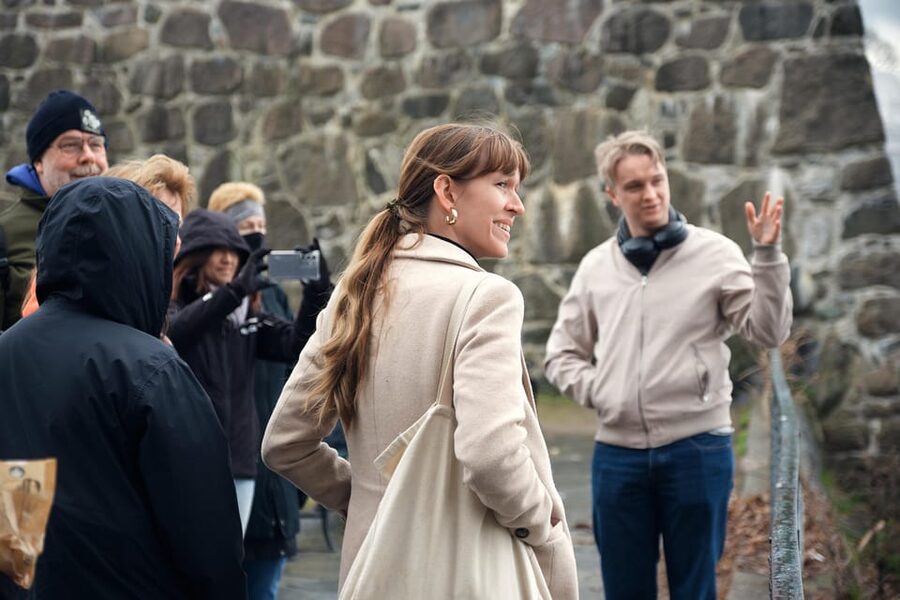
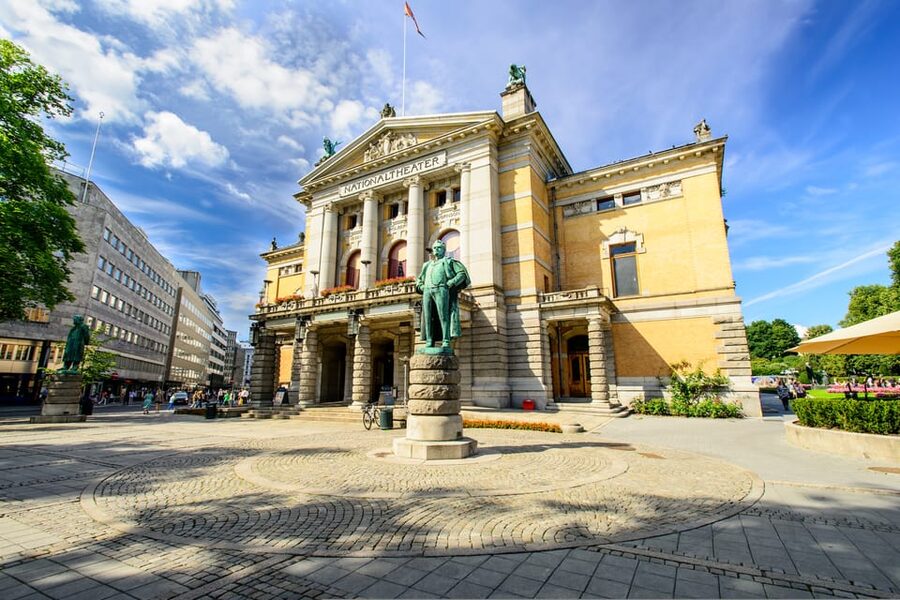
The route continues past the National Theater and the historic Aula at the University of Oslo. These landmarks broaden the tour beyond military history and urban planning. They point to Norway’s cultural and academic life, giving the final stretch more variety.
The University Aula is particularly useful as a visual introduction to Oslo’s older civic architecture. Even if you do not go inside, the building helps show how the city’s cultural institutions shaped the main street. The National Theater adds another layer, connecting the route to performance and public culture.
The walk concludes near the University of Oslo with a view toward the Royal Palace. It is a pleasing finish because the route ends with a broad city scene rather than another narrow street. You can look back over the central area you have just crossed and understand how the waterfront, Karl Johan Street, and the palace quarter relate to one another.
This ending also gives you a practical next step. From the palace area, you can decide whether to continue exploring, return toward the waterfront, or stop for a meal. The guide’s final location is useful for planning the rest of your day.
The German-language guiding experience
This tour is offered in German, with a live guide rather than an audio recording. That makes it a good fit if German is your preferred language for detailed historical explanations or if you want to ask questions as you go.
The guides appear to bring different personalities to the route. Emily was described as energetic and well informed. Anna Marie kept the experience enjoyable on a very cold winter day and even paused at markets for hot chocolate. Maria was praised for her city knowledge and sense of honor in presenting the information. Olav was described as friendly and interesting, even during rain and after a major snowstorm.
Those details matter because a walking tour depends heavily on the person leading it. The route is fixed, but the tone can change from dry lecture to engaging conversation. Tao’s experience was especially personal because he was the only participant, allowing him to ask many questions about language, politics, districts, and Oslo’s development.
You should not assume every departure will be private or small. The supplied information does not specify group size. Still, the reports suggest that the guides take questions seriously and adapt well to different conditions.
Walking pace, weather, and comfort
Two hours sounds short, but the route covers several central districts and requires regular walking. You need comfortable shoes and enough energy to remain on your feet for the full tour. The walk is listed as wheelchair accessible, though you should still be ready for ordinary city movement between multiple outdoor sites.
Weather planning is essential. The tour is not normally canceled for bad weather, including rain, cold, or snow. Cancellation is reserved for severe storms, so check the forecast and wear suitable layers, waterproof clothing, and shoes with a secure grip when conditions call for them.
The cold-weather experiences are useful evidence of how the tour operates. One group completed the walk after a three-day snowstorm, while another finished on a chilly winter day with a warm chocolate stop at a market. Rain did not stop another departure either.
Photography requires a little self-management. One participant felt the guide moved on immediately after speaking at each stop, making it awkward to take pictures without falling behind. I would stay near the front or middle of the group, take quick photos while listening, and ask when the guide is ready to move.
Toilet access is another practical concern. At the end of one walk, a public toilet suggested by the guide was described as unpleasant. A café was offered as an alternative, with the expectation that you purchase something. Use a restroom before meeting if that is important to you.
Is $37 a fair price for two hours?
At $37 per person, this is not the cheapest way to see Oslo, but the price is reasonable if you value orientation and explanation. You are paying for a live German-speaking guide who connects a long list of central sights into one readable story.
The value is strongest for first-time visitors, people with limited time, and anyone who wants cultural context rather than a self-guided walk between photo stops. If you already know central Oslo well, the tour may feel less necessary.
The route also saves you from sorting out the city’s main landmarks on your own. You see the fortress, old town area, Opera House, cathedral, Parliament, theater, university, and palace view in a single outing. You will not tour each site in depth, but you will know which ones deserve a return visit.
Flexible booking makes the decision easier. You can reserve now and pay later, and free cancellation is available up to 24 hours before the tour for a full refund. That is useful when your Oslo schedule depends on transport or changing weather.
Who should book this Oslo walking tour?
I would recommend it to:
- First-time visitors who want to get their bearings fast
- German-speaking visitors who prefer a live explanation
- People spending one or two days in Oslo
- History and architecture fans who enjoy seeing different periods in one route
- Visitors who want practical background on Norwegian culture and government
- Anyone comfortable walking outdoors for two hours
I would hesitate if you want long interior visits, extensive photography time, or a tour that runs only in good weather. This is a city orientation walk, not a museum tour or a slow architectural study.
Final verdict: book it for context and direction
Book this tour if you want a clear introduction to central Oslo in German. Its best feature is the way it links medieval Akershus Fortress, Christiania Torv and Kvadraturen, the modern Opera House, Karl Johan Street, and the palace quarter into one compact route.
The guides are the other major strength. Emily, Anna Marie, Maria, and Olav are described as warm, energetic, and deeply familiar with Oslo. Their explanations cover more than buildings, including language, culture, government, city districts, and Norway’s ties with neighboring countries.
Go prepared for cold, rain, or snow, and do not expect long pauses at every landmark. Keep your camera ready, use the restroom before the tour, and wear good shoes. For $37, this is a sensible first step into Oslo, especially when you want to understand the city before exploring it on your own.
FAQ
Where does the Oslo City Highlights Walking Tour meet?
The meeting point is near the entrance of the Nobel Peace Center in Oslo Municipality.
How long does the walking tour last?
The tour lasts two hours.
What language is the tour conducted in?
The live tour guide conducts the experience in German.
What landmarks are included on the route?
The route includes the Nobel Peace Center area, Akershus Fortress, Christiania Torv, the Kvadraturen district, Oslo Opera House, Karl Johan Street, Oslo Cathedral, the Parliament building, the National Theater, the University of Oslo’s Aula, and a view toward the Royal Palace.
Is the tour wheelchair accessible?
Yes, the activity is listed as wheelchair accessible.
Does the tour operate in bad weather?
The tour is not normally canceled because of bad weather. It may be canceled for severe storms, so you should check the forecast and dress appropriately.
Can I cancel the booking for a refund?
Yes. You can cancel up to 24 hours in advance for a full refund. You can also reserve now and pay later.
Just added in Oslo
- Oslo Winter Highlights Bike Tour★ 5.0 · 36 reviews
- 4 hours Best View of the Oslofjord Winter Edition★ 4.0 · 15 reviews
- The Ultimate Study of the Human Form at Vigeland’s Sculpture Park with a Local★ 4.0 · 14 reviews
- Unknown war. Oslo and Norway during 1940-45★ 5.0 · 74 reviews
- Top of Oslo Snowshoe Tour★ 5.0 · 2 reviews
- The Scenic Roadtrip, Oslo to Bergen via Flam & the Fjords★ 5.0 · 25 reviews
- The Viking Planet Museum – Mini Group (4 adults)★ 4.0 · 16 reviews
- The Oslo Beer Adventure★ 4.5 · 11 reviews
Walking Tours, compared.
Past & Present Small Group Guided Walking Tour
Read our review →
Walking Tour in Bergen of the Past and Present
Read our review →

Browse the lists this tour appears in