
REVIEW · WALKING TOURS
Best of Oslo Guided Walking Tour
Start with Oslo’s story, not just its sights. This two-hour walk links the Royal Palace, Akershus Fortress, Oslo Cathedral, the Opera House, and the waterfront into one clear route through the city center. I like the way it mixes major landmarks with useful background about Norwegian culture, politics, art, and daily life. I also like the local guides, especially Tetiana, Emily, Ann Marie, Anastasia, and Ihor, who have been praised for making the history lively rather than dry.
The main drawback is that this is a high-level introduction, not a museum tour or a deep visit inside each monument. You cover a lot of ground, so comfortable shoes matter. Meeting-point instructions also deserve care, since some people have reported confusion about locations or missed departures. At $38.70 per person, I see it as a sensible first look at Oslo, especially if you have only one day or arrive on a cruise ship.
In This Review
- Key points before you book
- Starting at University Square and Karl Johans gate
- The Royal Palace and Norway’s main street
- The Storting and the Nobel Peace Center
- Shopping halls, Oslo Cathedral, and the Opera House
- Cobblestones and Oslo’s oldest district
- Akershus Fortress and the city’s changing fortunes
- City Hall, the waterfront, and Tjuvholmen
- Eidsvolls Plass and public life
- What the guides add to the walk
- Price, pace, and what you actually receive
- Meeting-point advice and service concerns
- Should you book the Best of Oslo walk?
- FAQ
- How long is the Best of Oslo Guided Walking Tour?
- What time does the tour start?
- Where does the tour begin?
- Where does the tour end?
- Is the tour conducted in English?
- Are attraction entry fees included?
- Is public transportation included?
- What languages are available through the sightseeing app?
- Can I cancel for a full refund?
- Does the tour operate in poor weather?
Key points before you book
- Two hours, many central sights: The route covers royal, political, religious, military, artistic, and waterfront landmarks.
- The guides make the difference: Tetiana, Ann Marie, Anastasia, Emily, Ihor, Judit, Kinji, and others have been praised for clear explanations, humor, and useful local suggestions.
- A good first-day tour: You get your bearings around Karl Johans gate, the Royal Palace, the harbor, and the old city areas.
- Mostly an outdoor experience: You walk through streets, squares, and waterfront spaces, with no attraction admissions included.
- The walk can feel brisk: One route includes many stops, and some participants felt there was a lot of walking.
- The app adds extra sightseeing: A QR code provides a Vox City app with self-guided audio tours in English, Spanish, German, French, and Italian.
Starting at University Square and Karl Johans gate
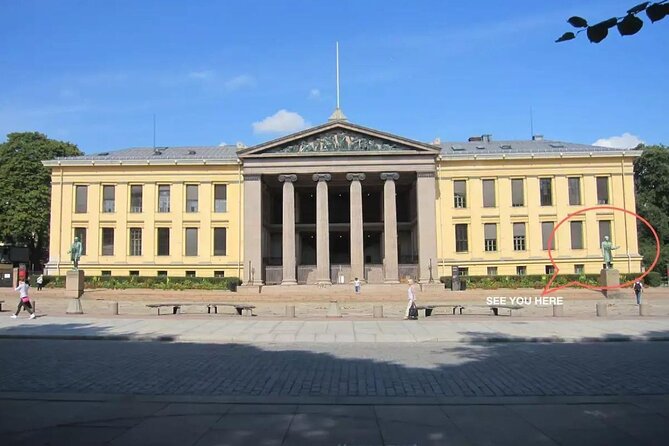
The tour begins at University Square, outside the Faculty of Law building at Karl Johans gate 47. Look for the statue of P.A. Munch near the entrance to University Aula, and arrive about five minutes early. That small buffer matters, since a walking group cannot easily wait once it gets moving.
The first stop introduces the original University of Oslo building, a ceremonial hall in the center of town. This is a useful beginning because Oslo’s central streets are not just shopping routes. They connect the monarchy, government, university life, theater, churches, and public squares in a compact area.
From here, the guide brings in Norway’s theater tradition. The stop is less about entering a performance venue and more about placing theater within Oslo’s cultural life. This is the kind of short explanation that helps you see the city as more than a collection of handsome buildings.
More Walking Tours in Oslo
- Oslo: Best of Oslo Walking Tour
★ 4.5 · 458 reviews - Oslo: Guided Walking Tour of Central Oslo
★ 4.7 · 438 reviews - Oslo: Historic Myths & Legends Evening Walking Tour
★ 4.8 · 408 reviews
The Royal Palace and Norway’s main street
The Royal Palace is one of the most important stops. Built as a royal residence and guarded by His Majesty The King’s Guard, it gives the walk a clear sense of Norway’s modern constitutional identity. Your guide can explain the role of the monarchy and point out details you might otherwise pass without noticing.
The route then follows Karl Johans gate, Oslo’s main street. Shops and restaurants line the way, and the statue of King Karl XIV Johan provides a reminder of the street’s royal name. This is a practical part of the walk, too. You begin to see where central Oslo’s shops, cafés, public buildings, and transport links fit together.
One useful timing detail comes from the tour experience itself: a guide named Ann Marie explained that the changing of the guard took place after the walk. If that ceremony interests you, ask your guide about the schedule on the day and plan to return to the palace afterward. The exact timing can make a short tour more useful.
The Storting and the Nobel Peace Center
Next comes the Storting, Norway’s parliament. The building has housed the country’s lawmakers since 1866, so this stop adds political context to the royal setting. The guide can help you understand how the monarchy and elected government share the ceremonial center of Oslo.
The route also passes an iconic five-star hotel with a white granite façade, where Nobel Peace Prize winners stay each year. This is a quick exterior stop, but it ties Oslo to the Nobel Peace Prize tradition in a direct and memorable way.
The Nobel Peace Center itself was built in 2005. It focuses on peace and understanding around the world, making it one of the more modern points on a route otherwise filled with older buildings. You should not expect a full museum visit here because entry is not included. Instead, you get the setting and a brief explanation before continuing.
That limitation is worth noting. If the center is high on your list, schedule a separate visit. The walking tour gives you an introduction, not time to explore its exhibitions.
Shopping halls, Oslo Cathedral, and the Opera House
The walk passes red-brick halls that have housed shops selling arts, crafts, cafés, and other goods for centuries. The itinerary does not promise time to browse, so think of this as a visual and historical stop rather than a shopping break. Still, it gives the route a change of mood after the formal palace and parliament buildings.
A glamorous shopping center follows, with designer labels, local shops, gifts, and bargain buys. This may sound less important than a fortress or cathedral, but it is useful for getting oriented. You can return here later if you need gifts, a café, or a warm indoor pause.
Oslo Cathedral, also called Domkirka, is the main church for the Diocese of Oslo and the seat of the Bishop of Oslo. The guide explains its role in the city and points out the building’s exterior. As with the other major sights, do not assume admission or an extended interior visit. Entry to attractions is not part of the price.
The Opera House is one of the most photogenic stops. Its striking design houses the Norwegian National Opera and Ballet, and the building provides a sharp contrast to the cathedral, palace, and older streets. You should have time to take photographs and hear about its place in modern Oslo, although the tour is not an inside performance or backstage visit.
One practical advantage of this sequence is variety. In a short time, you move from religious architecture to retail streets and then to a contemporary arts building. That range helps you understand how old and new Oslo sit side by side.
A completely different kind of day:
- Oslo: Scenic Fjord Cruise with Audio Guide Commentary
★ 4.5 · 5,375 reviews - Oslo Nature Walks: Island Hopping Tour
★ 4.8 · 2,713 reviews - Oslo: 100% Electric Oslofjord Sightseeing Cruise
★ 4.4 · 2,041 reviews - Oslo: Fjord Evening Cruise with Shrimp Buffet
★ 4.5 · 1,956 reviews
Cobblestones and Oslo’s oldest district
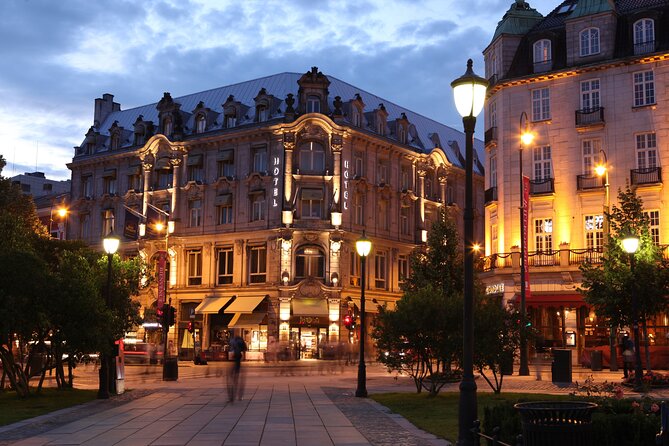
The route climbs toward the city’s oldest district, with cobblestone streets and older architecture. This section feels different from Karl Johans gate. It is quieter in character and gives the guide room to discuss how Oslo developed over time.
You also visit a historic market square, where some of the city’s oldest buildings can be found. Market spaces are often where a city’s story becomes easier to grasp. They connect trade, food, public life, and urban growth without requiring a long lecture.
Expect the walking surface and pace to vary. The tour is not described as difficult, and most people can participate, but one participant specifically noted the amount of walking. If you have mobility concerns, ask the operator before booking rather than assuming every section will be equally easy.
Akershus Fortress and the city’s changing fortunes
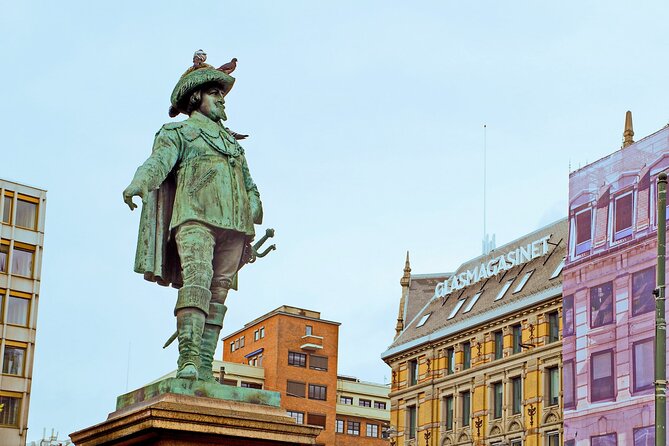
Akershus Fortress is one of the strongest historical stops. The castle has served as a royal residence, prison, military base, and more. That changing use gives the guide plenty to explain, and it keeps the fortress from feeling like a single-purpose monument.
The tour passes the fortress rather than promising a complete paid visit inside. That distinction affects the value. You get an overview, exterior views, and the setting, but anyone wanting a detailed examination of the buildings, rooms, or exhibits should return on a separate visit and pay any required admission.
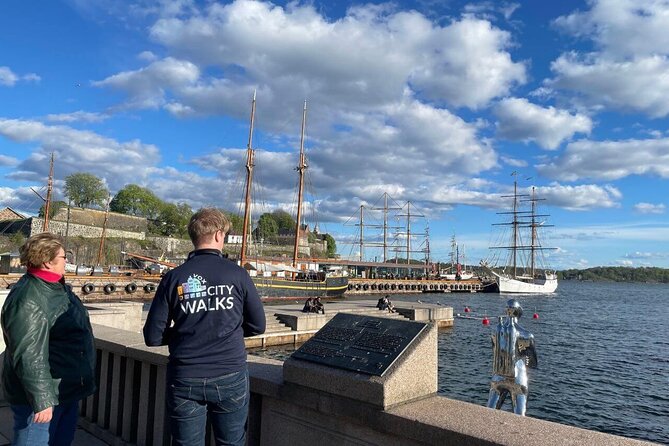
The fortress also helps connect the old city with the harbor. From here, Oslo’s waterfront feels less like a modern leisure zone and more like part of the city’s long military and trading story.
City Hall, the waterfront, and Tjuvholmen
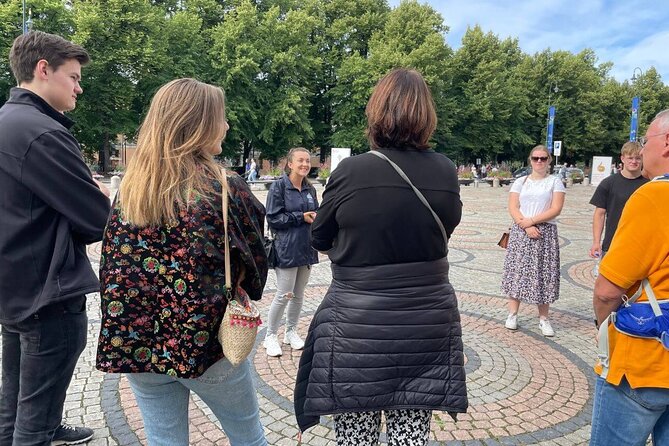
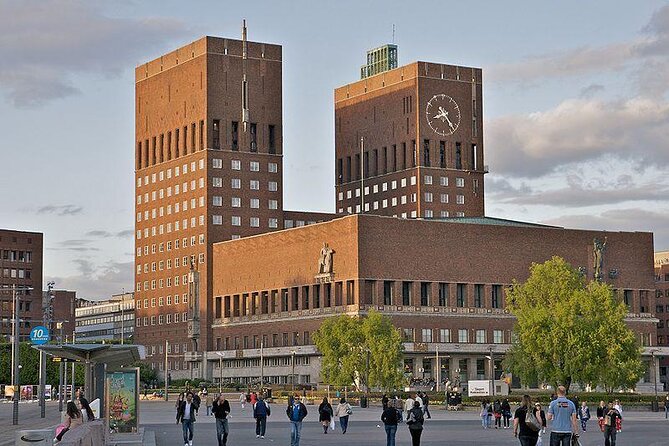
Oslo City Hall is another major stop. Its exterior artwork presents scenes from Oslo’s past and cultural life, so the building works almost like an open-air introduction to the city. Your guide can point out details that are easy to miss if you are simply walking toward the harbor.
The waterfront section gives you views of the city skyline and time for photographs. This is one of the more relaxed parts of the route, though wind can be a factor. One person found the cold wind uncomfortable even while enjoying the explanations, so bring a layer even on a mild-looking day.
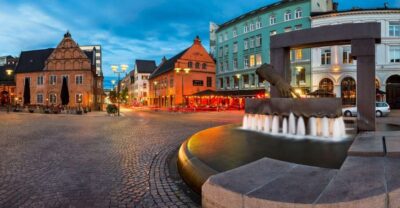
Tjuvholmen shows Oslo’s newer face. Once a fishing and shipbuilding community, it has been transformed with restaurants, shops, and art galleries. The contrast with Akershus Fortress is the point: within a short walk, you see working harbor history and a redeveloped waterfront district.
I find this part especially useful for planning the rest of your stay. If the harbor appeals to you, you can return for food, galleries, or a slower walk. If you prefer older Oslo, the fortress and historic district deserve more of your free time.
Eidsvolls Plass and public life
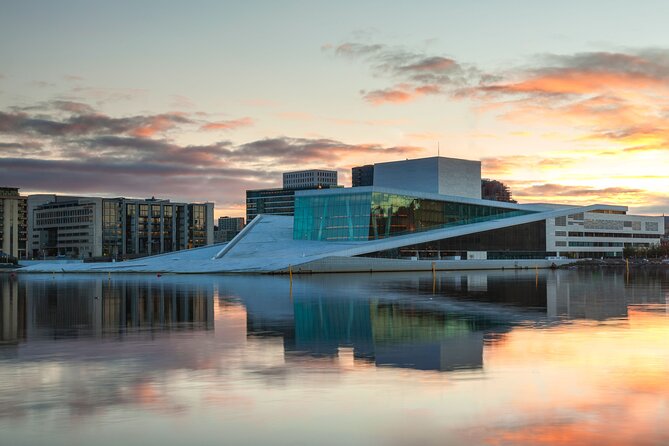
The last stop is the area sometimes called the National Mall of Norway. It is a public place where Norwegians express political views and offer feedback to the government. That gives the tour a fitting ending because the route has already introduced the monarchy, parliament, Nobel Peace Prize, and city government.
This final stop also shows why a guided walk can be more useful than a route map alone. A map identifies the square. A guide explains what it means in public life and how it fits with the nearby institutions.
The experience ends back at the meeting point. That makes it easy to continue exploring central Oslo, return to the palace, visit a museum, or stop for lunch without arranging transport back from another district.
What the guides add to the walk
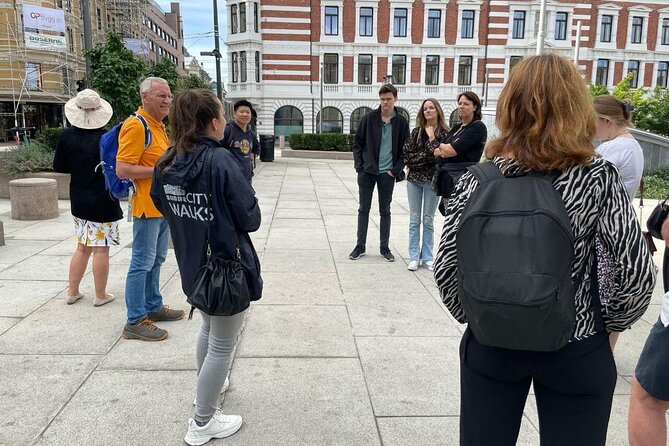
The strongest part of this experience is the guiding. Tetiana has been praised for being funny, warm, and deeply informed about Norwegian history and culture. Her personal story, including moving from Ukraine and building a life in Oslo, added a human angle to the city for one group.
Other guides have made a similar impression in different ways. Emily was described as highly informed and engaging. Ann Marie brought up figures such as the royal family, Henrik Ibsen, and Edvard Munch. Anastasia was praised for her grasp of Norwegian history, current events, and world politics, as well as for adapting kindly when two late participants eventually joined her.
I would not book this primarily for a guaranteed small group, since the stated maximum is 99 people. Group size may vary. Several positive experiences involved small groups, but that is not something the price guarantees.
The best guides also offer practical suggestions for the rest of your visit. They can point out popular destinations, explain where to go after the tour, and suggest food or museum options. That advice may be worth as much as the two hours of sightseeing if Oslo is new to you.
Price, pace, and what you actually receive
At $38.70, the price is reasonable if you want a live English-speaking guide and a broad introduction to central Oslo. A private tour would cost more, while a free walk would not necessarily offer the same structure or local storytelling.
The value drops if you expect entry to the Opera House, Nobel Peace Center, Akershus Fortress, or Oslo Cathedral. None of the attraction admissions are included. Public transportation is also not included, though this route is designed around central sights and ends where it begins.
The route is best for first-time visitors, cruise passengers with one day in port, solo visitors who want a clear orientation, and anyone who enjoys history explained through streets and buildings. I would be more cautious if you have young children who dislike walking or if you want long interior visits at each sight. One rating specifically felt the format suited adults better than children.
The tour is offered in English with a live guide. The complimentary app adds self-guided audio tours, with commentary in English, Spanish, German, French, and Italian. Scan the QR code on your voucher and download the app before arrival, not while the group is waiting.
You receive confirmation when booking. Free cancellation is available up to 24 hours before the start time. Cancellations or changes inside that window are not accepted for a refund, and poor weather can lead to a different date or a full refund.
Meeting-point advice and service concerns
The meeting point is University Square at the Faculty of Law, Karl Johans gate 47. The specific instruction is to meet near the P.A. Munch statue by the University Aula entrance. Read the voucher closely, since confusion over meeting locations has caused serious problems for some bookings.
Late arrival is another concern. One person arrived 12 or 13 minutes late after a delayed flight and found no guide or group. Another pair arrived very late but received exceptional help because Anastasia was able to meet them and extend the walk. That kindness should be seen as a fortunate exception, not a promise.
There have also been reports of cancellations without clear notice and difficulty obtaining refunds. The operator says it attempted contact in at least one case, but the mixed service record means you should check email, phone messages, and the voucher before leaving for the meeting point.
The overall rating is 4.5 from 122 published ratings, with many strong comments about the guides and the quality of the introduction. The practical lesson is simple: the tour itself can be excellent, but precise meeting instructions and prompt communication matter.
Should you book the Best of Oslo walk?
Book it if you want to get your bearings quickly and hear Oslo explained by a personable local guide. The route covers an impressive spread of sights in two hours, and the best guides turn a procession of buildings into a story about Norway’s monarchy, politics, art, religion, and waterfront renewal.
Skip it if your priority is entering attractions, moving slowly, or avoiding a fixed meeting point. You will need separate tickets and extra time for the Opera House, Nobel Peace Center, Akershus Fortress, or Cathedral.
For most first visits, I would take the walk early in the stay, then use the guide’s suggestions to choose what deserves a return visit. Arrive early, wear good shoes, bring a warm layer, and download the audio app before you go. At this price, it is a useful orientation to Oslo, provided you treat it as a lively overview rather than the complete story.
FAQ
How long is the Best of Oslo Guided Walking Tour?
The guided walk lasts approximately two hours.
What time does the tour start?
The stated start time is 10:00 am.
Where does the tour begin?
It begins at University Square, near the P.A. Munch statue by the Faculty of Law and University Aula entrance at Karl Johans gate 47 in Oslo.
Where does the tour end?
The activity ends back at the meeting point.
Is the tour conducted in English?
Yes. The live guide portion is English only.
Are attraction entry fees included?
No. Entry to attractions is not included in the tour price.
Is public transportation included?
No. Public transportation tickets are not included.
What languages are available through the sightseeing app?
The self-guided app provides commentary in English, Spanish, German, French, and Italian.
Can I cancel for a full refund?
Yes, if you cancel at least 24 hours before the experience start time. Cancellations or changes made less than 24 hours before the start time are not accepted for a refund.
Does the tour operate in poor weather?
The experience requires good weather. If the operator cancels because of poor weather, you will be offered another date or a full refund.
Just added in Oslo
- Oslo Winter Highlights Bike Tour★ 5.0 · 36 reviews
- 4 hours Best View of the Oslofjord Winter Edition★ 4.0 · 15 reviews
- The Ultimate Study of the Human Form at Vigeland’s Sculpture Park with a Local★ 4.0 · 14 reviews
- Unknown war. Oslo and Norway during 1940-45★ 5.0 · 74 reviews
- Top of Oslo Snowshoe Tour★ 5.0 · 2 reviews
- The Scenic Roadtrip, Oslo to Bergen via Flam & the Fjords★ 5.0 · 25 reviews
- The Viking Planet Museum – Mini Group (4 adults)★ 4.0 · 16 reviews
- The Oslo Beer Adventure★ 4.5 · 11 reviews
Walking Tours, compared.
Past & Present Small Group Guided Walking Tour
Read our review →
Walking Tour in Bergen of the Past and Present
Read our review →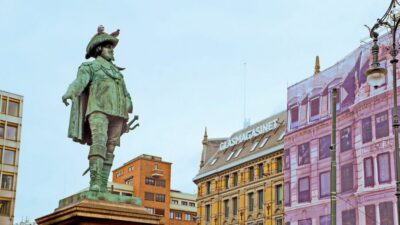

Browse the lists this tour appears in