
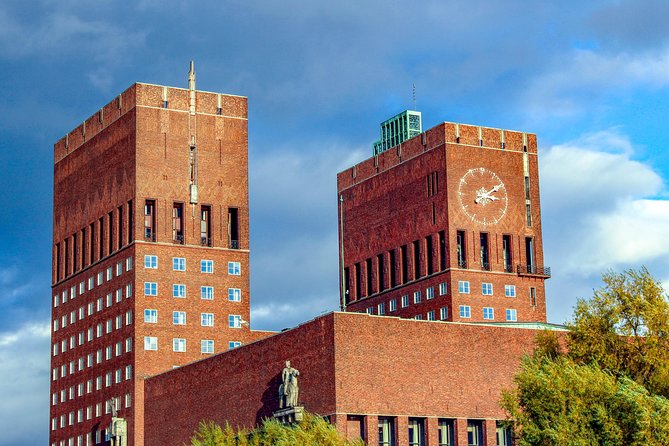
REVIEW · HISTORICAL TOURS
Historic Oslo: Exclusive Private Tour with a Local
Oslo reveals itself one street at a time. This private walk links the Opera House, Oslo Cathedral, Parliament, Royal Palace, wooden neighborhoods, and Akershus Fortress with a local guide who can explain how the city changed over time. I like the small maximum of eight and the chance to shape the route around your interests. I also like the practical food, art, and market tips that guides such as Simon and Mireia have shared with past participants.
The main drawback is the price: $205.67 per person for about two hours is a serious spend, especially for a solo visitor or couple. You also pay separately for transportation, museums, monuments, and personal expenses. Still, the private format can make sense for a family or small group that wants a focused introduction instead of a standard walk.
In This Review
- Key points to know before booking
- Starting beside the Oslo Opera House
- Oslo Cathedral and the city’s religious story
- Parliament and the making of modern Norway
- Wooden houses and everyday nineteenth-century Oslo
- Oslo’s oldest surviving building
- The Royal Palace and Oslo’s ceremonial center
- National Theatre and Oslo’s love of the arts
- Oslo City Hall and public life
- Ending at Akershus Fortress
- What a private two-hour format really gives you
- Guides, conversation, and useful local advice
- Price, exclusions, and practical limits
- Who should book this Oslo walk?
- Should you book Historic Oslo with a Local?
- FAQ
- How long is the Historic Oslo private tour?
- Where does the tour begin?
- Where does the tour end?
- How many people can join the private tour?
- Is transportation or admission included?
- Can I cancel for a full refund?
Key points to know before booking
- A private group of up to eight gives you room to ask questions and set the pace.
- The route connects modern Oslo with medieval, royal, and civic landmarks.
- Simon and Mireia have received praise for clear explanations, friendly conversation, and useful local suggestions.
- The itinerary can change with the weather, your interests, and how quickly you walk.
- The two-hour route ends at Akershus Fortress, leaving you well placed to continue sightseeing.
- No admission tickets or transport costs are included, so budget for extras if you want to go inside.
Starting beside the Oslo Opera House

The walk begins at the promenade beside the Oslo Opera House, an apt place to meet a city that likes to mix old and new. The building is known for its modern design and its role in Oslo’s cultural renewal. Even if you do not enter, it gives your guide a useful opening point: Oslo is not only a city of royal buildings and medieval remains. It is also a place that has put architecture, music, and the arts at the center of its public life.
I like starting here because it gives the tour a clear contrast. The Opera House represents present-day Oslo, while later stops take you toward older religious, political, and military landmarks. In two hours, that contrast helps you understand the city as a changing capital rather than a collection of unrelated sights.
The meeting point is on the Opera promenade, and the walk ends at Akershus Fortress. You should expect a walking route rather than a sightseeing trip by vehicle. Wear comfortable shoes, and keep in mind that the tour is not recommended for people with impaired mobility.
More History Tours in Oslo
- Oslo: Historic Myths & Legends Evening Walking Tour
★ 4.8 · 408 reviews - Oslo: History, Art and Secrets Tour
★ 4.7 · 62 reviews - Oslo City Walks – Historic River Walk
★ 5.0 · 31 reviews
Oslo Cathedral and the city’s religious story
One stop is Oslo Cathedral, a major religious landmark with roots reaching back to the seventeenth century. It has hosted royal ceremonies, giving it a role that reaches beyond worship. The building helps explain how religious life and royal ceremony were tied together in Norway’s capital.
This is the kind of stop that benefits from a local guide. A quick photograph tells you little about why a church matters to a city. Your guide can place it within Oslo’s public life and explain how ceremonial spaces helped shape the capital’s identity.
The tour does not include entry tickets, so you should not assume that the walk comes with interior access. Even from outside, the cathedral is useful as a marker of the city’s older center. If seeing the inside matters to you, ask the guide what may be possible during your visit, but budget separately for any admission or related costs.
Parliament and the making of modern Norway
The route continues to the Norwegian Parliament, the center of the country’s democratic life. Its Neoclassical design gives the building a formal appearance, but the more useful part of the stop is the political context. Here, Oslo’s story moves from church and monarchy toward representative government and the modern Norwegian state.
I would pay close attention during this part of the walk if you enjoy politics or national history. A local host can explain the building’s place in Oslo without turning the tour into a dry civics lecture. You can also ask questions, which is a major advantage of a private tour. Mireia, one of the guides associated with this experience, was praised for happily answering questions and extending the walk slightly when interest led in a new direction.
That flexibility matters. A fixed group tour has to keep moving when the guide reaches the end of a topic. Here, your group can spend more time on subjects that catch your attention, within the limits of the two-hour schedule.
Wooden houses and everyday nineteenth-century Oslo

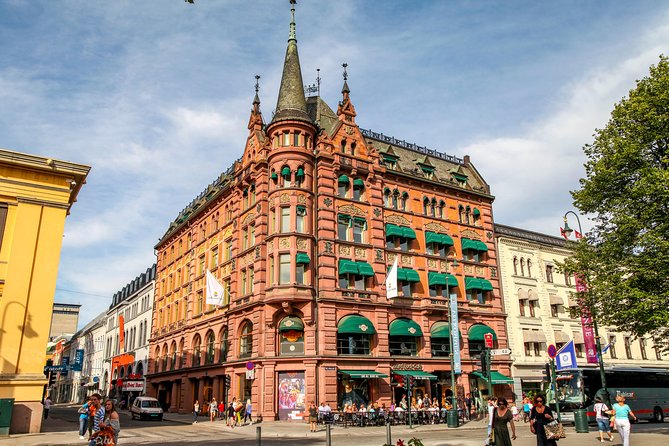
The tour also reaches parts of Oslo known for preserved wooden houses. These streets offer a useful change from grand public buildings. Instead of focusing on kings, politicians, and national ceremonies, they show how ordinary domestic architecture shaped the city in the nineteenth century.
I especially like this kind of stop because it gives you a sense of scale. Oslo’s story is not only found in official buildings. Wooden homes, narrow streets, and older residential details help you picture daily life in an earlier capital. The houses also provide a calmer break between the larger landmarks.
The exact stops can vary, and the itinerary adapts to your interests and walking pace. Your guide may choose one group of historic houses rather than another. Weather can also affect the route. You should see this as a benefit if you want a personal walk, but a drawback if you expect a fixed checklist of every sight named in advance.
A completely different kind of day:
- Oslo: Scenic Fjord Cruise with Audio Guide Commentary
★ 4.5 · 5,375 reviews - Oslo Nature Walks: Island Hopping Tour
★ 4.8 · 2,713 reviews - Oslo: 100% Electric Oslofjord Sightseeing Cruise
★ 4.4 · 2,041 reviews - Oslo: Fjord Evening Cruise with Shrimp Buffet
★ 4.5 · 1,956 reviews
Oslo’s oldest surviving building

A significant religious and historic stop is Oslo’s oldest remaining building, dating to the twelfth century. This medieval site gives the walk its strongest link to Oslo’s early past. It also adds depth to the city story: long before the modern Opera House, Parliament, and royal institutions, this was a place shaped by medieval faith and settlement.
The value here comes from the guide’s explanation. A very old building can be easy to admire and just as easy to misunderstand. Your host can show how the site fits into Oslo’s growth and why it survived while so much of the older city changed.
The description identifies the building as an important religious site, but you should not assume that an interior visit is part of the tour. Entry to monuments is excluded. Treat this stop as a chance to understand the setting and ask questions, with any additional visit handled separately.
The Royal Palace and Oslo’s ceremonial center
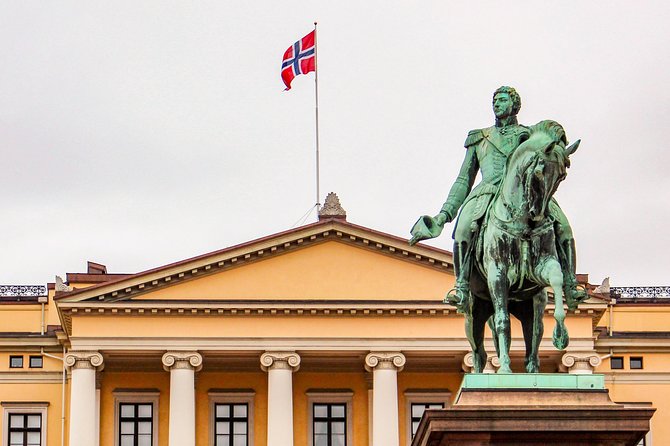
The Royal Palace is one of the clearest symbols of the Norwegian monarchy. Its elegant design and role in national ceremonies make it an important stop even for visitors who do not normally seek out royal sights.
A guide can add the context that a palace façade cannot provide. You can learn how the building functions as a ceremonial center and how monarchy fits into Norway’s national life. This is also a good place to ask about the difference between a working royal institution and a museum building.
The tour focuses on the outside experience unless you arrange and pay for any separate admission. That keeps the walk moving, but it also means you should not book this tour mainly to see palace rooms. If the exterior, setting, and historical explanation are enough for you, the stop fits well into a short introduction to Oslo.
National Theatre and Oslo’s love of the arts

The National Theatre adds another cultural layer to the route. It is an important institution for Norwegian drama and a notable example of Oslo’s architectural character.
This stop works well alongside the Opera House. The two buildings show different periods of Oslo’s cultural life, allowing you to compare a traditional theatre institution with a modern arts center. I like that the route does not treat culture as an afterthought. It gives the city a broader identity than royal buildings and old churches alone.
You may find this part most rewarding if you enjoy architecture, theatre, or the way cities use public buildings. It can also be a practical moment to ask your guide about other cultural places to visit during your stay. Simon, another guide connected with the walk, was praised for combining city history with food and art suggestions. That sort of conversation can help you plan the rest of your time in Oslo.
Oslo City Hall and public life
The route includes a building noted for its distinctive twentieth-century architecture and important artworks: Oslo City Hall. It represents the civic side of the capital, with a design that reflects public life rather than royal ceremony.
City Hall is a useful counterpoint to the Royal Palace. One building points toward monarchy and national tradition. The other points toward municipal government and the everyday work of a city. A good guide can help you notice that difference instead of treating both as simply large buildings in the center.
The stop may appeal to you if you enjoy art and architecture, but it may feel brief if you want a full museum visit. Admission is not included, and the tour lasts only about two hours. Think of the building as part of a connected story, not as a substitute for a dedicated City Hall tour.
Ending at Akershus Fortress
The walk ends at Akershus Fortress, a medieval castle with a long military role and a strong place in Oslo’s public memory. This is a satisfying final stop because it brings together many of the themes introduced earlier: royal power, defense, religion, politics, and the growth of the capital.
The fortress is also a practical ending point. Once the guide leaves you, the rest of Oslo is still available for your own exploration. You can ask for suggestions before the tour ends, including places to eat, markets to visit, or cultural sites worth adding to your plans. Food courts and markets were among the specific recommendations Mireia provided during a particularly flexible walk.
Do not confuse the end point with included access to every part of the fortress. Entry tickets to monuments are excluded. If you want to explore inside, plan that as a separate activity and check the opening arrangements for your date.
What a private two-hour format really gives you
Two hours is enough for a strong orientation, but not enough for long interior visits at every landmark. The tour’s value comes from connections and conversation. You move through several parts of Oslo while a local host explains how the city’s economy, global politics, social customs, arts, monarchy, and government have shaped it.
The private setup is especially useful if you have a focused interest. You might want more time on architecture, Norwegian politics, royal history, food, or the city’s older neighborhoods. The itinerary can adapt to your questions and walking pace, though weather may require changes.
The group limit is eight people. That is small enough for a more personal exchange, and a private booking means only your own group participates. Group discounts are available, but the supplied price is listed per person, so check the final total before booking. For one person, $205.67 is hard to justify unless personal guiding is your top priority. For a larger group sharing the convenience and attention, the calculation may look better.
Guides, conversation, and useful local advice
The strongest part of this experience is likely to be the human element. Simon received praise for explaining how economics, international politics, and social customs affected Oslo in different periods. He also offered food and art suggestions, which can be more useful than another list of monuments.
Mireia was praised for making the history easy to follow, answering questions openly, and extending the tour slightly when the group was engaged. She also pointed out food courts and markets to visit later. Those details matter because a city walk should help you use the rest of your stay, not simply fill two hours.
Your guide will be an independent local, so the exact personality and emphasis can vary. That is part of the appeal, but it also means you should arrive with a few questions ready. Ask about places to eat, neighborhoods worth walking, markets, museums, or buildings you plan to revisit.
Price, exclusions, and practical limits
At $205.67 per person, this is not a budget introduction to Oslo. You are paying for an exclusive private format, a tailored itinerary, and a local host rather than a large public group.
The price makes the most sense when you value time and personal attention. It can be useful on a short stay, when you want to understand the city quickly and receive advice for the days ahead. It may also work for a family or group of friends that prefers one private guide to a crowded public walk.
You should budget separately for personal expenses and any transport, museum, or monument tickets. The tour is conducted in English and includes a mobile ticket. Confirmation is provided at booking, and service animals are allowed. The route is near public transportation, but transportation costs are not included.
Most people can participate, but the walk is not recommended for people with impaired mobility. If walking comfort is a concern, contact the provider before booking and ask how the route can be adjusted.
Cancellation is free if you cancel at least 24 hours before the local start time. Within 24 hours, you receive no refund, and last-minute changes are not accepted.
Who should book this Oslo walk?
I would choose this tour if you want a personal introduction to Oslo and enjoy asking questions. It suits first-time visitors, families, small friend groups, and anyone who wants to connect the city’s modern buildings with its older religious, royal, civic, and military sites.
It is also a good fit if you want practical suggestions for the rest of your visit. The food, art, food-court, and market advice can add real value, particularly when your schedule is short.
I would skip it if you mainly want museum interiors, palace rooms, or a long visit at Akershus Fortress. You will need separate tickets and more time for those activities. I would also think twice if you are traveling alone on a tight budget, since the per-person cost is high for a two-hour walk.
Should you book Historic Oslo with a Local?
Book it if you want Oslo explained through conversation rather than a rapid list of sights. The combination of a maximum eight-person group, flexible pacing, and a route from the Opera House to Akershus Fortress gives you a useful first look at the capital.
The best reason to book is the chance to shape the experience around your questions. The clearest warning is the price and the fact that tickets are extra. If those limits fit your plans, this private walk can give you both a stronger sense of Oslo and practical ideas for what to do next.
FAQ
How long is the Historic Oslo private tour?
The tour lasts approximately two hours.
Where does the tour begin?
It begins at the promenade beside the Oslo Opera House, listed as Promenade Operaen, Opera w, Oslo, Norway.
Where does the tour end?
The tour ends at Akershus Fortress, at 0150 Oslo, Norway.
How many people can join the private tour?
The group can include a maximum of eight people, and only your own group participates.
Is transportation or admission included?
No. Transportation tickets, museum entry, monument entry, and personal expenses are not included.
Can I cancel for a full refund?
Yes, if you cancel at least 24 hours before the experience start time. Cancellations made within 24 hours are not refunded, and changes made within 24 hours are not accepted.
Just added in Oslo
- Oslo Winter Highlights Bike Tour★ 5.0 · 36 reviews
- 4 hours Best View of the Oslofjord Winter Edition★ 4.0 · 15 reviews
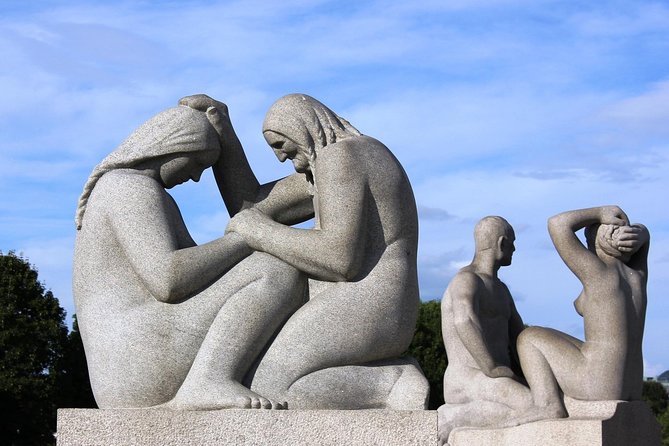
- The Ultimate Study of the Human Form at Vigeland’s Sculpture Park with a Local★ 4.0 · 14 reviews
- Unknown war. Oslo and Norway during 1940-45★ 5.0 · 74 reviews
- Top of Oslo Snowshoe Tour★ 5.0 · 2 reviews
- The Scenic Roadtrip, Oslo to Bergen via Flam & the Fjords★ 5.0 · 25 reviews
- The Viking Planet Museum – Mini Group (4 adults)★ 4.0 · 16 reviews
- The Oslo Beer Adventure★ 4.5 · 11 reviews
Historical Tours, compared.

Reindeer Camp and Sami Cultural Tour with Lunch
Read our review →

Sightseeing Cruise of Bergen’s Historic Landmarks
Read our review →


Browse the lists this tour appears in