
REVIEW · SAMI CULTURE AND REINDEER EXPERIENCES
Tromsø: Reindeer Camp and Sami Cultural Tour with Lunch
Feed a reindeer in the Arctic. That alone is worth the trip, but this four-hour outing also gives you a warm meal, Sami stories, and a close look at life in northern Norway. I like the generous feeding time and the chance to hear a traditional joik, a Sami song, from a local guide. The main drawback is group size: this can feel more like a well-run excursion than a quiet visit with a small family.
The bus ride from Tromsø takes about 35 to 40 minutes, with fine views toward snowy mountains and the fjord. At the camp, you can warm up with hot chocolate, coffee, tea, and cookies, then eat reindeer stew or vegetarian soup inside a lavvu, the traditional Sami tent. Bring waterproof shoes, though. The ground around the animals can be wet and messy.
In This Review
- Key points to know before you book
- From Tromsø harbor to the reindeer camp
- A first look at the herd
- Staying warm in the lavvu
- What the Sami cultural session adds
- How group size affects the mood
- The value of $141 for four hours
- Clothing, footwear, and family advice
- Timing your half-day visit
- Should you book the Tromsø reindeer and Sami tour?
- FAQ
- Where does the tour meet in Tromsø?
- How long does the tour last?
- How many reindeer can I expect to see?
- What food and drinks are included?
- What should I bring?
- Is a child booster seat provided?
Key points to know before you book
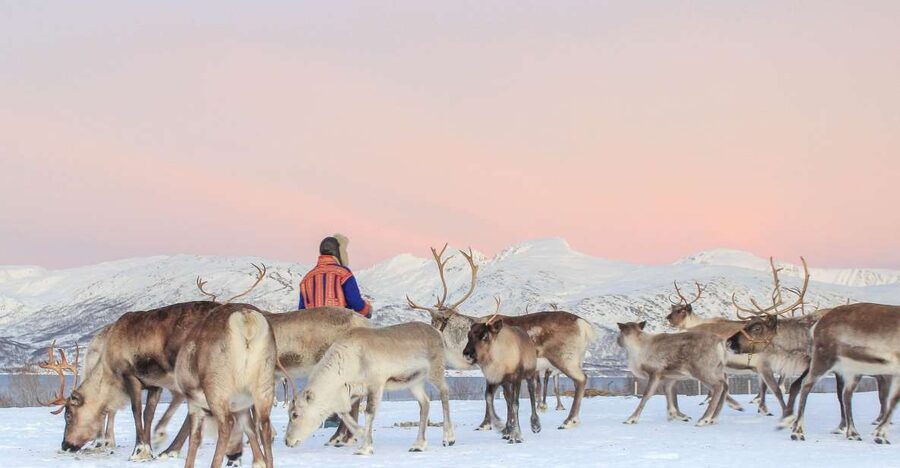
- Around 300 reindeer gather near the camp, giving you plenty of space to feed them and take photographs.
- One hour or more with the herd makes this feel unhurried, with time to refill your bucket and step inside if you get cold.
- Sami storytelling and joik singing add cultural meaning beyond a simple animal visit.
- Reindeer stew and vegetarian soup are served hot beside the fire, with coffee, tea, hot chocolate, and cookies.
- The camp is a short bus ride from Tromsø, but the meeting point at Prostneset can be confusing if you use the wrong terminal entrance.
- Large groups are part of the deal, so expect good organization rather than a private, intimate encounter.
From Tromsø harbor to the reindeer camp
Your day begins at Tromsø Havn Prostneset, the city’s bus terminal at Samuel Arnesens gate 5. There are two ground-floor entrances. Use the side by the buses, closest to the harbor, rather than the entrance between the terminal and the Clarion Edge hotel.
Look for staff in blue jackets with the Tromsø Arctic Reindeer logo. They guide you to the right coach, which is helpful because the terminal can feel busy and the meeting instructions are not perfectly obvious. I would arrive early enough to locate the bus without rushing.
The ride takes roughly 35 to 40 minutes. The buses have been described as clean, warm, and comfortable, and some have charging ports. Sit on the left side in the direction of travel if you want the best chance of seeing the water and fjord scenery.
The route is part of the pleasure. Snowy hills, open views, rivers, and distant mountains replace Tromsø’s streets as you head toward the camp in the Krokelvdalen area. You do not spend hours on the road, so the transport works well as a half-day outing rather than taking over your whole day.
More History Tours in Tromso
- Tromsø: Fjord History Cruise with Snack and Drinks
★ 4.9 · 364 reviews - Fjord & History Cruise
★ 5.0 · 62 reviews - 1 Hour Photo & History Cruise
★ 4.7 · 57 reviews
A first look at the herd
After arriving, you receive a short introduction and safety briefing. The exact order can vary, but feeding the reindeer is usually the main first activity.
The walk from the huts to the feeding area is short, though one section can be fairly steep. In winter, snow and ice make good footwear important. Waterproof shoes with a solid grip are a much better choice than casual trainers.
The herd may be close to the camp, or you may need to walk about five minutes to find it. That small walk is worth allowing for when you think about children, older family members, or anyone who has trouble walking on uneven ground.
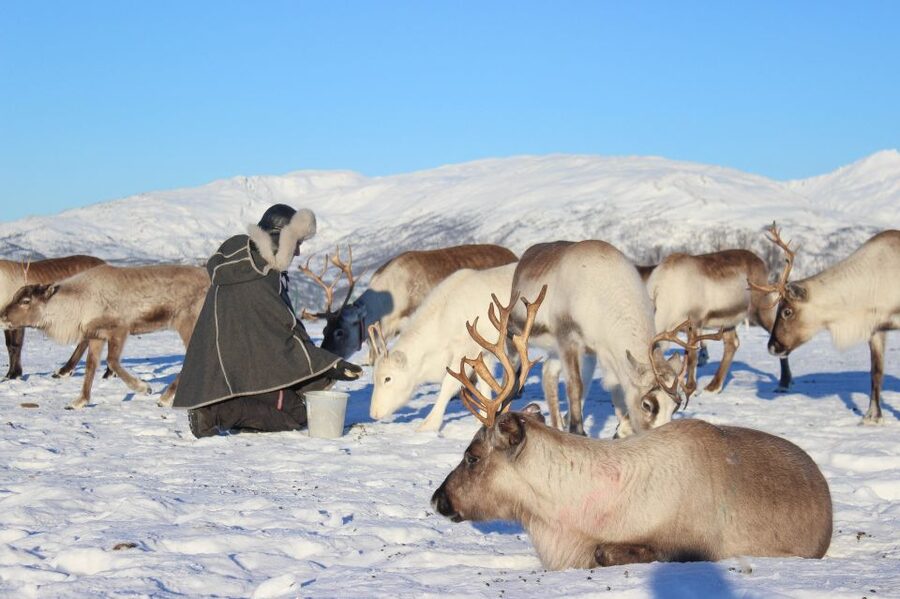
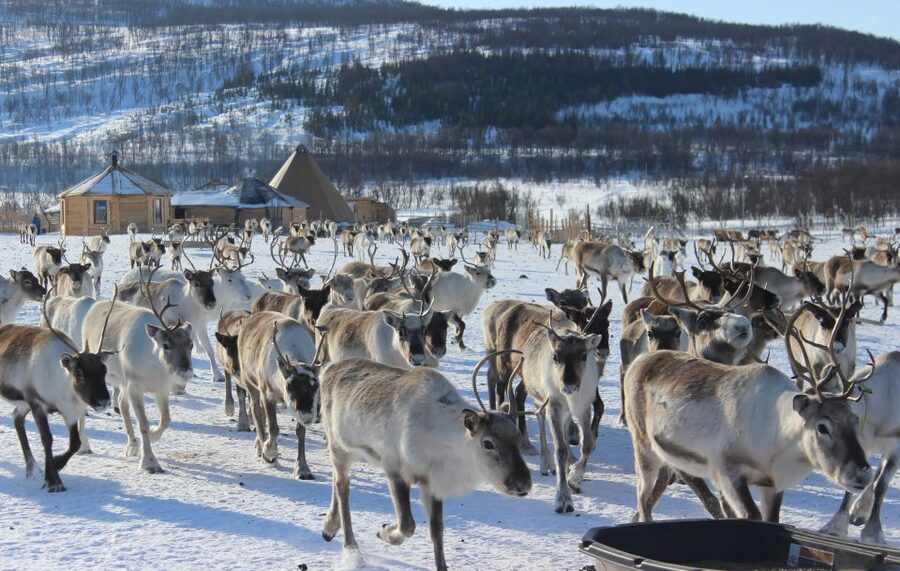
Then comes the star of the outing: a herd of roughly 250 to 300 reindeer. You receive feed in a bucket and can hold it out by hand. The animals are generally calm and accustomed to people, but they are not tame pets waiting for a cuddle. They are hungry working animals, and some can be pushy when they see food.
Keep the bucket raised if a reindeer crowds you, and move away slowly rather than waving your hands. One may try to nibble a glove or step on a foot. That is usually more comic than threatening, but it is a good reason to listen to the initial instructions.
You can often refill your bucket, giving you plenty of chances to feed different animals and take photographs. The herd spreads out, so you are not forced into one tiny viewing spot. I like this part of the arrangement. It gives you time to watch the animals’ behavior instead of rushing through a single photo opportunity.
You may also pet some of the reindeer, although feeding is the main interaction. Do not expect every animal to stand still for a portrait. Their attention is usually fixed on the food, which makes the experience feel natural rather than staged.
Staying warm in the lavvu
Arctic cold changes the mood of an outdoor activity quickly. The good news is that you are not expected to remain outside for the entire visit.
The camp provides warm drinks and cookies, and you can return to a hut or lavvu to warm your hands. Coffee, tea, and hot chocolate are available, with the hot chocolate receiving special praise for being a welcome treat after time in the snow.
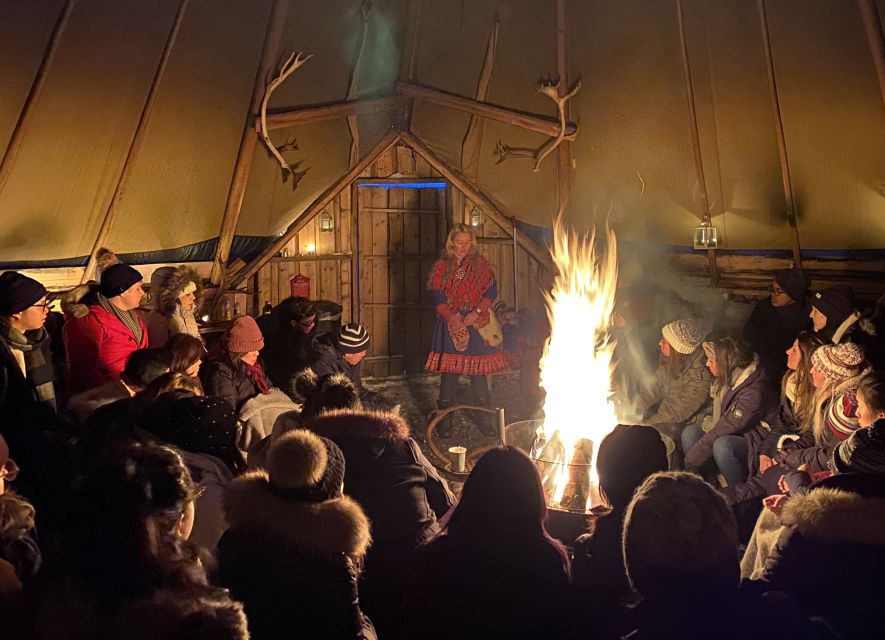
The traditional lavvu is a circular Sami tent with a fire at its center. Its shape is more than a practical shelter. One explanation given at the camp is that the circle allows people to share the warmth equally, with no single seat treated as the important one.
This is also where lunch is served. The usual choice is reindeer stew, a hearty meal that suits a cold day. The flavor may be unfamiliar if you do not often eat game, and not everyone will enjoy it. Vegetarian soup is available, and it has been well received as a satisfying alternative.
Portions can feel modest if you have a large appetite, and bread or a second serving is not always available. I would think of lunch as a warm, simple camp meal rather than a full restaurant lunch. The hot drinks and cookies help fill out the experience.
There is a practical point worth noting: toilet facilities are basic. Since hot chocolate is freely available, you may want to use the facilities before heading out or avoid drinking several large cups just before the return journey.
What the Sami cultural session adds
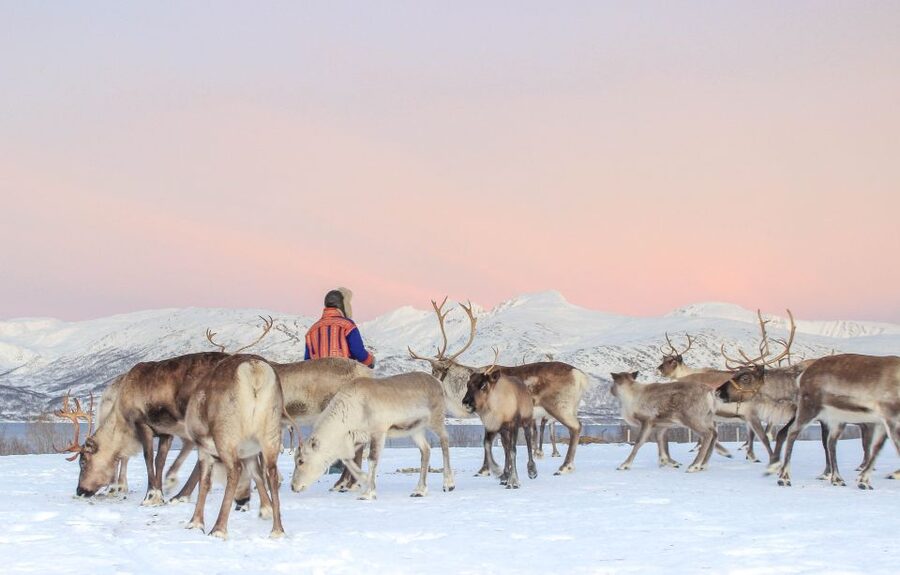
The cultural portion takes place around the fire, often after the feeding and meal. A Sami guide talks about reindeer herding, family life, local traditions, the land, and the challenges of living in the far north.
This section gives meaning to the animal encounter. Without it, the outing could be reduced to feeding reindeer for photographs. With it, you begin to understand that reindeer are tied to work, food, family, identity, and Sami life.
The strongest sessions depend on the guide. Guides named in the feedback include Johannes, Daniel, and Inga, with Inga especially praised for combining history, legends, daily life, and humor. The delivery can be passionate and personal, which makes the talk easier to remember than a standard museum lecture.
The session ends with storytelling and a joik. This traditional Sami form of singing can be spare and haunting, especially inside the firelit tent. You may also be invited to join in with a song.
I would set realistic expectations here. The cultural talk is interesting, but it is brief compared with the time spent feeding the reindeer. If you want a detailed study of Sami language, social structure, politics, and history, this tour will only give you an introduction. Some people find the talk too short or too general, while others consider it the highlight of the afternoon.
That difference comes down to what you want. If you want a first meeting with Sami culture paired with a hands-on activity, the balance works. If cultural learning is your main reason for booking, choose your expectations carefully.
More Sami and Reindeer Experiences in Tromso
- Tromsø: Reindeer Sledding & Feeding with a Sami Guide
★ 4.8 · 6,417 reviews - Tromsø: Reindeer Sled, Dinner, and Chance of Northern Lights
★ 4.6 · 2,651 reviews - Tromsø: Reindeer Camp Dinner with Chance of Northern Lights
★ 4.7 · 806 reviews - Sami Culture and Short Reindeer Sledding from Tromso
★ 4.5 · 584 reviews
How group size affects the mood
This experience can use two large coaches, and departures may be close to full. The organization generally keeps the day moving, with clear stages for transport, feeding, food, and storytelling.
A large group has some advantages. You are not waiting around for a tiny number of people to finish, and the herd is large enough to spread out. Families and children usually have room to find their own animals, and there is enough time for repeated feeding.
The tradeoff is intimacy. You may not have much personal conversation with the Sami guides, and the cultural presentation can feel less like a private visit and more like a well-produced group program. A few people have also found that some members of the group talk during the storytelling, which can weaken the atmosphere.
If a quiet, deeply personal encounter matters most to you, this may not be your ideal Sami experience. If you value simple logistics, a warm bus, a dependable schedule, and a good chance to see many reindeer, the larger format is easier to accept.
The value of $141 for four hours
At $141 per person, this is not a bargain-basement Tromsø activity. Still, the price includes transportation, guides, reindeer feeding, lunch, hot drinks, snacks, storytelling, and songs.
A separate trip to see reindeer would not give you the same cultural context. Here, the transport is handled for you, the camp is prepared for cold weather, and the meal is part of the experience rather than an extra expense at the end.
I see the value in the combination. You are paying for more than an hour with animals. You are also paying for a scenic transfer from Tromsø, an organized camp visit, a traditional setting, a Sami presentation, and food beside an indoor fire.
The value is weaker if you care only about taking reindeer photographs. In that case, the cultural talk and meal may feel like extras. It is stronger if you want a half-day activity that mixes nature, food, local culture, and easy transport.
The overall rating is 4.7 from 3,326 bookings, which fits the experience’s strengths: it is well organized, memorable, and easy to enjoy. The repeated cautions are also consistent: group sizes can be large, the cultural portion may feel short, portions may not satisfy everyone, and the meeting point needs careful attention.
Clothing, footwear, and family advice
Dress for standing outside in Arctic winter conditions. Bring a hat, gloves, and waterproof shoes. You will be near animals, snow, fire, and wet ground, so practical clothing matters more than looking polished.
Waterproof footwear is especially important because the feeding area can contain plenty of reindeer droppings and urine. This is not a criticism of the camp. It is simply what happens when hundreds of animals gather in one place, and it can ruin thin shoes quickly.
Children tend to enjoy the feeding, and the amount of time with the herd means they are not rushed from one activity to the next. A booster seat is not included, so bring your own if your child needs one.
The walk to the feeding area may be steep in places. If someone in your group has limited mobility, ask the operator for current details before booking, since the supplied information does not promise a fully accessible route.
This tour suits families, first-time visitors to northern Norway, couples seeking a distinctive half-day activity, and anyone curious about Sami traditions. It is less suitable if you dislike cold weather, animal smells, uneven snow, basic facilities, or group tours.
Timing your half-day visit
The tour lasts four hours, including the bus journey. That makes it easy to fit around other Tromsø plans, though you should allow some breathing room before scheduling a tight reservation afterward.
Morning departures have one practical advantage in the darkest winter months: the reindeer may be more eager to feed, and there is usually more daylight for photographs. Afternoon departures can still be beautiful, especially with snow and firelight, but early sunsets may make the outdoor portion darker.
The return ride may offer a final Arctic surprise. Under suitable conditions, you might see the northern lights from the bus, though this is not part of the tour promise and depends entirely on the sky.
The camp itself provides enough structure without making every minute feel fixed. You can spend more time with the herd, warm up inside, eat, and listen to the talk in a natural order. That relaxed pace is one of the experience’s best features.
Should you book the Tromsø reindeer and Sami tour?
I would book it if you want an accessible introduction to reindeer herding and Sami culture without giving up half a day to complicated transport. Feeding a large herd is fun, the scenery is beautiful, and the warm meal makes the cold easier to handle.
Go in expecting a popular group excursion, not a private cultural visit. Wear waterproof boots, arrive at the harbor-side bus entrance, consider a morning departure, and choose vegetarian soup if game meat is not for you.
For most visitors, the mix of animals, food, firelight, stories, and song makes the $141 price fair. The reindeer will probably be your first talking point afterward, but the Sami storytelling and joik may be what stays with you longest.
FAQ
Where does the tour meet in Tromsø?
The meeting point is at Tromsø Havn Prostneset bus terminal, Samuel Arnesens gate 5, 9008 Tromsø. Use the ground-floor entrance by the buses, on the side closest to the harbor. Staff wear blue Tromsø Arctic Reindeer jackets.
How long does the tour last?
The full experience lasts four hours. The bus ride to the camp takes about 35 to 40 minutes each way.
How many reindeer can I expect to see?
The camp has a herd of about 250 to 300 reindeer. You can feed them by hand and may be able to refill your bucket during the feeding period.
What food and drinks are included?
Lunch is usually reindeer stew, with a vegetarian soup option. Coffee, tea, hot chocolate, and cookies are also included.
What should I bring?
Bring a hat, gloves, and waterproof shoes. Waterproof footwear is particularly useful because the ground around the herd can be wet and dirty.
Is a child booster seat provided?
No. A booster seat is not included, so bring your own if your child needs one.
Just added in Tromso
- Tromsø:Northern light tour with mini bus i Tromsø★ 4.9 · 8 reviews
- Tromsø: Tasty King Crab Adventure★ 4.5 · 49 reviews
- Tromsø: Horseback Riding Tour★ 4.8 · 23 reviews
- Tromsø: Sommarøy Islands Midnight Sun Tour★ 5.0 · 9 reviews
- Tromsø Sweet Temptations tour: afternoon tea & chocolates★ 4.8 · 5 reviews
- Tromsø: City Walk & Polar Museum (Private or Shared)★ 3.7 · 3 reviews
- Tromsø: Snow Sledding, Mini Skiing, Lasso and Reindeer Hides★ 4.6 · 60 reviews
- Tromsø: Snowshoeing in a small group with free photos★ 4.3 · 4 reviews
Sami Culture and Reindeer Experiences, compared.
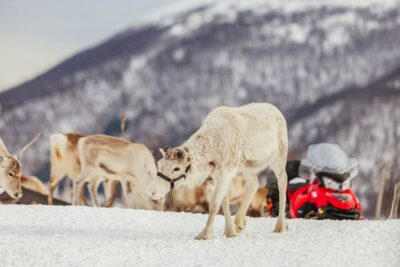
Reindeer Sledding & Feeding with a Sami Guide
Read our review →
Reindeer Sled, Dinner, and Chance of Northern Lights
Read our review →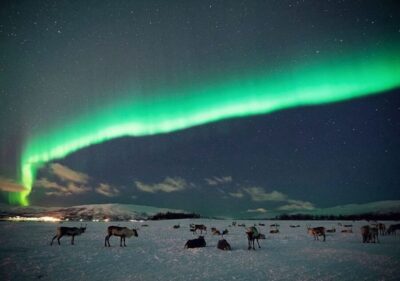
Reindeer Camp Dinner with Chance of Northern Lights
Read our review →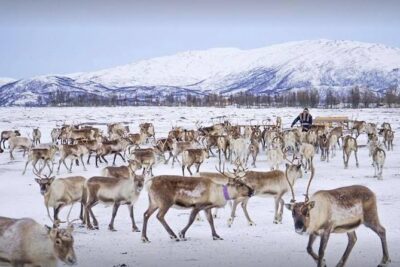
Sami Culture and Short Reindeer Sledding from Tromso
Read our review →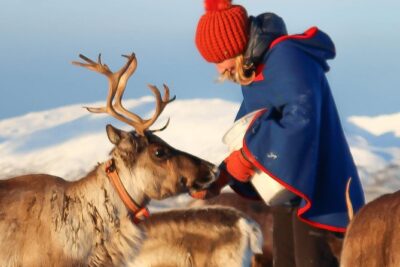
Reindeer Sledding Experience and Sami Culture Tour from Tromso
Read our review →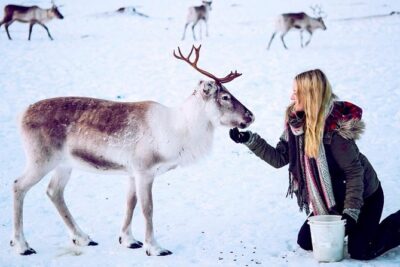
Reindeer Feeding and Sami Culture Including Lunch from Tromso
Read our review →
Snowshoeing Tour & Reindeer Encounter with Lunch
Read our review →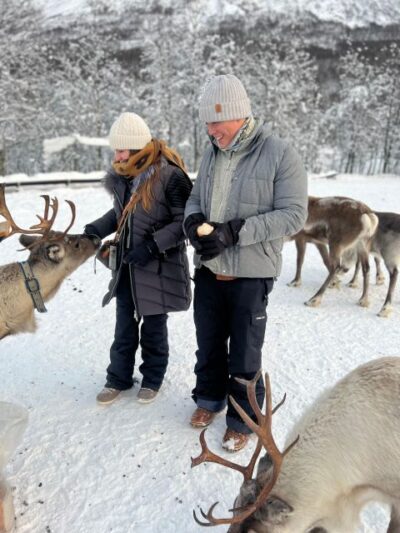
Browse the lists this tour appears in