
REVIEW · MUSEUMS
The Fram Museum Admission Ticket
Polar ships make history feel personal. The Fram Museum lets you walk through the original Fram, see cramped cabins and working spaces, and connect famous expeditions with the people who endured them. I like the freedom to explore at my own pace, and I like the excellent mix of ship access, maps, artifacts, films, and clear texts in ten languages. The main drawback is that the museum can become busy, and some areas may feel dim.
This is a strong Oslo choice for anyone curious about Arctic and Antarctic exploration, especially families and visitors who learn best by seeing the real thing. Plan on two to three hours if you read the displays carefully. If you have only a short window, you can still see the ships and the main exhibits in about an hour.
In This Review
- Key things to know before visiting
- Why the Fram Museum is different
- Start with the Fram building and its three expeditions
- Board Fram and picture life below deck
- Continue through the Gjøa building
- Watch the polar film and try the 4D features
- Give the museum two hours, not twenty minutes
- How much value do you get for $19.38?
- Plan the visit around Oslo’s Bygdøy museums
- Who will enjoy this most?
- Booking, cancellation, and practical timing
- Should you book the Fram Museum?
- FAQ
- How long does the Fram Museum visit take?
- What ships can I see at the museum?
- Is the museum ticket available on a mobile phone?
- What are the Fram Museum opening hours?
- Is a film included with admission?
- Are food and drinks included?
- Can I cancel the ticket for a refund?
- Are service animals allowed?
Key things to know before visiting
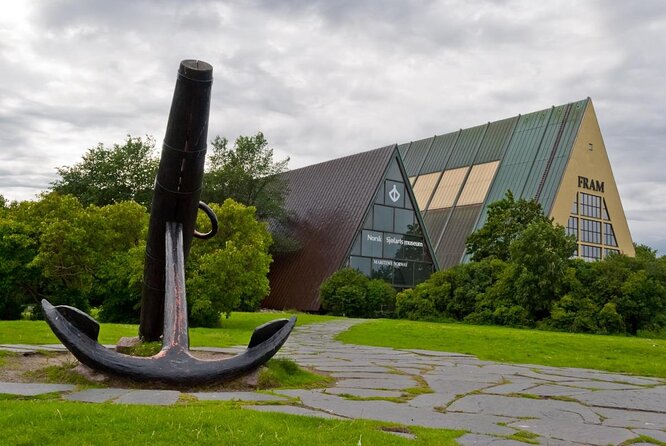
- Walk aboard the original Fram: You can move through several levels of the famous polar ship, including crew spaces, lower areas, and the engine room.
- See Gjøa in its own exhibition building: This was the first ship to navigate the entire Northwest Passage.
- Watch the High North film: A 116-seat cinema presents a polar introduction film every 15 minutes.
- Allow two hours for a proper visit: The displays, ships, films, and interactive features reward an unhurried visit.
- Use prepaid admission to save a little time: The mobile ticket provides straightforward entry and costs about $19.38 per person.
- Expect a self-guided museum visit: Explanatory text appears in ten languages, and no guide is listed as part of the admission.
Why the Fram Museum is different
Many maritime museums display a ship behind a barrier. Here, you can walk through the actual vessel that carried polar expeditions. That simple difference changes the visit. You are not just looking at a diagram of a cabin or reading about conditions at sea. You can see how little room the crew had and how daily life had to fit around the ship’s machinery and supplies.
The museum tells the story of three major Fram expeditions in the main Fram building. It also sets the ship within a wider account of Arctic exploration, including Gjøa, Maud, the N24 and N25 aircraft, and the airship Norge.
You will also find material on John Franklin’s expedition, Henry Larsen, and Eivind Astrup. These names and routes can seem like a lot at first, so take a moment to study the maps and timelines before boarding the ships. That background makes the cramped interiors more meaningful.
The museum also connects polar exploration with present-day concerns in the High North. Displays address polar bears, melting ice, gas, and oil. This gives the visit a modern edge instead of treating exploration as a sealed-off story from the past.
More Museum Tours in Oslo
- Kon-Tiki Museum Entrance Ticket
★ 4.5 · 1,096 reviews - Oslo: Paradox Museum Entry Ticket
★ 4.3 · 799 reviews - Oslo: Oslo Discovery Tour with 2 Museums Included
★ 4.6 · 334 reviews
Start with the Fram building and its three expeditions
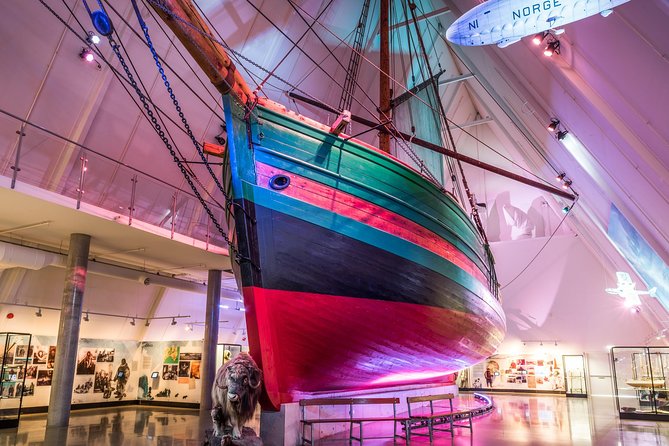
The Fram building is the heart of the museum. Its central object is the original Fram, displayed inside the building so you can walk around it and then go aboard.
Begin with the wall displays if you have enough time. Maps, routes, objects, and explanatory panels help you understand where the ship went and why the expeditions mattered. Several visitors have found that reading for an hour before boarding made the ship itself easier to understand.
The written material is available in ten languages, which makes this a practical stop for international visitors. You do not need to rely on a tour guide or understand Norwegian to follow the main story.
The layout is not always a strict, step-by-step narrative. If you prefer a clear introduction, watch the polar film first, then return to the displays. Otherwise, follow the maps and expedition timelines in the order that makes sense to you.
Board Fram and picture life below deck
The most praised part of the museum is the chance to board Fram. You can move through the ship, inspect rooms, look at crew belongings, and see working areas that are usually hidden in a maritime display.
The experience is most useful when you slow down. Notice the small sleeping spaces, the tight passageways, and the way every part of the ship had a job. The cabins and objects help turn broad tales of exploration into an ordinary daily routine: eating, sleeping, repairing equipment, and waiting out difficult conditions.
You can also reach lower parts of the ship, including the engine room. This is a popular feature with children, who tend to enjoy the physical act of climbing through the ship as much as the historical information.
On deck, a storm and iceberg presentation adds sound and movement to the visit. One feature includes a rocking bench, which gives you a small sense of how rough conditions might have felt. It is a clever bit of theater, though some people may find it more entertaining than historically essential.
The ship is the main reason to pay for admission. If you rush through the displays and spend only a few minutes aboard, you will miss much of what makes the museum worthwhile.
Continue through the Gjøa building
The Gjøa building opened in 2013 and connects to the Fram building through an underground tunnel. The tunnel adds a playful change of pace, and it keeps the two parts of the museum connected even when the weather outside is unpleasant.
At the center is Gjøa, the first ship to navigate the full Northwest Passage. Seeing it beside the Fram gives you a useful comparison between different ships and different stages of polar exploration.
The building also contains displays on Maud, the N24 and N25 aircraft, and the airship Norge. These exhibits show that exploration did not remain a ship-only effort. Aircraft and airships later became important tools for reaching and studying the High North.
The collection also covers John Franklin’s expedition, Henry Larsen, and Eivind Astrup. You may find these sections especially worthwhile if you already know something about polar exploration, but the maps and objects give newcomers enough context to follow the broad story.
Do not skip the Gjøa building simply because Fram is the famous name. Fram is the emotional centerpiece, but Gjøa broadens the visit and explains how exploration methods changed.
A completely different kind of day:
- Oslo: Scenic Fjord Cruise with Audio Guide Commentary
★ 4.5 · 5,375 reviews - Oslo Nature Walks: Island Hopping Tour
★ 4.8 · 2,713 reviews - Oslo: 100% Electric Oslofjord Sightseeing Cruise
★ 4.4 · 2,041 reviews - Oslo: Fjord Evening Cruise with Shrimp Buffet
★ 4.5 · 1,956 reviews
Watch the polar film and try the 4D features
A 116-seat cinema shows a polar introduction film every 15 minutes. That frequent schedule makes it easy to fit the film into your visit without building your entire day around a fixed showtime.
The film is a good opening choice if you want a quick explanation before studying the displays. It also works near the end, when you want a short change from reading and ship interiors.
The admission includes the N25 Flight 4D Cinema. The museum’s film and special effects give younger visitors something active to look forward to, while adults may appreciate the quick visual introduction to polar conditions.
One caution: check that all cinema areas are operating when you arrive. A temporary closure can remove a significant part of the visit, so ask at the entrance if a particular film or section is unavailable. This matters even more if you have limited time in Oslo.
Give the museum two hours, not twenty minutes
The listed visit time is about one to three hours, and that range is realistic. I would allow at least 90 minutes for the main ship and the key displays. Two hours gives you time to read maps, walk through Fram, visit Gjøa, and see a film. Three hours suits anyone who reads every panel or wants to examine the artifacts closely.
If you arrive at opening time, you have a better chance of seeing the ships with fewer people around. Early arrival also helps if you want clear photographs or prefer to read displays without stopping for a crowd.
The museum can be busy. Narrow ship passages become harder to navigate when several groups gather, and some display areas have limited lighting. Move patiently and do not expect the same quiet pace in every room.
The maximum group size connected with this activity is listed as 14 people, but this is admission to a public museum rather than a private guided tour. The size of the crowd inside can still vary by time of day.
How much value do you get for $19.38?
At about $19.38 per person, this is fairly priced for Oslo, especially because the admission covers the original Fram, Gjøa, the connected exhibitions, and the cinema features. You are paying for more than a set of wall panels. The ships provide the kind of access that is difficult to reproduce with models or photographs.
The value is strongest for anyone interested in polar exploration, engineering, maritime travel, or hands-on museums. Families may also find the admission worthwhile because children can move through the ships, see the engine room, use interactive elements, and watch the 4D presentation.
If you are not interested in ships or expedition stories, the price may feel less attractive. The museum is focused. It is not a general museum of Norwegian culture, and its subject is almost entirely exploration of the polar regions and the High North.
Prepaid mobile admission is useful if you want to go directly to the entrance and avoid buying a ticket in person. The price is stated as the same as buying on site, so the main benefit is convenience rather than a large discount.
Plan the visit around Oslo’s Bygdøy museums
The Fram Museum is in Oslo and is near public transportation. The location is somewhat removed from the city center, so check routes and departure times before you set out, especially if your schedule is tight.
The area has other attractions nearby, including museums connected with Norwegian seafaring and exploration. That makes the Fram Museum a good part of a half-day plan, but it also creates a timing trap. If you try to see several museums in the area, allow enough time for transport and for the Fram ship interiors.
Opening hours are listed as 10:00 a.m. to 5:00 p.m. daily for the stated operating period. Check the current hours before setting off, since one unfortunate visit involved a ticket with an incorrect opening time and a museum that was closed.
Food and drinks are not included with admission. Plan your meal separately, especially if you are bringing children or intend to stay for three hours.
Who will enjoy this most?
I would recommend the museum most strongly to:
- Anyone fascinated by the North or South Poles
- Families who prefer active, hands-on museums
- Visitors interested in Norwegian exploration and maritime technology
- Readers who enjoy maps, expedition routes, and original artifacts
- People with two or more hours available in Oslo
- Anyone who wants a museum that feels physical rather than purely text-based
It is also a meaningful stop for people with a personal connection to Fram. One visitor had waited decades to see the ship and finally visited on an 80th birthday. That kind of response makes sense once you understand that the museum lets you step into the vessel rather than simply view it from a distance.
You should think twice if you dislike tight spaces, have no interest in polar subjects, or need a completely predictable schedule. The ship can be busy, some areas are dim, and a temporary closure may affect the cinema or part of the exhibits.
Service animals are allowed with identification. Most people can take part, but the ship’s stairs, narrow passages, and multiple levels may require care for anyone with mobility concerns. The information provided does not promise full access to every part of the vessels.
Booking, cancellation, and practical timing
You receive confirmation at the time of booking, and the ticket is mobile. The experience is commonly booked about 21 days ahead, so reserving early is sensible during a busy Oslo visit, particularly if you need a specific day.
Free cancellation is available up to 24 hours before the experience start time. Cancel at least 24 hours ahead for a full refund. Cancellations or changes made less than 24 hours before the start time are not accepted for a refund, and the cut-off follows local Oslo time.
Because this is a museum admission rather than a guided walk, you can choose your own pace. I would start with the film, study the main displays, board Fram, cross the tunnel to Gjøa, and finish with the aircraft and High North sections.
Should you book the Fram Museum?
Yes, if you have at least 90 minutes and any real interest in polar exploration. The original Fram is the clear star, and walking through its decks gives you a physical sense of expedition life that photographs cannot provide.
Book it especially if you are visiting Oslo with children, enjoy ships, or want a museum that mixes real objects with films and interactive features. Arrive near opening time, allow two hours, and confirm that the cinema and all exhibition areas are open.
Skip it only if your Oslo schedule is extremely tight or polar exploration does not appeal to you. For most visitors with room in their itinerary, the combination of Fram, Gjøa, clear maps, original artifacts, and the N25 film makes this one of Oslo’s better-value museum admissions.
FAQ
How long does the Fram Museum visit take?
The visit takes approximately one to three hours. Allow about two hours if you want to read the displays, board both ships, and watch a film.
What ships can I see at the museum?
You can board the original Fram and see Gjøa in the connected Gjøa building. Gjøa was the first ship to navigate the entire Northwest Passage.
Is the museum ticket available on a mobile phone?
Yes. The admission includes a mobile ticket, and booking confirmation is provided at the time of booking.
What are the Fram Museum opening hours?
The listed hours are 10:00 a.m. to 5:00 p.m., Monday through Sunday, during the stated operating period.
Is a film included with admission?
Yes. Admission includes the N25 Flight 4D Cinema. A polar introduction film is shown every 15 minutes in a 116-seat cinema.
Are food and drinks included?
No. Food and drinks are not included with the museum admission.
Can I cancel the ticket for a refund?
Yes, if you cancel at least 24 hours before the experience start time. Cancellations made less than 24 hours in advance are not refunded.
Are service animals allowed?
Yes. Service animals are allowed, but they must have identification.
Just added in Oslo
- Oslo Winter Highlights Bike Tour★ 5.0 · 36 reviews
- 4 hours Best View of the Oslofjord Winter Edition★ 4.0 · 15 reviews
- The Ultimate Study of the Human Form at Vigeland’s Sculpture Park with a Local★ 4.0 · 14 reviews
- Unknown war. Oslo and Norway during 1940-45★ 5.0 · 74 reviews
- Top of Oslo Snowshoe Tour★ 5.0 · 2 reviews
- The Scenic Roadtrip, Oslo to Bergen via Flam & the Fjords★ 5.0 · 25 reviews
- The Viking Planet Museum – Mini Group (4 adults)★ 4.0 · 16 reviews
- The Oslo Beer Adventure★ 4.5 · 11 reviews
Museums, compared.

Troll Museum Entry Ticket with AR Media Experience
Read our review →


Aksla-Alnes-Giske-Sunnmøre museum 100 % Highlights 4.5 H
Read our review →
Browse the lists this tour appears in