
REVIEW · WALKING TOURS
Oslo: Norwegian Food Tour & Hidden Gems City Walk
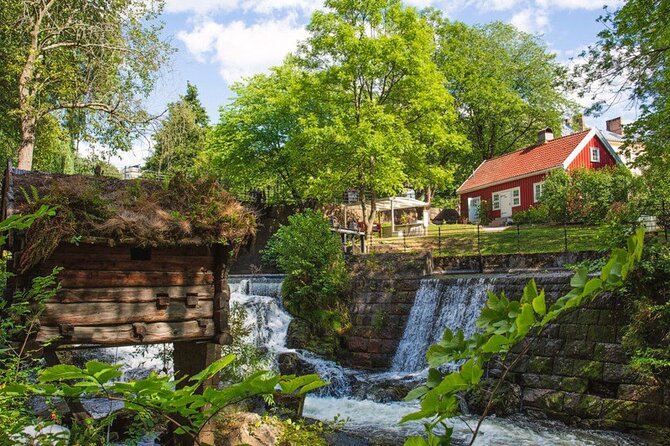
Come hungry, leave pleasantly tired. This three-hour Oslo tour pairs Norwegian dishes with a walk through Youngstorget, Grünerløkka, and Birkelunden, giving you a look at the city beyond the usual central sights. I like the small-group limit of 10, which keeps the outing personal, and I like the mix of food, local stories, street art, parks, bridges, and river views.
The food has a clear Norwegian flavor, from creamy fish soup to farm-to-table tastings and waffles with brown cheese. The main caution is the walking: the route is mostly flat but includes short, steep hills, and the food is served at three main stops rather than as a constant stream of small bites.
In This Review
- Key points to know before you book
- Why this Oslo tour is different
- Meeting the guide at the Tiger sculpture
- Youngstorget and the first bowl of fish soup
- Grünerløkka, old bridges, and the uphill work
- What the guide adds between the food stops
- Birkelunden and the farm-to-table main course
- The tram ride and the practical end of the route
- Karl Johans Gate and waffles with brown cheese
- Is $172.63 a fair price?
- Who will enjoy this experience most?
- Booking and cancellation details
- Should you book the Oslo food and city walk?
- FAQ
- Where does the Oslo food tour start?
- Where does the tour end?
- How long does the experience last?
- How far do you walk?
- Is public transportation included?
- Are drinks included?
- What food is served?
- Can people with dietary restrictions join?
- Is the tour suitable for people with limited fitness?
- What happens if bad weather cancels the tour?
Key points to know before you book
- Three food stops with a proper Norwegian focus: Expect fish soup, a farm-to-table main course, and waffles with brown cheese.
- A small group capped at 10: You get more room to ask questions and speak with the guide.
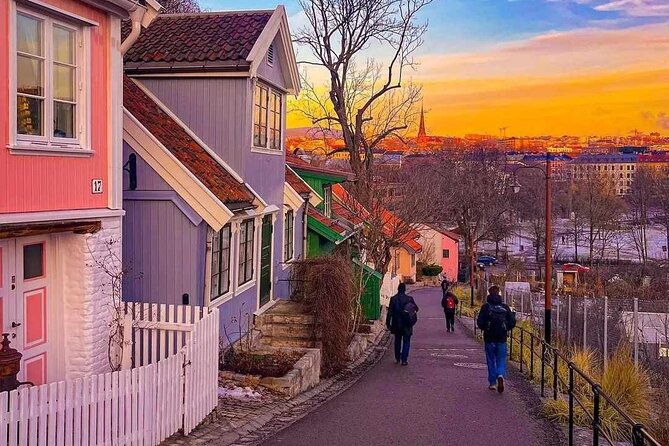
- A quieter side of Oslo: The walk moves through Grünerløkka, parks, old bridges, wooden houses, waterfalls, and street art.
- About three hours and roughly 3 to 4 kilometers: The route is manageable for most active visitors, though some inclines require good shoes.
- Drinks cost extra: Food and public transportation are included, but beverages are not.
- Guides bring much of the personality: Idunn, Annie, Anni, Margarita, Eden, and others have been praised for their warmth, stories, and local insight.
Why this Oslo tour is different
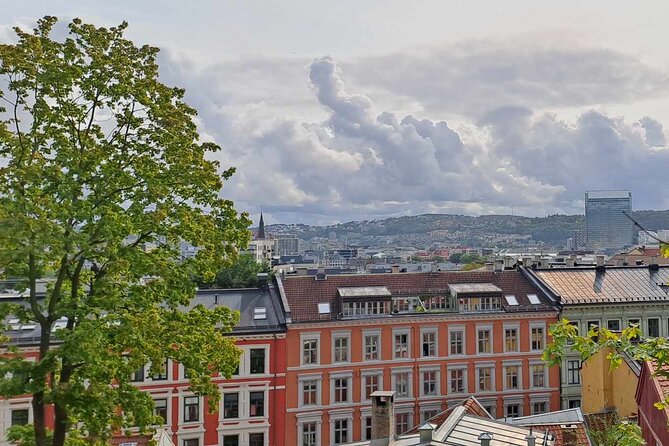
Central Oslo is easy to cover on your own. You can walk Karl Johans Gate, see the Royal Palace from outside, and make your way toward the harbor without much trouble. This experience takes a different approach. It uses food as a reason to move through neighborhoods that many first-time visitors might otherwise skip.
I like that the tour is not built around a checklist of famous monuments. The emphasis is conversation, local places, and the feel of everyday Oslo. You may pause for a story, ask about Norwegian customs, or spend a little longer at a viewpoint instead of being rushed from one sight to the next.
The group size matters here. With no more than 10 people, it is easier to hear the guide and easier to ask questions about food, city life, and Norwegian culture. Several guides have been singled out for being friendly, funny, and easy to talk with. Idunn and Margarita, in particular, have been praised for combining historical facts with a relaxed, personal style.
Still, keep your expectations in check. This is not a full course on Oslo’s past, Norwegian food traditions, or national politics. One dissatisfied participant felt the tour offered too little historical and culinary explanation. If you want a thorough city history lesson or a serious tasting seminar, choose a more specialized tour.
More Food Tours in Oslo
- Oslo: Grünerløkka Food & Culture Walking Tour
★ 4.5 · 161 reviews - Norwegian Food Tour & Hidden Gems of Oslo
★ 4.9 · 60 reviews - Oslo: Food Tasting and Walking Tour with a Local
★ 4.5 · 50 reviews
Meeting the guide at the Tiger sculpture
The starting point is the Tiger sculpture by Oslo Central Station at 12:00 p.m. This is a smart meeting place because it is easy to find and close to public transportation. You begin with a short introduction before walking toward the first restaurant.
The sculpture is also a useful orientation point. If you have just arrived in Oslo, you are in the center of the action, yet the tour soon moves away from the station crowds. Your guide may explain the area and answer basic questions before the food portion begins.
Allow a little extra time to locate the exact meeting spot. The listed address is The Tiger, near Jernbanetorget. Since the tour starts at noon, arriving early gives you time to find the sculpture without rushing.
Youngstorget and the first bowl of fish soup
The first substantial stop is in the Youngstorget area, where you receive creamy fish soup at a local seafood restaurant known for its award-winning version. This is one of the most praised parts of the experience. The soup provides an immediate taste of Norway, and it is warm and welcome on a cold day.
The serving is described as a starter, not a full lunch. That distinction matters. You are not sitting down to a large meal at the first stop, but you are getting a proper Norwegian dish before the longer walk.
Fish soup is not suitable for everyone, and alternatives are available for people who cannot eat it. You should provide allergy or dietary information when booking. The food may also change with the season and holiday schedule, so do not expect an identical menu every month.
I like the timing of this stop. You get something to eat fairly early, then have time to walk without feeling weighed down. If you arrive especially hungry, though, remember that there is a longer gap before the next main food stop.
Grünerløkka, old bridges, and the uphill work
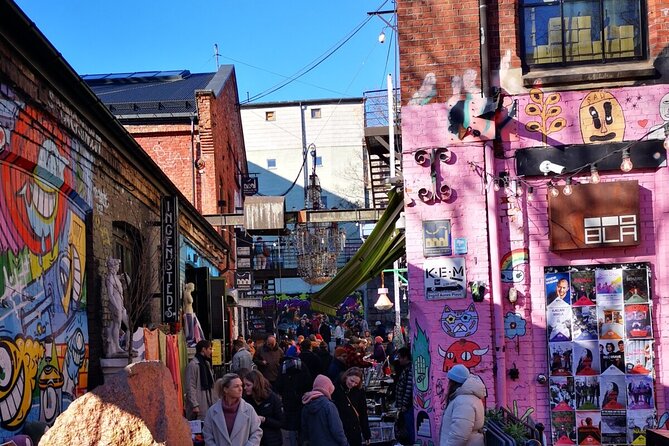
After Youngstorget, the tour turns toward Grünerløkka. This is the heart of the walking portion, lasting about an hour according to the planned schedule. You pass parks, viewpoints, colorful wooden houses, street art, an urban river, waterfalls, and old bridges.
This section gives the tour its real character. You are not simply walking between restaurants. You are seeing how Oslo changes from a central transport district into a more residential and creative neighborhood. The combination of river scenery, older buildings, and public art gives you a broader sense of the city.
There are hills. The route is described as mostly flat with several short, steep sections, reaching a high point of about 45 meters above sea level. That does not sound dramatic, but a series of inclines can feel different in winter, when roads may be slippery.
Wear shoes with good grip. Bring water. A family who took the tour in winter found the walking reasonable, but still recommended comfortable shoes and preparation for inclines. Another participant felt there was much more walking than tasting, even estimating a longer distance than the official route. The stated route is around 3 to 4 kilometers, but you should plan for a solid walking outing rather than a quick stroll.
The walking also serves a practical purpose. The distance spaces out the meals, and the hills help you work up an appetite. If you prefer frequent tastings every few minutes, this will not be your ideal food tour. Here, the rhythm is food, walk, food, walk, dessert.
More Walking Tours in Oslo
- Oslo: Best of Oslo Walking Tour
★ 4.5 · 458 reviews - Oslo: Guided Walking Tour of Central Oslo
★ 4.7 · 438 reviews - Oslo: Historic Myths & Legends Evening Walking Tour
★ 4.8 · 408 reviews - Taste of Oslo Walking Tour
★ 4.5 · 282 reviews
What the guide adds between the food stops
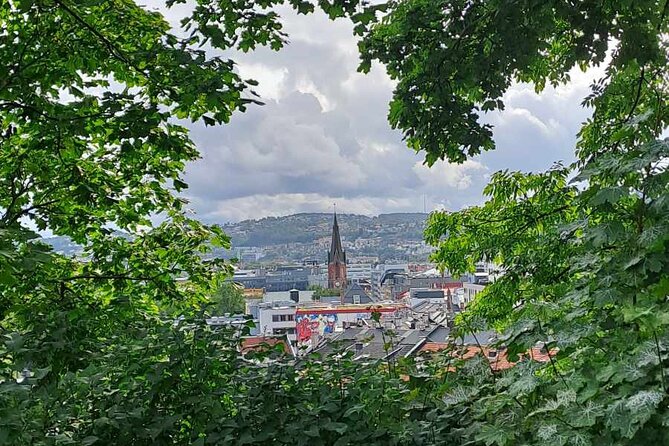
The guide is central to the quality of this experience. A good guide turns a neighborhood walk into something more than a route on a map. Idunn has been praised for her humor, warmth, and ability to answer questions about Oslo and Norway. Annie and Anni have received similar praise for their stories and easy conversation. Margarita has been appreciated for connecting older and newer parts of Oslo with local culture.
The best part of the guiding style appears to be its informality. You are encouraged to ask questions instead of listening to a long speech at every stop. That works well for people who prefer real conversation to a memorized lecture.
There is some unevenness in the experience, as you would expect when different guides lead the tour. One participant wanted more explanation of Norwegian food culture and more information about Oslo’s history. If you are curious about a particular topic, ask directly. The guide may give a more useful answer when you steer the conversation toward food customs, neighborhood change, or Norwegian daily life.
Birkelunden and the farm-to-table main course
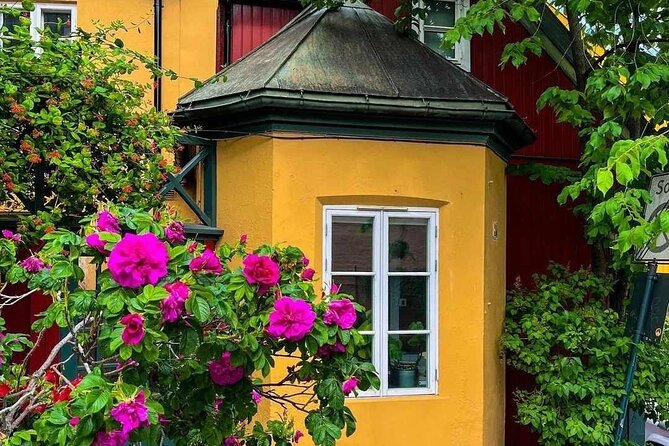
The next major food stop is near Birkelunden, where the main course is served at a farm-to-table restaurant. The meal has been described as a tasting-style spread with local ingredients, including fish, cheeses, cured meats, and several salads. Portions have generally been considered satisfying, though one person felt the amount of food was modest for the price.
This is a higher-quality restaurant stop rather than a market-style snack. That gives you a chance to sit down, rest your legs, and taste several ingredients in one place. It also helps show how Norwegian food can be presented beyond the familiar image of fish and potatoes.
Do not assume a drink comes with the meal. Tap water is available, but beverages are not included. You can buy a drink if you wish, so budget a little extra. This is one of the main value questions with the tour. If you count only the food, you may find the price high. If you value the small group, restaurant settings, public transportation, and several hours of guided exploration, the cost makes more sense.
The menu may change during holidays or with the season. That is normal for a food experience built around local ingredients, but it means you should view the published dishes as a guide rather than a guarantee.
The tram ride and the practical end of the route
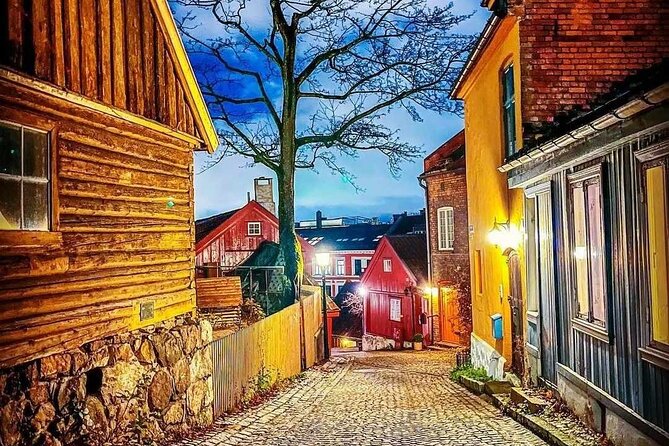
After the Birkelunden meal, the group takes a tram toward the city center. Public transportation is included, which is useful because it saves you from retracing the entire route on foot.
The ending details deserve attention. The official end point is on Karl Johans Gate, close to the starting area, but several descriptions explain that the walk may finish in the Grünerløkka area, around 2.5 kilometers from Oslo Central Station. From nearby Biermannsgate, tram lines 11, 12, or 18 can take you back toward the center in roughly 10 to 15 minutes, while walking may take about 25 to 30 minutes.
This may reflect route or restaurant changes, so listen carefully to the guide’s directions at the end. In winter, especially when daylight is limited, you should know how you will return before the tour finishes. The neighborhood itself can be worth exploring after the meal, but you need to allow for the extra trip if your hotel is near the station.
Karl Johans Gate and waffles with brown cheese
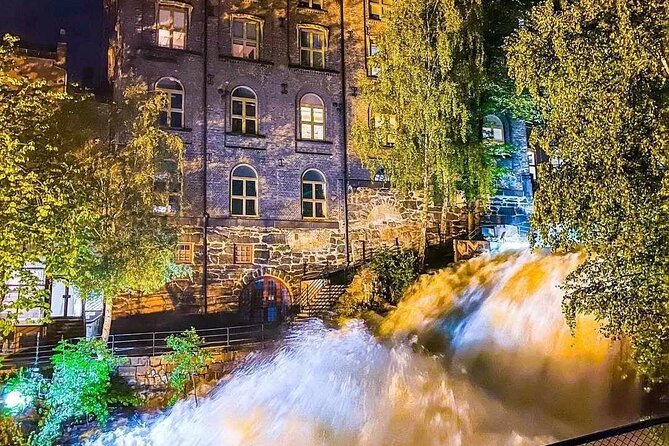
The final food stop is a Norwegian waffle served with brown cheese. This is an excellent dessert choice because it is distinctly local and easy to enjoy even if you are new to Norwegian cuisine.
Brown cheese has a sweet, caramel-like flavor and is a classic match for waffles. The warm waffle makes a fitting end to a winter tour, and the portion has been described as generous. Some servings may also include raspberry jam, depending on the menu.
This stop is more than a sweet finish. It gives you a chance to try a familiar comfort food in a Norwegian form. If the fish soup is your favorite savory dish, the waffle often becomes the memorable final note.
Is $172.63 a fair price?
At $172.63 per person, this is not a budget walk. You are paying for food at several restaurant stops, a small group, a local guide, and included public transportation. The tour also covers about three hours, so the value depends heavily on how much you want the guided neighborhood experience.
I would consider the price reasonable for a first visit if you enjoy food and want a quick introduction to parts of Oslo that are less obvious from the main sights. The small group is a real advantage, especially if the guide is as engaging as Idunn, Annie, Anni, or Margarita.
The price is harder to justify if you mainly want a large meal. Drinks are extra, the first stop is a starter, and there are only three main food locations. One person felt the tour offered more walking than tasting and would have preferred smaller bites along the way.
To get better value, schedule it early in your Oslo stay. You can use the guide’s neighborhood tips for later meals and independent walks. The tour is also a good choice after you have seen the major central sights, since it adds a different side of the city instead of repeating the standard route.
Who will enjoy this experience most?
I would recommend it to you if you:
- Like combining food with walking and local stories
- Want a small group rather than a large coach tour
- Are comfortable walking several kilometers
- Can manage short, steep hills
- Enjoy trying fish, cheese, cured meats, salads, and brown cheese
- Want to see Grünerløkka and nearby areas with a local guide
- Prefer conversation and questions over a formal lecture
I would hesitate if you want a seated food crawl with constant tastings, a fully explained history of Oslo, or included wine, beer, and soft drinks. It is also less suitable if hills or slippery winter streets are a serious concern.
The tour requires a moderate level of fitness. It is not an extreme hike, but you should not book it expecting a flat, effortless city walk.
Booking and cancellation details
The tour is offered in English and uses a mobile ticket. Free cancellation is available up to 24 hours before the start time. Changes or cancellations inside that window are not refunded.
Weather can affect the route. If poor conditions force cancellation, you are offered another date or a full refund. Winter participants should prepare for cold weather and possible slippery roads, while anyone with allergies or dietary restrictions should provide that information at booking.
Should you book the Oslo food and city walk?
Book it if you want a friendly, small-group introduction to Oslo’s food and lesser-known neighborhoods, and you are happy to earn dessert with a bit of walking. The fish soup, farm-to-table meal, and waffle with brown cheese create a good food arc, while Grünerløkka supplies the scenery and local feel.
Skip it if your main goal is a large, drink-inclusive meal or a detailed lecture on Norwegian history and cuisine. At this price, you should be comfortable paying for the guide’s access and interpretation, not just the food on the plate.
For most active first-time visitors, I would book it near the start of an Oslo stay, wear sturdy shoes, carry water, and confirm the ending point with the guide. That small bit of preparation lets you enjoy what the tour does best: good local food, a relaxed guide, and a walk through Oslo you might not have found alone.
FAQ
Where does the Oslo food tour start?
It starts at The Tiger sculpture near Jernbanetorget and Oslo Central Station at 12:00 p.m.
Where does the tour end?
The listed end point is Karl Johans Gate 8 in central Oslo. Route details may vary, and some information places the finish in the Grünerløkka area before the return toward the center.
How long does the experience last?
The tour lasts approximately three hours.
How far do you walk?
The tour information describes a route of about 3 to 4 kilometers. It is mostly flat but includes some short, steep sections.
Is public transportation included?
Yes. Public transportation, including the tram ride used during the experience, is included.
Are drinks included?
No. Food is included, but beverages are not. Tap water is available, and you can purchase other drinks separately.
What food is served?
The food usually includes creamy fish soup, a farm-to-table main course with local ingredients, and Norwegian waffles with brown cheese. Menus can vary by season and holidays.
Can people with dietary restrictions join?
Alternatives are available for people who cannot eat fish soup. You should provide allergy or dietary information when booking.
Is the tour suitable for people with limited fitness?
The tour requires moderate physical fitness. You should be comfortable walking several kilometers and handling short, steep hills.
What happens if bad weather cancels the tour?
If the experience is canceled because of poor weather, you will be offered another date or a full refund.
Just added in Oslo
- Oslo Winter Highlights Bike Tour★ 5.0 · 36 reviews
- 4 hours Best View of the Oslofjord Winter Edition★ 4.0 · 15 reviews
- The Ultimate Study of the Human Form at Vigeland’s Sculpture Park with a Local★ 4.0 · 14 reviews
- Unknown war. Oslo and Norway during 1940-45★ 5.0 · 74 reviews
- Top of Oslo Snowshoe Tour★ 5.0 · 2 reviews
- The Scenic Roadtrip, Oslo to Bergen via Flam & the Fjords★ 5.0 · 25 reviews
- The Viking Planet Museum – Mini Group (4 adults)★ 4.0 · 16 reviews
- The Oslo Beer Adventure★ 4.5 · 11 reviews
Walking Tours, compared.
Past & Present Small Group Guided Walking Tour
Read our review →
Walking Tour in Bergen of the Past and Present
Read our review →
Browse the lists this tour appears in