
REVIEW · HISTORICAL TOURS
Downtown Oslo: Self-Guided Highlights and History Audio Tour
Oslo’s center tells its story block by block. This 40-minute audio walk links the waterfront, the Nobel Peace Center, the Royal Palace, Karl Johan Avenue, and the reborn Østbanehallen, giving you a quick introduction to the city without tying you to a guide’s schedule. I like the low $9.99 price and the useful offline maps and audio. The main drawback is that the information may not always be current, so you should treat this as a light orientation rather than a definitive history lesson.
I also like the freedom to pause, wander, or return to a stop at your own pace. You start at Rådhusplassen and finish near Oslo Central Station, a practical route for a first look at central Oslo. The tour is offered only in English, and you must supply your own smartphone, headphones, and any admission fees along the way.
In This Review
- Key points to know before you go
- A short introduction to Oslo for $9.99
- Starting at Rådhusplassen and reaching Aker Brygge
- The Nobel Peace Center and Oslo’s award tradition
- The Royal Palace park and its unexpected past
- Walking Karl Johan Avenue from the 1500s to today
- Ending at Østbanehallen and the old railway center
- How the VoiceMap format works for you
- Timing, access, and practical planning
- Who gets the most value from this walk
- Should you book the Downtown Oslo audio tour?
- FAQ
- Where does the Downtown Oslo audio tour start?
- Where does the tour end?
- How long does the audio tour take?
- What language is the tour offered in?
- What does the price include?
- Do I need to bring a smartphone?
- Are museum tickets included?
- Can I cancel or change the booking?
Key points to know before you go
- Five central Oslo stops: The route connects Aker Brygge, the Nobel Peace Center, the Royal Palace park, Karl Johan Avenue, and Østbanehallen.
- A short 40-minute walk: It works best as a city orientation before a museum visit or a longer day of sightseeing.
- Offline access included: You can download the audio, map, and geodata through the VoiceMap application.
- A useful route between major areas: The walk begins at Rådhusplassen and ends at Havnelageret on Langkaia, close to the central station area.
- No admissions are included: Museum tickets, food, drinks, transportation, and the phone itself are your responsibility.
- A modest price with a clear limitation: At $9.99, it is inexpensive, but one detailed complaint described parts of the information as out of date.
A short introduction to Oslo for $9.99
This audio tour is best understood as a primer. In roughly 40 minutes, it gives you a string of recognizable Oslo landmarks and explains how the city’s public spaces, royal center, railway history, and waterfront fit together.
I find that format useful when you have just arrived and want to get your bearings fast. You can listen while walking instead of sitting through a long presentation, and you are free to stop for photos or coffee. The route also finishes near a major transport area, so it can fit neatly into a first afternoon.
At $9.99 per person, the cost is low compared with a traditional guided walk. You are paying for recorded narration, route material, and lifetime access to the tour. That is fair value if you want basic context and do not need a live guide to answer questions.
The price is less attractive if you expect a fully updated, detailed account of Oslo. The tour has a 3.9 rating from 10 ratings, and one sharp criticism said that the information felt out of date. The provider asked for specific details so it could correct weak sections. That response is useful, but it also tells you to keep expectations sensible.
More History Tours in Oslo
- Oslo: Historic Myths & Legends Evening Walking Tour
★ 4.8 · 408 reviews - Oslo: History, Art and Secrets Tour
★ 4.7 · 62 reviews - Oslo City Walks – Historic River Walk
★ 5.0 · 31 reviews
Starting at Rådhusplassen and reaching Aker Brygge
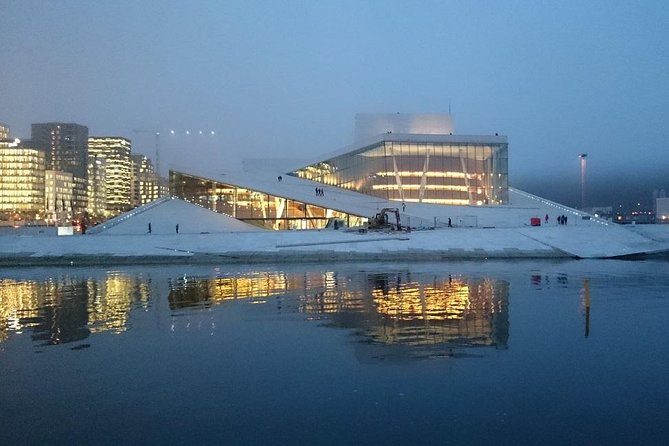
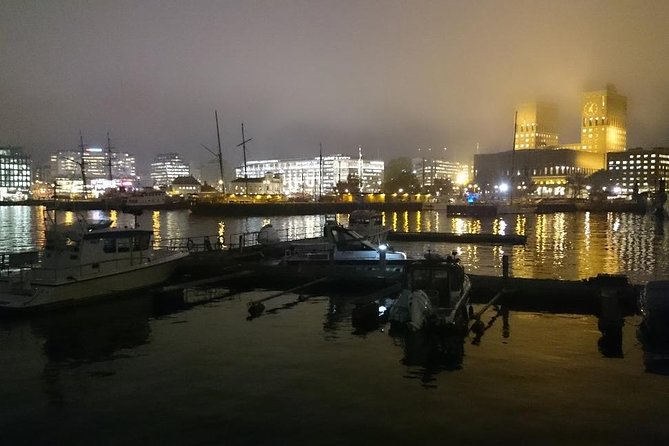
The walk begins at Rådhusplassen, Oslo’s city hall square. From there, the first featured stop is Aker Brygge, a shopping center built on the remains of an old shipyard.
That contrast is the point. Aker Brygge is not presented simply as a place to shop. Its setting shows how Oslo has reused former industrial waterfront space for restaurants, shops, and everyday city life. It is a popular place to meet for a meal or an after-work drink, so this stop gives you a quick look at how the harbor functions today.
I like having Aker Brygge near the beginning of the walk. You start with an area that is easy to recognize and pleasant to explore on your own. If you want to pause for food or a drink, this is the most natural place on the route to do it, though those purchases are not included in the tour price.
The tradeoff is that a shopping and dining center may feel less historic than the other stops. The audio can explain the shipyard connection, but you should not expect access to old industrial buildings or a museum-style presentation. This is a setting for understanding change, not a preserved monument.
The Nobel Peace Center and Oslo’s award tradition
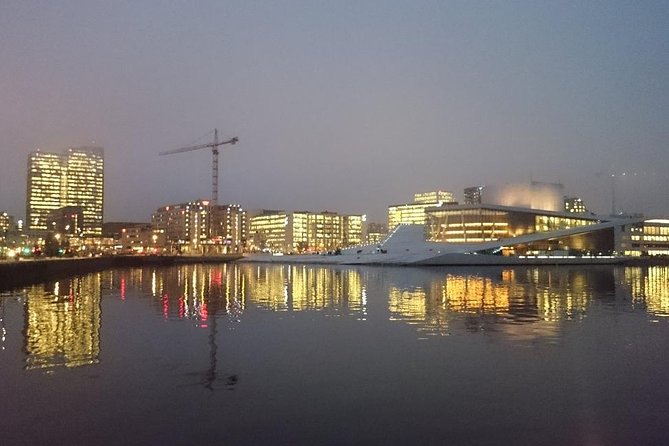
The next major stop is the Nobel Peace Center. The building once served as an old railway station for trains arriving from the western parts of Norway. Today, it houses a museum devoted to the Nobel Peace Prize, Alfred Nobel, and past prize winners.
That change of use gives the stop two stories at once. You hear about the building’s railway past, then its role as a place connected with one of the world’s best-known peace awards. The audio format is useful here because a passing look at the building would not tell you much about either layer.
The museum itself requires an admission ticket, and that ticket is not included. You can still take in the building from the outside and continue with the walk, but anyone who wants the full exhibits should plan extra time and money beyond the $9.99 audio tour.
This is one of the places where the tour works better as a doorway than a final word. It points you toward a museum visit, but 40 minutes is not enough to explain Alfred Nobel, the prize, and its past recipients in great detail. If you have an interest in international affairs or modern history, you may want to treat this stop as a reason to return.
The Royal Palace park and its unexpected past
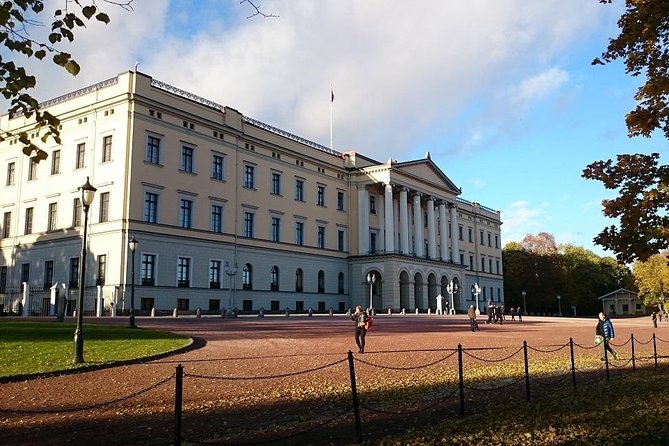
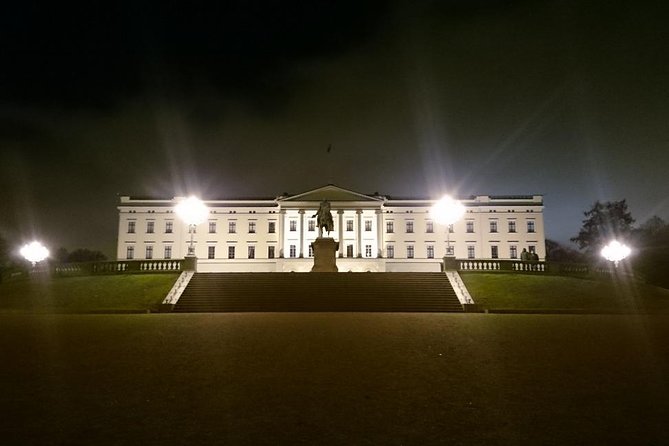
The route then moves toward the park around the Royal Palace. The park was created during the 1840s and includes mature trees, cared-for lawns, ponds, and fountains. It remains a recreational area for people living in Oslo.
This is a welcome change of pace from the harbor and city streets. You get open green space without leaving central Oslo, and the audio adds a memorable social detail: the park served as a base for hippies in the mid-1960s.
That small fact helps keep the stop from becoming a dry royal summary. You are not only looking at formal lawns around a palace. You are also hearing how public space can take on different meanings over time, from royal grounds to a gathering place for counterculture.
You should not expect a palace tour to be included. The material supplied for this walk focuses on the surrounding park, not an interior visit. If you want to see any museum or attraction along the route, admission fees remain separate.
More Self-Guided Tours in Oslo
- Oslo: Scenic Fjord Cruise with Audio Guide Commentary
★ 4.5 · 5,375 reviews - Oslo To Bergen Self-Guided Full Day Trip with Flåm Railway And Fjord Cruise
★ 4.0 · 69 reviews - Self-Guided 22-Hour Round Trip From Oslo To Sognefjord With Flåm Railway
★ 4.5 · 54 reviews - Oslo Viking Quest: Exploration Game and Tour
★ 4.5 · 17 reviews
Walking Karl Johan Avenue from the 1500s to today
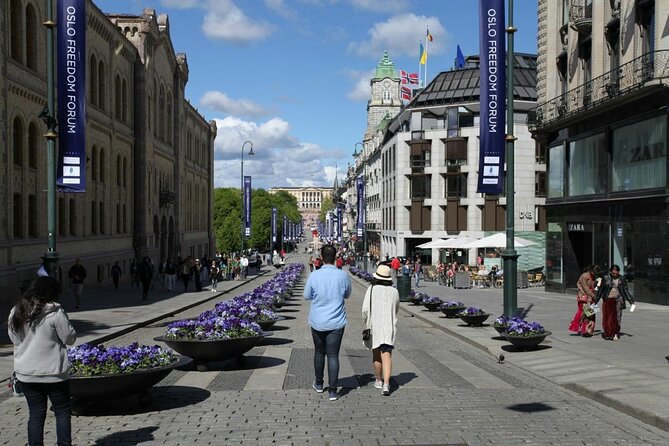
Karl Johan Avenue is Oslo’s best-known main street and one of the route’s most useful connecting points. The description compares it with Champs Elysees in Paris and Broadway in New York, but the real value is more local: Karl Johan is the city’s grand central avenue.
The first part of the street was established in the 1500s. Since 1852, it has carried the name Karl Johan, after the king. That gives you a simple way to read the street. It is not just a modern shopping corridor. Its name and layout reflect older royal and civic development.
I like this kind of historical note because it is easy to miss when you are walking. A street name can seem like background decoration until you know where it came from. The audio gives you a reason to look more closely at the route instead of simply using it to get from one stop to another.
Still, this segment is likely to be most useful for first-time visitors. If you already know central Oslo well, the basic history may feel brief. The tour does not promise a long architectural study, detailed restaurant advice, or a deep account of every building along Karl Johan.
Ending at Østbanehallen and the old railway center
The final featured stop is Østbanehallen. In earlier years, it served as Oslo’s central railway station for northern routes in Norway. After a complete transformation, it reopened in 2015 with shops, restaurants, a hotel, and the Oslo Visitor Center.
This is a smart ending point. The walk begins around the harbor and finishes at a place tied to movement, transport, food, and visitor services. If you still have questions about Oslo, the Visitor Center offers a practical next step after the audio ends.
Østbanehallen also brings the tour back to its recurring theme: old city spaces finding new uses. A former station is now a place to eat, stay, shop, and plan. You can compare it with Aker Brygge, where a shipyard site became a social waterfront district.
The endpoint is listed at Havnelageret, Langkaia 1, near the central station area. Because the route ends in a transport-friendly part of the city, you can continue with other plans rather than needing to retrace your steps. Transportation is not included, but the location is near public transit.
How the VoiceMap format works for you
The tour uses the VoiceMap application. You receive lifetime access to the Exploring Downtown Oslo tour, plus offline access to the audio, map, and geodata.
Offline access matters in practical terms. You can download the material before setting out, reducing your dependence on a mobile connection while walking. You still need a compatible smartphone, since the phone is not provided.
The self-guided setup gives you control. You can stop the narration, take pictures, enter the Nobel Peace Center, pause for a drink at Aker Brygge, or continue later. A live guide would offer conversation and answers, but this format avoids a fixed departure time and the pressure of keeping up with a group.
The listed maximum is 10 travelers, though the experience is fundamentally self-guided. That small maximum may matter if a booking is handled as a compact group, but you should not expect a guide physically leading you from stop to stop.
The audio is offered in English only. You should also bring headphones if you prefer not to hold your phone during the walk. Food, drinks, local transportation, museum tickets, and other admissions all cost extra.
Timing, access, and practical planning
The tour is listed as available Monday through Sunday, around the clock, during the period from February 25, 2019, through February 16, 2027. That broad schedule gives you plenty of freedom to fit it around a train arrival, hotel check-in, or museum visit.
The 40-minute duration is approximate. Your actual outing will take longer if you stop at Aker Brygge, enter the Nobel Peace Center, spend time in the Royal Palace park, or browse Østbanehallen. I would allow at least an hour if you want to walk without rushing.
The route is near public transportation, and most people can participate. Service animals are allowed. The information does not specify distances, steep sections, restroom access, or seating at every stop, so you should not assume the tour provides detailed mobility guidance.
Confirmation is received at booking. The cancellation policy is strict: the experience is non-refundable and cannot be changed for any reason. I would book only once your Oslo plans are firm.
Who gets the most value from this walk
I would recommend this audio tour to you if you want a cheap, flexible introduction to central Oslo. It suits independent visitors who prefer walking alone, already have a full day planned, or want a little context before choosing which museums and neighborhoods deserve more time.
It also works well for a short Oslo stop. The route covers several recognizable areas without requiring a full guided excursion. Since the endpoint is near the city’s central transport area, it can be a practical addition to a day built around trains or public transportation.
Families and mixed-interest groups may appreciate the pause-anytime format. One person can listen while another takes photographs or stops for refreshments. The English-only narration limits its usefulness for anyone who prefers another language.
I would be cautious if you want current, highly detailed information. The dated-information complaint is the main warning attached to this product. Before setting off, use the app’s offline material, but also pay attention to current signs and opening information at the places you pass.
Should you book the Downtown Oslo audio tour?
Book it if you want a low-cost orientation with freedom to set your own pace. The route covers five useful central stops, the app includes offline maps and audio, and the $9.99 price is reasonable for lifetime access.
Skip it if you expect a live guide, museum entry, extensive storytelling, or guaranteed up-to-date commentary. The best approach is to use this as a compact introduction, then spend extra time at the places that catch your interest, especially the Nobel Peace Center, the Royal Palace park, Aker Brygge, and Østbanehallen.
FAQ
Where does the Downtown Oslo audio tour start?
The tour starts at Rådhusplassen in Oslo, Norway.
Where does the tour end?
The listed endpoint is Havnelageret, Langkaia 1, 0150 Oslo, Norway.
How long does the audio tour take?
The approximate duration is 40 minutes.
What language is the tour offered in?
The tour is offered in English.
What does the price include?
The $9.99 price includes lifetime access to the Exploring Downtown Oslo tour, the VoiceMap application, and offline access to audio, maps, and geodata.
Do I need to bring a smartphone?
Yes. A smartphone is not included, so you need to provide your own device for using the VoiceMap application.
Are museum tickets included?
No. Tickets or entrance fees for museums and other attractions along the route are not included.
Can I cancel or change the booking?
No. The experience is non-refundable and cannot be changed for any reason.
More Audio Tours in Oslo
- Akerselva River Meander: A Self-Guided Audio Tour
★ 3.5 · 8 reviews - Oslo Scavenger Hunt and Highlights Self Guided Audio Tour
★ 4.5 · 6 reviews - Discover Oslo: Self Guided Audio Tour
★ 3.5 · 5 reviews - Molde: Atlantic Ocean Road & Varden Audio Guide Bus Tour
★ 4.1 · 473 reviews
Just added in Oslo
- Oslo Winter Highlights Bike Tour★ 5.0 · 36 reviews
- 4 hours Best View of the Oslofjord Winter Edition★ 4.0 · 15 reviews
- The Ultimate Study of the Human Form at Vigeland’s Sculpture Park with a Local★ 4.0 · 14 reviews
- Unknown war. Oslo and Norway during 1940-45★ 5.0 · 74 reviews
- Top of Oslo Snowshoe Tour★ 5.0 · 2 reviews
- The Scenic Roadtrip, Oslo to Bergen via Flam & the Fjords★ 5.0 · 25 reviews
- The Viking Planet Museum – Mini Group (4 adults)★ 4.0 · 16 reviews
- The Oslo Beer Adventure★ 4.5 · 11 reviews
Historical Tours, compared.

Reindeer Camp and Sami Cultural Tour with Lunch
Read our review →

Sightseeing Cruise of Bergen’s Historic Landmarks
Read our review →

Browse the lists this tour appears in