
REVIEW · VIKING HISTORY TOURS
Oslo Viking Quest: Exploration Game and Tour
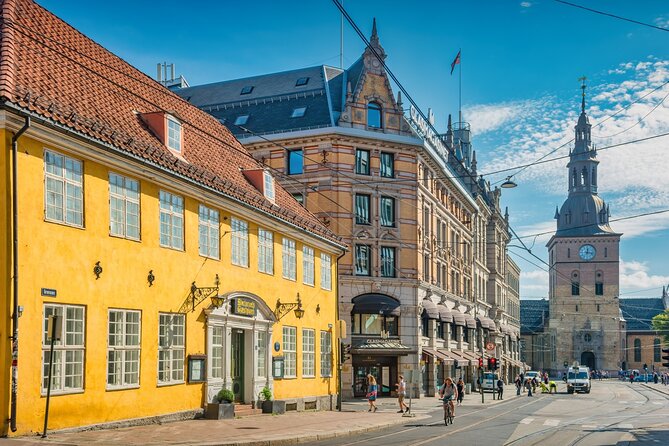
Oslo rewards curious walkers. This self-guided game turns central Oslo into a Viking-themed puzzle trail, guiding you past the Nobel Peace Center, City Hall, the Royal Palace, and Akershus Fortress. I like the freedom to start anytime and pause when you wish, and I like how each puzzle adds a small piece of Oslo’s story instead of asking you to follow a fixed tour script.
The low price is another strong point, especially for families or friends who want an activity rather than a lecture. The tradeoff is simple: there is no physical guide, and a few clues may take patience to understand. Plan for about 75 minutes if you stick to the route, but allow longer if you stop at sights along the way.
In This Review
- Five things to know before you start
- A walking game instead of a standard Oslo tour
- Starting near City Hall and the Nobel Peace Center
- Oslo City Hall and the story behind the brickwork
- A sculpture stop connected to Nils Sigurd Aas
- The Royal Palace and Oslo’s royal past
- The University of Oslo and the Storting
- Oslo Cathedral and a working place of worship
- Akershus Fortress and Norway during the war
- How long the game really takes
- What you get for $7.20
- Who should choose this Oslo experience?
- Booking, cancellation, and practical details
- Should you book the Oslo Viking Quest?
- FAQ
- How long does Oslo Viking Quest take?
- What is included in the experience?
- Is there a physical tour guide?
- Where does the game start?
- Where does the game finish?
- Which language is offered?
- Can I choose when to start?
- Can I cancel for a full refund?
Five things to know before you start
- Eleven interactive puzzles lead you through central Oslo, with challenges connected to the places you visit.
- The route links major sights, including the Royal Palace, Oslo City Hall, the Storting, Oslo Cathedral, and Akershus Fortress.
- You control the clock, with access available from 5:00 AM to 9:00 PM and the option to pause and resume.
- The experience costs $7.20 per person, making it a modest way to get oriented in central Oslo.
- Your group plays privately, using a mobile access code rather than joining a larger walking group.
- Some clues require patience, so this works best when you enjoy solving problems rather than rushing from stop to stop.
A walking game instead of a standard Oslo tour
This experience gives you a different way to see Oslo. You are not following a guide holding a flag, and you are not simply listening to facts while walking behind a group. Instead, your phone provides a Viking storyline, location-based challenges, and information about the places in front of you.
The route is designed to keep your attention moving between the screen and the city. You look for an answer at each stop, enter it into the game, and then receive the next location and more background about Oslo.
That format works well for families, couples, and friends who like a little friendly competition. It also helps break up sightseeing for children who might lose interest during a conventional history talk.
You should not expect a full museum visit or a detailed lesson in Norwegian history. The information is presented in short pieces tied to the route. That makes it easy to absorb, though readers looking for long historical explanations may want to add a museum or guided walk elsewhere in Oslo.
More Self-Guided Tours in Oslo
- Oslo: Scenic Fjord Cruise with Audio Guide Commentary
★ 4.5 · 5,375 reviews - Oslo To Bergen Self-Guided Full Day Trip with Flåm Railway And Fjord Cruise
★ 4.0 · 69 reviews - Self-Guided 22-Hour Round Trip From Oslo To Sognefjord With Flåm Railway
★ 4.5 · 54 reviews
Starting near City Hall and the Nobel Peace Center
The game begins at Rådhusgata 30B, in central Oslo. The first major stop is the Nobel Peace Center, a place devoted to the Nobel Peace Prize and the ideas connected with peace, war, conflict, and public debate.
This is a smart opening point because it gives the route an immediate connection to modern Norway. The center is not only about displaying the prize. It also links culture and politics, so the game’s first challenge asks you to look closely and use the surroundings.
You will need to search for the answer rather than simply read a paragraph on your phone. That small task changes how you look at the building and its setting. Instead of walking past, you pause and inspect the details around you.
If you want to visit the Nobel Peace Center itself, allow extra time beyond the stated game duration. The activity takes you to the location, but the supplied details do not include museum admission or an interior visit.
Oslo City Hall and the story behind the brickwork
From the Nobel Peace Center, the route continues to Oslo City Hall. This is the municipal heart of the capital, housing the city council, city administration, and other public offices.
The present building was constructed between 1931 and 1950, with work interrupted during the Second World War. That timeline gives the puzzle a useful historical setting. Oslo City Hall is not merely a photo stop. It reflects the city’s public life and the difficult period in which modern Norway developed.
You will again search the area for a clue before the game allows you to continue. This is where the activity feels more like an urban scavenger hunt than a traditional tour.
The main practical issue is weather. You are outdoors for the whole route, and the game requires you to stop, look around, and think. Rain or very cold conditions can make the experience less pleasant, especially if you are trying to solve a difficult clue with cold hands.
A sculpture stop connected to Nils Sigurd Aas
One stop focuses on the Norwegian sculptor Nils Sigurd Aas. Born in 1933 and active until his death in 2004, Aas was an important figure in modern Norwegian sculpture.
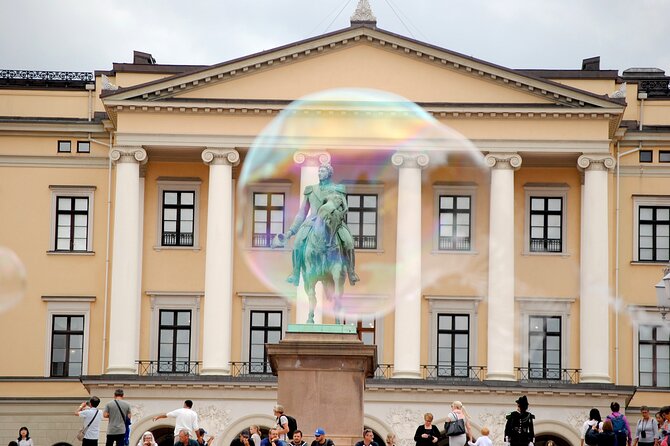
He is particularly known for the statue of King Haakon VII in June Seventh Square. He also designed Norwegian coins, including the 10-krone and 20-krone pieces.
This is one of the route’s more unusual stops because it shifts attention from major buildings to public art and national identity. You may already recognize the coins without realizing who designed them. The game uses that kind of connection to make the city feel less like a string of famous addresses and more like a collection of people, symbols, and civic stories.
The challenge here asks you to observe your surroundings. If you enjoy architecture and sculpture, this can be one of the more rewarding pauses on the route. If you prefer only major landmarks, it may feel like a detour, but it adds variety to the walk.
More exploration games in Oslo:
- Vigeland Alien Threat in Oslo Exploration Game and Tour
★ 5.0 · 8 reviews - Oslo Scavenger Hunt and Highlights Self Guided Audio Tour
★ 4.5 · 6 reviews - Stavanger: Prison Island Adventure Game
★ 4.9 · 11 reviews - Molde: Serial Killer Escape Room Game
★ 5.0 · 6 reviews
The Royal Palace and Oslo’s royal past
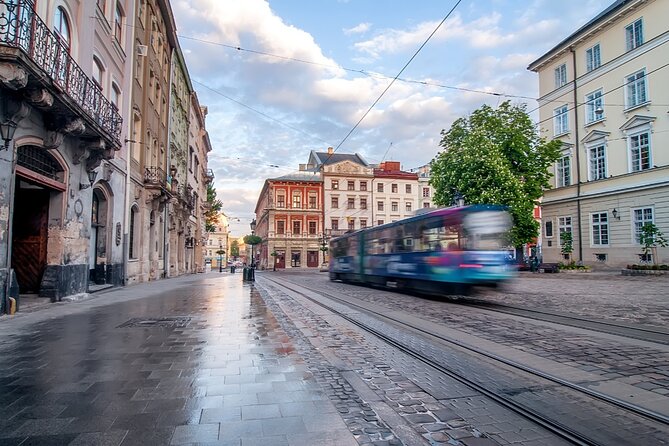
The Royal Palace is one of the route’s headline sights. Built in the first half of the 19th century, it was created as a Norwegian residence for Charles III John, the French-born king who ruled Norway and Sweden.
The palace gives the game a chance to move from civic Oslo to royal Oslo. You will learn the basic story through the mobile challenge, then search around the location for the answer that sends you onward.
The palace is also a good place to slow down. The game is designed to take about 75 minutes, but you do not have to treat that as a race. Since you can pause and resume, you can take photographs or spend a little time around the palace before continuing.
Keep your expectations clear. The tour takes you to the Royal Palace, but the information supplied does not promise an interior tour or palace admission. Think of this as an outdoor orientation with a puzzle attached, not a ticketed royal residence visit.
The University of Oslo and the Storting
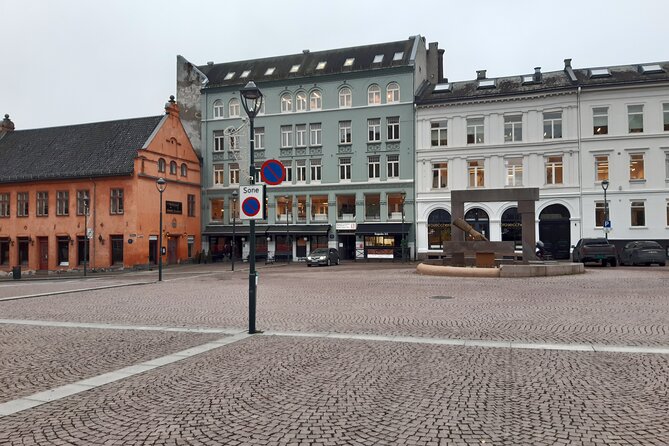
The University of Oslo provides another change of mood. Until 1939, it was called the Royal Frederick University, and it is the oldest university in Norway.
A university stop adds an academic layer to the route. It reminds you that central Oslo is not only about government buildings and royal landmarks. Learning, public debate, and national culture also shape the city.
The next stop is the Storting building at 22 Karl Johans gate. This is the seat of Norway’s parliament. The building opened on March 5, 1866, and was designed by the Swedish architect Emil Victor Langlet.
This part of the walk is especially useful if you want to understand how Norway’s public institutions fit together. The route moves from the university to parliament, creating a natural sequence of education, government, and civic life.
The game does not replace a detailed political tour. Instead, it gives you compact context and a reason to study the buildings around you. For a first visit, that is valuable because you gain a basic map of Oslo’s central institutions without committing to a long guided program.
Oslo Cathedral and a working place of worship
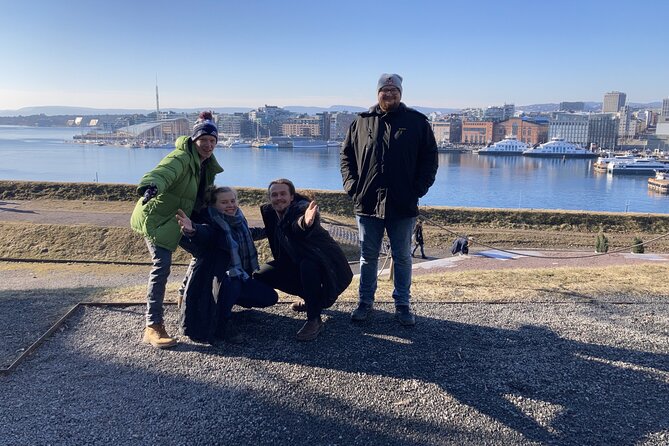
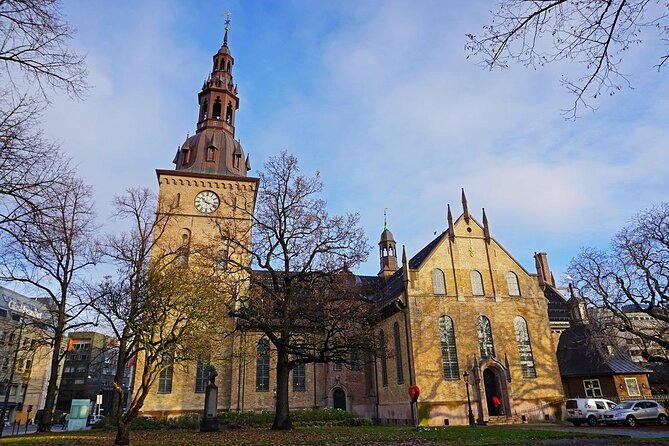
Oslo Cathedral, formerly Our Savior’s Church, is the main church of the Church of Norway Diocese of Oslo and the parish church for downtown Oslo. The current building dates from 1694 to 1697.
The cathedral also has a ceremonial role. Norway’s Royal Family and government use it for public events, giving the building importance beyond its religious function.
At this stop, you look for the answer to another challenge and learn the cathedral’s place in Oslo life. The route’s pattern remains consistent: observe, solve, read, and move on.
That rhythm is easy to follow, but it can become repetitive. You will face 11 interactive puzzle challenges, and not every clue will feel equally clear. Patience helps. If your group becomes stuck, use the available hints rather than turning the walk into a contest of stubbornness.
Akershus Fortress and Norway during the war
The final section carries the route toward Akershus Fortress, one of Oslo’s most important historic sites. The medieval castle was built to protect the city and provide a royal residence.
Before reaching the fortress itself, the route includes Norway’s Resistance Museum, also called the Norwegian Home Front Museum. Its collection focuses on the Norwegian resistance during the German occupation from 1940 to 1945. Equipment, photographs, and documents from the war years form the core of its displays.
This is a serious subject, and it gives the end of the route more weight. The earlier stops introduce peace, government, royalty, art, and education. The resistance museum adds the story of occupation and national struggle.
The game takes you to the location, but the provided experience does not include museum entry. If the subject interests you, you may want to set aside separate time for the museum rather than trying to squeeze it into the puzzle route.
Akershus Fortress is a fitting final area because it brings together defense, monarchy, and Oslo’s long development. The route ends at the Scandinavian Star Memorial on Akershusstranda, 0150 Oslo. That endpoint gives you a clear finish near the fortress and waterfront area.
How long the game really takes
The advertised duration is about one hour and 15 minutes. That is a reasonable target if you move steadily, solve the clues without long pauses, and do not add extra sightseeing.
In practice, you should leave room for more time. One experience took a few hours because the group made side trips, extending the outing by at least half again. That is not a flaw. The flexible design invites you to treat the game as a framework for exploring central Oslo.
The ability to pause and resume matters here. You can stop for food, visit a nearby attraction, or take a break when the weather turns unpleasant. You are not tied to a guide’s departure time or a group’s pace.
The operating hours are unusually broad, from 5:00 AM to 9:00 PM every day during the stated operating period. The access code is mobile, and confirmation is sent when you book. Since the experience is in English, you should be comfortable reading and solving clues in English.
What you get for $7.20
At $7.20 per person, this is inexpensive for an organized activity in central Oslo. The value comes from combining a self-guided walk, a simple game, and short historical explanations.
You are not paying for a physical guide, museum admissions, food, transportation, or private vehicle service. That matters when comparing it with a conventional walking tour. Those tours may offer more context and the chance to ask questions, while this experience gives you privacy and control.
The private format can be a real advantage. Only your group participates, so you do not need to match the pace of strangers. Families can stop when needed, and friends can solve clues in their own way.
Group discounts are available, which may improve the price for larger parties. Most people can participate, the route is near public transportation, and service animals are allowed. The activity is also listed as suitable for most participants, though the outdoor walking and puzzle-solving format may be less appealing in poor weather.
Who should choose this Oslo experience?
I would choose this game for a first day in Oslo when I wanted a broad look at the center without booking a full guided tour. It links enough major sights to help you understand the city’s layout.
It is also a good choice for:
- Families who want children involved in sightseeing
- Couples who prefer a private activity
- Friends who enjoy puzzles and light competition
- Budget-minded visitors seeking a low-cost introduction to Oslo
- Independent people who dislike fixed departure times
- Visitors who want to pause for food, photos, or extra sightseeing
I would think twice if you want detailed commentary at every stop. You cannot ask the app a follow-up question in the way you can ask a guide. I would also avoid scheduling it during heavy rain or extreme cold, since one piece of direct feedback specifically found the outing better suited to mild, dry conditions.
The clues may not all be obvious. Give yourself time, read carefully, and use hints when needed. The point is to explore, not to prove that your group can solve every puzzle without help.
Booking, cancellation, and practical details
You can book with a mobile ticket and receive the access code at confirmation. The start point is Rådhusgata 30B, 0151 Oslo, and the finish is the Scandinavian Star Memorial at Akershusstranda.
The activity is offered in English. It runs Monday through Sunday from 5:00 AM to 9:00 PM during the stated period, January 25, 2021 through February 7, 2027.
Free cancellation applies when you cancel at least 24 hours before the scheduled start time. Cancellations or changes made within 24 hours are not refunded or accepted, and the cut-off uses Oslo local time.
Should you book the Oslo Viking Quest?
Book it if you want a cheap, flexible way to see central Oslo and your group enjoys solving clues. The route covers an impressive range of subjects, from the Nobel Peace Prize and public art to royalty, parliament, religion, wartime resistance, and medieval defense.
Skip it if you want a human guide, long historical explanations, or a tightly planned indoor activity. For everyone else, the $7.20 price makes the risk small. Start with comfortable shoes, allow more than 75 minutes if you like side stops, and treat the puzzles as a reason to look closer at Oslo rather than a race to the finish.
FAQ
How long does Oslo Viking Quest take?
The stated duration is approximately one hour and 15 minutes. You can take longer if you make side trips, pause, or spend extra time at the stops.
What is included in the experience?
You receive mobile access to the quest, 11 interactive puzzle challenges, a Viking storyline, Oslo history content, and the ability to pause and resume.
Is there a physical tour guide?
No. This is a self-guided mobile experience and does not include a physical tour guide.
Where does the game start?
The starting point is Rådhusgata 30B, 0151 Oslo, Norway.
Where does the game finish?
The endpoint is the Scandinavian Star Memorial at Akershusstranda, 0150 Oslo, Norway.
Which language is offered?
The experience is offered in English.
Can I choose when to start?
Yes. The game has no fixed itinerary, and access is available every day from 5:00 AM to 9:00 PM during the stated operating period.
Can I cancel for a full refund?
Yes, if you cancel at least 24 hours before the scheduled start time. Cancellations made within 24 hours are not refunded, and changes during that period are not accepted.
More Viking History Tours in Oslo
- Oslo: Viking Planet Entry Ticket
★ 4.4 · 603 reviews - The Viking Planet Museum Ticket
★ 4.0 · 197 reviews - The Viking Planet Museum – Mini Group (4 adults)
★ 4.0 · 16 reviews - Tønsberg: Walk with a Viking – Guided Tour
★ 5.0 · 5 reviews
Just added in Oslo
- Oslo Winter Highlights Bike Tour★ 5.0 · 36 reviews
- 4 hours Best View of the Oslofjord Winter Edition★ 4.0 · 15 reviews
- The Ultimate Study of the Human Form at Vigeland’s Sculpture Park with a Local★ 4.0 · 14 reviews
- Unknown war. Oslo and Norway during 1940-45★ 5.0 · 74 reviews
- Top of Oslo Snowshoe Tour★ 5.0 · 2 reviews
- The Scenic Roadtrip, Oslo to Bergen via Flam & the Fjords★ 5.0 · 25 reviews
- The Viking Planet Museum – Mini Group (4 adults)★ 4.0 · 16 reviews
- The Oslo Beer Adventure★ 4.5 · 11 reviews
Viking History Tours, compared.

Viking Village, Nærøyfjord Cruise & Flåm Railway
Read our review →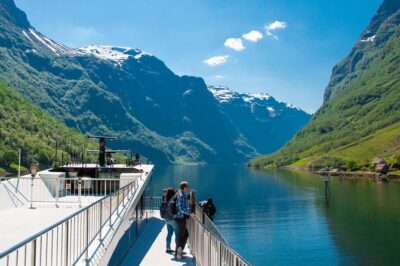
Guided tour – Viking Village, Nærøyfjord Cruise and Flåm Railway
Read our review →
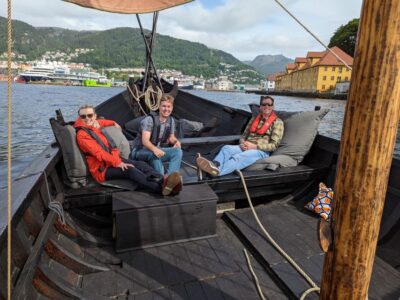
Viking Ship Sailing Experience and Sightseeing Trip
Read our review →
Viking Village, Nærøyfjorden Cruise and Flåm Railway
Read our review →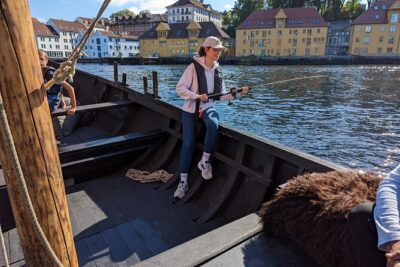
Bergen Fjord Experience Aboard Viking-style Ship
Read our review →
Haugesund Viking Cruise – The Viking Farm and Viking Planet
Read our review →
Private tour – Viking Village, Nærøyfjord Cruise and Flåm Railway
Read our review →Browse the lists this tour appears in