
REVIEW · WALKING TOURS
Vardø: A Self-Guided Walking Tour of Pomors, Radars & Witches
History speaks clearly in Vardø. This short audio walk connects the town’s Russian trading past, witch trials, fortress, and Arctic birdlife through the VoiceMap app. I like the freedom to begin whenever you wish, and I like that the tour uses your phone’s GPS to start the next piece of narration as you move.
The 35-minute length fits neatly around a ferry, museum visit, meal, or quick stop in town. The low price of $6.99 is another strong point. The trade-off is that you guide yourself, so you will need a charged smartphone, headphones if you prefer them, and enough attention to follow the route in an exposed northern town.
In This Review
- Key points before you set out
- Why this short Vardø walk works well
- Starting at Kaigata and using VoiceMap
- Vardø and the Pomor traders
- Steilneset Memorial and the witch trials
- Vardøhus Fortress and the town’s defenses
- Hornøya and Arctic birdlife
- What the $6.99 price really covers
- Timing, access, and who will enjoy it
- The main strengths and limits
- Should you book this Vardø tour?
- FAQ
- Where does the Vardø walking tour begin?
- Where does the tour finish?
- How long does the tour take?
- What language is the tour offered in?
- How do I access the tour?
- Is transportation included?
- Can I cancel or change the booking?
Key points before you set out

- GPS-guided storytelling: The VoiceMap app begins the next audio section as you reach new places.
- A compact route: The walk takes about 35 minutes, making it useful when your schedule is tight.
- Pomor trade at the center: You learn why Vardø earned the title capital of Pomor.
- The Steilneset Memorial: The route explains the memorial to 91 people tried and executed for witchcraft.
- Historic Vardøhus Fortress: You see an eight-point star-shaped fortress dating from the 1730s.
- Private and flexible: Only your group takes part, with lifetime access and offline audio, maps, and route data.
Why this short Vardø walk works well
Vardø is not a place where you need a full-day tour to get a useful introduction. This route links several major subjects in a small area and gives each one a clear place in the town’s story. You move from trade and seafaring to persecution, military defense, and birdlife.
I especially like the way the tour handles local connections instead of presenting isolated sights. The Pomor traders explain Vardø’s ties to Russia. The memorial shows a darker side of local history. The fortress brings Norway’s border position into focus. Hornøya then points you toward the natural world just offshore.
The audio format also removes the pressure of keeping up with a guide or a group. You can pause, repeat a section, or stop to look more closely. Since the tour is private, you do not have to share the experience with strangers or fit into someone else’s walking speed.
There is one clear limitation. A self-guided audio tour cannot answer a question in the moment or adjust its route if you become curious about something else. You are also responsible for making sure your phone has the VoiceMap app, and the tour does not include transport, food, admission fees, or a smartphone.
More Walking Tours in Norway:
- Bergen: Past & Present Small Group Guided Walking Tour
★ 4.9 · 1,609 reviews - Walking Tour in Bergen of the Past and Present
★ 5.0 · 1,575 reviews - Oslo: Best of Oslo Walking Tour
★ 4.5 · 458 reviews
Starting at Kaigata and using VoiceMap
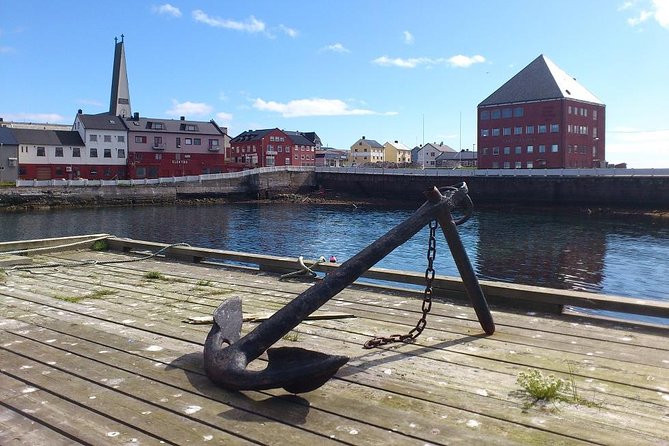
The route begins at NASTA Servicemekaniker on Kaigata 18B in Vardø and finishes back at the same meeting point. That simple out-and-back arrangement is useful if you need to collect a bag, return to a vehicle, or continue with another plan after the walk.
You access the tour through the VoiceMap application. The package includes the app plus offline access to the audio, maps, and geodata. Downloading the material for offline use is a practical step, especially since a walking tour is easier when you are not worrying about a live connection.
The phone’s GPS is central to the experience. As you move toward each new location, the guide begins speaking at the appropriate point. This creates a more natural rhythm than pressing play on a long recording and guessing when to stop.
The system is designed to be easy to follow, with a pleasant guide voice noted as one of its strengths. Still, give yourself a moment to get the app ready before walking. The tour does not provide a phone, and the price does not cover any transport or attraction tickets.
Vardø and the Pomor traders
One of the most useful parts of the walk is its explanation of the word Pomor. In Russian, it means those who live by the sea. The term refers to Russians from the White Sea area who sailed to northern Norway during the summer season to fish and trade.
Pomor trade began in Finnmark around the 1700s. Vardø became the main center of this exchange and earned the title capital of Pomor. That label gives you a better way to understand the town than simply calling it a remote Norwegian settlement.
The sea connected Vardø to places far beyond the nearby coast. Seasonal trade brought Russian and Norwegian communities into regular contact, with fishing and commerce shaping the town’s daily life. The audio guide uses this background to show Vardø as a meeting point, not merely the farthest eastern corner of Norway.
I like this opening subject because it gives the rest of the walk a human scale. Before you reach military sites or memorials, you hear about people who crossed the sea to work, trade, and build relationships. It also helps explain why Vardø’s story has both Norwegian and Russian threads.
Do not expect a long museum-style account of Pomor commerce. The tour lasts less than an hour, so this part is an introduction rather than a full study. If you want more detail, you will need to find a museum or other attraction separately, and any entrance fees are your responsibility.
Steilneset Memorial and the witch trials
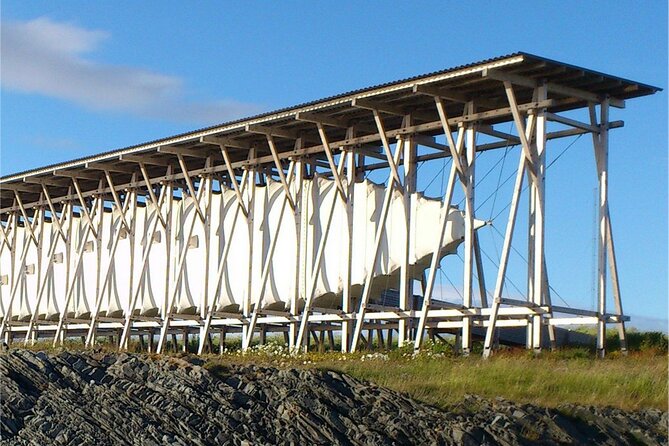
The Steilneset Memorial is the most serious stop on the route. It commemorates the trial and execution of 91 people accused of witchcraft. The number alone makes clear that this was not a minor episode in Vardø’s past.
The memorial was designed by artist Louise Bourgeois and architect Peter Zumthor and opened in 2011. Their involvement gives the site a strong artistic identity, but the audio walk keeps the focus on the people who suffered and on the historical meaning of the trials.
This is not a cheerful sightseeing stop, and the subject deserves time and attention. The route allows you to hear the context while you approach the memorial, then take in the place itself. I would avoid rushing through this section simply because the full tour is short.
The memorial also changes the tone of the walk. The Pomor section is about exchange and movement. Here, the story turns toward fear, accusation, and punishment. That contrast is one reason the route feels more thoughtful than a simple list of landmarks.
The tour does not include admission to museums or other attractions along the way. The supplied information does not identify an entrance fee for the memorial itself, so you should check locally if access arrangements matter to your plans. The important point is that the audio tour gives you the historical setting, but it does not replace a separate ticketed attraction.
More Self-Guided Tours in Norway:
- Oslo: Scenic Fjord Cruise with Audio Guide Commentary
★ 4.5 · 5,375 reviews - Molde: Atlantic Ocean Road & Varden Audio Guide Bus Tour
★ 4.1 · 473 reviews - Geiranger: Bus Tour with Multilingual Audio Guide
★ 4.0 · 317 reviews - Bergen: Self-Guided Round-Trip Full-Day Excursion
★ 4.5 · 158 reviews
Vardøhus Fortress and the town’s defenses

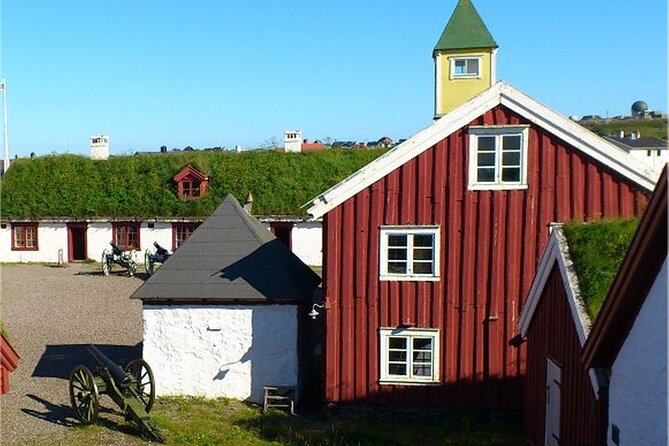
Vardøhus Fortress gives the walk another shift in subject. Built between 1733 and 1739, it remains almost in its original form. The site is shaped like an eight-point star, with the walls protecting the buildings inside.
That star shape is not just an architectural curiosity. It shows how the fortress was planned as a defensive structure. On a map or from the grounds, the geometry helps you understand how the site organized protection around the settlement.
Vardøhus did not see military action until the Second World War. That detail is worth noting because old fortifications often suggest a long record of battles. Here, the fortress’s importance came as much from its position as from combat.
During the Second World War, it was used as an anti-aircraft site and a prisoner-of-war camp before the German occupation. Those later uses add a difficult modern chapter to the older stone and earthwork defenses.
The route’s title also refers to radars, and that word points toward Vardø’s continuing strategic importance. The supplied tour details do not provide a full explanation of the radar installations, so you should not expect a technical lecture. Instead, the walk places Vardø’s military role beside its trading past and shows how the town’s location has mattered across different periods.
The fortress is a particularly good stop for visitors who prefer places with visible structure. Unlike a story that exists only in an audio recording, the eight-point plan gives you something concrete to inspect. You can connect the narration to walls, buildings, and the shape of the site.
Hornøya and Arctic birdlife

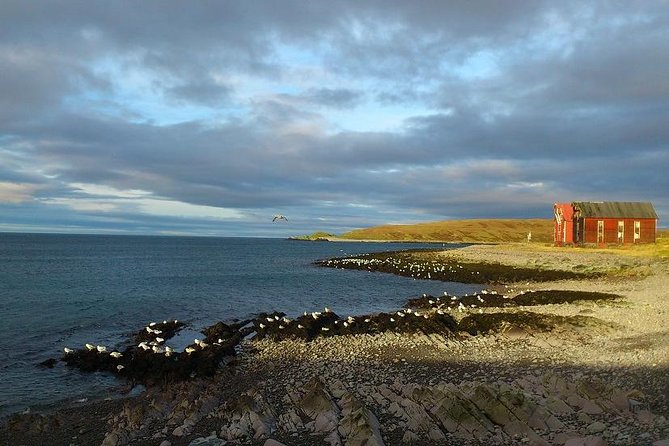
Hornøya is described as the easternmost nature area in Norway. The walk points you toward the island and its birdlife, where you can go aground and experience birds at close quarters.
This part expands the tour beyond human history. Vardø’s identity comes from the sea, trade, and defense, but it is also shaped by its position beside an important natural area. Hornøya gives you a reason to think about the coast as habitat, not just as a route for boats.
The wording about going aground means this is connected to an island visit rather than just a view from the street. However, transportation to Hornøya is not included in the $6.99 tour. The audio walk can introduce the place, but you must arrange and pay for any separate transport or activity yourself.
That distinction matters when planning your day. If your goal is only to complete the 35-minute walking route, treat Hornøya as a subject and nearby point of interest. If you want to land there and see the birdlife close up, allow extra time and confirm the separate arrangements before booking.
What the $6.99 price really covers
At $6.99 per person, the tour is priced as a low-cost introduction rather than a full guided excursion. You are paying for lifetime access to the Vardø audio tour, the VoiceMap application, and offline audio, maps, and geodata.
That lifetime access improves the value if your plans change. You can take the walk when the weather or schedule suits you, and you are not tied to one departure time. The tour is available daily around the clock according to the stated opening hours, from January 1, 2021 through July 2, 2027.
The price does not include a smartphone, transport, food, drinks, or tickets to museums and other attractions. You should see the tour as a storytelling layer for a walk around Vardø, not as a package covering the town’s other expenses.
I think the value is strongest for independent visitors who already have a reason to be in Vardø. For $6.99, you get a guided structure without paying for a private human guide. It is less useful if you want transport, personal conversation, or a detailed answer to every question.
Timing, access, and who will enjoy it

The tour takes about 35 minutes, though your actual time may be longer if you pause at the memorial, fortress, or other points. Since the route uses GPS, walking at a relaxed pace is sensible. You do not need to hurry to keep up with a group.
Only your own group participates, which makes the activity private. Most people can take part, and service animals are allowed. The starting point is near public transportation, but the tour itself does not provide any ride.
The route is offered in English. That makes it a practical choice for English-speaking visitors who want local context without arranging a live guide. If you prefer another language, this particular experience will not meet that need.
You should also think about the conditions of a northern coastal town. The supplied details do not give weather guidance, so I would plan sensibly for outdoor walking and keep your phone protected and charged. That is practical advice rather than a special feature of the tour, but it matters when your guide exists inside a phone.
The main strengths and limits
The strongest feature is the GPS-triggered narration. The guide starts as you reach new points, so you can focus on the place in front of you instead of managing a long audio file. The system has been praised for working well, and the calm voice makes the format easier to follow.
The second strength is the selection of subjects. Pomor trade, witch trials, Vardøhus Fortress, radars, and Hornøya cover commerce, tragedy, defense, and nature in a compact route. You get a useful first picture of Vardø without spending half a day on a formal tour.
The main weakness is the fixed scope. Thirty-five minutes is convenient, but it leaves little room for extended explanation. You will hear the essential story, then need to do your own research or pay separately if you want museums, island transport, or further interpretation.
The non-refundable booking terms also deserve attention. Once purchased, the experience cannot be changed or refunded, even if you cancel. Because the tour has flexible access, the best approach is to buy only when you are confident you will be in Vardø and have a compatible smartphone.
Should you book this Vardø tour?
Book it if you want a short, inexpensive introduction to Vardø and prefer to explore independently. It is especially well suited to people with limited time, visitors who dislike fixed group departures, and anyone interested in the town’s Russian trade links, witch trials, fortress, or birdlife.
Skip it if you want a live guide, transport, entrance tickets, or a long historical explanation. The tour gives you a strong framework, but you remain responsible for the phone, route, and any extra stops.
For $6.99, the balance is favorable. You get a private, flexible walk with offline access and a clear route through some of Vardø’s most important subjects. Just treat it as a compact audio companion, not a full day of guiding, and it should fit neatly into your time in the Far North.
FAQ
Where does the Vardø walking tour begin?
The tour begins at NASTA Servicemekaniker, Kaigata 18B, 9950 Vardø, Norway.
Where does the tour finish?
The activity ends back at the meeting point on Kaigata.
How long does the tour take?
The walking tour takes approximately 35 minutes.
What language is the tour offered in?
The tour is offered in English.
How do I access the tour?
You access the private tour through the VoiceMap smartphone application. Offline access to the audio, maps, and geodata is included.
Is transportation included?
No. Transportation is not included. Food, drinks, and tickets or entrance fees for museums and other attractions are also excluded.
Can I cancel or change the booking?
No. The experience is non-refundable and cannot be changed for any reason after booking.
Just added in Norway
- Vik i Sogn: Authentic Farm Visit★ 5.0 · 3 reviews
- From Svolvær: Whale Watching Day Trip to Andenes★ 3.8 · 27 reviews
- Two Fjord SUP n Sauna Guided Paddle Tour (Stavanger)★ 5.0 · 1 review
- Voss – Mountain Bike – Bømoem Forest★ 4.3 · 2 reviews
- Vossevangen: Nærøyfjord Full-Day Guided Kayaking Trip★ 4.8 · 4 reviews
- Ulvik: Hardangerfjord Ultimate RIB Tour★ 4.7 · 39 reviews
- Ulvik adventure: Exploring Hardangerfjord’s Osafjord by RIB★ 4.8 · 5 reviews
- Tromsø:Northern light tour with mini bus i Tromsø★ 4.9 · 8 reviews
Walking Tours, compared.

Past & Present Small Group Guided Walking Tour
Read our review →
Walking Tour in Bergen of the Past and Present
Read our review →



Browse the lists this tour appears in