
REVIEW · CITY TOURS
Oslo City Walks: The City of Contrasts
Oslo changes fast. This two-hour walk gives you a close look at how an old capital is making room for new districts, modern transport, and bold architecture. With an authorized Oslo guide, you move from Oslo Visitor Centre through Central Station and across the Acrobat pedestrian bridge toward Bjørvika, ending near the Opera House and Deichman Library.
I like the strong focus on modern architecture and the way the route connects Oslo’s industrial past with its present-day building boom. I also like the gentle walking pace, which lets you ask questions and take photos without being rushed. The main drawback is clear: this is not a classic tour of Oslo’s major historic sights, and some people may find the route light on famous landmarks.
In This Review
- Key points to know before you book
- Oslo’s new story begins at Østbanehallen
- From Oslo Central Station to the Acrobat bridge
- Reading the old and new buildings in Bjørvika
- Passing the new Munch Museum
- Finishing near the Opera House and Deichman Library
- What the guide adds to a short walk
- Is $52 a fair price?
- Walking conditions and what to wear
- Who will enjoy this Oslo experience most?
- Should you book the City of Contrasts walk?
- FAQ
- Where does the Oslo City Walks tour meet?
- How long does the tour last?
- What is the price?
- What languages are available?
- Where does the walk finish?
- Does the tour include an authorized guide?
- Does the tour visit the Munch Museum?
- Should I arrive before the starting time?
- What should I wear?
- Can I cancel for a full refund?
Key points to know before you book
- The Acrobat bridge is a central highlight: You cross this striking pedestrian link from Oslo Central Station into Bjørvika.
- Bjørvika shows Oslo’s modern face: The route passes Bispevika, the new Munch Museum, the Opera House area, and Deichman Library.
- This is a city-change tour: Your guide explains industrial growth, new construction, transport, and the mix of older and newer buildings.
- The pace is designed for conversation: You have time for questions, photos, and a steady two-hour walk.
- It costs $52 per person: That is fair if you want guided context on architecture, but less attractive if you mainly want famous sights.
- Wear practical shoes: High heels are not allowed, and the walk takes place outdoors in changing weather.
Oslo’s new story begins at Østbanehallen
Your meeting point is easy to find if you arrive at Oslo Central Station. The Oslo Visitor Centre sits inside Østbanehallen at Jernbanetorget 1, and you meet your guide in front of the centre.
I would arrive at least 10 minutes early. Oslo Central Station is a busy place, and Østbanehallen contains shops and food outlets that can distract you from the simple task of finding your guide. The meeting point is indoors, which is useful in bad weather.
The walk is led in English or Norwegian by an authorized Oslo guide. That matters here because the subject is not just architecture. You are trying to understand why Oslo looks the way it does today, and a local guide can connect the buildings and streets to the city’s wider growth.
The tour is described as beginning on a typical Monday evening. Check the available departure time when you book, since the exact starting time can vary. An evening start may give the city a different feel, especially around the central station and waterfront districts, but you should still dress for the weather and bring shoes suited to walking.
A few more options to weigh up in Oslo
- Oslo: Scenic Fjord Cruise with Audio Guide Commentary
★ 4.5 · 5,375 reviews - Oslo Nature Walks: Island Hopping Tour
★ 4.8 · 2,713 reviews - Oslo: 100% Electric Oslofjord Sightseeing Cruise
★ 4.4 · 2,041 reviews
From Oslo Central Station to the Acrobat bridge
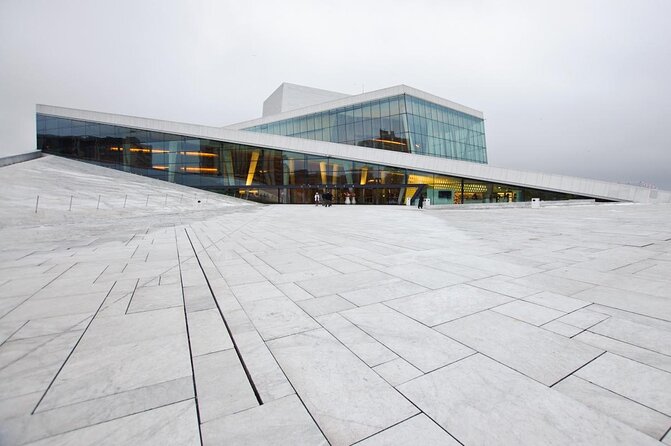
The first notable move is across the Acrobat pedestrian bridge. The bridge links the area around Oslo Central Station with Bjørvika, and it gives you a useful sense of how the city is stitching together older transport zones and newer waterfront development.
This is a good place to think about the tour’s main idea. Oslo is not simply replacing old buildings with new ones. The city is reshaping former industrial and transport areas while keeping older parts of its urban fabric nearby. From the bridge, you can see the change in scale and design as the route moves toward Bjørvika.
The bridge also adds a visual moment to what could otherwise be a talk-heavy walk. You get photographs, movement, and a clear transition between districts. If architecture interests you, pay attention to how the bridge functions as both a practical crossing and part of the city’s newer public space.
Do not expect a long sightseeing stop with entry into a building. The value is in seeing the connection between places while your guide explains the changes around you.
Reading the old and new buildings in Bjørvika
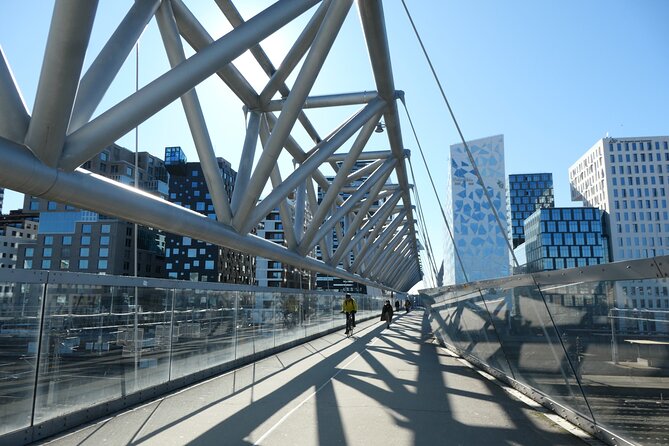
Bjørvika is where the city’s modern side becomes most obvious. The walk continues through the waterfront area and Bispevika, where contemporary buildings sit close to older parts of Oslo.
The route is useful for anyone who wants more than a list of dates and monuments. You can look at the materials, shapes, height, and placement of the newer buildings while hearing how industrialization and city expansion helped shape Oslo. The contrast is the point.
The experience may appeal to you if you have already seen the standard central sights and want a different angle. It also works if you are visiting Oslo for a short time and want a quick explanation of the city’s current direction.
Still, keep your expectations in check. This is not a broad tour of every district, museum, or historic building. One piece of past feedback described the walk as unusually flat and limited in major sights, with the Opera House and an old fort among the few prominent places noticed. The route provided for this experience specifically highlights Bjørvika, Bispevika, the Munch Museum, and Deichman Library, so you should not book it expecting a full introduction to Oslo’s historic centre.
Passing the new Munch Museum
The new Munch Museum is one of the route’s most recognizable modern landmarks. Even if you do not go inside, seeing it as part of the Bjørvika district helps explain the scale of Oslo’s cultural and building projects.
Your guide’s commentary is especially useful here because the museum is not treated as an isolated attraction. It is part of a much larger change in the waterfront area. The museum, new public spaces, pedestrian routes, and nearby buildings show how Oslo is developing a new urban centre close to the station and harbour.
This stop is best for visual comparison. You can see how a major cultural building differs from older structures nearby, and you can take photos of the changing skyline. If your main goal is to visit the Munch collection, remember that this walk does not include museum admission. It gives you the outside context, not a gallery visit.
The same is true of the other buildings along the way. You are looking at Oslo as a working city and a construction project, not simply moving from one ticketed attraction to another.
More city tours in Oslo:
- Oslo: City Sightseeing Hop-On Hop-Off Bus Tour
★ 3.6 · 724 reviews - Oslo: Grand City Sightseeing Tour by Bus with Fjord Cruise
★ 4.6 · 647 reviews - Oslo Combo Tour: Grand City Tour and Oslo Fjord Cruise
★ 4.5 · 555 reviews - City Sightseeing Oslo Hop-On Hop-Off Bus Tour
★ 3.0 · 455 reviews
Finishing near the Opera House and Deichman Library
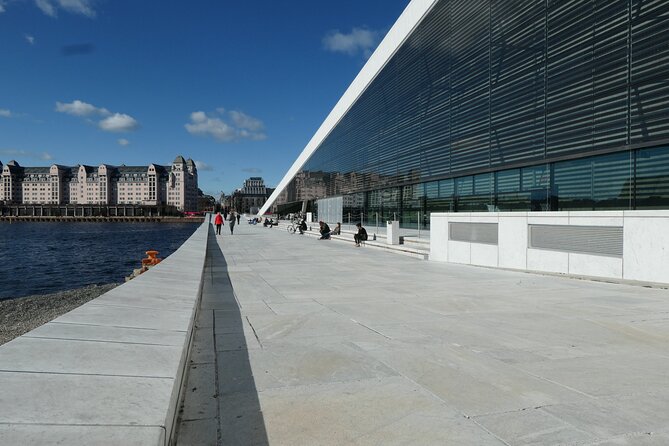
The walk ends at Deichman Library beside the Opera House. This is a strong finish because both buildings help show Oslo’s effort to create public spaces around culture, water, and pedestrian access.
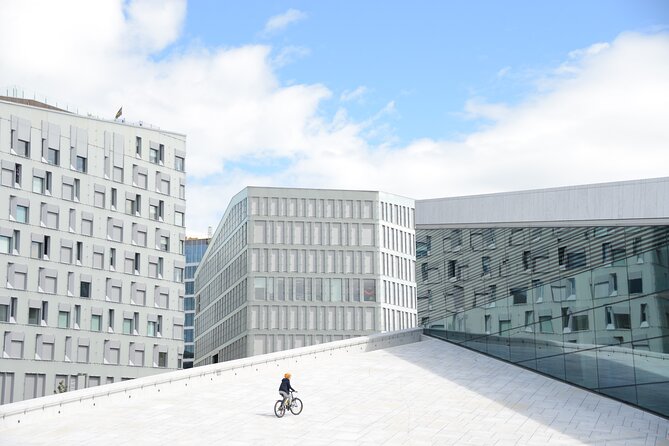
The Opera House is the more familiar sight, with its broad, walkable exterior and strong connection to the waterfront. Deichman Library adds a newer civic building to the final stop. Together, they give you a clear picture of the contrast that defines the tour: older Oslo nearby, newer Oslo rising around it.
This ending is also practical. You finish in a central area rather than at an isolated viewpoint or distant suburb. From there, you can continue exploring on your own, take more photos, or stop for food. The provided details do not promise a return to the starting point, so plan on ending your evening at Deichman Library.
The drawback is that the tour’s final stretch may feel familiar if you have already spent time around the Opera House. The guide’s explanation is what adds value. Without that context, you could see the same buildings on your own for free.
What the guide adds to a short walk
The best version of this experience depends heavily on the guide. One positive account praised the guide’s ability to answer questions, explain the city clearly, and keep the pace comfortable. Another short comment described the guide as quick and capable.
That matches the structure of the walk. There are no major interior visits or long transport sections to carry the experience. The guide has to make the streets, bridges, building fronts, and planning choices interesting.
You should feel free to ask questions as you go. The tour is designed for conversation, and the two-hour length gives you enough time to pause without turning the walk into a full-day commitment. If you care about urban design, city planning, industry, or architecture, your questions can make the tour much more rewarding.
The feedback is not perfectly consistent. One past participant found the guide lacking in personality, while another described the guide as fantastic. That difference tells you something important: this is a guide-led experience, so the quality can depend on the person leading your group and on how much you engage.
A separate comment complained that the group was too large. The available information does not give a fixed maximum group size, so you should be prepared for the possibility that it may not feel like a private walk. A larger group can make questions and photography less easy, especially on narrow paths or busy public areas.
Is $52 a fair price?
At $52 per person, this is not the cheapest way to see the Opera House or walk through Bjørvika. You can visit the public areas on your own without paying an admission fee. The price is justified only if the guide’s explanation is important to you.
I think the value is strongest for three types of visitors:
- You want a guided introduction to Oslo’s current development.
- You enjoy architecture and city planning more than a checklist of monuments.
- You prefer a short walk with room for questions instead of a packed sightseeing schedule.
The value is weaker if you want to cover the Royal Palace, Akershus Fortress, museums, or a wide range of historic sights in one outing. The route is focused, and that focus is both its strength and its limit.
The tour can also work well early in a visit. After two hours, you will have a better sense of the central station area, Bjørvika, Bispevika, and the waterfront cultural buildings. You can then return to the places that caught your attention.
Walking conditions and what to wear
You walk outdoors for about two hours, so practical clothing matters. Good walking shoes are recommended, and high-heeled shoes are not allowed. That rule is sensible given the bridges, streets, and changing surfaces along the route.
Dress for the weather. Oslo can be cool, wet, or windy, and the route includes open public areas where you may feel the conditions more than you would inside a museum. A light waterproof layer is a practical choice, though the supplied information only requires weather-appropriate clothing.
Drones are not allowed. Leave yours behind rather than expecting to use it for aerial photographs.
The tour does not list special transport, hotel pickup, food, or museum admission as included. The only included feature is the authorized guide. That makes the walking route simple, but it also means you should budget separately for anything you want to eat or visit after the walk.
Who will enjoy this Oslo experience most?
I would recommend this walk to you if you like seeing how a city works. The focus on industrialization, infrastructure, transport, new construction, and older buildings gives you a more practical view of Oslo than a standard monument tour.
It also suits repeat visitors who have already seen the obvious sights. The route offers a fresh look at districts that are changing quickly, with several strong photo stops along the way.
First-time visitors can enjoy it too, but you should treat it as a focused introduction rather than a complete city tour. If you have only one short evening in Oslo, you may prefer a route that covers more traditional landmarks.
Families and casual walkers may appreciate the two-hour length and steady pace. The exact group size is not specified, so the experience may feel less personal if many people attend. People who dislike outdoor walking in poor weather should also think twice.
Booking flexibility helps. You can cancel up to 24 hours before the tour for a full refund, and the reserve-now, pay-later option lets you hold a place without paying immediately. Those policies are useful when your Oslo schedule is still shifting.
Should you book the City of Contrasts walk?
Book it if you want to understand Oslo’s modern growth, enjoy contemporary architecture, and value a guide who can answer questions along the way. The Acrobat bridge, Bjørvika, the Munch Museum, the Opera House, and Deichman Library create a clear two-hour story about a city changing around you.
Skip it if your priority is a broad list of historic sights or a more entertaining, personality-driven tour. At $52, the experience needs strong commentary to earn its price, and past feedback shows that guide style and group size can affect the day.
My practical call: choose this tour as a focused architecture and urban-development walk, not as your only Oslo sightseeing tour. Wear comfortable shoes, arrive early at Østbanehallen, and book it when you want context for the new city taking shape beside the old one.
FAQ
Where does the Oslo City Walks tour meet?
You meet your guide in front of the Oslo Visitor Centre inside Østbanehallen, at Jernbanetorget 1, 0154 Oslo.
How long does the tour last?
The tour lasts approximately two hours.
What is the price?
The listed price is $52 per person.
What languages are available?
The live guide is available in English and Norwegian.
Where does the walk finish?
The tour finishes at Deichman Library, next to the Opera House.
Does the tour include an authorized guide?
Yes. An authorized Oslo guide is included.
Does the tour visit the Munch Museum?
The route passes by the new Munch Museum. Museum admission is not listed as included.
Should I arrive before the starting time?
Yes. You should arrive at the meeting point 10 minutes early.
What should I wear?
Wear clothing suited to the weather and good walking shoes. High-heeled shoes are not allowed.
Can I cancel for a full refund?
Yes. You can cancel up to 24 hours in advance for a full refund.
Just added in Oslo
- Oslo Winter Highlights Bike Tour★ 5.0 · 36 reviews
- 4 hours Best View of the Oslofjord Winter Edition★ 4.0 · 15 reviews
- The Ultimate Study of the Human Form at Vigeland’s Sculpture Park with a Local★ 4.0 · 14 reviews
- Unknown war. Oslo and Norway during 1940-45★ 5.0 · 74 reviews
- Top of Oslo Snowshoe Tour★ 5.0 · 2 reviews
- The Scenic Roadtrip, Oslo to Bergen via Flam & the Fjords★ 5.0 · 25 reviews
- The Viking Planet Museum – Mini Group (4 adults)★ 4.0 · 16 reviews
- The Oslo Beer Adventure★ 4.5 · 11 reviews
City Tours, compared.
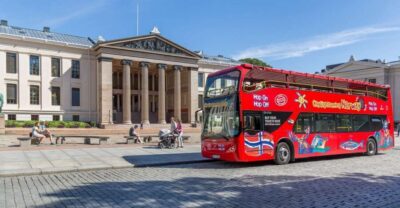
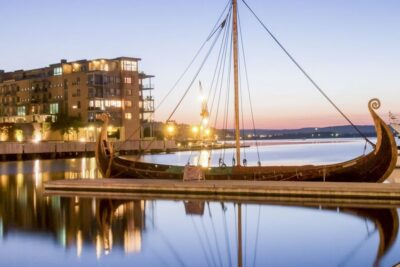
Grand City Sightseeing Tour by Bus with Fjord Cruise
Read our review →
Oslo Combo Tour: Grand City Tour and Oslo Fjord Cruise
Read our review →

Browse the lists this tour appears in