
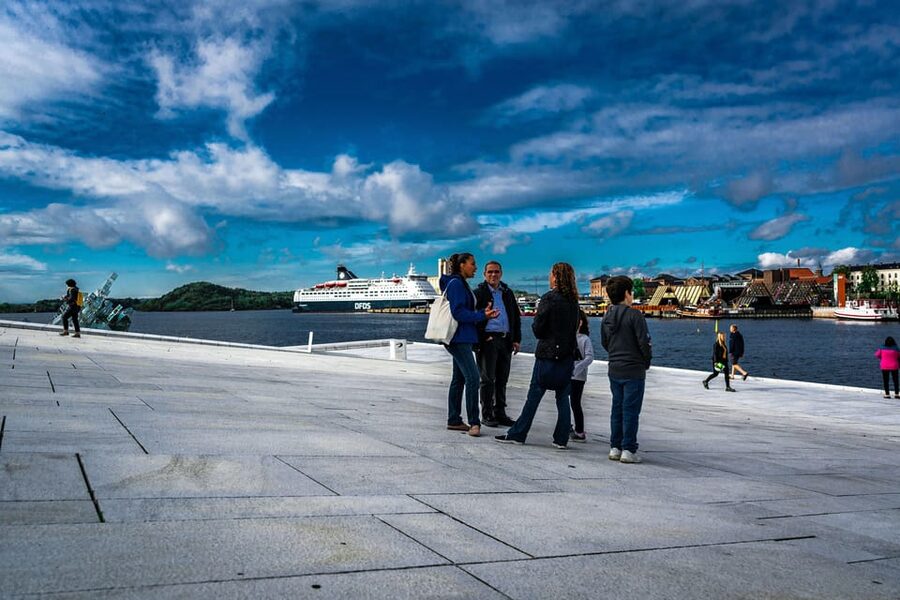
REVIEW · VIGELAND PARK TOURS
Oslo: 3-hour Highlights & Vigeland Park Private Walking Tour
Oslo reveals itself quickly. This private walking tour packs the city’s main sights, a tram ride, and Vigeland’s remarkable sculptures into three well-planned hours. I like the small private format, which gives you room to ask questions and adjust the pace, and I like the way the route links Norway’s royal, political, artistic, and peace-making stories. The guide is praised for clear English, a friendly manner, and answering questions well.
The main drawback is the brisk schedule. You will see many places from the outside rather than enter them, and the tour ends at Frognerparken instead of returning you to central Oslo. You should also expect gravel and unpaved paths at Vigeland Park, so comfortable shoes are not optional.
In This Review
- Key points to know before booking
- Why this three-hour Oslo route works
- Beginning at the Nobel Peace Center
- Oslo City Hall and the city’s public face
- The National Theatre and Norway’s literary tradition
- The Royal Palace above Karl Johans gate
- Parliament, Akershus Fortress, and the harbor
- Bank Square and Christiania Torv
- The public transport ride to Frogner Park
- Gustav Vigeland’s sculpture park
- The Monolith Plateau and its 36 figures
- The Monolith and the final park walk
- What the $518 private price delivers
- Walking conditions, timing, and language choices
- Should you book the Oslo highlights tour?
- FAQ
- Where does the tour start?
- Where does the tour finish?
- Is public transport included?
- What sights are included in central Oslo?
- What will I see at Vigeland Sculpture Park?
- What languages are available?
Key points to know before booking
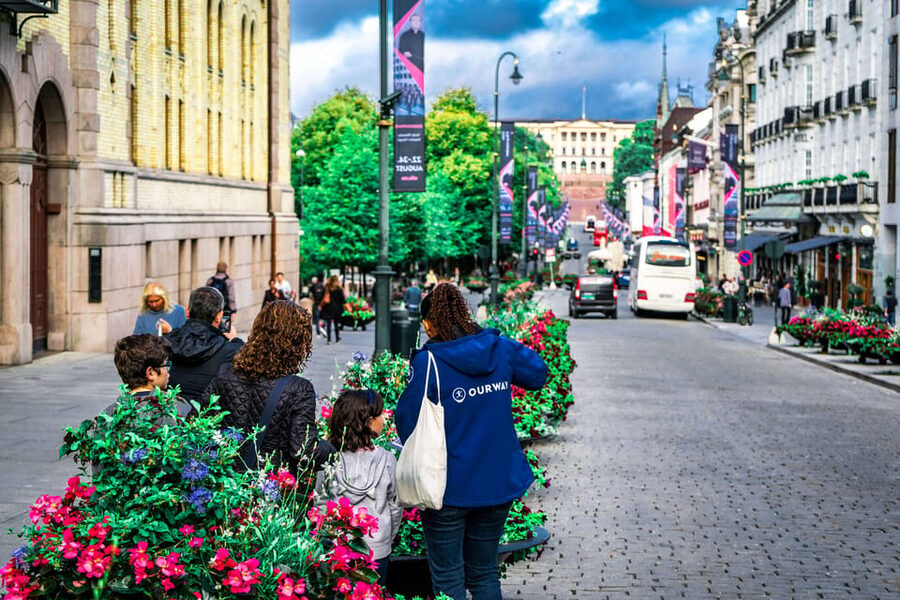
- A city-to-park route: Start at the Nobel Peace Center, walk through central Oslo, then take public transport to Vigeland Sculpture Park.
- A private experience: The listed price is $518 for a group up to one person, with a private guide and a return public transport ticket included.
- The strongest history lesson: Akershus Fortress, Oslo City Hall, the Royal Palace, Parliament, and the Nobel Peace Center give you a useful overview of Norway’s capital.
- A major art stop: The tour includes Vigeland’s Monolith Plateau and its 36 figures, plus the famous Monolith carved from one block of stone.
- A flexible finish: The formal tour ends in Frognerparken, but you can continue exploring the park on your own.
- Languages available: You can book a live guide in English, Spanish, French, Italian, Norwegian, or German.
Why this three-hour Oslo route works
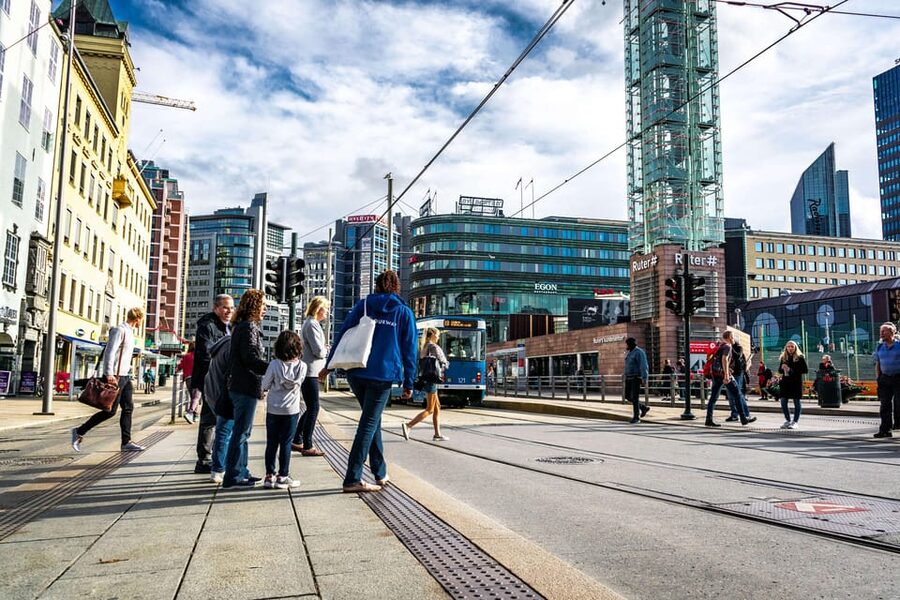
Oslo is spread out enough that a first visit can feel scattered. One sight sits by the harbor, another on a hill, another along the main shopping street, and Vigeland Park lies well beyond the compact center. This tour solves that problem by creating a clear route through the city before moving you to Frogner Park by tram or other public transport.
I especially like the balance between walking and riding. The first 90 minutes are spent on foot in Sentrum, where the guide can point out the relationships between government, monarchy, culture, and Norway’s maritime setting. The 30-minute public transport segment then gives your feet a break before the final hour at Vigeland.
This is not a museum-heavy tour. The focus is on seeing the city, learning its story, and understanding why each major sight matters. If you want long interior visits or time for detailed photographs at every stop, the schedule will feel tight. If you want a well-organized first look at Oslo, it does a lot in a short period.
More Walking Tours in Oslo
- Oslo: Best of Oslo Walking Tour
★ 4.5 · 458 reviews - Oslo: Guided Walking Tour of Central Oslo
★ 4.7 · 438 reviews - Oslo: Historic Myths & Legends Evening Walking Tour
★ 4.8 · 408 reviews
Beginning at the Nobel Peace Center
The meeting point is outside the Nobel Peace Center at Brynjulf Bulls plass 1. Your guide is expected to arrive about 10 minutes before departure and will hold a sign with the local partner’s name. Arriving a little early makes sense, since this is a walking tour and the group moves off promptly.
The Nobel Peace Center is a fitting starting point. It introduces Alfred Nobel and the story behind the peace prize, giving the tour a theme that is closely tied to Oslo’s international identity. You should not expect a full museum visit as part of the three-hour route, but the stop helps explain why this building and this prize matter in Norway.
The guide’s role is important here. A good explanation of Alfred Nobel can turn a quick exterior stop into a useful piece of context. The guide is praised for being personable, speaking strong English, and handling questions with confidence. A private pair also found that the guide could respond well to their wishes, which is one of the main advantages of booking this format.
Oslo City Hall and the city’s public face
From the Nobel Peace Center, the route continues through central Oslo to City Hall. The building was constructed between 1931 and 1950, and its large brick form gives the waterfront area a strong civic presence.
You will see City Hall as a sightseeing stop rather than take part in a full interior tour. That distinction matters. The guide can explain its place in Oslo’s public life, while you get a close look at one of the city’s most important buildings without spending valuable time waiting in an entrance line.
This part of the walk also helps you understand Oslo as a working capital, not just a collection of royal buildings and scenic viewpoints. The city’s government, cultural institutions, and harbor are all close together. I find that useful on a first visit because it gives the center a shape in your mind.
The National Theatre and Norway’s literary tradition
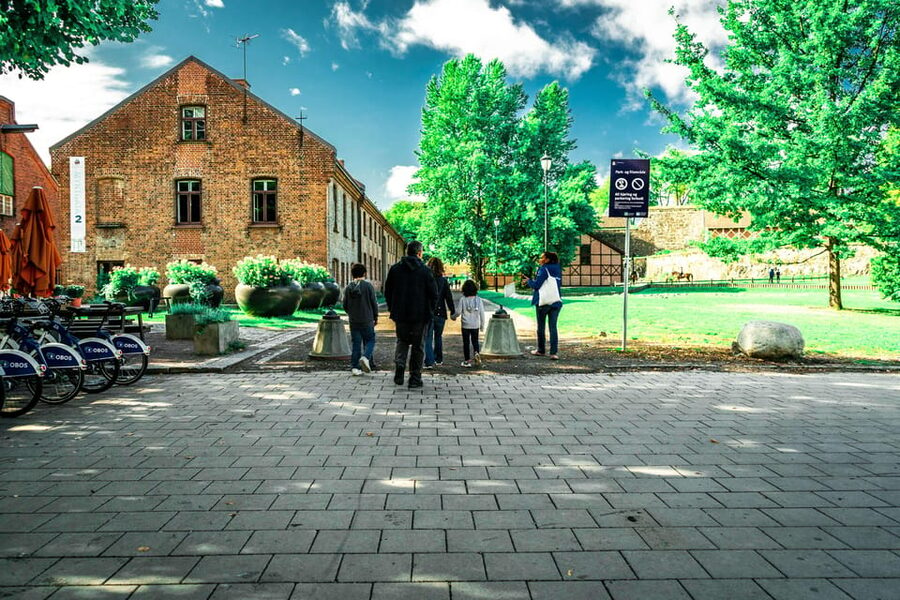
The Norwegian National Theatre adds a cultural stop to the route. It is associated with some of Norway’s greatest playwrights, so the building offers more than a quick photograph. It points toward the country’s strong theatrical and literary traditions.
The tour does not include a performance. Instead, you will hear about the theatre while moving through the central district. That makes this a good stop for visitors who want cultural context but do not have time to schedule a show.
The pace here remains brisk. You may get only a short explanation before continuing, but the route is designed to connect several landmarks rather than linger at one. I recommend treating the National Theatre as part of the larger story of Norwegian public culture, not as a standalone attraction.
More Vigeland Park visits:
- Oslo: Sightseeing with Holmenkollen Ski Jump & Vigeland Park
★ 4.5 · 451 reviews - Oslo Panorama Tour with Holmenkollen Ski Jump and Vigeland Park
★ 4.5 · 153 reviews - The Ultimate Study of the Human Form at Vigeland’s Sculpture Park with a Local
★ 4.0 · 14 reviews - Vigeland Alien Threat in Oslo Exploration Game and Tour
★ 5.0 · 8 reviews
The Royal Palace above Karl Johans gate
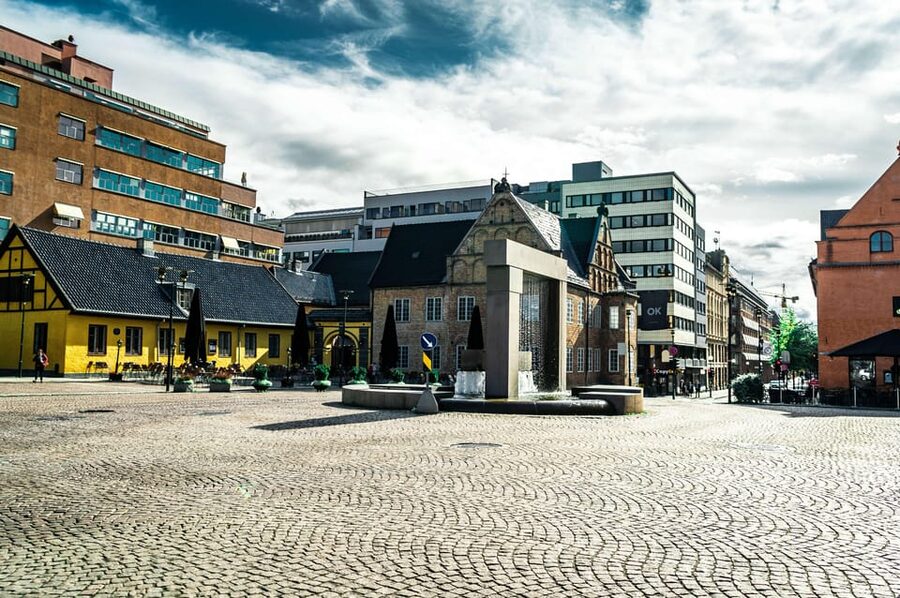
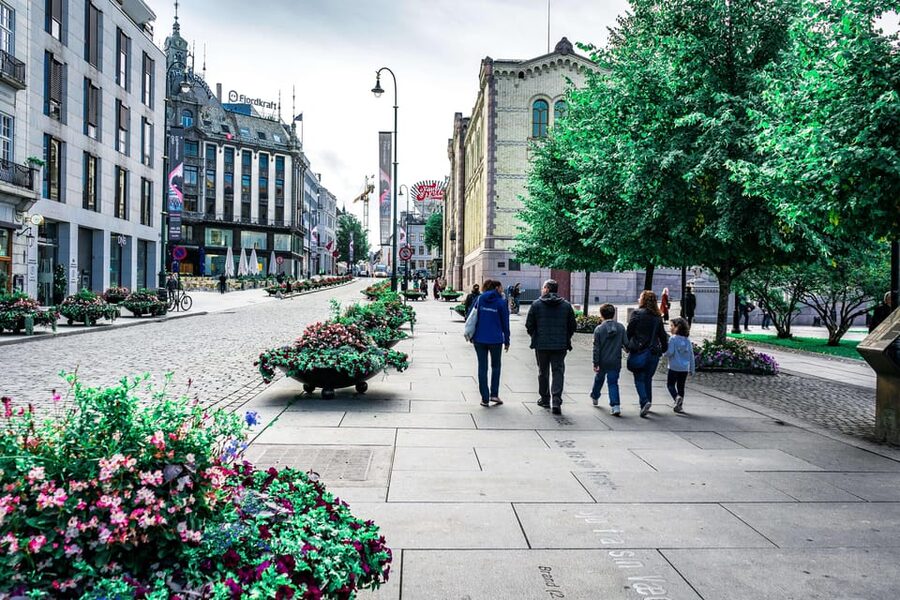
The Royal Palace sits on a hill above Karl Johans gate, Oslo’s main pedestrian shopping street. This position gives the palace a clear visual relationship with the center below. You can see how the royal residence anchors the upper end of the city’s principal avenue.
The guide helps place the palace in Norway’s modern national story. You will see the building from the outside, hear about its role, and then continue along the route. If entering the palace is important to you, you will need a separate visit because this experience does not list an interior admission.
Karl Johans gate provides a change of mood. After the formal palace and theatre stops, you move along a lively public street lined with shops and city activity. It is also a practical orientation point. Once you know this avenue, finding several central sights later becomes easier.
Parliament, Akershus Fortress, and the harbor
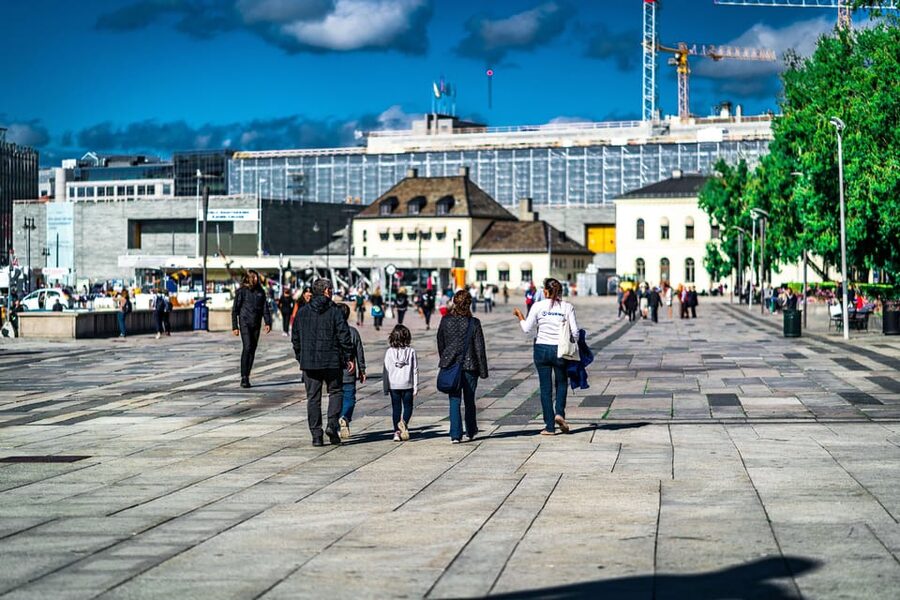
The Norwegian Parliament is the next major civic landmark. It is the place from which Oslo and the country are governed, making it a useful counterpart to the Royal Palace. Seeing both buildings in one walk gives you a simple picture of Norway’s constitutional structure: monarchy, elected government, and public institutions sharing the same central district.
The route then leads toward Akershus Fortress. This is one of the most rewarding outdoor stops because of its position above Oslo harbor. The fortress brings military and royal history into the tour, while the harbor view reminds you that Oslo’s story has always been tied to the water.
The description presents Akershus as a royal residence as well as a fortress. You should expect a guided sightseeing stop, not a long exploration of every building or room. Still, its setting makes it one of the places where the route feels especially rewarding. You get architecture, history, and a view in one stop.
Weather can affect this part of the walk. Much of the experience takes place outdoors, and the fortress area may involve uneven surfaces. Dress for the conditions rather than relying on Oslo’s city-center streets to be perfectly smooth.
Bank Square and Christiania Torv
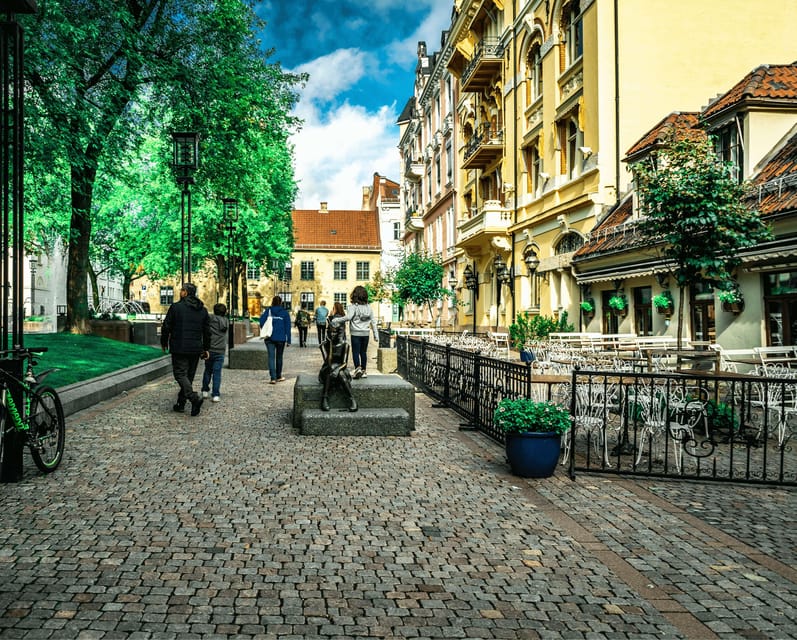
The walk continues through Bank Square and Christiania Torv, two places that help connect present-day Oslo with its earlier urban identity. These stops are less famous internationally than the Royal Palace or City Hall, but they give the guide space to explain how the capital developed.
Christiania Torv is especially useful as a reminder that Oslo has not always looked or functioned as it does today. The name itself points to an earlier period in the city’s story. You will not spend a full afternoon studying historic buildings, but these locations add depth to the route and keep the tour from becoming a simple checklist of postcard sights.
This is where a private guide can make a real difference. You can ask why the square matters, how the city changed, or how the older center relates to the newer harbor district. The tour’s value depends partly on your curiosity, so bring questions.
The public transport ride to Frogner Park

After about 90 minutes in the center, you board public transport toward Vigeland Sculpture Park. The ride takes about 30 minutes, and a return ticket is included and provided by the guide.
This transfer is practical rather than scenic, but it solves a real Oslo sightseeing problem. Vigeland Park is an essential stop, yet it is not within easy walking distance of the central landmarks on this route. Public transport lets you cover both areas without wasting the tour on a long city walk.
The ride also creates a natural break. You have already covered several political, royal, and cultural sights. By the time you reach Frognerparken, the focus changes completely from city history to sculpture and human expression.
Remember that the official tour finishes in the park. You are not escorted back to the Nobel Peace Center, but the included transport ticket helps you make your own way afterward. You may also continue looking around Frognerparken before leaving.
Gustav Vigeland’s sculpture park
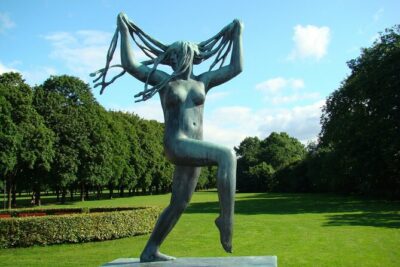
Vigeland Sculpture Park is the grand finale, and it deserves the time given to it. It is described as the world’s largest sculpture park, and the scale is immediately different from the compact city-center stops. The park contains many works by Gustav Vigeland, most made from local Iddefjord granite.
The guide explains how one man created this enormous artistic project. That story gives the park a human focus. Instead of simply walking past statues, you learn about the artist, the materials, and the ideas running through the collection.
The art is centered on people and the stages of life. The figures are direct and often physically expressive, making them easy to understand even if you do not usually visit sculpture parks. The guide’s explanation can help you notice repeated themes and relationships between the works.
The Monolith Plateau and its 36 figures
The Monolith Plateau is one of the park’s most striking areas. Thirty-six figures represent the circle of life, creating a scene that works both as a large-scale artwork and as a place for reflection.
The arrangement is important. You are not looking at one isolated statue but at a group of human forms placed together in a carefully planned setting. The guide can point out how the figures relate to one another and why this part of the park carries such visual weight.
The scale may surprise you. After the smaller street-level details of central Oslo, the plateau feels broad and monumental. Give yourself a moment to look beyond the first photograph. The human poses, stone surfaces, and grouping become more interesting when you slow down.
The Monolith and the final park walk
The Monolith itself is carved from a single block of stone. That fact alone makes it one of the park’s essential sights, but its design and height are what make the stop memorable. The sculpture rises above the surrounding figures and gives the park a clear focal point.
Most of the works are made from Iddefjord granite, a local material that connects the art to Norway’s physical setting. You are not just looking at abstract objects placed in a garden. You are seeing a large body of work shaped from stone associated with the region.
The final hour is guided, which helps you get more from the park than you might on a quick solo walk. At the same time, one hour is not enough to inspect every sculpture. If the park interests you greatly, plan to remain after the formal tour ends. The arrangement allows you to continue exploring Frognerparken on your own.
What the $518 private price delivers
At $518 for a group of up to one person, this is a costly way to tour Oslo if you are traveling alone. The price includes a professional guide, the three-hour route, public transport, and the guided visit to Vigeland Park, whose entrance is free.
The value improves if the booking structure allows additional members of your own private party at the same group price, but the supplied rate specifically says up to one person. Check the final booking details carefully so you understand how the group pricing applies to your party.
You are paying mainly for personal attention and efficiency. A private guide can answer your questions, adjust explanations, and respond to your interests in a way a large group tour usually cannot. The strong praise for the guide’s English, friendly manner, and ability to answer questions supports that benefit.
Still, the price is harder to justify if you only want basic orientation. Many of the stops are viewed from outside, and public transport is used for part of the route. I would choose it for a short Oslo stay, a first visit, or a special private outing where saving time matters more than finding the lowest possible cost.
Walking conditions, timing, and language choices
Bring comfortable shoes. The route includes ordinary city walking as well as gravel and unpaved paths in parts of Vigeland Park. Weather-appropriate clothing is also essential because this is an outdoor-focused experience.
The tour lasts three hours, with roughly 90 minutes in central Oslo, 30 minutes on public transport, and one hour in Vigeland Park. That division gives you broad coverage, but not much spare time. Keep your schedule clear around the tour so you do not feel rushed at the end.
Live guiding is available in English, Spanish, French, Italian, Norwegian, and German. If you have a language preference, select it when checking availability. The English guide has been praised for clear speech and a personable approach, which is useful on a tour with many short explanations.
The route is best for visitors who can walk comfortably for several hours and manage uneven surfaces. It may suit families, couples, solo visitors, and private groups who want a guide focused on their interests, but the price deserves careful thought for a solo booking.
Should you book the Oslo highlights tour?
I would book this experience if you have only a few hours in Oslo and want the major central sights plus Vigeland Park without organizing the connections yourself. The route is smart, the guide adds context, and the private format lets you ask questions about Norway’s monarchy, government, culture, and Nobel tradition.
I would skip it if your priority is entering several buildings, spending a long time at the Nobel Peace Center, or exploring Vigeland Park at a slow pace. You also need to be comfortable ending on your own in Frognerparken.
For the right visitor, this is an efficient introduction to Oslo. You get the city’s civic center, royal setting, harbor fortress, public squares, and one of its most memorable art collections in a single outing. Just pack good shoes, watch the weather, and judge the private price against the value of personal attention.
FAQ
Where does the tour start?
The tour starts outside the entrance to the Nobel Peace Center at Brynjulf Bulls plass 1 in Oslo.
Where does the tour finish?
The tour finishes at Frognerparken, next to Vigeland Sculpture Park. You can continue exploring the park afterward and make your own way back.
Is public transport included?
Yes. The guide provides a return ticket for public transportation, and the ride to Vigeland Park takes about 30 minutes.
What sights are included in central Oslo?
The route includes the Nobel Peace Center, Oslo City Hall, the Norwegian National Theatre, the Royal Palace, Karl Johans gate, the Norwegian Parliament, Akershus Fortress, Bank Square, and Christiania Torv.
What will I see at Vigeland Sculpture Park?
You will see works by Gustav Vigeland, including the Monolith Plateau with 36 figures and the Monolith carved from a single block of stone.
What languages are available?
Live guiding is available in English, Spanish, French, Italian, Norwegian, and German.
Just added in Oslo
- Oslo Winter Highlights Bike Tour★ 5.0 · 36 reviews
- 4 hours Best View of the Oslofjord Winter Edition★ 4.0 · 15 reviews
- The Ultimate Study of the Human Form at Vigeland’s Sculpture Park with a Local★ 4.0 · 14 reviews
- Unknown war. Oslo and Norway during 1940-45★ 5.0 · 74 reviews
- Top of Oslo Snowshoe Tour★ 5.0 · 2 reviews
- The Scenic Roadtrip, Oslo to Bergen via Flam & the Fjords★ 5.0 · 25 reviews
- The Viking Planet Museum – Mini Group (4 adults)★ 4.0 · 16 reviews
- The Oslo Beer Adventure★ 4.5 · 11 reviews
Vigeland Park Tours, compared.
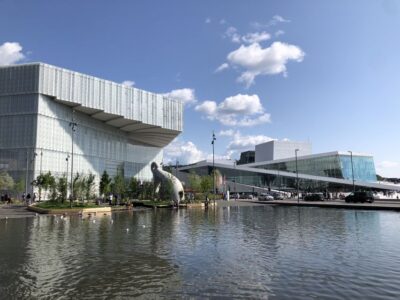
Sightseeing with Holmenkollen Ski Jump & Vigeland Park
Read our review →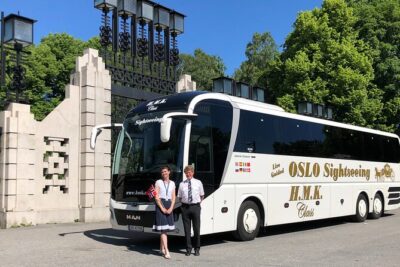
Oslo Panorama Tour with Holmenkollen Ski Jump and Vigeland Park
Read our review →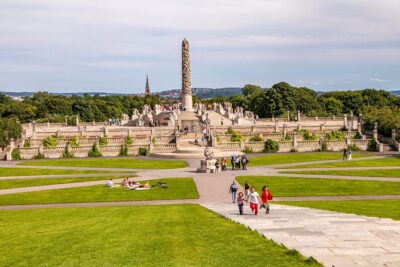
The Ultimate Study of the Human Form at Vigeland’s Sculpture Park with a Local
Read our review →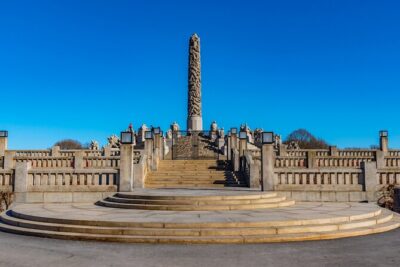
Vigeland Alien Threat in Oslo Exploration Game and Tour
Read our review →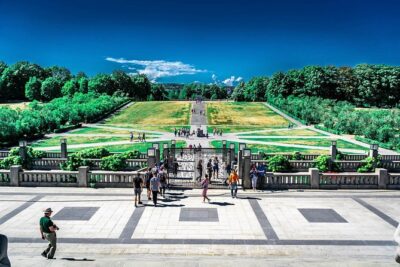
Visit the Instaworthy Spots of Oslo’s Vigeland Park with a Local
Read our review →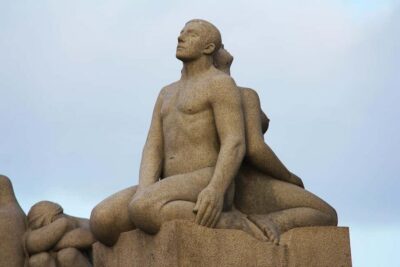
The Vigeland Park in Oslo: Insta-Perfect Walk with a Local
Read our review →
Oslo Private Tour: From The Opera to Vigeland Sculpture Park
Read our review →Browse the lists this tour appears in