
REVIEW · PRIVATE
Architectural Oslo: Private Tour with a Local Expert
Oslo’s best story is written in stone. This private walking tour links the city’s bold new buildings with older streets, religious landmarks, and political monuments, giving you a useful way to read Oslo rather than simply photograph it. I especially like the small-group format and the chance to shape the route around your interests. I also like that the walk moves from the Opera House to the waterfront, ending near Astrup Fearnley Museet.
The main drawback is value. At $756.32 for up to two people, this is a serious splurge for roughly two hours, and entry fees plus transport are not included. You will want to confirm the group-size terms before booking, since the experience is priced for up to two but also describes a private group of eight or fewer.
In This Review
- Key points at a glance
- Starting beside the Opera House
- Akrobaten Bridge and the changing Bjørvika district
- Oslo Cathedral and the older city center
- Parliament, civic power, and neoclassical design
- Wooden houses and cobbled streets
- Oslo City Hall and the Nobel Peace ceremony
- Ending at Astrup Fearnley Museet
- What the private format really adds
- Is $756.32 a fair price?
- Walking pace, weather, and practical planning
- Who should book this Oslo architecture walk?
- FAQ
- How long does the architectural tour last?
- Where does the tour start?
- Where does the tour end?
- Is this a private tour?
- How many people can join?
- Are museum and monument entry fees included?
- Can the tour route change?
- Should you book it?
Key points at a glance
- The Opera House begins the walk with public architecture you can touch and climb.
- Akrobaten Bridge shows how Bjørvika became a testing ground for new design.
- Oslo Cathedral and the older wooden-house areas add needed historical contrast.
- The Parliament and City Hall connect architecture with Norway’s political and diplomatic life.
- Renzo Piano’s Astrup Fearnley Museet provides a strong contemporary finish.
- The private guide can adjust the pace and route, but museum and monument admission costs extra.
Starting beside the Opera House
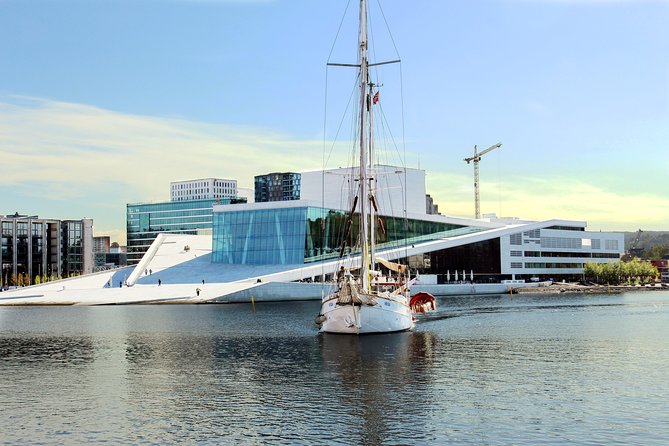
The meeting point is on the promenade at Operaen, beside Oslo’s famous Opera House. This is a smart place to begin because the building itself explains much of modern Oslo’s architectural character.
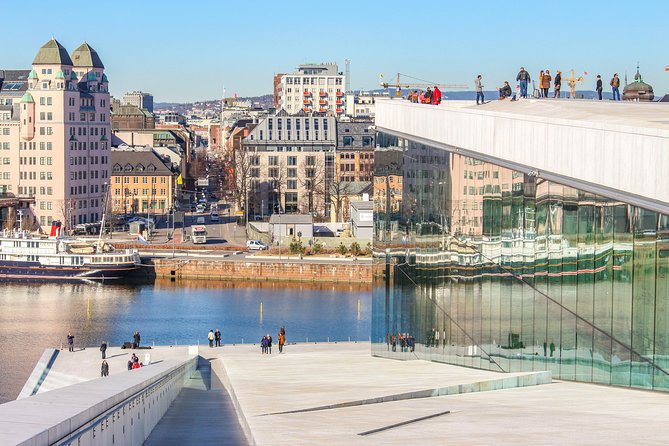
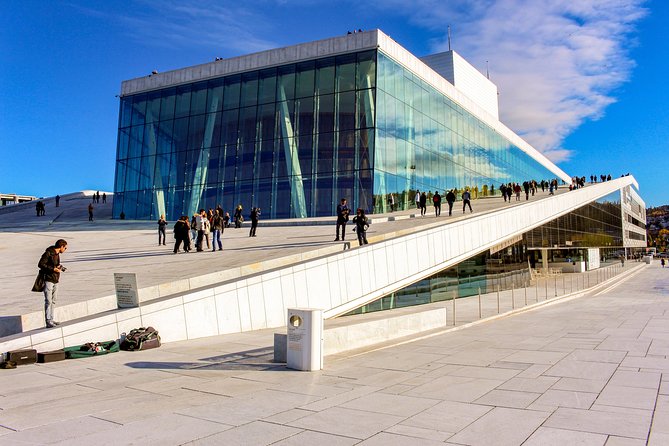
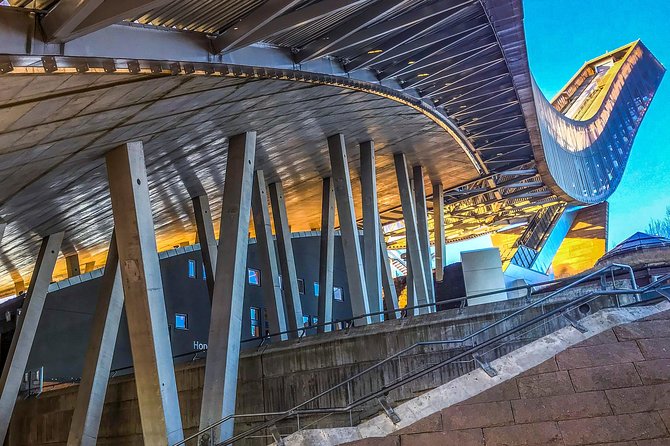
The Opera House is clad in pale marble and designed as a public surface as much as a performance venue. Its sloping roof invites you to walk upward, turning the building into a viewing platform and a piece of the city’s everyday life. You can expect your guide to use the building as an example of contemporary Norwegian design and to explain how modern architecture can serve both culture and public space.
I like this opening because it gives you something physical to experience right away. You are not only looking at a façade from across the street. You can pay attention to the angles, materials, changing views, and way people use the building.
The tour lasts about two hours, so the guide will need to keep the walk moving. If you want a long visit inside the Opera House or time for a full architectural sketching session, this is not that kind of outing. It is a guided overview, with several stops packed into a short period.
A few more options to weigh up in Oslo
- Oslo: Scenic Fjord Cruise with Audio Guide Commentary
★ 4.5 · 5,375 reviews - Oslo Nature Walks: Island Hopping Tour
★ 4.8 · 2,713 reviews - Oslo: 100% Electric Oslofjord Sightseeing Cruise
★ 4.4 · 2,041 reviews
Akrobaten Bridge and the changing Bjørvika district
From the Opera House, the route includes the Akrobaten Pedestrian Bridge in Bjørvika. This modern bridge has a distinctive design and offers a clear example of Oslo’s recent urban development.
A bridge can be easy to overlook when you are rushing from one major sight to another. Here, it becomes part of the lesson. You can look at how the structure crosses the railway area and connects parts of the district, while your guide explains the relationship between practical movement and visual design.
This stop also helps you understand why the waterfront matters so much to the tour. The experience is not limited to grand monuments. It pays attention to bridges, public paths, and newer districts where Oslo is still changing.
The walk is especially useful if you want to compare the Opera House with smaller pieces of modern design. The Opera House is a major cultural institution. Akrobaten is a piece of infrastructure. Together, they show two different ways architecture shapes daily life.
Because weather can affect the route, the exact stops may change. That flexibility is useful in Oslo, where wind and rain can quickly make a waterfront walk less pleasant. It also means you should treat the advertised route as a framework rather than a fixed checklist.
Oslo Cathedral and the older city center
The next contrast comes from Oslo Cathedral, a religious landmark dating to the 17th century. Its baroque architecture and central location give the walk a strong historical pause after the clean lines of Bjørvika.
This is where the tour can help you see that Oslo is not only a city of new waterfront buildings. The cathedral represents an older religious and civic center, with a style that feels very different from the marble planes of the Opera House.
I would pay close attention to the way your guide compares materials and design habits across the stops. Baroque architecture tends to draw the eye through ornament and layered detail. Modern buildings often rely more heavily on shape, surface, light, and open space. The value of a local guide is in making those comparisons clear without turning the walk into a classroom lecture.
The information provided does not include interior admission, so you should not assume the visit includes a paid entrance or a long indoor tour. Since the experience is built around walking through the city, the cathedral may be viewed as an exterior stop unless your guide confirms otherwise.
Parliament, civic power, and neoclassical design
The route also passes the Norwegian Parliament, described as a 19th-century neoclassical building and a symbol of Norway’s political heart. This stop shifts the focus from religious and cultural buildings to government.
Neoclassical architecture often uses symmetry, formal proportions, and references to earlier classical styles. Even if you are not an architecture specialist, those features give political buildings a deliberate sense of order and authority.
I like this part of the route because it adds meaning to the façades. A government building is not merely an old structure to admire. Its design helps project stability and public importance. The guide can also place the Parliament within the broader story of Oslo’s changing city center.
The experience does not promise an interior visit, and monument entry is excluded. You should book this tour for interpretation from the street, not for access behind official doors.
A completely different kind of day:
- Oslo: Fjord Evening Cruise with Shrimp Buffet
★ 4.5 · 1,956 reviews - Oslo: 3-Hour Highlights Bike Tour
★ 4.8 · 1,609 reviews - Oslo: 24 or 48-Hour Hop-On Hop-Off Sightseeing Bus Ticket
★ 4.1 · 1,470 reviews - Oslo: Guided Sightseeing Fjord Cruise on Premium Silent Boat
★ 4.7 · 1,390 reviews
Wooden houses and cobbled streets
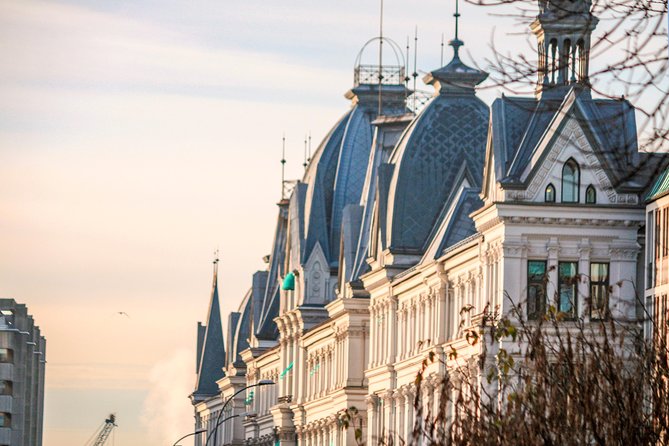
The tour includes historic areas known for well-preserved wooden houses and cobbled streets. These neighborhoods offer the clearest change in mood from the newer waterfront.
Here, the architecture is smaller in scale. Instead of broad public buildings and dramatic bridges, you get domestic structures, narrow streets, and older building traditions. The wooden houses reflect Oslo’s traditional character and give you a better sense of how the city once looked outside its major civic centers.
This is an important part of the walk because a tour devoted only to modern architecture could leave you with an incomplete picture. The older districts show how Oslo’s identity also rests on modest buildings and residential streets.
The itinerary does not name the exact neighborhoods, so you should not book this expecting a guaranteed visit to a particular lane or house. The guide may adjust the route to match weather, walking pace, or your interests.
Oslo City Hall and the Nobel Peace ceremony
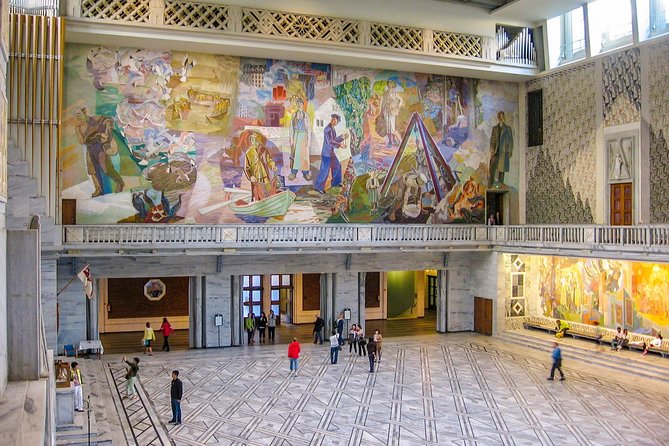
Another key stop is Oslo City Hall, a functionalist building known for its murals and connection to the annual Nobel Peace Prize ceremony. This brings together architecture, public art, and Norway’s international role.
The building’s functionalist character provides another useful comparison. After the decorative language of the cathedral and the formal government style of the Parliament, City Hall gives you a more direct, practical visual vocabulary. Its murals add a major artistic layer, turning public walls into a record of civic and cultural themes.
The Nobel Peace Prize connection makes this stop especially worthwhile for visitors interested in diplomacy and public life. You are not just seeing a large municipal building. You are seeing a place associated with one of the world’s best-known international awards.
Again, entry tickets to monuments are not included. The tour description does not promise access inside City Hall, so ask the guide or operator if interior viewing is important to you. The strongest expectation is an exterior explanation, with attention to the building’s form, murals, and public role.
Ending at Astrup Fearnley Museet
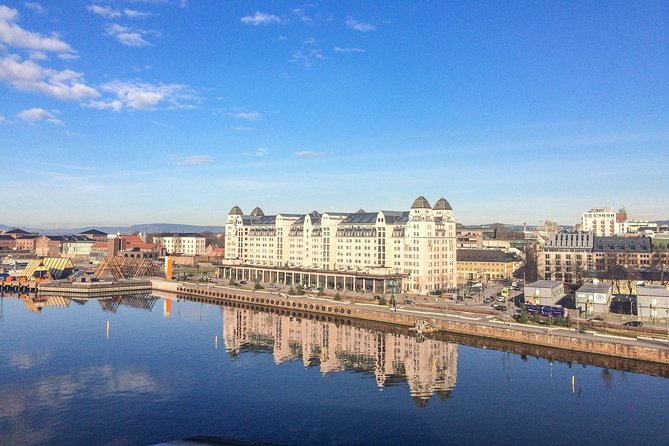
The walk ends at Strandpromenaden 2, near Astrup Fearnley Museet. The museum is a privately owned contemporary art gallery housed in a building designed by Renzo Piano.
This is a fitting final stop because Renzo Piano’s architecture gives the tour a polished contemporary ending. The museum building itself is part of the experience, even if you do not enter. Its design connects art, waterfront space, and modern construction in a way that echoes the tour’s opening at the Opera House.
You should remember that the museum collection and admission are not included. If you want to visit the galleries, plan that as a separate activity and check current opening information before you go.
The end point is practical for continuing your day around central Oslo, but the tour does not include onward transport. The wording suggests that the city is yours to explore after the walk, so bring a plan for what you want to do next.
What the private format really adds
The tour includes a local expert guide, a private booking, and a tailored itinerary. Those features matter most if you enjoy asking questions or want to focus on a particular area of architecture.
You can ask for more attention to modern design, historic buildings, public art, religious architecture, or the city’s waterfront development. The guide can also adapt to your walking pace. That is more useful than it may sound, especially if you want time for photographs or need a less hurried route.
The group-size information needs a careful reading. The price is listed as $756.32 per group of up to two, while the experience is also described as limited to eight or fewer people. If you are booking for more than two, confirm the final price and permitted party size before paying.
A private guide can make the walk feel personal, but it also means you are paying for exclusivity rather than the lowest possible price. The only written feedback supplied gives the guide high praise for being friendly and well informed, with particular approval for the mix of Scandinavian culture and modern architecture by the water. That praise points to the experience’s strongest feature: the human explanation connecting the buildings.
Is $756.32 a fair price?
For two people, the listed price works out to $378.16 per person. That is expensive for a two-hour walk, even in Oslo. You are paying for a private format, a local guide, and the ability to shape the outing, not for museum admissions or transportation.
The value improves if you have limited time and want a focused introduction to Oslo’s built environment. A standard sightseeing walk may give you a list of landmarks. This experience is aimed at helping you understand why those landmarks look different and how they fit together.
The price is harder to justify if you mainly want photographs or plan to visit the same buildings on your own. The Opera House, bridge, cathedral, Parliament, City Hall, wooden-house districts, and Astrup Fearnley Museet are all presented as city stops rather than ticketed attractions included in the booking.
I would consider this a special-occasion purchase for a couple, family, or small private group with a real interest in architecture. If you are comparing it with a group walking tour, the premium is substantial. If a private guide is important to you, the tailored route may make the cost worthwhile.
Walking pace, weather, and practical planning
This is a walking tour of about two hours. Wear comfortable shoes, especially if you want to explore the Opera House roof and continue through cobbled areas. The experience does not list meals, drinks, or personal expenses, so bring what you need for the walk.
Weather can change the route. The operator specifically notes that stops may vary in poor conditions, which makes sense for a tour centered on open waterfront spaces and pedestrian areas. A wet or windy day may reduce time at the outdoor sites.
The meeting point is at Promenade OperaenOpera w in Oslo, and the walk ends at Strandpromenaden 2. Public transportation is nearby, and a mobile ticket is provided. Confirmation arrives at booking, while personal expenses, transport tickets, museum admissions, and monument entries remain your responsibility.
Most people can participate, and service animals are allowed. The information also notes that people with impaired mobility should take care with the format. Since the route includes walking, a pedestrian bridge, cobbled streets, and potentially sloped public surfaces, ask in advance about the day’s adjusted route if access is a concern.
Free cancellation is available until 24 hours before the start time. Inside that window, the payment is not refunded and changes are not accepted, so keep the local cut-off time in mind.
Who should book this Oslo architecture walk?
I would recommend it to you if you want context more than a checklist. It suits visitors who enjoy comparing old and new buildings, asking a guide questions, and seeing how public spaces reflect politics, culture, and city planning.
It is also a good match for a short Oslo stay. The route brings together several major architectural themes in about two hours, leaving you free to visit a museum or continue exploring afterward.
You may want to skip it if your budget is tight, if you prefer independent sightseeing, or if you need substantial indoor time. The experience is expensive, entry fees are extra, and weather may affect the outdoor route.
FAQ
How long does the architectural tour last?
The tour lasts approximately two hours.
Where does the tour start?
It starts at the promenade beside the Opera House, listed as Promenade OperaenOpera w in Oslo, Norway.
Where does the tour end?
The tour ends at Strandpromenaden 2, 0252 Oslo, Norway, near Astrup Fearnley Museet.
Is this a private tour?
Yes. It is described as an exclusive private tour, with only your group participating.
How many people can join?
The price is listed for a group of up to two people. The experience also describes a private group of eight or fewer, so confirm the applicable group-size terms before booking.
Are museum and monument entry fees included?
No. Entry tickets for transportation, museums, and monuments are excluded.
Can the tour route change?
Yes. The itinerary can adapt to your interests and walking pace, and stops may vary depending on weather conditions.
Should you book it?
Book this walk if you want a private introduction to Oslo’s architecture and value a guide who can connect the Opera House, Akrobaten Bridge, cathedral, Parliament, City Hall, wooden-house streets, and Renzo Piano’s museum into one story.
Skip it if you are looking for a low-cost way to see the sights. At $756.32 for up to two people, the price demands a genuine interest in architecture and a preference for private guidance. For the right audience, the route offers a thoughtful look at Oslo’s old and new faces.
Just added in Oslo
- Oslo Winter Highlights Bike Tour★ 5.0 · 36 reviews
- 4 hours Best View of the Oslofjord Winter Edition★ 4.0 · 15 reviews
- The Ultimate Study of the Human Form at Vigeland’s Sculpture Park with a Local★ 4.0 · 14 reviews
- Unknown war. Oslo and Norway during 1940-45★ 5.0 · 74 reviews
- Top of Oslo Snowshoe Tour★ 5.0 · 2 reviews
- The Scenic Roadtrip, Oslo to Bergen via Flam & the Fjords★ 5.0 · 25 reviews
- The Viking Planet Museum – Mini Group (4 adults)★ 4.0 · 16 reviews
- The Oslo Beer Adventure★ 4.5 · 11 reviews
Private, compared.

Northern Lights Minibus Small Private Tour Group
Read our review →


Private Cruise: Mostraumen by Zodiac or Lux Pontoon Boat
Read our review →
Northern Lights Private tour with your special ones – Greenlander
Read our review →
PRIVATE GUIDED TOUR: Queen of the Fjords – tour from Bergen, 6 hours
Read our review →
Browse the lists this tour appears in