REVIEW · 2-DAY EXPERIENCES
2 Day Guided Snowkite Course in Hardangervidda
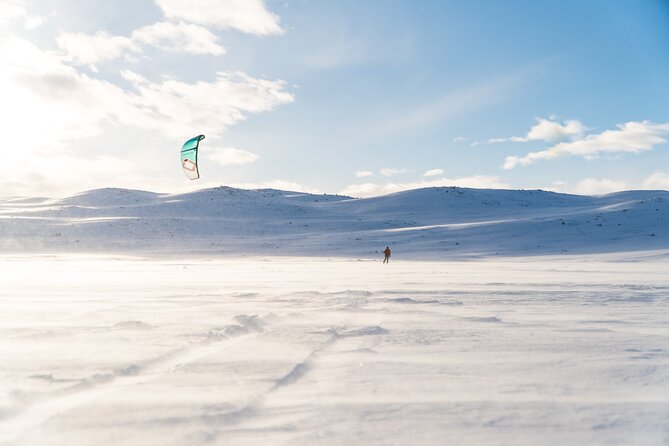
Snow turns into a runway here. This two-day snowkite course takes you across Hardangervidda National Park, where wide open snowfields and frozen lakes provide a striking setting for learning. I like the small maximum group of six and the fact that the course aims to get you kiting independently, not just holding a kite for a quick photo. I also like that the instructor, Valentin, is praised for calm, clear teaching. The catch is practical: you must bring your own skis or snowboard, and food, clothing, lodging, and water are all your responsibility.
The course suits a wide age range, from age nine to people over 70, provided you have moderate fitness and no health issue that would make cold-weather activity risky. You can expect real progress, but wind and snow conditions matter. This is not a sightseeing trip with a little kite play added. It is a hands-on course, and you should be ready to work.
In This Review
- Key points to know before booking
- Why Hardangervidda is a powerful classroom
- Day one: theory, gear, and your first controlled runs
- Day two: turning basic control into independent kiting
- What is included, and what you must bring
- Is $426.55 a fair price?
- Who will enjoy this course most?
- The instructor can make or break the experience
- Timing, dates, and practical planning
- The main drawbacks to weigh
- Should you book the Hardangervidda course?
- FAQ
- How long does the snowkite course last?
- Where does the course start?
- Where does the activity finish?
- What kite equipment is included?
- Do I need to bring skis or a snowboard?
- Are winter clothes included?
- Are food and accommodation included?
- How many people can join the course?
- Can I cancel for a full refund?
Key points to know before booking
- Two days on Hardangervidda: You spend the course exploring different snowkiting areas around the high plateau, rather than staying at one fixed practice patch.
- An indoor theory session comes first: About an hour of instruction covers basic kite handling and safety before you head onto the snow.
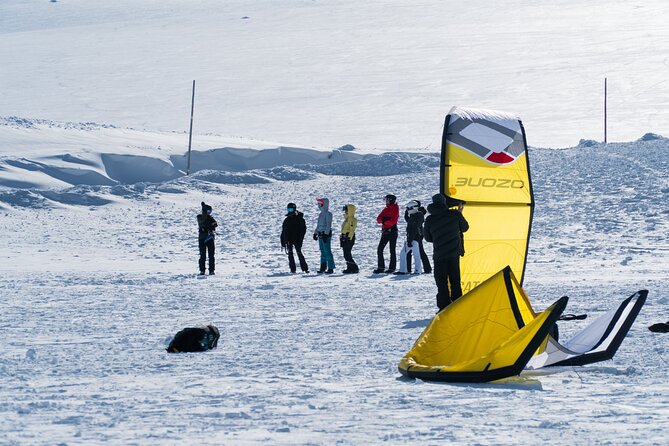
- Kite equipment is included: The course supplies the kite, harness, bar, and pump, but you need your own skis or snowboard.
- Small groups make a difference: With no more than six people, the instructor can watch your technique and help you progress.
- Independent kiting is the goal: You learn to rig your own kite and work toward moving around the plateau without constant hands-on help.
- Plan for a full winter day: The course runs approximately from 10 a.m. to 6 p.m., and you need to arrange clothing, food, water, and accommodation yourself.
Why Hardangervidda is a powerful classroom
Hardangervidda is a fitting place to learn snowkiting because the activity needs space. You are not learning between trees or on a crowded resort run. The course moves through different parts of Norway’s high plateau, using the conditions and open snow areas that work best on the day.
That setting gives the course a sense of purpose. You are not simply practicing a sport in an artificial training zone. You are learning how wind, snow, skis, and the kite work together in a broad mountain environment.
The scenery is a major reward. The supplied description points to wide snow-covered areas and frozen lakes, and one particularly enthusiastic account describes getting around on frozen lakes within hours. Conditions will always control what is possible, so you should not treat that as a promise of a particular route. Still, it gives you a good idea of the course’s appeal: once the basics click, the plateau becomes your playground.
I also like the mobile nature of the course. The instructors take you to suitable snowkiting spots instead of forcing every group to stay in one place. That may mean the exact order of activities changes, but this flexibility is useful in a wind-powered sport.
A few more options to weigh up in Norway
- Tromsø: Reindeer Sledding & Feeding with a Sami Guide
★ 4.8 · 6,417 reviews - Oslo: Scenic Fjord Cruise with Audio Guide Commentary
★ 4.5 · 5,375 reviews - Bergen: Past & Present Small Group Guided Walking Tour
★ 4.9 · 1,609 reviews
Day one: theory, gear, and your first controlled runs
The first step is an indoor theory session lasting about an hour. This is where you learn the basic parts of the kite, how the control bar works, what the harness does, and how to think about the wind before launching.
That hour matters. Snowkiting can look simple from a distance, but the kite is powerful even before you are moving quickly. Understanding the basic controls indoors gives you a safer start and lets you ask questions before your hands are cold and your attention is split between the kite and your skis.
The course also focuses on rigging. You are not simply handed a ready-to-use kite for two days. You learn how to set up your own equipment, which is one of the most valuable parts of the program if your aim is to continue snowkiting later.
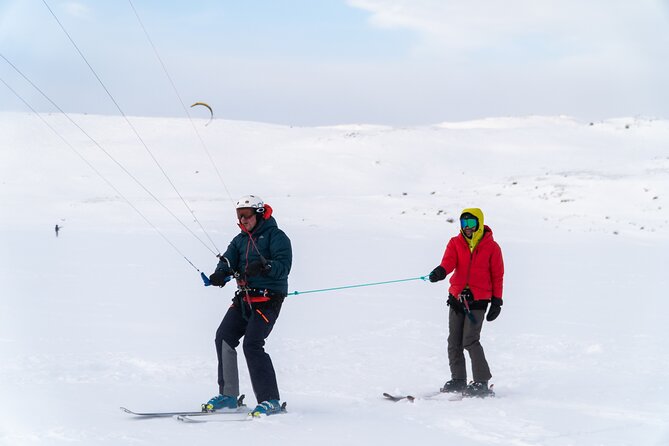
Once you head outside, the instructor introduces the kite in manageable stages. You learn to feel its pull and guide it through the wind window before trying to travel across the snow. If you already ski or snowboard, the transition should feel more natural because you understand balance and edge control. You still need to learn a new skill, but your feet are not starting from zero.
The pace depends on the conditions and on you. The typical progression described for the course is learning to kite on skis within five or six hours, then spending the rest of the course having fun with the skill. That is an encouraging benchmark, not a guarantee. Wind strength, snow surface, coordination, and your comfort level all affect the pace.
A good instructor will keep the early session focused on control rather than speed. Valentin receives praise for being relaxed, helpful, and clear, which is exactly the tone many beginners need. You want corrections that keep you moving forward without making the first attempts feel like an exam.
Day two: turning basic control into independent kiting
The second day is where the course’s main promise becomes clearer. The goal is to help you become an independent kiter, meaning you can manage your equipment and move around with less direct instruction.
You continue practicing the kite and skis or snowboard, then work on traveling across the plateau. The precise route is not fixed in the information provided, and that is sensible. A snowkite course must respond to wind and snow, so the group may use different parts of Hardangervidda during the day.
This mobile format also gives you a more complete introduction to the sport. You are not just learning how to launch and stop. You are learning how to make decisions in changing open terrain, how to use the wind to move, and how to stay in control while covering ground.
For me, the strongest part of the two-day design is the time to repeat skills. A short introductory lesson might give you a taste of snowkiting, but it cannot offer much room for mistakes, rest, and improvement. Two days give you a better chance to move past the first awkward attempts and enjoy the sport itself.
The second day may also be the more satisfying one. Once you no longer need to think about every hand movement, you can pay attention to the speed, the snow beneath your skis, and the huge view around you. That is the point at which a lesson starts to feel like an adventure.
What is included, and what you must bring
The course includes the main kite equipment:
- Kite
- Harness
- Control bar
- Pump
Your skis or snowboard are not included. You must bring your own, although rental gear is available in the nearby city of Geilo. This is the most important preparation detail because you cannot take part on the supplied kite equipment alone.
You also need suitable outerwear and winter clothing. The course does not provide food, water, snacks, or accommodation. Those exclusions are easy to overlook when you focus on the exciting part, so plan them before you arrive at Haugastøl.
Bring enough clothing for long hours outside and make sure your ski or snowboard setup is appropriate for you. The exact clothing list is not specified, so you should contact the provider if you have questions about what to bring for the expected conditions.
The meeting point is Haugastøl 1000 Moh, at Haugastølvegen 200, 3595 Haugastøl. The activity ends back at the same meeting point. Since you need to handle your own food, lodging, and equipment rental if necessary, staying near the start can make the two days much easier.
A completely different kind of day:
- From Bergen: The Original Fjord Cruise to Mostraumen
★ 4.7 · 8,440 reviews - Stavanger: Scenic Fjord Cruise to Lysefjord and Preikestolen
★ 4.6 · 5,791 reviews - Tromsø: Whale Watching Tour by Hybrid-Electric Boat
★ 4.5 · 4,217 reviews - From Tromsø: Aurora Borealis Tour
★ 4.8 · 4,206 reviews
Is $426.55 a fair price?
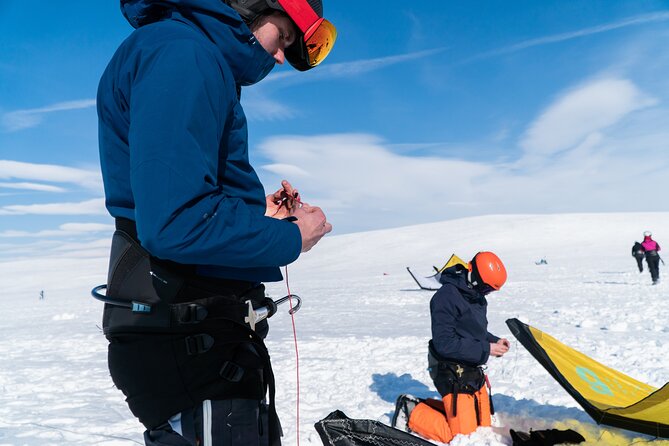
The cost is $426.55 per person. That is a serious outlay, but the value depends on what you want from the experience.
You are paying for two days of instruction, access to the instructor’s kite equipment, small-group teaching, and the chance to practice in several parts of Hardangervidda. The equipment package alone would make a casual trial lesson more useful, since you get to learn with the gear used throughout the course.
The small group is especially important. A maximum of six people is not a private lesson, but it is still compact enough for the instructor to keep track of progress. In a sport where small errors in kite position can affect balance and direction, regular feedback has real value.
The price is less attractive if you need to rent skis or a snowboard, buy extra winter clothing, pay for accommodation, and arrange meals on top. Those costs are separate. Add them to your budget before deciding.
I would see this as a specialist activity rather than a cheap add-on to a Norway holiday. If you want a memorable two-day skill course and expect to keep snowkiting afterward, the price is easier to justify. If you only want a brief introduction to snow and mountain scenery, a shorter activity may suit you better.
Who will enjoy this course most?
You should consider booking if you already ski or snowboard and want to try something that changes how you move across the snow. The course is also designed for beginners, so previous snowkiting experience is not required.
The stated age range is broad, from nine years old to 70 or older. That does not mean age alone determines suitability. You need moderate physical fitness, and you should contact the provider in advance about any known health restrictions so the course can be planned appropriately.
This course is a good fit for:
- Confident beginners who want proper instruction
- Skiers and snowboarders looking for a new winter sport
- People who enjoy active outdoor experiences
- Anyone interested in learning to rig and control their own kite
- Visitors who can commit two full days to the activity
It may not suit you if you want a relaxed, passive excursion. You will be outside, handling equipment, practicing balance, and responding to wind. Snowkiting is fairly easy to begin, but it still asks for attention and effort.
The course also suits people who want a skill they can continue after Norway. The aim is not merely to give you a thrill for one afternoon. By the end, you should have a foundation for independent kiting, assuming the conditions and your progress line up well.
The instructor can make or break the experience
Snowkiting instruction depends heavily on the teacher. A good kite instructor must explain equipment clearly, watch several people at once, and know when to push you and when to slow things down.
Valentin is the named instructor associated with this course, and the strongest praise centers on his calm manner, helpful guidance, and clear teaching. That combination is valuable for beginners. You need someone who can make the sport feel exciting without treating safety as an afterthought.
The small group limit helps him do that. With no more than six people, you should have more contact with the instructor than you would in a large commercial class. The exact amount of individual time will depend on the group, but the size is reassuring.
The course also begins with time for questions. One account describes meeting Valentin during the theory session before the two-day course, with questions answered ahead of the practical work. If your schedule allows, use that time well. Ask about clothing, equipment, the expected conditions, and what level of ski or snowboard control is useful.
Timing, dates, and practical planning
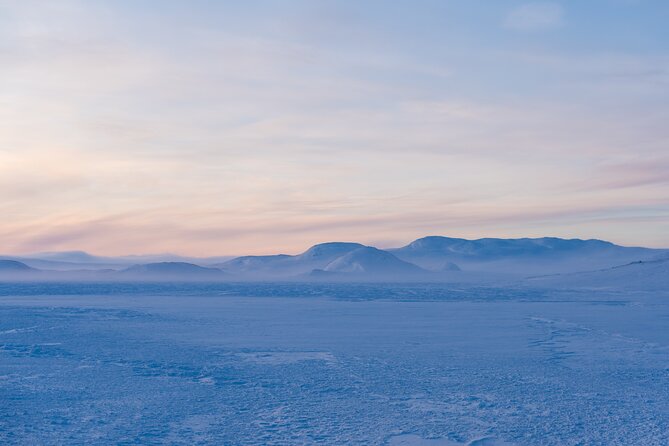
The published operating period runs from January 23, 2026, through April 12, 2026. Hours are listed as Monday through Sunday, 10 a.m. to 6 p.m.
Those hours suggest long days, even if the exact active teaching time changes with conditions. I would avoid planning another major activity on either course day. You need time to reach Haugastøl, prepare, learn, practice, and return to the meeting point.
The activity begins and ends at Haugastølvegen 200 in Haugastøl. If you need ski or snowboard rental, Geilo is the nearby rental option named for this course. Arrange that before the first practical session rather than hoping to sort it out at the last minute.
Confirmation is normally sent at booking. If you book within 18 hours of the start, confirmation is sent as soon as possible, subject to availability. That makes early booking the safer choice, especially for a course capped at six people.
Service animals are allowed. If a health condition may affect your ability to take part, contact Vindskolen.no before booking. Free cancellation is available up to 24 hours before the start time, while cancellations and changes inside that window are not accepted for a refund.
The main drawbacks to weigh
The biggest drawback is the amount of planning left to you. The price does not cover skis, snowboards, clothes, food, water, snacks, or accommodation. For a two-day winter course, those are not minor extras.
The second consideration is weather dependence. The course takes you to the best available snowkiting areas, but the sport relies on suitable wind and snow. The information does not promise a particular route, lake, or number of hours spent moving at speed.
You should also keep expectations sensible about independence. Many people learn to kite on skis in five to six hours, but you may need longer. The course is designed to help you progress, not to guarantee that every person reaches the same level.
These points do not make the experience a poor choice. They simply mean you should book it as an active course, not as a fixed sightseeing product with every detail guaranteed.
Should you book the Hardangervidda course?
I would book this course if you want to learn a genuine winter sport in a dramatic Norwegian setting and can manage the extra equipment and clothing costs. The combination of two full days, a small group, included kite gear, and a clear goal of independent kiting gives it more substance than a quick introductory session.
The strongest reason to choose it is the progression. The course starts indoors with theory, moves into practical kite control, and builds toward traveling across Hardangervidda. The enthusiastic account of reaching frozen lakes within hours shows how rewarding that progress can feel when the conditions cooperate.
I would hesitate only if you dislike physically active holidays, need a guaranteed itinerary, or do not want to arrange skis, winter clothing, food, and lodging. For everyone else, this looks like a demanding but memorable way to experience the plateau. Go prepared, listen closely to Valentin, and treat the wind as part of the plan rather than an inconvenience.
FAQ
How long does the snowkite course last?
The course lasts approximately two days. The listed operating hours are 10 a.m. to 6 p.m.
Where does the course start?
It starts at Haugastøl 1000 Moh, Haugastølvegen 200, 3595 Haugastøl, Norway.
Where does the activity finish?
The activity ends back at the meeting point in Haugastøl.
What kite equipment is included?
The course includes a kite, harness, control bar, and pump.
Do I need to bring skis or a snowboard?
Yes. Skis and snowboards are not included, and you must bring your own. Rental equipment is available in the nearby city of Geilo.
Are winter clothes included?
No. You must bring your own outerwear and winter clothing.
Are food and accommodation included?
No. Food, water, snacks, and accommodation are not included.
How many people can join the course?
The maximum group size is six people.
Can I cancel for a full refund?
Yes, if you cancel at least 24 hours before the experience start time. Cancellations made less than 24 hours before the start are not refunded, and changes inside that period are not accepted.
Just added in Norway
- Vik i Sogn: Authentic Farm Visit★ 5.0 · 3 reviews
- From Svolvær: Whale Watching Day Trip to Andenes★ 3.8 · 27 reviews
- Two Fjord SUP n Sauna Guided Paddle Tour (Stavanger)★ 5.0 · 1 review
- Voss – Mountain Bike – Bømoem Forest★ 4.3 · 2 reviews
- Vossevangen: Nærøyfjord Full-Day Guided Kayaking Trip★ 4.8 · 4 reviews
- Ulvik: Hardangerfjord Ultimate RIB Tour★ 4.7 · 39 reviews
- Ulvik adventure: Exploring Hardangerfjord’s Osafjord by RIB★ 4.8 · 5 reviews
- Tromsø:Northern light tour with mini bus i Tromsø★ 4.9 · 8 reviews
2-Day Experiences, compared.
Touring-Trekking Bicycle Rental in Tromso – 1 to 2 Days
Read our review →
2-Day Round Trip from Bergen: THE GRAND SOGNEFJORD – fjords, waterfalls, glacier
Read our review →
Discover Besseggen: An inspiring 2-Day Adventure
Read our review →
Hønefoss: 2-Day Moose Safari in Oslo’s Wilderness
Read our review →