
REVIEW · WHALE WATCHING
Tromsø: Whale Watching Tour by Hybrid-Electric Boat
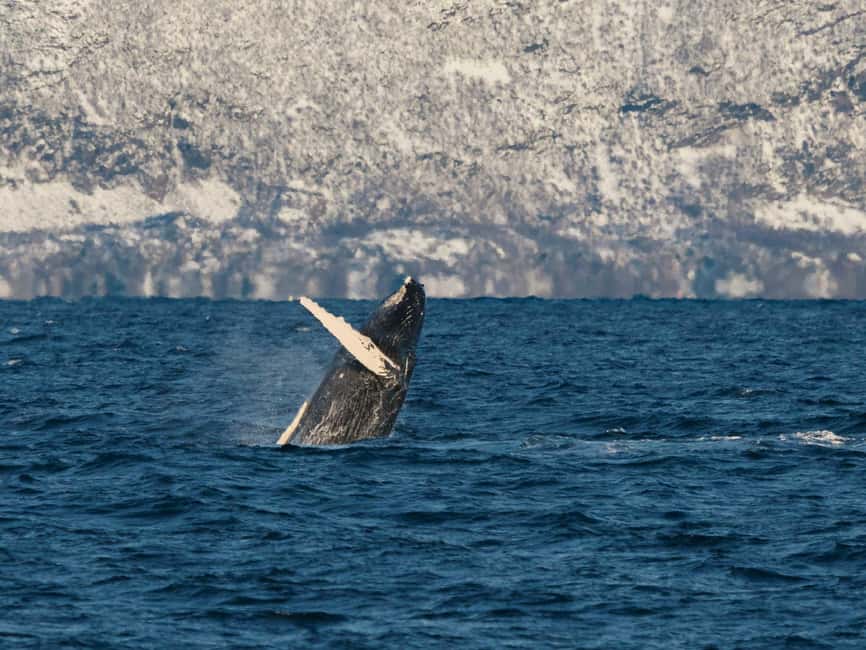
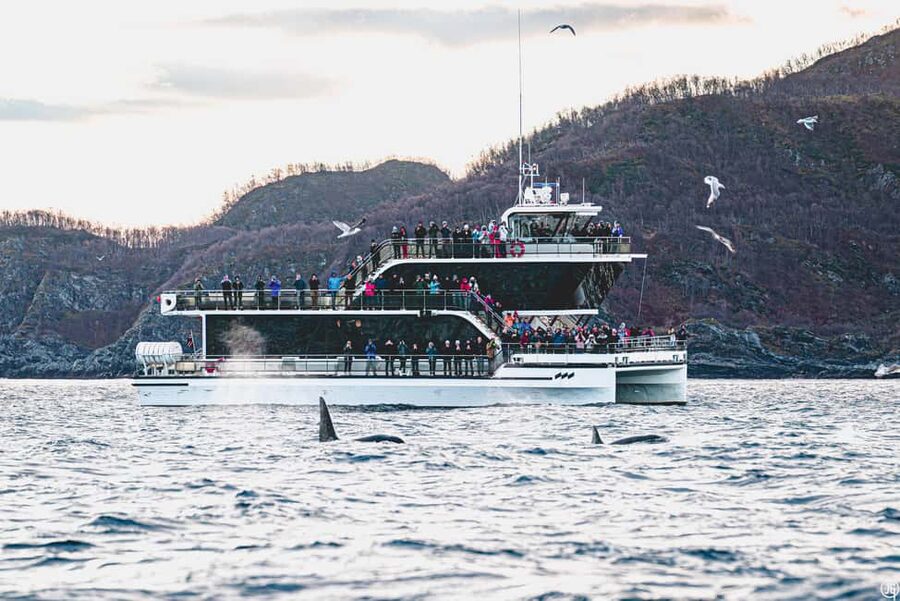
The Arctic keeps its best secrets moving. This nine-hour cruise from Tromsø heads toward the herring-rich fjords near Skjervøy, where orcas, humpbacks, fin whales, and sperm whales may be feeding. I like the purpose-built hybrid-electric catamaran, which can switch to a quiet electric engine near the animals, and I like the warm lounges with wide windows for watching the fjords without freezing solid. The main drawback is the long ride: you may spend three to three and a half hours reaching the whales, and rough water can make some passengers seasick.
This is a serious wildlife search, not a quick harbor outing. The crew gives talks, scans the water, and keeps looking even when the whales are slow to reveal themselves. The advertised sighting success rate is above 95 percent, but no wild animal takes reservations, so you should book this for the full Arctic day, not only for a guaranteed photograph.
In This Review
- Key points to know before booking
- Leaving Tromsø from Kaigata
- The long route through Arctic fjords
- Reaching Skjervøy and searching for whales
- Why the hybrid-electric boat matters
- Watching from the saloon or the deck
- Sunrise, sunset, and the return to Tromsø
- Seasickness, crowds, and practical comfort
- Is $195 good value?
- Who should book this Tromsø whale tour?
- Final booking advice
- FAQ
- How long does the whale watching tour last?
- Where does the tour begin?
- Where does the tour end?
- Which whales might I see?
- Are whale sightings guaranteed?
- Is food included?
- Is the boat heated?
- Is the tour wheelchair accessible?
Key points to know before booking
- Three to three and a half hours to the feeding grounds: Most of the day is spent reaching Skjervøy and returning to Tromsø, with roughly one to one and a half hours near the whales.
- A quieter approach: The boat uses its electric engine around the animals to reduce engine noise and disturbance.
- Comfortable viewing indoors: Heated saloons, panoramic windows, Wi-Fi, tap water, and several deck levels help you manage the cold.
- Several whale species are possible: You might see orcas, humpbacks, fin whales, sperm whales, or more than one kind on the same trip.
- A long Arctic day for $195: The price makes more sense if you value the full fjord cruise, guiding, boat design, and high chance of sightings.
- Warm clothing is essential: Bring wool or equivalent layers, sturdy shoes, and extra protection for the windy outer waters.
Leaving Tromsø from Kaigata
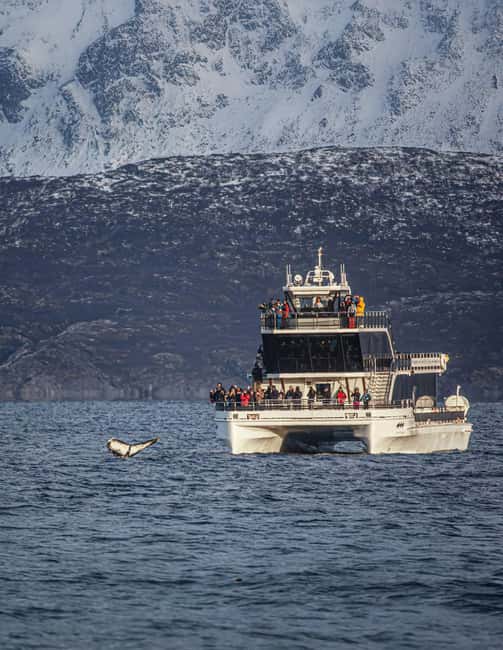
The tour begins beside Skarven Kro Restaurant at Kaigata 6, where you look for the white Brim Explorer boat. The meeting point is central and simple, but arrive ready for a full day outside the city. The boat returns to the same place at the end.
After boarding, you receive an 18-minute safety briefing in Tromsø. This is useful rather than ceremonial. You need to know how the boat works, where to go if the sea turns rough, and how to move between the indoor saloons and outdoor decks.
The vessel is built for sightseeing rather than speedboat thrills. It can carry more than 100 people, so this is not a small, intimate wildlife outing. The payoff is space, several viewing levels, large windows, and the ability to move around when one side of the boat has the better view.
Seats may be shared at tables. Boarding can feel a little busy as people choose places, but the wide windows and outdoor decks mean you are not confined to one chair for the day. I would avoid treating your seat as a permanent base. Keep valuables with you when you step outside, and bring a phone charger or power bank if you plan to take photographs all day.
More Whale Watching in Tromso
- Tromsø Whale Safari with MS Gabriele
★ 4.3 · 1,937 reviews - From Tromsø: All-Inclusive Whale & Orca Safari
★ 4.5 · 1,221 reviews - Silent Whale Watching by Hybrid-Electric Boat from Tromsø
★ 4.5 · 1,017 reviews
The long route through Arctic fjords
The trip heads from Tromsø toward the waters around Skjervøy, where seasonal herring attracts whales. The route itself is part of the outing. You pass frozen shorelines, steep fjords, small settlements, and open water, with changing light during the short Arctic day.
The boat normally takes about three to three and a half hours to reach the feeding area. That is a substantial journey, especially for children or anyone who needs constant activity. The guides help by talking about local places, whale behavior, and the marine environment, but you should still bring something to occupy yourself if long stretches of sightseeing are not your idea of fun.
Some departures use a bus and boat combination, with passengers split between the two at the start and reunited at the whale area. On those trips, one group may travel north by bus and return by boat, while the other does the reverse. This arrangement can make the day more manageable for people prone to seasickness and gives you a different view of the fjords from land. Check the current plan for your departure, since the exact transport arrangement can vary.
The bus journey has its own appeal. You can watch the fjords from the road, spot porpoises in the water if luck is on your side, and avoid spending the entire outward leg at sea. USB and USB-C charging, Wi-Fi, water, and a cereal bar have been available on some bus departures, but you should confirm what is included for your date.
Reaching Skjervøy and searching for whales
The Skjervøy area is where the mood changes. Until then, you are on a scenic Arctic cruise. Once the captain and guides begin scanning with greater focus, every dark shape on the water becomes a possible fin.
The boat spends about one to one and a half hours around the feeding grounds. That may sound short after the long approach, but whale watching depends on animal behavior, weather, and the captain’s search pattern. The crew may need extra time to locate a pod, and the trip can last anywhere from seven to nine hours depending on how far the whales are.
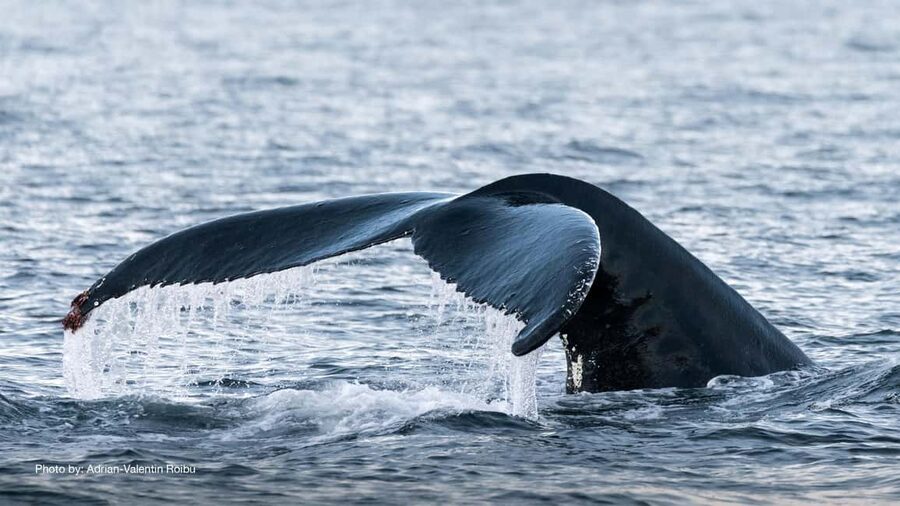
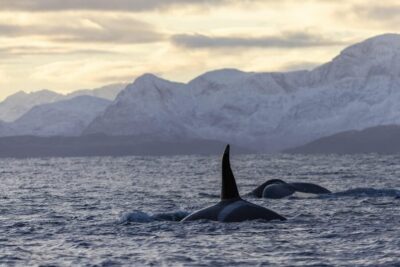
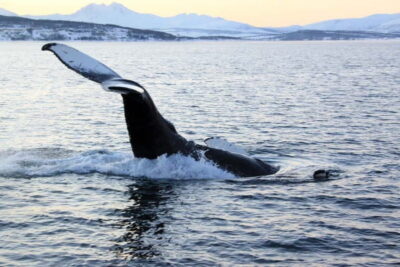
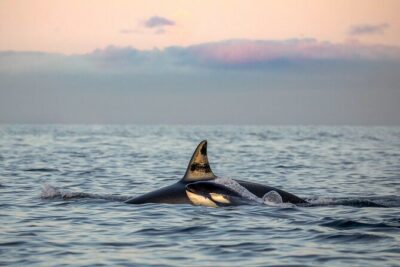
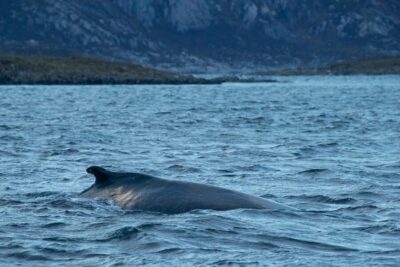
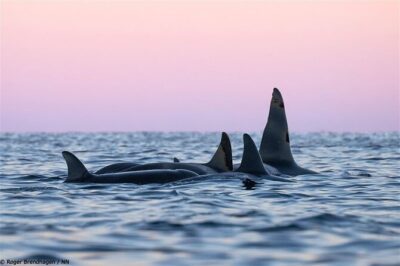
Possible sightings include humpback whales, fin whales, sperm whales, and orcas. Orcas can be especially elusive. They may surface briefly, change direction, or remain farther from the boat than you hoped. Humpbacks and fin whales can also appear suddenly, so keep watching instead of relying only on announcements.
The guides are one of the strongest parts of the trip. They explain the differences between the whale species, share local stories, and point out places along the route. Their work is not limited to shouting whale sightings over a loudspeaker. They keep the search interesting and explain why the boat is slowing, turning, or waiting.
Several guides have received especially warm praise, including Connor, whose humor and clear explanations helped keep a long journey lively, and crew members Bee, Adrian, and Ivan, who were praised for friendly service and care on board. The crew’s enthusiasm matters here. A quiet stretch without sightings feels less frustrating when you understand what the team is looking for and why they are not rushing away.
Why the hybrid-electric boat matters
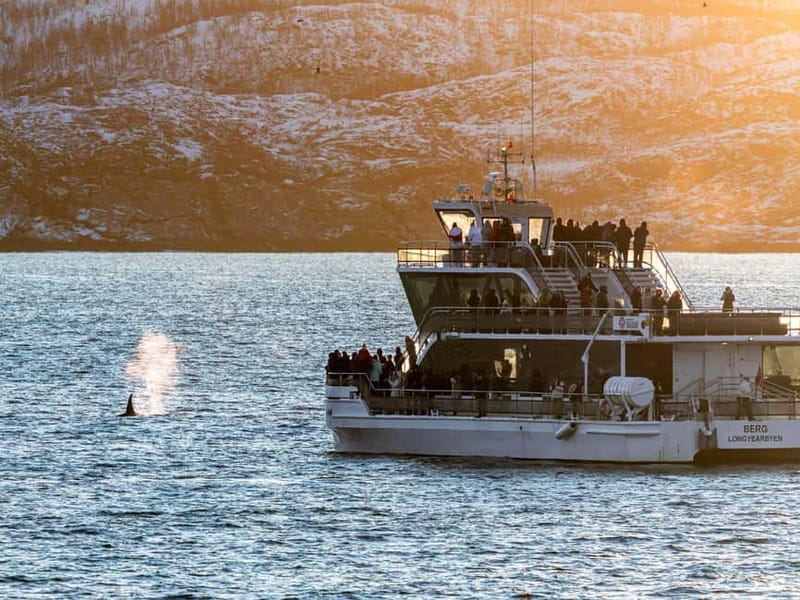
The boat’s main selling point is not simply that it uses modern technology. It is how that technology affects the whale encounter.
During the approach, the boat runs normally to cover the distance. Once whales are located, the crew can switch to the electric engine, reducing engine noise and vibration. Researchers have identified noise and vibration as disturbances for marine life, so the quieter approach is a meaningful part of responsible whale watching.
The boat also follows a strict whale watching philosophy. That means the crew does not treat the animals like performers. The whales decide how close they come, and the boat keeps a respectful distance rather than chasing every surface movement.
This can require patience. You may get a spectacular close look, or you may see an orca at a greater distance. Smaller boats may sometimes appear closer simply because of their size, but the larger catamaran offers warmth, toilets and movement space, along with a calmer platform for people who do not want a tiny vessel pitching beneath them.
The quiet motor may also improve your photographs and your sense of the moment. Instead of hearing a roaring engine while a whale surfaces, you may hear the water and the reactions around you. That does not guarantee a close sighting, but it makes the encounter feel less intrusive.
A completely different kind of day:
- Tromsø: Reindeer Sledding & Feeding with a Sami Guide
★ 4.8 · 6,417 reviews - From Tromsø: Aurora Borealis Tour
★ 4.8 · 4,206 reviews - Tromsø’s Top-Rated Fjord & Fishing Cruise – All-Inclusive
★ 4.7 · 4,017 reviews - Tromsø: Fjords and Sommarøy Islands Tour with Salmon Picnic
★ 4.7 · 3,922 reviews
Watching from the saloon or the deck
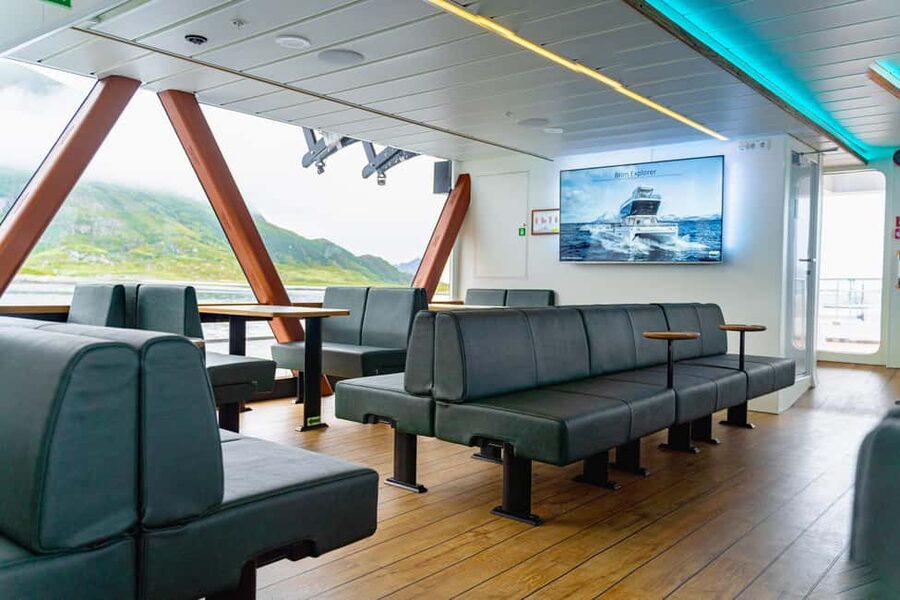
The heated indoor saloons are a real advantage. You can warm up behind panoramic windows, keep watching the water, and return outside when something is spotted. For much of the journey, this lets you enjoy the views without treating cold exposure as a test of character.
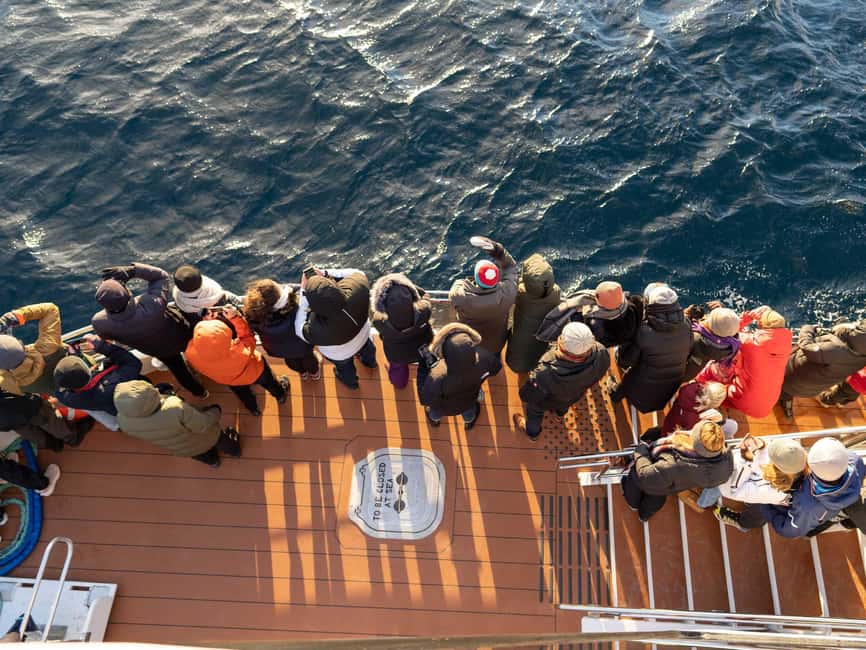
Still, you should not remain indoors all day if you want the best chance of seeing a whale. Outdoor decks give you a wider field of view and make it easier to follow a pod as it moves. The deck can be icy, and the wind at sea is sharp, so wear shoes with a firm grip and bring several warm layers.
Pack wool, a hat, gloves, a scarf, and clothing that blocks wind. The advice to dress warmly is not a polite suggestion. Even if the saloon is comfortable, whale sightings often pull everyone outside quickly, and the cold feels stronger when you are standing still on open water.
The boat has Wi-Fi and tap water. Food and drinks are available to buy, but lunch is not included in the $195 price. The onboard bar has been praised for a decent range of choices and reasonable prices, while free tea and coffee have been appreciated on some trips. I would still eat before departure and bring any snacks you know you need, especially if you are traveling with children or have dietary needs.
Sunrise, sunset, and the return to Tromsø
The light can be as memorable as the wildlife. Depending on the season and departure time, you may see a low sunrise over the fjords, a soft sunset on the return, or even a glimpse of the northern lights. None of these is guaranteed, but the short daylight hours give the trip a special Arctic quality.
The return journey may feel faster because you know the main search is over. If the whales were active, you will probably spend the ride sorting photographs and replaying the sightings. If the search was quiet, the views and guide talks become more important.
The itinerary includes scenic stops and passing views around Grøtnesdalen and Haugnoes, with photo opportunities along the way. These are not long land visits with extensive walking. Think of them as viewpoints and parts of the boat route, with time for photographs when conditions allow.
The boat arrives back at Kaigata, completing a very full day. Some trips return in about seven hours, while others take closer to nine, depending on the whales’ location and the transport plan. Do not schedule a tight dinner reservation or another activity immediately afterward.
Seasickness, crowds, and practical comfort
Wavy conditions are possible, and some passengers have found the route rough for part of the journey. If you are prone to seasickness, plan ahead with whatever remedy you normally use. The bus and boat option, when offered, may be easier than a full day on the water, but even the boat return can move around.
The catamaran is comfortable, yet comfort does not mean private. With capacity for more than 100 people, popular departures can feel social and busy. You may share tables, wait briefly around viewing areas, and need to move politely when a whale appears on your side.
That size is also useful. You have indoor shelter, multiple decks, broad windows, and more freedom to change position than on a small rigid-hull boat. I would choose this vessel if warmth, stability, and responsible operating practices matter more to you than being in the smallest possible craft.
The tour is wheelchair accessible, and the live guiding is in English. Free cancellation is available up to 24 hours before departure, and you can reserve now and pay later, which helps if your Arctic schedule depends on weather or other bookings.
Is $195 good value?

At $195 per person, this is not a cheap add-on. You are paying for a nine-hour operation in remote Arctic waters, a specialist boat, professional crew, guiding, fuel, and the cost of reaching whales that may be many hours from Tromsø.
The value improves if you see several species or a large orca pod, but the price should not be judged only by the number of photographs you bring home. The hybrid-electric operation, heated viewing areas, careful approach, and full-day route are important parts of what you are buying.
I would call it fair value for someone who has made whale watching a priority. It is less convincing if you only want a short boat ride or are uncomfortable spending much of the day in transit. Lunch is not included, so add food and drink costs to your budget.
The stated success rate is above 95 percent, which is strong. Still, success does not necessarily mean whales beside the rail. You may see distant blows, fins, or brief surfaces, while another departure sees orcas and humpbacks close to the boat. That uncertainty is part of wildlife watching, and the operator clearly says sightings cannot be guaranteed.
Who should book this Tromsø whale tour?
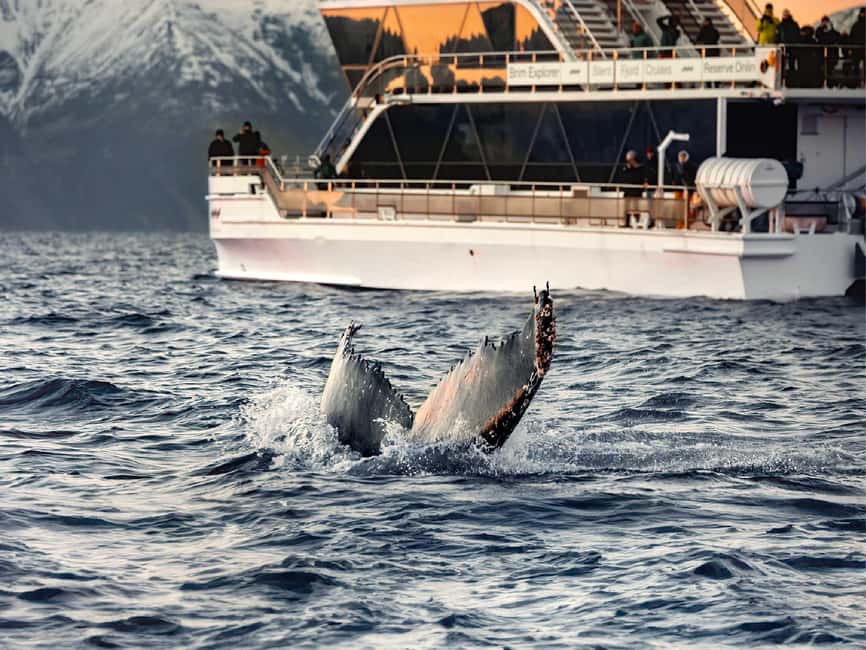
I recommend it most for adults, families with older children, photographers, and anyone who wants wildlife paired with fjord scenery. It suits people who can enjoy the journey, not just the final sighting.
You should also consider it if responsible whale watching matters to you. The electric mode near the animals and the effort to reduce noise give the trip a stronger environmental point than a simple high-speed chase.
I would hesitate if you dislike long transfers, get severe seasickness, need a tightly timed day, or expect a private encounter. The large boat is comfortable, but it is still a group outing. The cold, early start, uncertain timing, and open sea are not minor details.
Final booking advice
Book this Brim Explorer trip if you want the best chance of seeing Arctic whales from a warm, stable boat and you are happy to give up most of a day for it. Bring serious layers, seasickness protection, snacks, and patience.
Skip it if you want a short excursion or guaranteed close-range wildlife photography. For everyone else, the combination of orcas and humpbacks, fjord scenery, thoughtful boat design, and lively guiding can make this one of the defining days of a Tromsø visit, even when the whales make you work for the reward.
FAQ
How long does the whale watching tour last?
The listed duration is nine hours, but the trip can take approximately seven to nine hours depending on where the whales are located.
Where does the tour begin?
Meet the crew at the pier beside Skarven Kro Restaurant at Kaigata 6 in Tromsø. Look for the white Brim Explorer boat.
Where does the tour end?
The tour returns to the same meeting point at Kaigata 6 in Tromsø.
Which whales might I see?
Possible sightings include humpback whales, fin whales, sperm whales, and orcas.
Are whale sightings guaranteed?
No. The operator reports a sighting success rate above 95 percent but cannot guarantee that whales will be seen.
Is food included?
No lunch is included. Food and drinks can be purchased on board, and tap water is included.
Is the boat heated?
Yes. The indoor saloons are heated and have panoramic windows. You should still bring warm clothing for the outdoor decks and cold Arctic waters.
Is the tour wheelchair accessible?
Yes, the activity is listed as wheelchair accessible. The live tour guide speaks English.
Just added in Tromso
- Tromsø:Northern light tour with mini bus i Tromsø★ 4.9 · 8 reviews
- Tromsø: Tasty King Crab Adventure★ 4.5 · 49 reviews
- Tromsø: Horseback Riding Tour★ 4.8 · 23 reviews
- Tromsø: Sommarøy Islands Midnight Sun Tour★ 5.0 · 9 reviews
- Tromsø Sweet Temptations tour: afternoon tea & chocolates★ 4.8 · 5 reviews
- Tromsø: City Walk & Polar Museum (Private or Shared)★ 3.7 · 3 reviews
- Tromsø: Snow Sledding, Mini Skiing, Lasso and Reindeer Hides★ 4.6 · 60 reviews
- Tromsø: Snowshoeing in a small group with free photos★ 4.3 · 4 reviews
Whale Watching, compared.
Silent Whale Watching by Hybrid-Electric Boat from Tromsø
Read our review →
Bleik: Whale Watching by Speedboat with Puffins and Muffins
Read our review →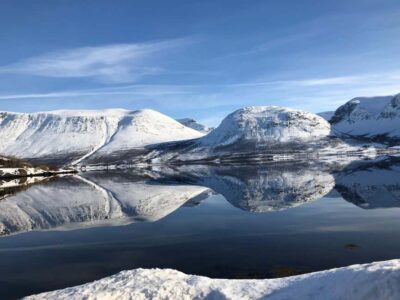

24hr Northern Lights & Whale Watching Cruise
Read our review →Browse the lists this tour appears in