
REVIEW · WHALE WATCHING
Skjervøy: Whale Watching with RIB Boat and Local Guide
The Arctic ocean puts on a serious show. This Skjervøy RIB tour combines close whale sightings with a fast, lively boat ride through northern Norway’s fjords and open water. I like the warm suits, boots, hats, goggles, and life jackets provided, and I especially like the local guiding from Viktor, who has been praised for finding orcas and explaining their behavior clearly. The main drawback is the cold. Even with the supplied gear, you need good gloves and something to cover your neck.
This is a three-hour outing from mid-October through February, when herring brings killer whales and humpback whales into the waters around Skjervøy. The boat carries up to 12 participants plus the guide, so you get a proper RIB experience rather than a large sightseeing cruise. Sightings are never guaranteed, but the recent record of orcas, humpbacks, and even fin whales makes this one of the stronger whale-watching choices in the region.
In This Review
- Key points at a glance
- Why Skjervøy is the right place for winter whales
- Meeting behind the white harbor building
- The three-hour route from harbor to whales
- What makes the RIB ride special
- Orcas, humpbacks, and the luck factor
- Viktor’s role in the experience
- Staying warm in Arctic conditions
- Getting to Skjervøy from Tromsø
- Value, flexibility, and the right type of visitor
- Should you book this Skjervøy whale safari?
- FAQ
- Where does the whale-watching tour begin?
- How long does the whale-watching experience last?
- Which whales might I see?
- What clothing and equipment are provided?
- Is the tour available in English?
- Can I reach Skjervøy from Tromsø without driving?
Key points at a glance
- Orcas at feeding time: You might see killer whales working together to catch herring, sometimes in large groups.
- A fast RIB boat: The ride is exciting and exposed, with spray, wind, and occasional rough water.
- Viktor’s local guiding: He has been praised for finding whales, recognizing some orcas by name, and keeping a respectful distance.
- Full cold-weather gear: Suits, boots, hats, goggles, and life jackets are supplied, but bring serious gloves and neck protection.
- A practical Skjervøy meeting point: Find the guide behind the old white harbor building, downhill from the Extra grocery store.
- Easy Tromsø connection: Arctic Route runs daily bus services between Tromsø and Skjervøy, letting you arrange the trip without driving.
Why Skjervøy is the right place for winter whales
The whale season around Skjervøy runs roughly from the middle of October until February. During these months, herring draws large numbers of fish-eating whales into the waters north of Tromsø.
That seasonal timing matters. You are not simply heading out to look at whatever wildlife happens to be nearby. You are visiting during a period when the local food supply can bring together killer whales, humpback whales, and sometimes fin whales.
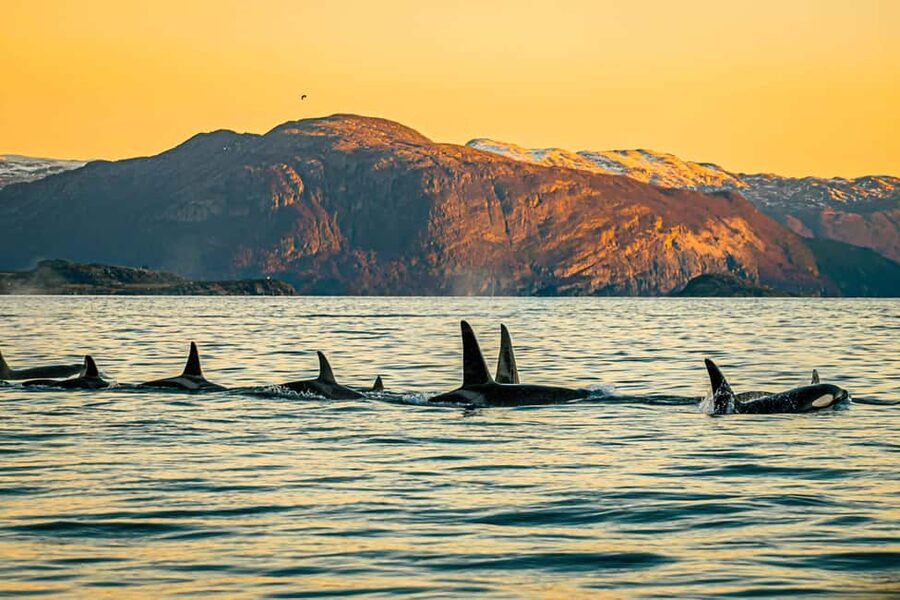
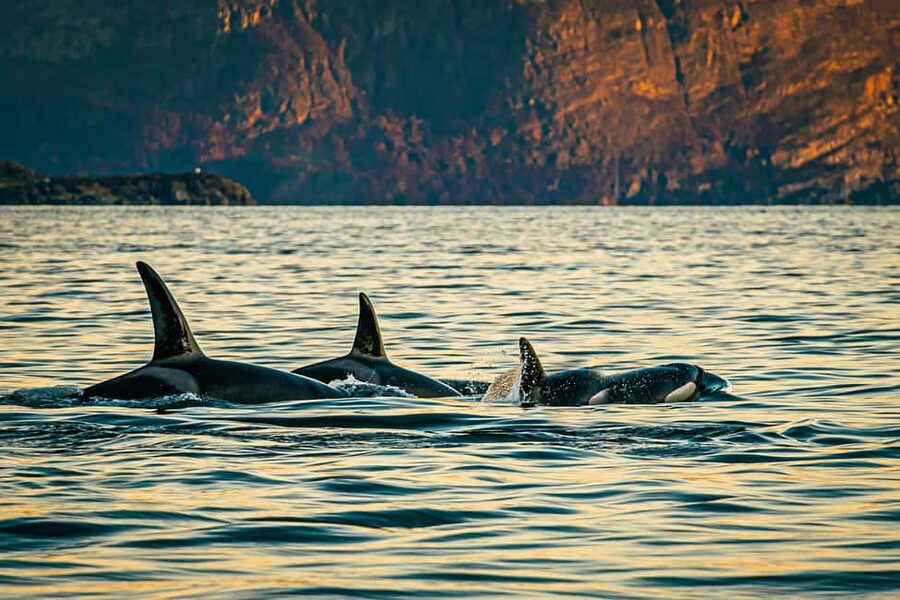
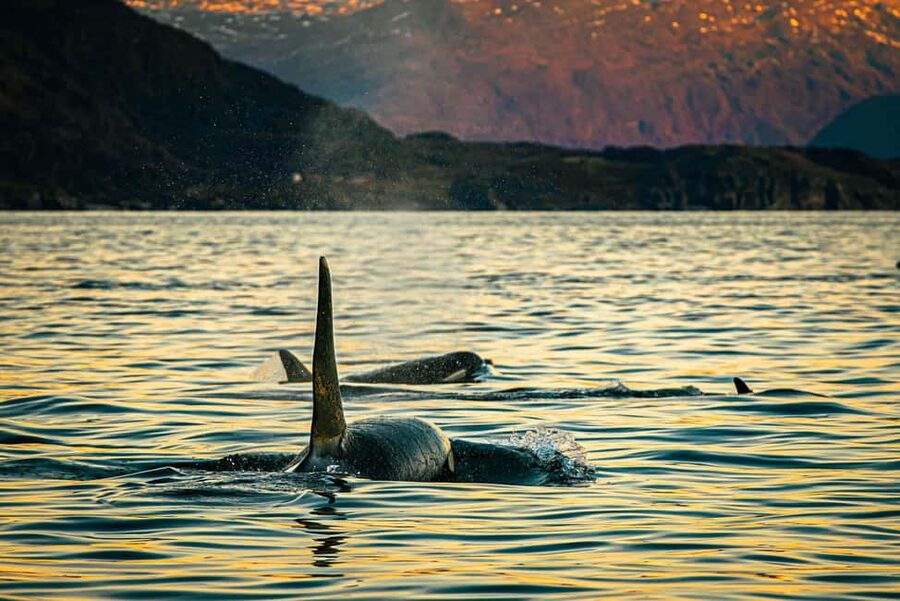
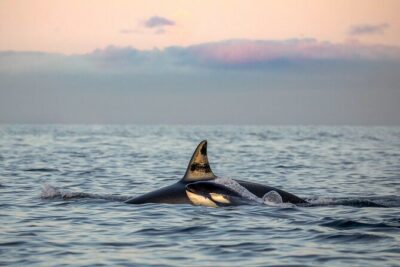
Killer whales are the main attraction for many people. Their black bodies, white patches, and tall dorsal fins make them easy to identify, even when the sea is moving. The most memorable sightings can involve several family groups traveling together or coordinating while feeding.
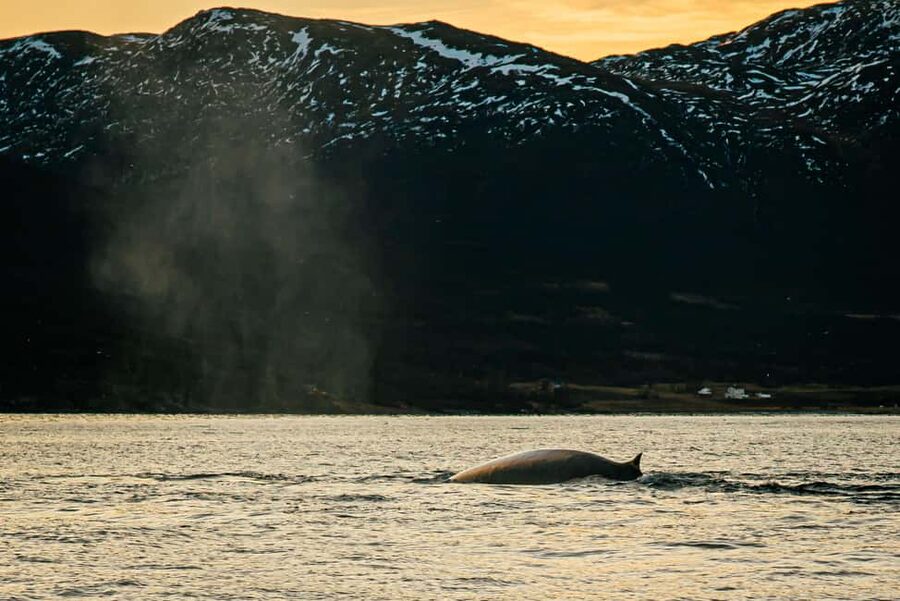
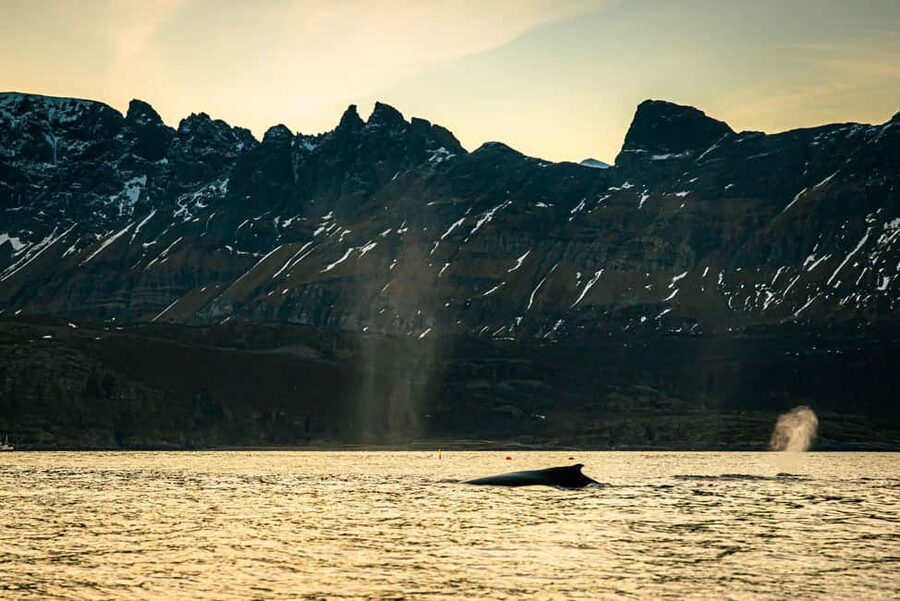
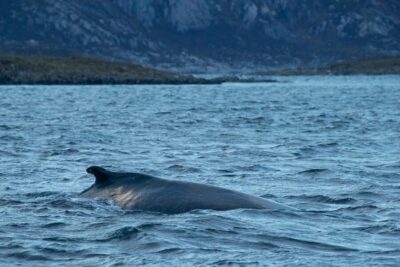
Humpback whales offer a different kind of encounter. They are often seen alone or in small groups, and their behavior can be less predictable. You might see a broad back roll through the water, a tail fluke rise into the air, or an occasional breach. Each humpback has a distinctive tail pattern, so a good sighting can feel like meeting an individual animal rather than watching a generic whale.
The setting adds plenty. Snow-covered mountains rise around the water, and the short winter daylight can give the scenery a blue, silver, or golden tone. Even when the whales take time to find, the ride gives you a strong sense of northern Norway’s scale.
More Whale Watching in Tromso
- Tromsø: Whale Watching Tour by Hybrid-Electric Boat
★ 4.5 · 4,217 reviews - Tromsø Whale Safari with MS Gabriele
★ 4.3 · 1,937 reviews - From Tromsø: All-Inclusive Whale & Orca Safari
★ 4.5 · 1,221 reviews
Meeting behind the white harbor building
The starting point is Strandveien 96 in Skjervøy. The precise meeting location is on the backside of the old white building in the harbor, downhill from the Extra grocery store.
This is useful information because harbor areas can contain several operators, boats, and changing facilities. Go to the stated point rather than assuming every whale-watching group gathers at the same doorway. The listed coordinates are 70.02948760986328, 20.968090057373047.
Allow a little time to find the guide and get dressed. One positive feature of this operation is its changing arrangement. A recent outing included a dedicated changing room, which made it easier to get into the supplied clothing before boarding.
The company is Reisafjord Xperience AS, a local operator. Tours are conducted in English or Norwegian. The small group format, with up to 12 people and one guide, keeps the outing personal enough for the guide to help with equipment and point out wildlife.
The three-hour route from harbor to whales
The tour begins with a safety briefing and the fitting of warm clothing and life jackets. You receive thermal outerwear, hats, goggles, and thermal shoes. The protective suit is important because a RIB sits low on the water and moves quickly, exposing you to wind and spray.
Then the boat leaves Strandveien 96 and heads out from Skjervøy. The journey itself is part of the attraction. A RIB has powerful engines and a more direct connection with the water than a heated cabin boat. You feel the speed, the turns, and the movement of the sea.
That also creates the principal trade-off. Several outings have included rough or rolling water, described as a fun rock-and-roll ride. If you are prone to motion sickness or prefer a quiet platform for photography, a heated cabin cruiser may suit you better.
The guide searches for signs of whales and coordinates the route around current sightings. Sometimes the boat may need to travel back and forth before finding the animals, especially early in the season. The outing is scheduled for three hours, but the guide has sometimes stayed out a little longer when whales were putting on an exceptional show.
Once whales are found, the boat slows and keeps a considerate distance. The best moments may be brief: a group of orcas surfaces together, a humpback lifts its tail, or a whale appears close to the boat to inspect the unfamiliar shape.
The guide’s job is not just to locate animals. He explains what you are seeing and helps you read the water. Orcas communicate with whistles and pulsed sounds, some of which are audible to people. Humpbacks are known for their distinctive songs, although you should not expect an underwater concert from a small RIB.
What makes the RIB ride special
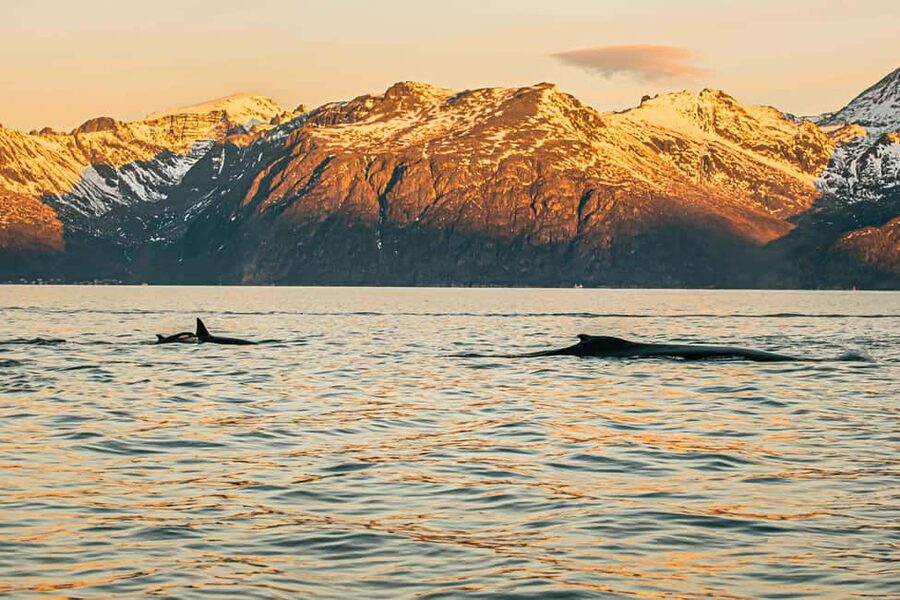
A RIB gives you a more immediate experience than a large boat. You are closer to the waterline, and the boat can move quickly between locations. That speed can matter when whales surface across a wide area.
You also feel more exposed to the Arctic. Spray may reach the boat, the wind can cut through weak clothing, and the sea may be choppy. The supplied goggles are not a throwaway extra. They help protect your eyes from wind and spray, particularly when the boat is moving at speed.
The boat holds 12 participants plus Viktor, according to the available trip details. That is a fairly full small boat, but the seating has been described as comfortable and suitable for viewing. A small group also means less time waiting for people to board or change positions.
The ride is not designed as a lecture on the water. One practical criticism is that the RIB setup does not allow the guide to share as much information as he might on a larger or more stable boat. If detailed commentary is your top priority, compare this with a heated cabin cruise. If you want speed, fresh air, and a closer feel for the sea, the RIB is the more exciting choice.
More RIB Boat Trips in Tromso:
- Whale Watching RIB Safari at Skjervøy
★ 4.8 · 136 reviews - Skjervøy: Whale and Orca Watching Tour by RIB Boat
★ 4.1 · 87 reviews - From Stavanger: RIB Tour to Lysefjord
★ 4.9 · 1,288 reviews - From Stavanger: Lysefjord Sightseeing RIB Boat Tour
★ 4.9 · 821 reviews
Orcas, humpbacks, and the luck factor
Wildlife watching always includes uncertainty. You may see several species in one outing, or you may spend much of the time searching. The operator’s skill improves your chances, but it cannot control weather, whale movement, or the location of the herring.
Recent trips have produced striking encounters. Orca sightings have included groups of around 50 animals, coordinated feeding, close approaches, and breaching. Other outings have combined orcas, humpback whales, and fin whales on the same day.
One especially useful detail is the guide’s patience. Viktor has been praised for finding a family group before other RIBs and then stopping at a respectful distance. In some cases, the orcas became curious and approached the boat themselves.
That distinction matters. A good whale-watching outing should not be judged only by how close the boat gets. The guide’s care for the animals is part of the experience. The available feedback repeatedly points to a calm approach, safe distances, and an effort to let the whales decide how close they want to come.
You may also see feeding behavior rather than simple passing whales. Orcas can work as a team around herring, creating a much more interesting scene than a single fin appearing once. If you see this, watch the whole group instead of focusing on one animal. The action can shift quickly around the boat.
Viktor’s role in the experience
The guide can make or break a wildlife outing, and Viktor receives unusually strong praise for both warmth and skill. He helps participants with the suits and equipment, explains whale behavior, and keeps looking when the first search does not produce results.
He has also been described as recognizing some orcas by name. That adds a local, personal touch. Instead of treating each sighting as an anonymous black fin, he can give you a sense that these are known family groups with individual identities.
His guiding style appears flexible. He has asked what else people hoped to see and then tried to make it happen within safe limits. That does not mean you can order up a breach or a humpback, but it suggests a guide who pays attention to the group rather than simply following a fixed script.
The language choices are English and Norwegian. His commentary may be harder to hear while the boat is moving, especially in rough conditions. Listen closely during slower periods, and ask questions when the boat is stopped or idling near the whales.
Staying warm in Arctic conditions
The operator supplies much of what you need: warm outerwear, life jackets, hats, thermal shoes, and goggles. This is a major value point because buying or renting a full Arctic outfit for one activity can be expensive and inconvenient.
Still, do not treat the supplied suit as a magic shield. The cold reaches your hands, face, and neck first. Bring or wear warm gloves, and take neck coverage seriously. One participant found the trip less comfortable because the gloves and neck protection were not warm enough.
Dress in layers underneath the suit. The information provided does not specify the exact clothing requirements, so avoid arriving in ordinary city clothes and expecting the outer suit to handle everything. Wool or thermal layers are a sensible choice, along with clothing that can tolerate some spray.
Protect your camera and phone. A waterproof case or plastic bag is practical, particularly in rough water. You may have excellent views, but the boat is an active marine environment rather than a dry photo platform.
At the end, a hot chocolate and cookies may be served back at the base. That small finish matters more than it sounds. After three hours in cold air, a warm drink gives you time to thaw out and talk through what you saw.
Getting to Skjervøy from Tromsø
The tour itself begins in Skjervøy, not Tromsø. If you are staying in Tromsø, Arctic Route runs daily buses between Tromsø and Skjervøy, and tickets can be booked separately.
This makes the tour possible without renting a car, but you need to plan the connection carefully. Check the bus timetable against the whale tour’s available start time and allow enough margin to reach Strandveien 96. The whale trip lasts three hours, so also check the return bus before committing to a same-day connection.
The bus ride is not just a transfer. Northern Norway’s roads lead through striking fjord scenery and mountain country. Still, the entire day becomes longer once transport from Tromsø is added. If you are sensitive to long travel days, an overnight stay in Skjervøy may be more comfortable than trying to force the whale tour between bus departures.
The local start point is an advantage for people already staying in Skjervøy. It avoids the extra transfer time built into tours that collect participants in Tromsø. For Tromsø-based visitors, compare the cost and timing of the bus with a package that includes transport.
Value, flexibility, and the right type of visitor
A price is not provided here, so I cannot judge the exact cost against competing trips. I can judge what you receive: three hours on the water, a maximum group of 12 plus the guide, full protective gear, local guiding, and the possibility of seeing multiple whale species.
That package can offer good value if you care about the quality of the time on the water rather than simply ticking off whale watching. The RIB gives you a more active ride, and the guide’s reported willingness to search longer or extend the trip slightly during a strong sighting adds value.
The experience suits you best if you:
- Want an energetic boat ride rather than a quiet cruise
- Are visiting during the October to February whale season
- Are happy to accept that nature sets the schedule
- Want a small boat and direct access to the water
- Enjoy learning about whale behavior while watching
- Can manage cold, wind, and some rough movement
You might prefer another format if you need a heated indoor cabin, want extensive commentary while underway, or strongly dislike bouncing over waves. A larger boat may feel calmer, while a cabin cruiser gives you a warmer place to retreat between sightings.
Free cancellation up to 24 hours before departure and reserve-now, pay-later booking make it easier to fit the trip into a weather-dependent northern Norway itinerary. Check the actual departure time and availability before booking, particularly if you are connecting from Tromsø.
Should you book this Skjervøy whale safari?
I would book this tour if your priority is a close, lively encounter with the Arctic sea and you are visiting during the whale season. The strongest reasons are the small RIB, supplied gear, local operation, and Viktor’s reputation for patient searching and careful whale handling.
I would not choose it purely because you want a guaranteed orca sighting. No responsible operator can promise that. I would also think twice if you need warmth and stability above all else.
Bring proper gloves, neck protection, layered clothing, and a waterproof camera cover. Arrive at the old white harbor building behind the Extra store, keep your schedule flexible, and prepare for a bit of spray and motion. If the whales cooperate, you may see team-feeding orcas, acrobatic humpbacks, and snowy mountains in one memorable Arctic morning or afternoon.
FAQ
Where does the whale-watching tour begin?
The meeting point is at Strandveien 96 in Skjervøy, on the backside of the old white building in the harbor, downhill from the Extra grocery store.
How long does the whale-watching experience last?
The whale-watching activity lasts three hours. Starting times depend on availability.
Which whales might I see?
The main species are killer whales and humpback whales. Fin whales have also been seen during some outings.
What clothing and equipment are provided?
The operator provides warm outerwear, life jackets, hats, thermal shoes, and goggles. You should still dress warmly and bring suitable gloves and neck protection.
Is the tour available in English?
Yes. The live guide speaks English and Norwegian.
Can I reach Skjervøy from Tromsø without driving?
Yes. Arctic Route runs daily bus trips between Tromsø and Skjervøy. Check the bus schedule carefully against the whale tour departure and return times.
Just added in Tromso
- Tromsø:Northern light tour with mini bus i Tromsø★ 4.9 · 8 reviews
- Tromsø: Horseback Riding Tour★ 4.8 · 23 reviews
- Tromsø: Tasty King Crab Adventure★ 4.5 · 49 reviews
- Tromsø: Sommarøy Islands Midnight Sun Tour★ 5.0 · 9 reviews
- Tromsø Sweet Temptations tour: afternoon tea & chocolates★ 4.8 · 5 reviews
- Tromsø: City Walk & Polar Museum (Private or Shared)★ 3.7 · 3 reviews
- Tromsø: Snow Sledding, Mini Skiing, Lasso and Reindeer Hides★ 4.6 · 60 reviews
- Tromsø: Snowshoeing in a small group with free photos★ 4.3 · 4 reviews
Whale Watching, compared.

Silent Whale Watching by Hybrid-Electric Boat from Tromsø
Read our review →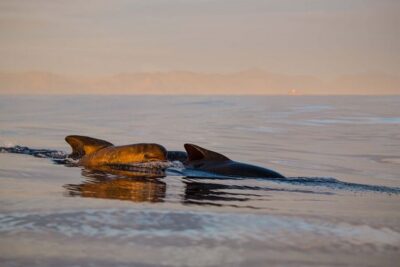
Bleik: Whale Watching by Speedboat with Puffins and Muffins
Read our review →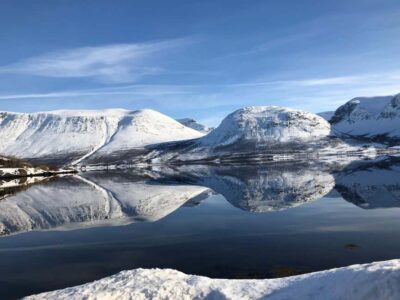

Browse the lists this tour appears in