
REVIEW · WILDLIFE
Skjervøy: Birds and Wildlife of Arctic Norway
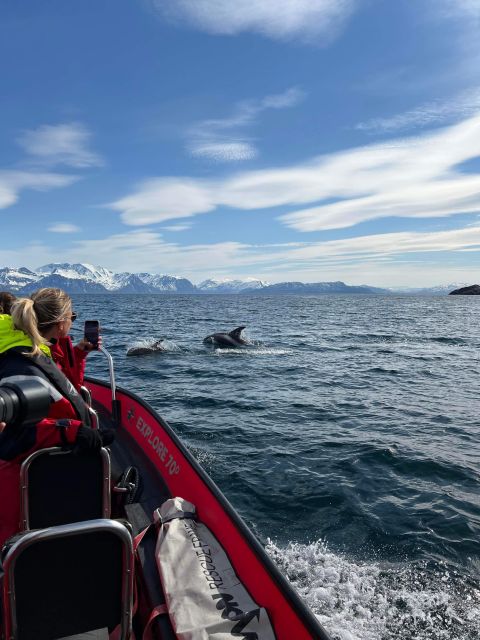
Wildlife rarely follows a schedule. That is the charm here. This three-hour Rib cruise from Skjervøy takes you through Arctic fjords in search of white-beaked dolphins, harbor porpoises, whales, eagles, seabirds, seals, otters, moose, and reindeer. I like the local company and its focus on Sami and Norwegian stories, and I also like the practical safety setup, including thermal suits, mittens, goggles, and a professional guide. The main drawback is simple: nature may provide magnificent scenery but no animals on the day.
The tour costs $165 per person and runs from 9:30 a.m. to 12:30 p.m. That is a fair price for a specialized small-boat wildlife trip, especially since warm gear is supplied. Still, you must arrange your own transport to Skjervøy, and the ride can be cold, wet, and bumpy despite the steady Rib.
In This Review
- Key points to know before booking
- Why this Skjervøy cruise is worth considering
- A steady Rib, Arctic water, and useful winter gear
- The 9:30 a.m. departure and the first search
- Dolphins and porpoises, the most dependable targets
- Whales after the winter feeding season
- Eagles, puffins, and the spring bird season
- Moose, reindeer, and the shore beyond the boat
- What the guide adds to a three-hour outing
- Is $165 good value?
- Who should book this experience?
- Final call: book it if you accept the wild card
- FAQ
- Where does the Skjervøy wildlife cruise take place?
- How long does the tour last?
- What animals might I see?
- Are whales guaranteed?
- Are dolphins seen throughout the year?
- What bird species might appear?
- What clothing and equipment are provided?
- Is food included?
- Is transport from Tromsø included?
- Where does the tour start and finish?
- Is the tour suitable for children and people with back problems?
- Can I cancel for a refund?
Key points to know before booking
- White-beaked dolphins and harbor porpoises are year-round possibilities: These are among the most regular marine sightings in the area, though wildlife is never guaranteed.
- Whale sightings change with the calendar: The main winter whale feeding period around Skjervøy ends in late January, but juvenile humpback whales and other passing cetaceans may still appear.
- Birdlife is strongest in spring and summer: Eagles, cormorants, puffins, guillemots, razorbills, little auks, Arctic terns, eider ducks, and long-tailed ducks may all be seen.
- The tour carries a Norwegian quality mark: The Varde-quality certificate for whale watching signals that the operator meets a recognized Norwegian standard for this type of activity.
- The trip adds local stories: Your English-speaking guide may explain how Sami and Norwegian communities have shaped life around the fjords.
- The boat returns to the same meeting point: Look for the red door and large windows marked with Explore 70 Degrees.
Why this Skjervøy cruise is worth considering
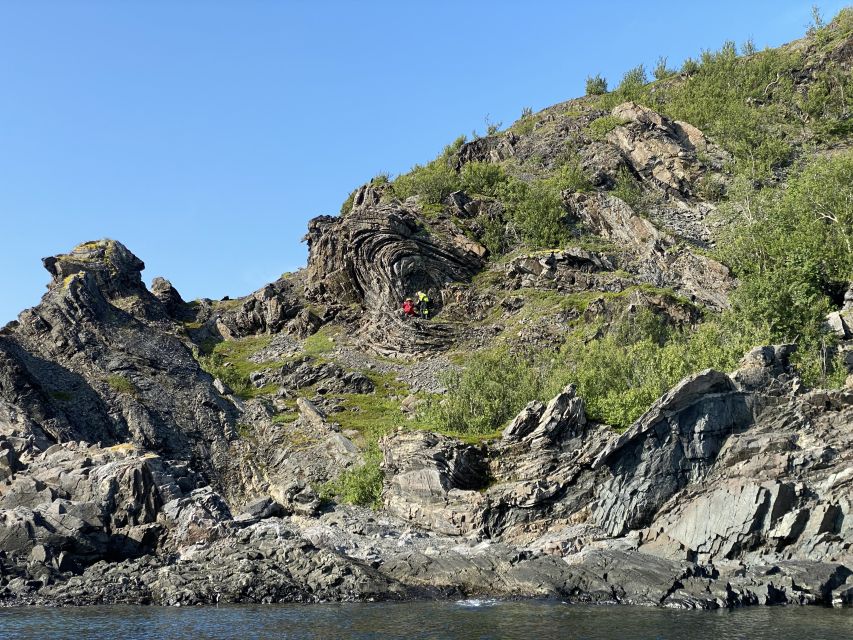
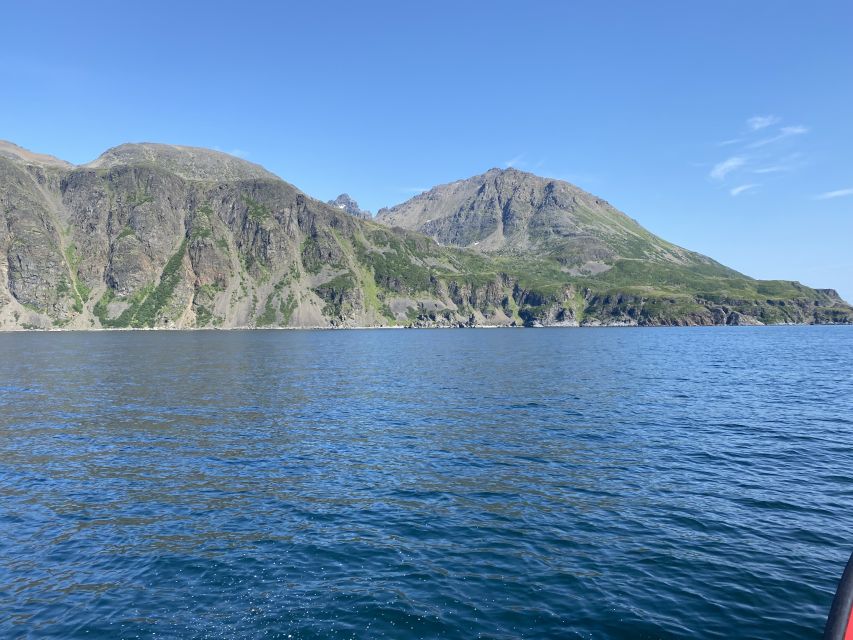
Skjervøy sits in a part of northern Norway where sea, snow, islands, and fjords meet. The appeal is not a single famous sight. It is the chance to watch a living Arctic environment change minute by minute.
One moment, you may scan the water for a dorsal fin. Then an eagle may cross the sky, or a flock of seabirds may skim low over the waves. You might spot reindeer or moose on shore. The tour works best when you treat it as a search rather than a guarantee.
That distinction matters. A wildlife cruise can be excellent even when the animals stay hidden, but you should be comfortable with uncertainty before paying $165. The boat trip is special, yet the area itself is also part of the cost. Reaching Skjervøy takes effort, and the fjord journey gives you a strong reason to make the trip.
The operator, Explore 70 Degrees, is locally based in Skjervøy. That matters because local crews know the nearby waters and can connect the wildlife to daily life in the region. The company also places clear emphasis on hospitality and personal attention, rather than treating the outing as a quick ride with a few facts added on.
More wildlife trips in Tromso:
- Tromso Snowshoeing – Valley, Fjord Views, Wildlife, Meal & Pickup
★ 5.0 · 398 reviews - Tromsø: Winter Sea Kayaking Tour with Wildlife Sightings
★ 4.9 · 333 reviews - Fjord, Mountain and Wildlife Tour
★ 4.5 · 229 reviews
A steady Rib, Arctic water, and useful winter gear
The tour uses a Rib, a rigid inflatable boat designed for speed and stability. It is a practical choice for searching several parts of the fjord system during a three-hour outing. You are not confined to one viewing point, and the boat can move between open water, shorelines, and areas where birds or marine mammals may appear.
The boat is described as safe and steady, but you should still expect an exposed ride. Arctic weather can shift quickly. Snow showers, wind, spray, and low temperatures are all part of the setting, particularly outside the warmer months.
The operator supplies thermal suits, a life vest, mittens, and goggles. These are not minor extras. Good clothing can determine whether you stay alert and enjoy the trip or spend three hours thinking about your fingers and ears. You should still bring warm clothing of your own, as the supplied gear is an added layer of protection rather than a substitute for proper base layers.
The goggles should help with wind and spray, while the mittens offer basic protection during the ride. Wear practical clothes underneath the suit, and avoid arriving in light city clothing. The rules also prohibit intoxication, alcohol, and drugs. That is sensible on a moving boat where balance, judgment, and cold-weather awareness matter.
The activity is listed as wheelchair accessible, but people with back problems should not book it. A Rib ride can involve motion and jolts, so anyone with concerns about mobility or physical comfort should check the conditions before committing.
The 9:30 a.m. departure and the first search
The standard schedule runs from 9:30 a.m. until 12:30 p.m. You meet at the provider’s base in Skjervøy, identified by a red door and large windows with the company name. The cruise ends at that same point.
The opening part of the trip is likely to be about getting settled, putting on safety equipment, and learning how to behave on the Rib. Listen closely to the guide’s instructions. A wildlife boat needs everyone to remain seated and ready to respond quickly when an animal appears.
Once underway, the crew searches the water and nearby shores. This is not a fixed parade of viewing stops. The route changes according to weather, sea conditions, and recent animal activity. Your guide may point out movement in the water, birds on the surface, or distant shapes along the shore.
You will need patience. Marine mammals can surface for only a few seconds, and birds can disappear into the background of dark water and rocky shore. Bring a sense of humor and avoid judging the trip by how quickly the first sighting arrives.
A previous departure had a particularly useful stroke of luck with the weather. The boat trip took place between two snow showers, creating a clear window for the fjord ride. That detail tells you something important about Arctic outings: conditions can make the same route feel completely different from one morning to the next.
Dolphins and porpoises, the most dependable targets
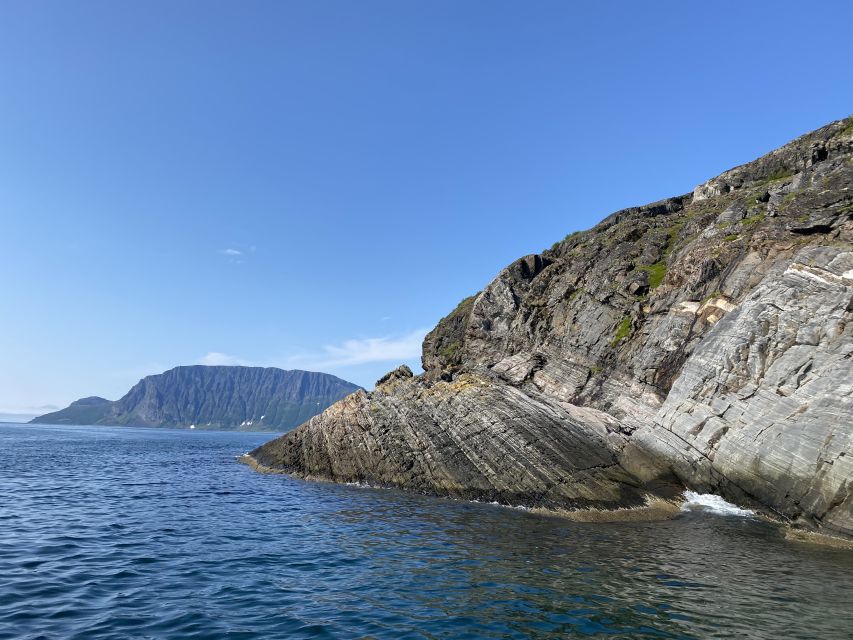
White-beaked dolphins and harbor porpoises are described as common in the area throughout the year. They are the marine mammals you should think of as the main possibilities, not as guaranteed performers.
White-beaked dolphins may travel in groups and can be lively at the surface, though the information provided does not promise a particular behavior. Harbor porpoises are smaller and often harder to spot. You may see only a brief roll or a small fin before the animal vanishes.
This is where a local guide earns the supplied fee. An experienced eye can notice a pattern in the water before you do, then direct your attention to the right place. Keep watching after the first sighting. The first animal you see may be only part of a larger group.
Seals and otters are also possible. They are described as regular residents from time to time, but their presence is less predictable. Seals may appear near shore or rocks, while otters are smaller and easier to miss. Do not expect a close encounter. The value is in seeing these species in their natural setting, with the fjords around them rather than an enclosure or staged viewing area.
A few more options to weigh up in Tromso
- Tromsø: Reindeer Sledding & Feeding with a Sami Guide
★ 4.8 · 6,417 reviews - Tromsø: Whale Watching Tour by Hybrid-Electric Boat
★ 4.5 · 4,217 reviews - From Tromsø: Aurora Borealis Tour
★ 4.8 · 4,206 reviews - Tromsø’s Top-Rated Fjord & Fishing Cruise – All-Inclusive
★ 4.7 · 4,017 reviews
Whales after the winter feeding season
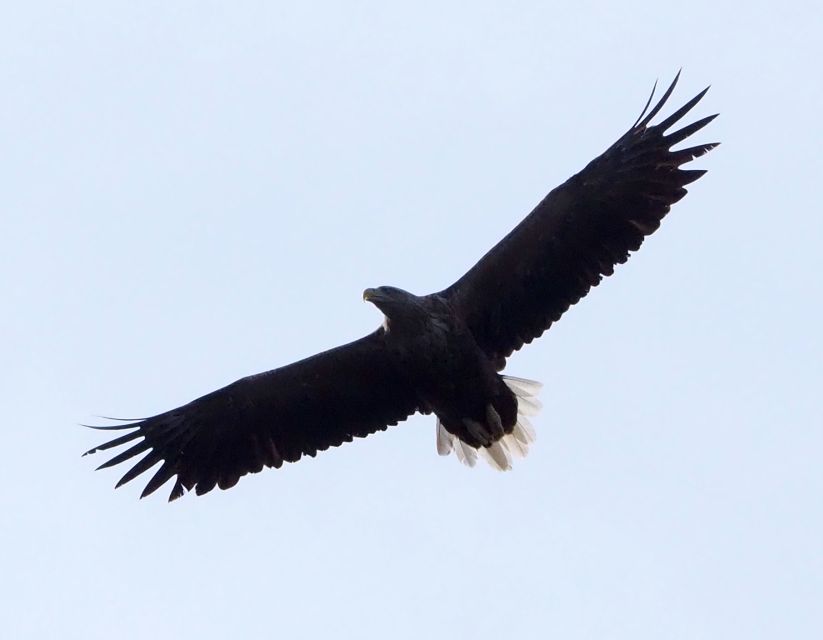
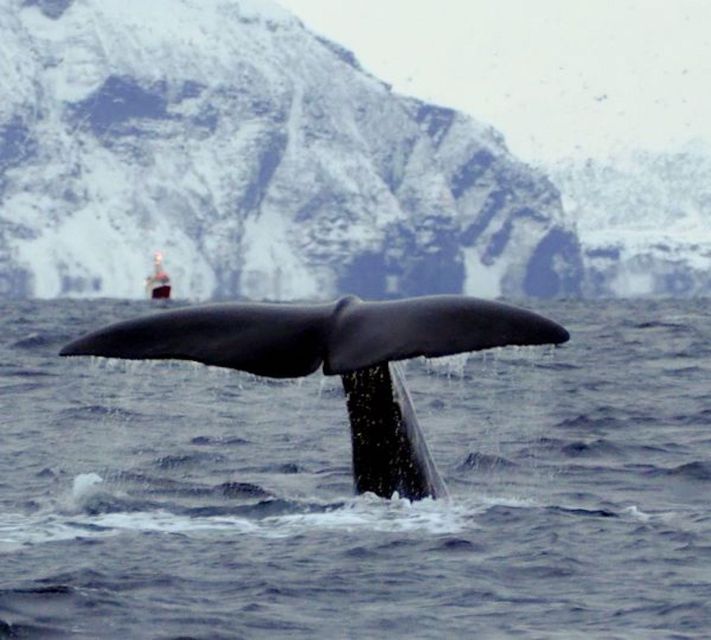
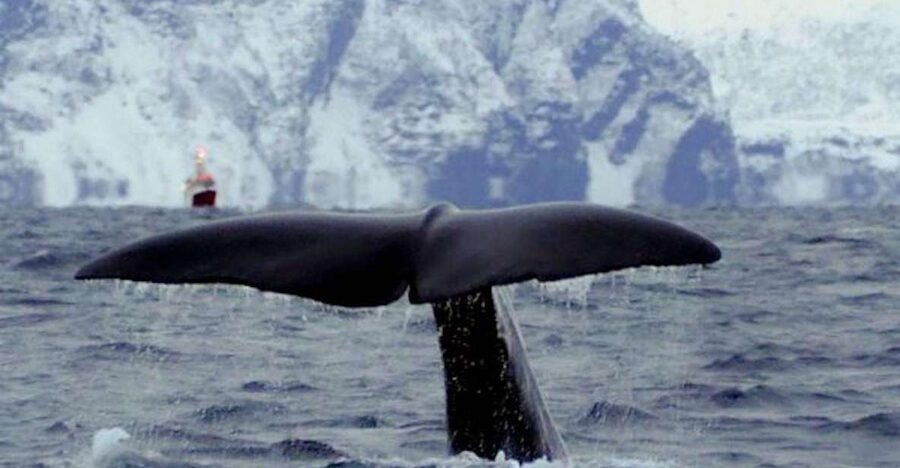
Whales are a major reason many people consider a Skjervøy boat trip, but timing deserves an honest explanation. The winter whale feeding period around Skjervøy ends in late January. After that, cetaceans can still be seen, but sightings are more occasional.
Juvenile humpback whales and other passing whales may travel into or through the fjord system. That makes a post-January trip possible, but not whale-focused in the same dependable way as the heart of the winter season.
If whales are your only goal, check the seasonal situation before booking and accept that the cruise may produce dolphins and seabirds instead. If you want a broader Arctic wildlife outing, the changing odds are easier to accept.
The activity carries the Varde-quality certificate for whale watching, a Norwegian quality certification. That does not promise sightings. It does indicate that the operator has been assessed within a Norwegian quality framework for whale-watching activity, which gives the tour a useful mark of professionalism.
The honest approach is to view the certificate as reassurance about how the activity is run, not insurance against empty water.
Eagles, puffins, and the spring bird season
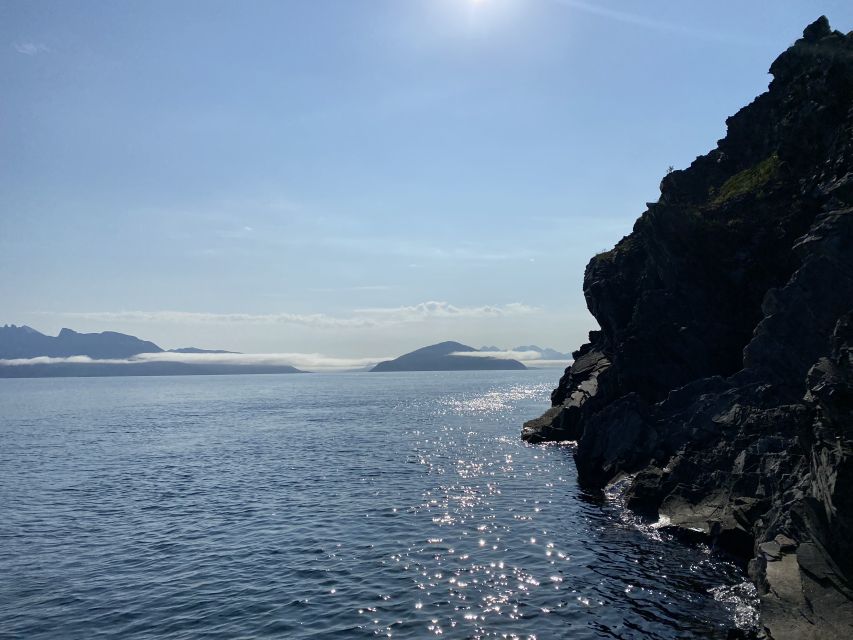
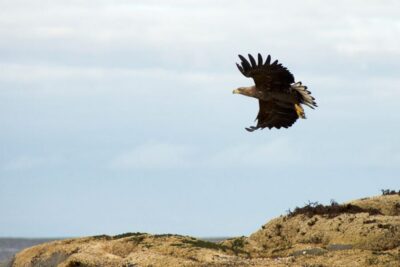
The birdlife may be the strongest reason to choose this outing outside the main winter whale period. Arctic Norway supports a wide mix of seabirds and coastal birds, and spring and summer are described as especially rewarding for bird watching.
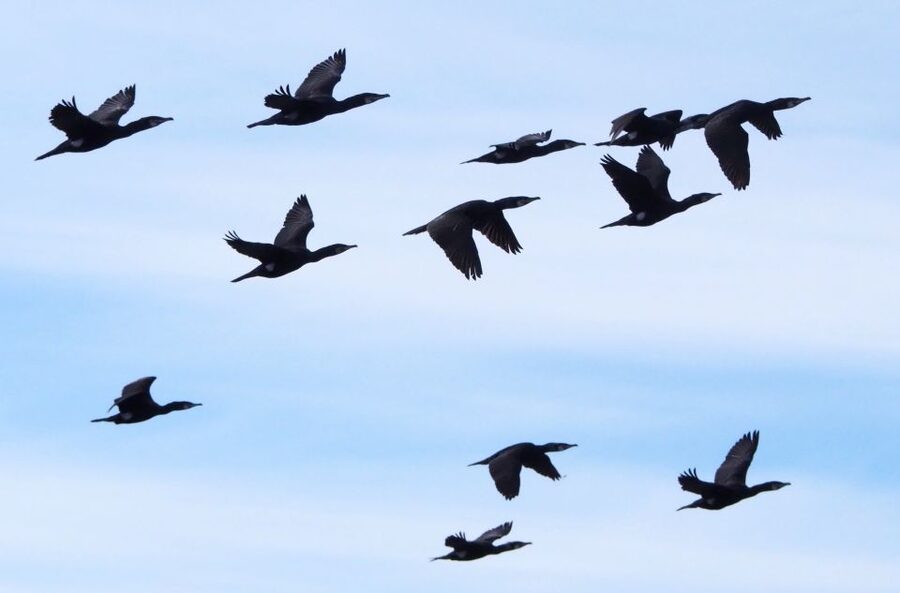
You may see large eagles circling or moving across the fjord. Cormorants are another striking possibility, with their dark bodies and broad wing movements easy to recognize from the boat.
The list of possible seabirds is long:
- Puffins
- Guillemots
- Razorbills
- Little auks
- Arctic terns
- Eider ducks
- Long-tailed ducks
Each species gives the guide another way to explain the ecology of the region. Puffins and auks bring the drama of open-sea birdlife, while eider ducks and long-tailed ducks connect the trip to calmer coastal water.
Bird sightings can be less theatrical than a whale surfacing, but they are often more varied. You may see several kinds during one outing, especially in spring and summer. Bring patience and keep scanning above the water as well as below it. Eagles may be overhead, while seabirds gather lower down.
A basic pair of binoculars could be useful, though binoculars are not listed among the included equipment. Do not assume the operator supplies them.
Moose, reindeer, and the shore beyond the boat
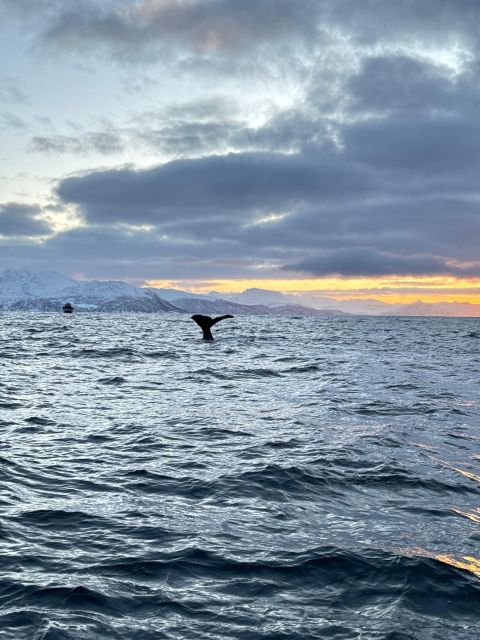
The crew also watches the land for moose and reindeer. These animals may be far from the water, so you need to look carefully at the shore rather than focusing only on the sea.
This gives the trip a broader sense of Arctic wildlife. You are not simply moving from one marine mammal search area to another. The guide may help you read the coastline and notice animals that blend into the terrain.
The boat also provides a different view of human life in the region. From the water, you see the setting that has supported generations of Sami and Norwegian communities. The guide is expected to include stories about local culture and history, not just species names.
That cultural element is valuable because wildlife does not exist separately from the people who use these waters. Sami and Norwegian traditions, fishing, travel, and settlement are part of the story of northern Norway. The experience will suit you best if you want that wider context rather than a nonstop animal checklist.
What the guide adds to a three-hour outing
The guide speaks Norwegian and English, with English provided for the tour. The operator places strong value on hosting and personal attention, and the guide’s role is practical as well as educational.
You need someone who can explain safety rules, help you spot wildlife, describe the weather, and tell local stories without turning the cruise into a lecture. The supplied information does not name individual guides, so you should not expect to request a particular person.
Three hours is a sensible length. A shorter trip might feel rushed, while a much longer ride could become tiring in cold weather. This schedule gives you enough time to search several areas without taking over the entire day.
It also leaves room for other plans in Skjervøy. The catch is that the tour itself begins and ends in Skjervøy, and transport from Tromsø is not included. You must account for the cost and time of reaching the meeting point. If you are staying elsewhere, check your connections carefully before reserving.
Is $165 good value?
At $165 per person, this is not a casual budget boat ride. The price makes more sense when you count the supplied thermal gear, safety equipment, professional local guide, and specialized wildlife search.
You are also paying for a certified Norwegian whale-watching operator and a local company with roots in Skjervøy. Those details add value if you care about safety standards, regional knowledge, and a more personal outing.
The price is harder to justify if you want a guaranteed whale sighting. No wildlife tour can promise that here, and the main winter feeding season ends in late January. You are paying for access to the fjords, the search itself, the guide’s interpretation, and the chance of a memorable sighting.
The strongest value comes when you enjoy nature even during quiet stretches. A snow shower breaking over the fjord, an eagle crossing the sky, or a sudden glimpse of a porpoise can make the ride worthwhile even without whales.
Who should book this experience?
I would recommend it to you if you enjoy wildlife, cold-weather scenery, and small-boat outings. It is also a good choice if you want local Sami and Norwegian context woven into a nature activity.
Spring and summer may suit bird watchers best. The warmer period offers a stronger chance to see the region’s varied birdlife, including puffins, guillemots, razorbills, Arctic terns, and ducks.
Late winter may appeal more if whales are your main interest, but you should understand the seasonal limits. After late January, whales may still pass through, yet dolphins, porpoises, birds, seals, otters, moose, and reindeer become important parts of the experience.
I would not choose this for a child under six, since the activity is not suitable for that age group. I would also avoid it if you have back problems or dislike exposed boat rides. The tour is listed as wheelchair accessible, but you should still confirm that the specific boat setup meets your needs.
Final call: book it if you accept the wild card
Book this Skjervøy cruise if you want a well-equipped, locally operated search for Arctic wildlife, and if you can accept that the animals control the schedule. The Varde certification, supplied thermal gear, steady Rib, and local storytelling give the $165 price a solid basis.
Choose your timing carefully. For whales, late winter offers the better context, while spring and summer may provide the most varied birdlife. If a quiet day would leave you disappointed, this may not be the right outing. If you can enjoy the fjords, weather, stories, and chance encounters as much as the headline animals, it is a worthwhile addition to an Arctic Norway itinerary.
FAQ
Where does the Skjervøy wildlife cruise take place?
The activity takes place in the fjords around Skjervøy, in Arctic Norway and the Barents Sea region.
How long does the tour last?
The cruise lasts three hours, from 9:30 a.m. to 12:30 p.m.
What animals might I see?
Possible sightings include white-beaked dolphins, harbor porpoises, whales, seals, otters, eagles, cormorants, puffins, guillemots, razorbills, little auks, Arctic terns, eider ducks, long-tailed ducks, moose, and reindeer.
Are whales guaranteed?
No. Wildlife sightings vary during the year. After the main winter whale-feeding period ends in late January, juvenile humpback whales and other passing cetaceans may still be seen from time to time.
Are dolphins seen throughout the year?
White-beaked dolphins and harbor porpoises are described as common in the area year-round, but no animal sighting is guaranteed.
What bird species might appear?
Possible birds include eagles, cormorants, puffins, guillemots, razorbills, little auks, Arctic terns, eider ducks, and long-tailed ducks. Birdlife is expected to be especially interesting in spring and summer.
What clothing and equipment are provided?
The operator provides thermal suits, life vests, mittens, and goggles. You should also bring warm clothing.
Is food included?
No. Food and drinks are not included.
Is transport from Tromsø included?
No. Transport to and from Tromsø is not included. You must make your own way to the meeting point in Skjervøy.
Where does the tour start and finish?
Look for the red door and large windows marked with the activity provider’s name. The tour ends back at the same meeting point.
Is the tour suitable for children and people with back problems?
The activity is not suitable for children under six or for people with back problems. It is listed as wheelchair accessible.
Can I cancel for a refund?
You can cancel up to 24 hours in advance for a full refund. You can also reserve now and pay later.
Just added in Tromso
- Tromsø:Northern light tour with mini bus i Tromsø★ 4.9 · 8 reviews
- Tromsø: Tasty King Crab Adventure★ 4.5 · 49 reviews
- Tromsø: Horseback Riding Tour★ 4.8 · 23 reviews
- Tromsø Sweet Temptations tour: afternoon tea & chocolates★ 4.8 · 5 reviews
- Tromsø: City Walk & Polar Museum (Private or Shared)★ 3.7 · 3 reviews
- Tromsø: Sommarøy Islands Midnight Sun Tour★ 5.0 · 9 reviews
- Tromsø: Snow Sledding, Mini Skiing, Lasso and Reindeer Hides★ 4.6 · 60 reviews
- Tromsø: Snowshoeing in a small group with free photos★ 4.3 · 4 reviews
Wildlife, compared.
Tromso Snowshoeing – Valley, Fjord Views, Wildlife, Meal & Pickup
Read our review →
Winter Sea Kayaking Tour with Wildlife Sightings
Read our review →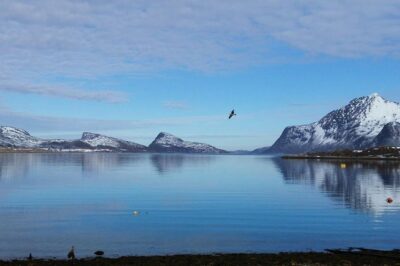
Arctic Wildlife & Fjord Sightseeing Tour by Car
Read our review →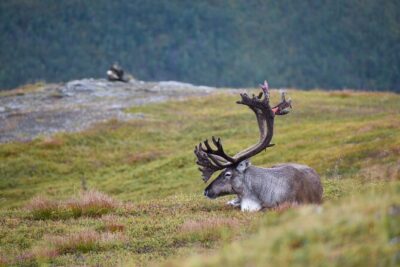
Half-Day Scenic Wildlife & Photographic Fjord Tour.
Read our review →
Browse the lists this tour appears in