
REVIEW · FJORD CRUISES
Geiranger: Sky to Fjord Downhill Biking Adventure
Norway rolls beneath your wheels. This short, thrilling ride begins high at Djupvatn Lake and follows 16 kilometers of mountain road toward Geiranger, with fjord views, waterfalls, and famous viewpoints along the way. I like the freedom to stop for photos and ride at your own pace, and I like that transport, bikes, helmets, gloves, and visibility vests are included.
The main catch is important: this is an unguided downhill ride, not a guided cycling tour. You also share a narrow public road with buses and other vehicles, and equipment quality appears to have varied. If you want a quiet bike path or close support, think carefully before booking.
In This Review
- Key Points Before You Book
- From Geirangervegen to Djupvatn Lake
- Getting Ready for a 16-Kilometer Descent
- The Road Down From the High Mountains
- Blåfjell, Kvandalls Waterfall, and Opplenskedalen Valley
- Knuten and the Famous View at Flydalsjuvet
- Why Unguided Riding Can Be a Strength
- Price and What the $160.09 Covers
- Who Will Enjoy This Ride Most
- Practical Details and Cancellation
- Should You Book the Geiranger Downhill Bike Ride?
- FAQ
- Where does the Geiranger downhill biking experience start?
- How far do you ride?
- Is a guide included during the bike ride?
- What equipment is included?
- How fit do I need to be?
- What happens if the weather is poor?
Key Points Before You Book
- Start at 1,030 meters: A vehicle carries you from Geiranger up to Djupvatn Lake, where the downhill ride begins.
- Ride 16 kilometers: Most of the route runs downhill, with one short uphill section that some riders choose to walk.
- Stop at Norwegian viewpoints: The route includes Blåfjell, Kvandalls waterfall, Opplenskedalen Valley, Knuten, and Flydalsjuvet.
- Ride without a guide: Staff provide equipment and instructions, but you make your own way down.
- Small group size: The activity is limited to six people, which keeps the transport more personal.
- Check the bike carefully: Ask about brakes, seat height, helmet fit, tires, and emergency contact details before setting off.
From Geirangervegen to Djupvatn Lake
The meeting point is at Geirangervegen 10 in Geiranger. Although the tour summary lists Andalsnes as the location, the supplied meeting point and route clearly place this activity in Geiranger. Check your confirmation closely and allow time to reach the correct town.
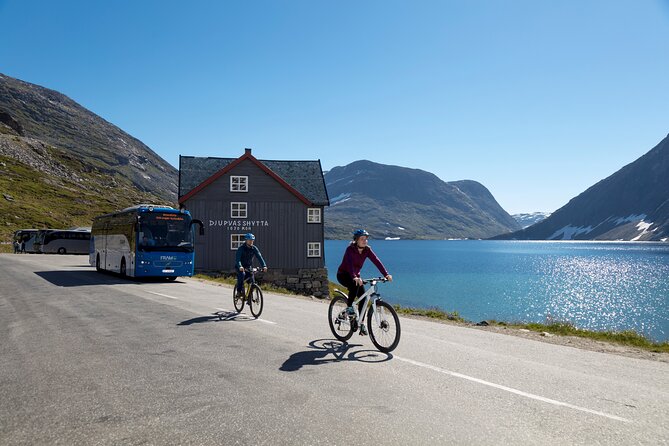
From the meeting point, an air-conditioned vehicle takes you uphill to Djupvatn Lake. At 1,030 meters above sea level, the lake provides a dramatic starting point. You begin among high mountain scenery, then descend toward the fjord and the lower valleys around Geiranger.
The drive up matters more than it might seem. It saves you from a long, demanding climb and gives you a chance to look over the route before riding it. The vehicle ride has also been praised for being informative, although the exact amount of commentary may depend on the staff member driving that day. One account specifically praised the driver Marcell for being helpful and stopping for photos when the rider chose not to continue by bike.
The tour lasts about two and a half hours, including transport, preparation, and the ride. That is a sensible length for a port-day activity, but you should still keep a generous buffer if you are returning to a ship. Delays can happen, and the activity has reportedly started late on at least one occasion.
More Fjord Cruises in Andalsnes:
- From Ålesund: Trollstigen Sightseeing Village & Fjord Tour
★ 4.4 · 651 reviews - Fjord Sightseeing Tour by Boat in Geiranger
★ 4.0 · 69 reviews - From Bergen: The Original Fjord Cruise to Mostraumen
★ 4.7 · 8,440 reviews
Getting Ready for a 16-Kilometer Descent
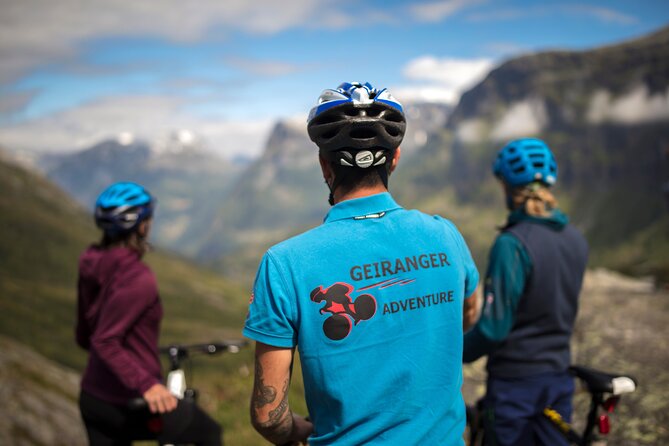
At Djupvatn, the team provides a bicycle, helmet, bicycle gloves, and a visibility vest. You receive basic technical and safety information, along with tips for handling the descent.
The ride is described as manageable for people with moderate fitness. You do not need to pedal hard for most of the route, but you do need to control speed, steer confidently, brake smoothly, and stay alert around traffic. Downhill riding can feel easy right up until a bend or slow vehicle demands quick action.
Take a few minutes before departure to check the bicycle yourself. Make sure the seat suits your height, the brakes respond evenly, the kickstand is secure, and the helmet strap fits snugly. One serious complaint described poorly adjusted bikes, sticky brakes, smooth tires, small helmets, and a badly worn visibility vest. Other riders found the equipment excellent and easy to handle, so quality may vary from one bike to another.
That difference makes your pre-ride check especially important. If something feels wrong, ask for another bicycle before leaving the lake. The team should also tell you what to do in case of a puncture or mechanical problem. One rider had no mobile service and struggled to get an office phone number, so save the operator’s contact details before you arrive.
The Road Down From the High Mountains
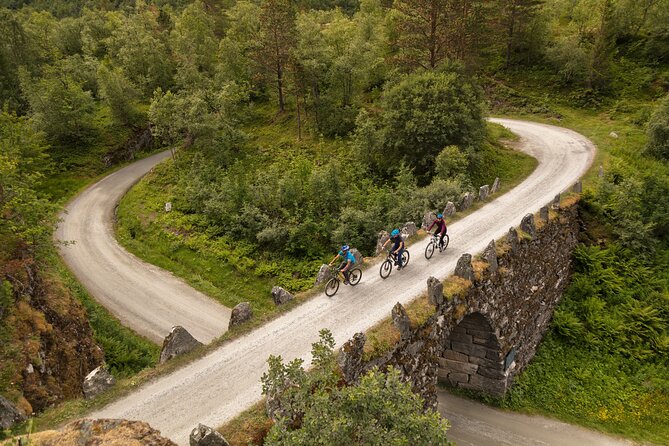
The route covers about 16 kilometers, nearly 10 miles, from Djupvatn toward Geiranger. You are not racing. The best way to enjoy it is to keep a controlled pace and stop often.
The road is a public mountain road rather than a dedicated cycle path. This is the most important practical point in the entire experience. Large buses and other vehicles may pass close by, and there is no promise of a broad shoulder. Some riders found traffic considerate, while another decided not to ride after seeing how close the buses came.
You should be comfortable sharing a narrow road with traffic before booking. Keep to the correct side, slow down before bends, and never assume an approaching vehicle has seen you. If you are nervous on roads, the operator’s option to ride in the vehicle instead may be worth confirming in advance, but the provided information does not promise a separate sightseeing alternative.
The reward is the setting. You move from the stark mountain zone near the lake into valleys, waterfalls, villages, and views toward the fjord. Clear weather can make the route unforgettable, while mist or rain will soften the views and make braking and road awareness more important.
Blåfjell, Kvandalls Waterfall, and Opplenskedalen Valley
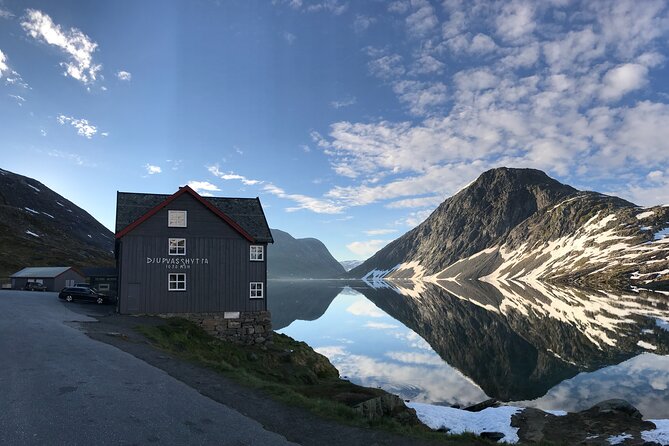
The first notable viewpoint lies near the foot of Blåfjell mountain. This is a good place to pause and take in the change in scale. You are no longer looking only across a high lake and bare mountain slopes. The descent begins to reveal the layers of valley and fjord below.
Kvandalls waterfall adds movement to the ride. Waterfalls are easy to miss when you are focused on steering, so do not treat the route as a simple downhill sprint. Pull over only where it is safe, get clear of the road, and give yourself time to look.
Opplenskedalen Valley brings a softer contrast to the high start. The route passes through a mix of mountain scenery, vegetation, and small settlements. The exact appearance depends heavily on weather and season, but the changing views are a major reason to choose this ride over a standard vehicle excursion.
There is one small uphill section. It is short enough that some riders simply walk the bike, but it is still worth knowing about if you expect a completely effortless coast. The rest of the ride is mainly downhill, and riders with different skill levels can spread out and travel at their own speed.
More Bike Tours in Andalsnes:
- E-bike and hike in Åndalsnes
★ 5.0 · 4 reviews - Andalsnes: Bike & Hike Adventure to Litlefjellet Summit
★ 5.0 · 3 reviews - Oslo: 3-Hour Highlights Bike Tour
★ 4.8 · 1,609 reviews - Oslo Highlights Bike Tour
★ 5.0 · 979 reviews
Knuten and the Famous View at Flydalsjuvet
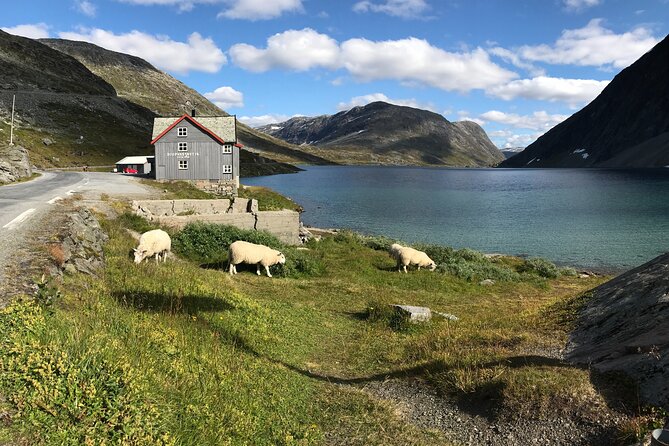
Knuten is another marked point along the descent. It gives you another reason to slow down rather than rush straight into Geiranger. The route is designed around a series of viewpoints, so the best experience comes from treating each stop as part of the outing.
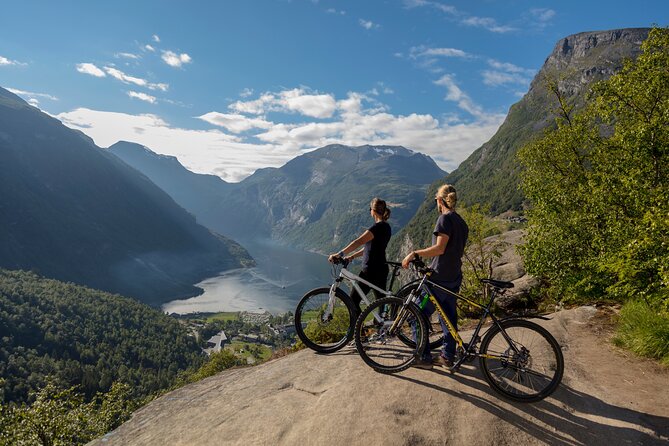
Flydalsjuvet is the headline view. This famous gorge and viewpoint opens onto the fjord and the mountains around Geiranger. It is the kind of place where you will want your camera ready, but do not stop in an unsafe section of road just to frame a picture.
Flydalsjuvet is also listed as the formal itinerary stop, while the route description includes the other viewpoints along the way. That wording suggests the exact number and timing of stops may be flexible. Since you ride without a guide, you control how long you spend at each point.
That independence is one of the tour’s best features. You can pause for a quick photograph, spend longer enjoying the view, or continue steadily if you prefer. One couple even left the bikes temporarily to hike toward Storsaeterfossen Waterfall, then returned and continued the descent. That option is not presented as a formal part of the tour, so ask staff before leaving the bikes and do not assume every side route is approved.
Why Unguided Riding Can Be a Strength
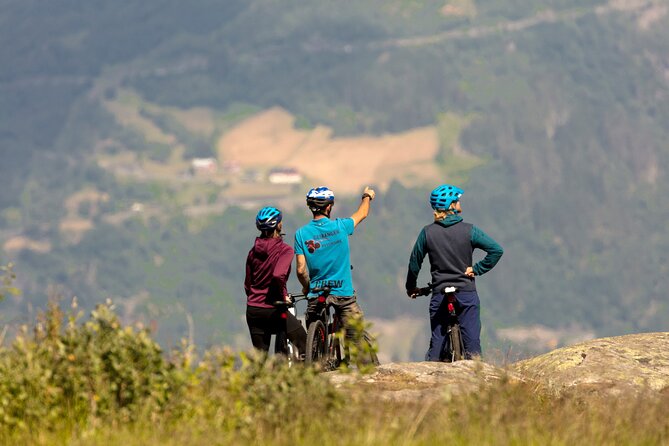
Some people will see the lack of a guide as a weakness. There is no cycling leader pacing the group, explaining every bend, or riding behind you in case of trouble. If you want detailed local commentary during the descent, this is not the right format.
I see a real advantage, too. You do not have to stay locked into someone else’s speed. Strong riders can coast ahead, cautious riders can take their time, and everyone can stop for pictures without holding up a formal group. This freedom was one of the most praised parts of the experience.
The small maximum of six people helps. You are not being sent down the mountain in a large mass of cyclists, and the vehicle ride should be more manageable. Still, small group size does not replace a guide. You need to understand the route, follow the road safely, and make sensible decisions on your own.
The basic instructions at the top are therefore important. Pay attention even if the route looks simple. Ask how to use the brakes, where to stop, what to do if you have trouble, and how to contact the office without mobile service.
Price and What the $160.09 Covers
The listed price is $160.09 per person. That is not cheap for a two-and-a-half-hour activity, especially because the downhill ride itself is unguided. You are paying for the uphill transport, the bicycle and safety gear, staff support at the start, and access to a memorable route.
The value depends on what you compare it with. If you want a quiet guided cycling tour with expert commentary and close mechanical support, the price may feel high. Several people questioned the cost because the vehicle drops you at the top and you then continue alone.
If your priority is the chance to ride one of Norway’s great mountain roads, stop when you wish, and avoid pedaling a long climb, the price becomes easier to defend. The experience combines transport and an active outing in one package, and the views are the main attraction.
Weather also affects value. On a clear day, Djupvatn, the waterfalls, valleys, and fjord can make this a high point of a cruise stop. In rain or heavy cloud, the same road may feel less inviting. The operator requires good weather and offers a different date or full refund if poor conditions force cancellation.
Who Will Enjoy This Ride Most
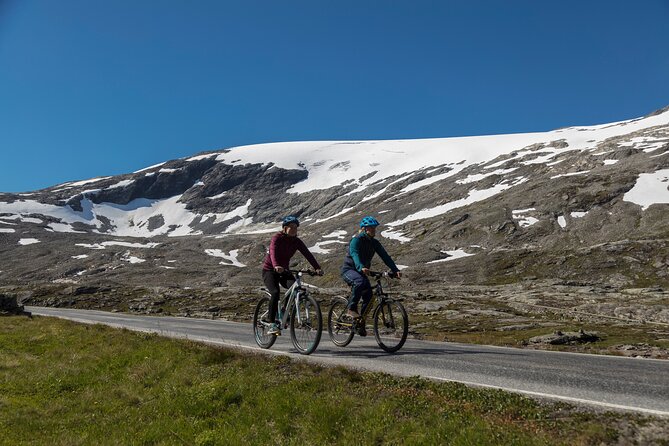
This activity suits confident recreational cyclists, couples, families with older children if permitted by the operator, and cruise passengers who want something more active than a bus tour. You should have moderate physical fitness and feel comfortable braking on a downhill road.
You do not need to be a serious mountain biker. One 67-year-old rider found the route easy to manage, and another rider with less cycling experience felt unnecessarily worried before discovering that the ride was mainly a gentle coast. Those comments suggest the physical effort is modest for many people.
Your road confidence matters more than your athletic ability. If you dislike traffic, have trouble controlling a bicycle, or want a protected bike path, choose another way to see Geiranger. The road’s lack of a bike lane is not a minor detail.
Bring a phone, but do not rely on mobile service. Wear clothing suitable for changing mountain weather, and secure anything loose before setting off. Gloves and a visibility vest are included, but you may want to ask about layers and rain protection because those items are not listed as provided.
Practical Details and Cancellation
The activity is offered in English, uses a mobile ticket, and has a maximum of six people. Confirmation arrives when you book, and the meeting point is near public transportation. The tour ends back at the same Geiranger meeting point.
Free cancellation is available up to 24 hours before the start time for a full refund. Changes or cancellations made inside that 24-hour window are not accepted for a refund. Cut-off times follow local time, so check the time zone carefully if you are arranging this from abroad.
Because the experience depends on good weather, poor conditions can lead to a different date or a full refund. That policy is useful in Geiranger, where cloud, rain, and road conditions can change the feel of the ride quickly.
Should You Book the Geiranger Downhill Bike Ride?
Book it if you want a flexible, scenic descent and you are comfortable sharing a public mountain road with buses. The fjord views, waterfalls, viewpoints, small group, and freedom to stop make this a memorable choice for active sightseers.
I would not book it blindly. Confirm the meeting point, check the equipment before leaving Djupvatn, ask for emergency contact information, and make sure you understand the traffic conditions. If the brakes, tires, helmet, or seat adjustment are not right, speak up immediately.
For confident riders on a clear day, this can be one of the best ways to see Geiranger. For anyone expecting a guided tour, a protected cycle path, or polished equipment every time, the cost may not match the experience.
FAQ
Where does the Geiranger downhill biking experience start?
The meeting point is Geirangervegen 10, 6216 Geiranger, Norway. The vehicle then takes you to Djupvatn Lake, where the biking route begins.
How far do you ride?
The downhill route covers about 16 kilometers, or nearly 10 miles, from Djupvatn Lake toward Geiranger.
Is a guide included during the bike ride?
No. The downhill ride takes place without a guide. Staff provide the bicycle, safety equipment, technical instructions, and tips before you leave.
What equipment is included?
A bike, helmet, bicycle gloves, and visibility vest are included. Transport in an air-conditioned vehicle is also included.
How fit do I need to be?
The activity advises a moderate physical fitness level. Most of the route is downhill, but there is one short uphill section that you may choose to walk.
What happens if the weather is poor?
The experience requires good weather. If the operator cancels because of poor conditions, you will be offered a different date or a full refund.
Just added in Andalsnes
- The Golden Train on Rauma Railway in Romsdalen★ 4.5 · 21 reviews
- Via Ferrata Åndalsnes West Wall★ 5.0 · 65 reviews
- Private Tour from Åndalsnes To Troll Wall And Troll Road★ 5.0 · 1 review
- Geiranger by Royal route, 5 hours with visiting a high-mountain farm★ 5.0 · 3 reviews
- 3-Hour Kayak Tour in Åndalsnes★ 5.0 · 6 reviews
- Private tour Geiranger and Glaciers 1 to 15 people★ 5.0 · 4 reviews
- Geiranger: Excursions.no Mount Dalsnibba & Eagle’s Bend★ 4.5 · 101 reviews
- Geiranger-Trollstigen Private Guided Shore Excursion★ 5.0 · 1 review
Fjord Cruises, compared.
Scenic Fjord Cruise to Lysefjord and Preikestolen
Read our review →
Scenic Fjord Cruise with Audio Guide Commentary
Read our review →
Tromsø’s Top-Rated Fjord & Fishing Cruise – All-Inclusive
Read our review →
Fjords and Sommarøy Islands Tour with Salmon Picnic
Read our review →
Dalsnibba, Flydalsjuvet, Eagle Bend & Fjords Tour
Read our review →
Arctic Fjord Cruise With Stop On Land At Fish Racks
Read our review →Browse the lists this tour appears in