
REVIEW · FJORD CRUISES
Geiranger: Dalsnibba, Flydalsjuvet, Eagle Bend & Fjords Tour
Mountain roads earn your trust. This 3.5-hour Geiranger tour combines Dalsnibba’s high mountain view with the famous outlooks at Flydalsjuvet and Eagle Bend, while a skilled driver handles the hairpin bends. I also like the live commentary, which adds useful detail about fjord life, tunnels, local history, and Norwegian customs. The main catch is simple: clouds, snow, or ice can close the road to Dalsnibba.
At $115 per person, this is not a bargain-basement bus ride, but it covers the main viewpoints in a short cruise stop and includes the Dalsnibba road toll. The tour is well suited to anyone who wants big scenery without worrying about driving, parking, or getting back to the ship on time.
In This Review
- Key points at a glance
- Why this Geiranger bus tour works so well
- Meeting the guide near the Geiranger pier
- Flydalsjuvet: the classic first look at the fjord
- Dalsnibba Skywalk: the high point of the day
- Djupvatnet Lake and the changing mountain scenery
- Eagle Bend and the Seven Sisters waterfall
- The guide and driver make a real difference
- Timing, crowds, and the cruise ship guarantee
- Is $115 a fair price?
- Who should book this experience?
- Practical tips for a better day
- Should you book the Dalsnibba and fjord tour?
- FAQ
- How long is the Geiranger Dalsnibba tour?
- What places does the tour visit?
- Is Dalsnibba guaranteed to be open?
- What language is the tour conducted in?
- Is transportation included?
- Is the tour suitable for wheelchair users?
- Can cruise passengers rely on a return-to-ship guarantee?
Key points at a glance
- Dalsnibba reaches 1,500 meters: The high point offers the broadest views of the fjord, valley, and surrounding mountains, when weather allows.
- Four strong photo stops: Flydalsjuvet, Dalsnibba, Djupvatnet Lake, and Eagle Bend each show Geiranger from a different angle.
- Excellent mountain driving: The winding roads are narrow and demanding, yet the driver is a major part of the experience.
- Built for cruise schedules: The tour is timed around ship arrivals and departures, with a back-to-ship guarantee when your ship details are correctly registered.
- English commentary is guaranteed: A second language may be possible, but only English is assured.
- Weather controls the day: The Dalsnibba road usually opens in May, depending on conditions, and may close again after snow or ice.
Why this Geiranger bus tour works so well
Geiranger is a small place with oversized scenery. The fjord reaches inland beneath steep mountains, waterfalls drop from high ledges, and the roads climb quickly above the village. In a few hours, you can see the water from the shore, the valley from a cliff, and the whole fjord from the mountain top.
That range is the real strength of this excursion. You are not spending the whole time at one crowded overlook. The bus keeps moving through different parts of the Geiranger area, and each stop adds something new.
I especially like the balance between sitting back and getting out. The coach handles the difficult roads, while you have time at each stop to walk a little, take photographs, and enjoy the view. The schedule is firm, though. That is useful for a cruise stop, but it means you should return to the bus promptly.
The group travels in a full sightseeing coach, with one account describing roughly 40 passengers. This is not a small private tour. The tradeoff is clear: you pay less than you might for a private vehicle, but you share the viewpoints and follow a fixed timetable.
More Fjord Cruises in Geiranger
- From Geiranger: Geiranger Fjord Tour with Stop in Hellesylt
★ 4.4 · 142 reviews - Geiranger: Fjord and Waterfalls Sightseeing Boat Trip
★ 4.4 · 142 reviews - Geiranger Fjord Boat Tour with Waterfall Tasting
★ 4.4 · 98 reviews
Meeting the guide near the Geiranger pier
The meeting point is at Ørnevegen 5, between the pier and the public bus stop. Look for the light-blue jacket and the EXCURSIONS.NO sign or flag.
That location matters. You do not need hotel pickup, and cruise passengers can walk from the terminal area. Still, allow enough time to locate the coach after leaving the ship. Geiranger can be busy when several coaches arrive, so checking the meeting instructions before disembarking is sensible.
The tour operator adapts departure times to cruise schedules. Modified times are announced in advance, and the tour is intended to finish one hour before the ship sails. The back-to-ship guarantee applies when you register the correct cruise ship name during booking.
Also enter a mobile number with the country code. The operator uses it for communication, and the supplied terms warn that a wrong or unreachable number can mean no refund.
Flydalsjuvet: the classic first look at the fjord
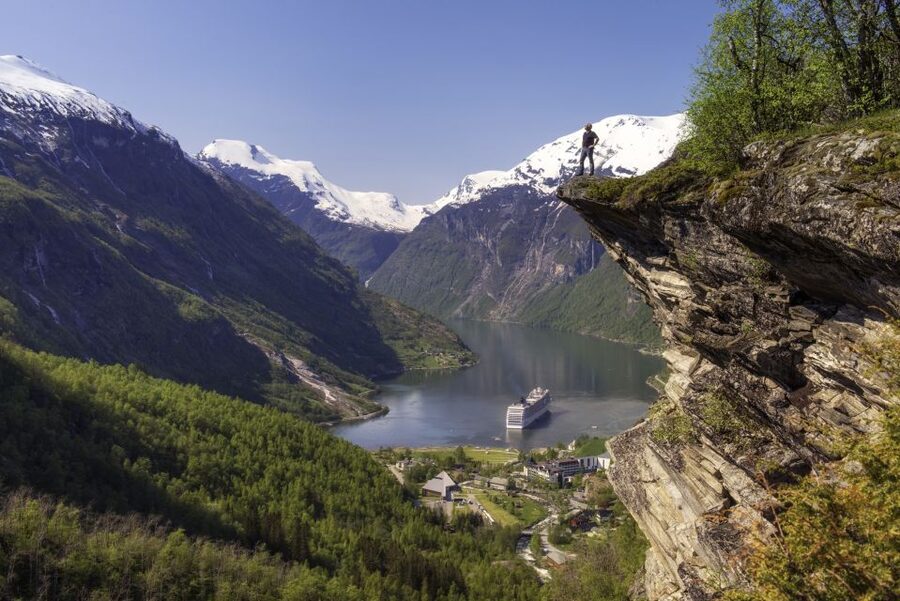
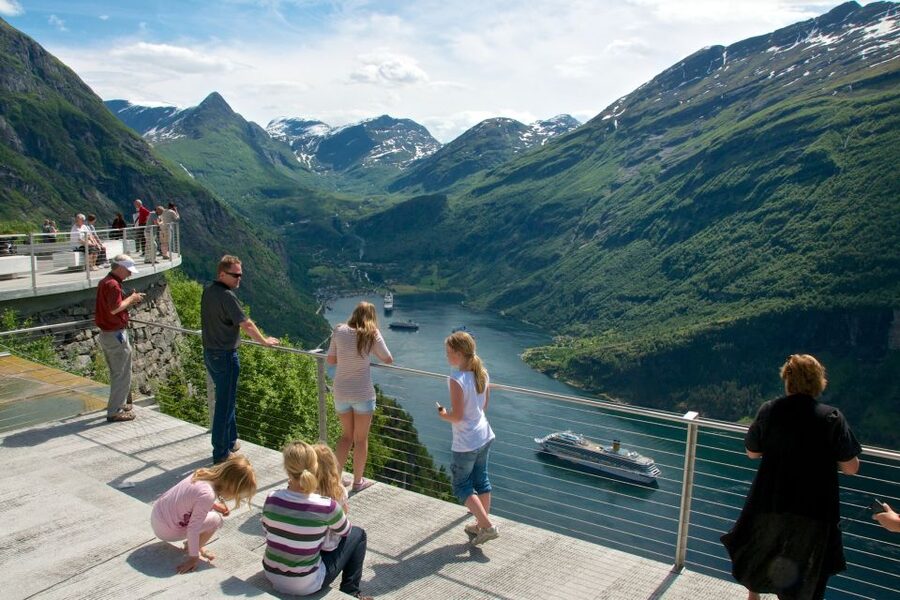
Flydalsjuvet is one of Norway’s best-known viewpoints, and it makes a strong first stop. From here, the road and cliffs frame Geirangerfjord below, giving you the kind of broad, dramatic view that quickly explains why this area has UNESCO World Heritage status.
This stop is especially good for photographs because the view has layers. You can look across the valley, down toward the fjord, and toward the mountains rising on both sides. The village may appear small below, which gives you a useful sense of the scale.
The drawback is that famous viewpoints attract buses. You may be sharing the area with other groups, and the stop is intended for photographs rather than a long walk. I would use the first few minutes to get the main picture, then pause and simply look around before returning to the coach.
The guide’s commentary adds value here. Guides such as Kira, Daniel, and others have been praised for explaining local geography, history, daily life, and the way the roads and tunnels connect this remote region.
Dalsnibba Skywalk: the high point of the day
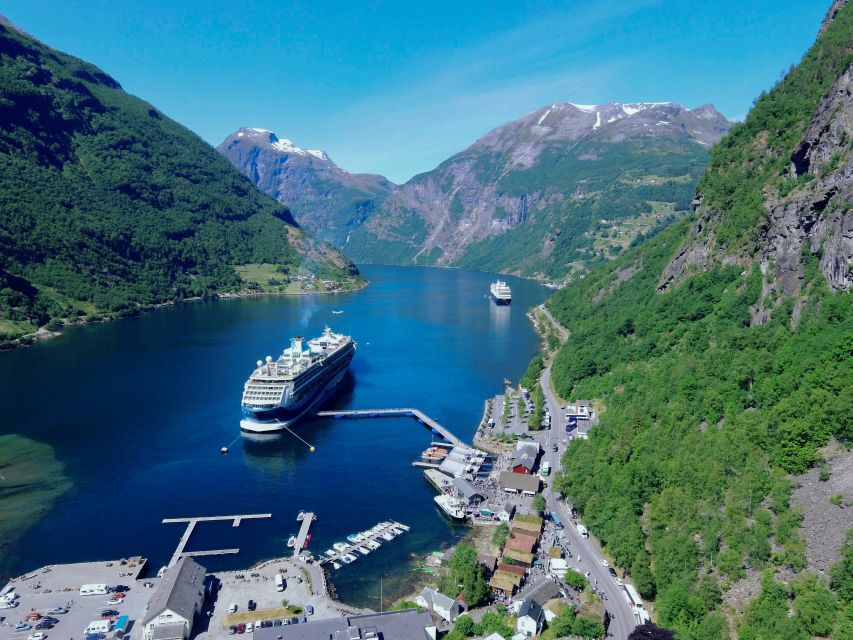
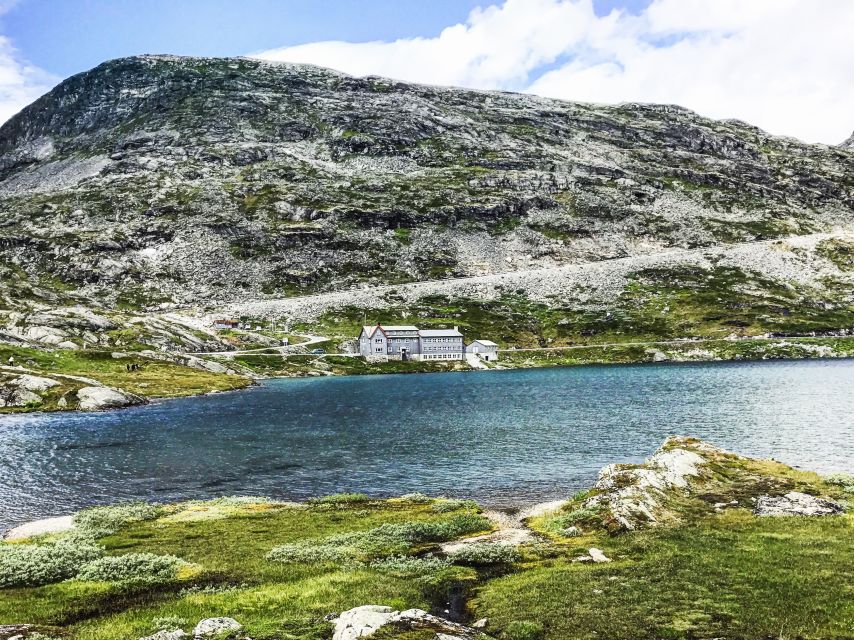
The road from the main route to Dalsnibba climbs toward the summit at about 1,500 meters above sea level. At the top, the Dalsnibba Skywalk gives you a powerful view down toward Geirangerfjord and the valley.
This is usually the tour’s headline stop. From the high rock viewpoint, the fjord appears far below, with mountain ridges spreading in every direction. One particularly useful detail is the difference in weather between the village and the summit. You may leave green lower slopes and find snow near the top, even in a season that feels mild by the water.
The Skywalk can feel exposed, especially in strong wind or low cloud. The views depend entirely on conditions. A clear day can make Dalsnibba the highlight of your cruise. A cloud-covered summit can reduce the stop to a cold, gray pause with little to see.
The road is also seasonal. Nibbevegen, the road leading from the main road to the highest point, is closed during winter. Opening is scheduled for May, but snow and ice can delay access. Autumn conditions can close it again. Recent snow has caused closures even in September, followed by reopening the next day.
That uncertainty is not a flaw in the tour. It is simply part of visiting a high mountain. If Dalsnibba cannot be reached, the stop is substituted, but you should not book this excursion on the assumption that the summit is guaranteed.
Several practical details help. Wear warm layers, even if Geiranger village feels comfortable. Bring something waterproof, and keep your camera ready during the climb. The journey itself includes changing views of the valley, road, water, and mountain slopes.
A completely different kind of day:
- RIB Geiranger – Fjordsafari
★ 4.8 · 807 reviews - Geiranger: Guided Geirangerfjord Boat Tour
★ 4.7 · 728 reviews - Geiranger: City Sightseeing Hop-On Hop-Off Bus Tour
★ 3.7 · 546 reviews - Geiranger: Zipline Park Experience
★ 4.7 · 328 reviews
Djupvatnet Lake and the changing mountain scenery
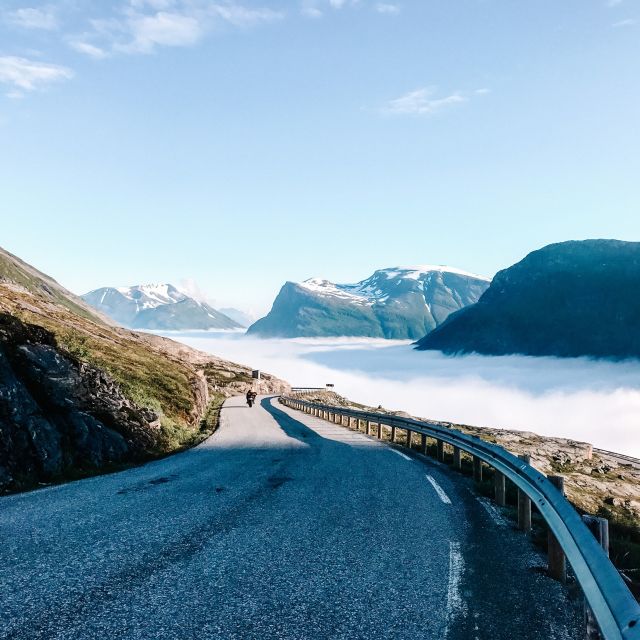
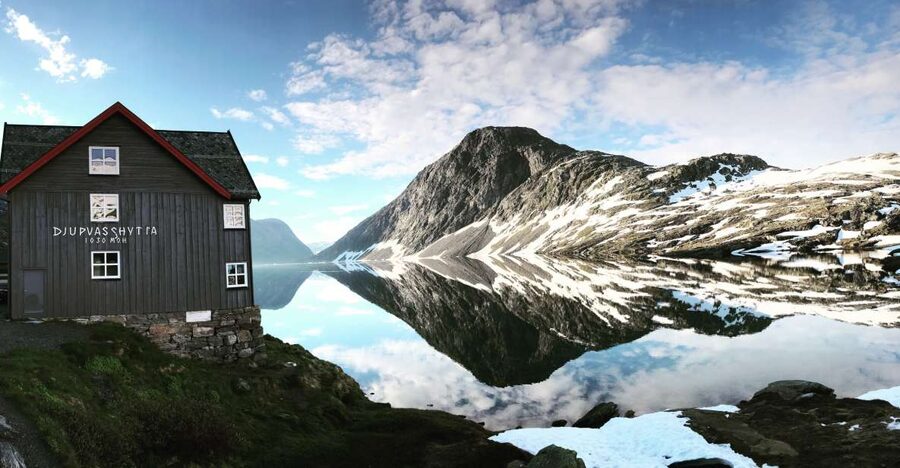
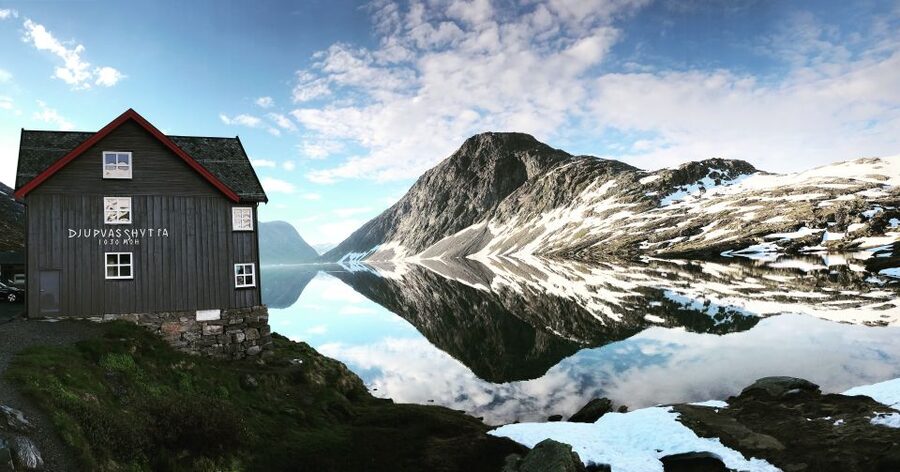
Djupvatnet Lake adds a quieter note after the drama of Dalsnibba. The lake sits in the high mountain country, where the scenery feels more open and spare than around the fjord.
This photo stop helps you understand the climb. Geiranger is not only about steep green walls and waterfalls. Higher up, the views become colder and more exposed, with water, rock, and snow shaping the scene.
You may find the stop less instantly famous than Flydalsjuvet or Eagle Bend, but that is part of its value. It breaks up the sequence of postcard overlooks and gives you another view of the region’s mountain environment.
Because this is a short stop on a timed coach tour, do not expect a long lakeside walk. Think of Djupvatnet as a scenic pause and a chance to photograph the high country before the bus returns toward the fjord.
Eagle Bend and the Seven Sisters waterfall
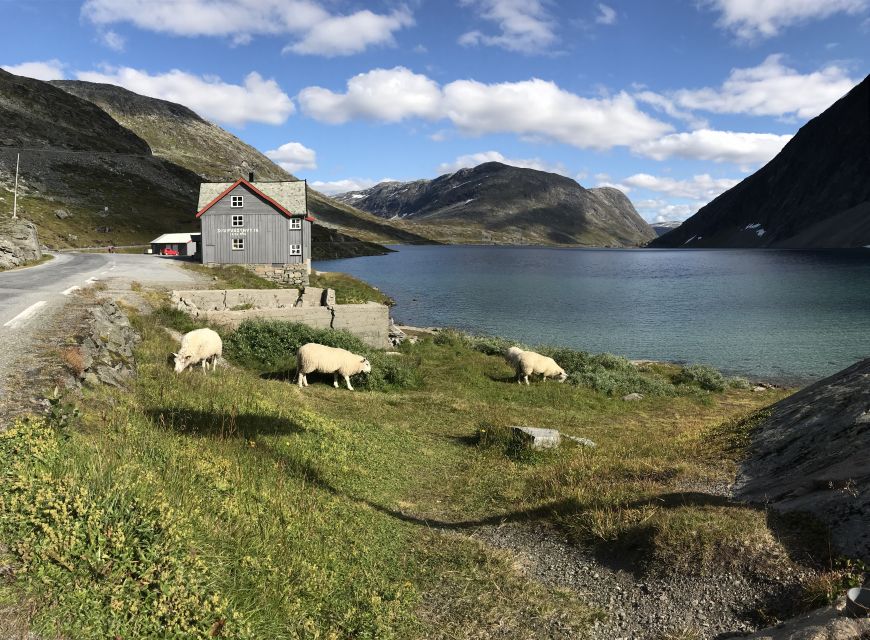
Eagle Bend, also called Ørnesvingen, gives you a different angle from the high western side of the fjord. From the viewpoint, you can look down toward Geiranger village, across the water, and toward the Seven Sisters waterfall.
The Seven Sisters is one of the most recognizable sights in Geirangerfjord. From Eagle Bend, it is viewed from above and across the fjord rather than from a boat. The perspective makes the waterfall part of a much larger scene, with the waterway and steep mountain walls sharing the frame.
The road to Eagle Bend is the famous Eagle Road, a serpentine route with tight bends. This is where the driver earns the compliments. Several accounts single out the careful handling of the narrow road and hairpin turns, with passengers saying they felt safe throughout.
You should know that road conditions can make some people uncomfortable. One passenger became sick on the curvy route, although the bus stopped to help. If you are prone to motion sickness, consider taking suitable medication before departure and choosing a seat that helps you feel steady.
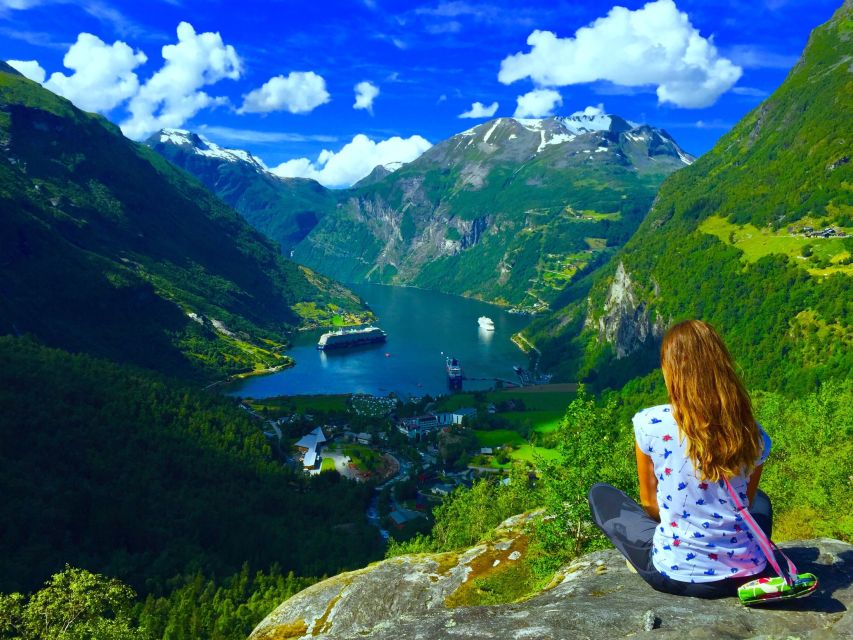
Eagle Bend is also a good place to see cruise ships from above. The ship can look surprisingly small on the fjord, which gives you a memorable scale comparison and a better sense of how deeply the water cuts into the mountains.
The guide and driver make a real difference
A mountain coach tour depends on two people: the guide and the driver. The guide turns the ride between stops into part of the experience, while the driver lets you enjoy scenery that would be difficult to watch while managing the road.
The strongest praise has gone to guides named Kira, Kera, Keira, and Daniel, along with drivers including Niko, Nicholas, Gaia, Tom, Ankra, and Nicolai. Names and staff can change, but the pattern is consistent: the best guides keep the bus informed and on time, and the best drivers handle the road with calm skill.
The commentary covers the fjords, tunnels, local history, geography, and Norwegian life. That is more useful than a string of place names. As you climb, you can connect the spoken explanation with what you see outside the window.
Large coach tours can feel impersonal if the guide only gives instructions. Here, the commentary appears to be one of the main reasons the experience earns such high marks. English is the primary language and the only one guaranteed. A second language can be added if availability and the passenger mix allow it.
Timing, crowds, and the cruise ship guarantee
Three and a half hours is a good length for a port stop. It gives you enough time to reach the major viewpoints without turning the day into a long coach ride.
The schedule is also a reason to choose this tour instead of arranging separate transport. Mountain traffic and weather can make Geiranger roads slow. A coordinated group excursion reduces the need for you to judge how long each stop will take.
The early departure can be especially useful. One passenger noted that an early tour reached the photo stops before the roads became busier and before other coaches filled the viewpoints. If an early time is offered for your ship, I would consider it.
You will need to respect the guide’s return times. This is not the place for an unplanned extra walk or a leisurely café visit. Some people may wish they had longer at each stop, but a firm schedule is what makes the cruise timing work.
The tour must end one hour before ship departure for the back-to-ship guarantee. Register your ship information accurately when booking, and do not assume the guarantee covers a failure to follow the meeting instructions.
Is $115 a fair price?
At $115 per person, the value depends on what you want from Geiranger. If your priority is a private guide, flexible stops, or a quiet mountain road, this is not the right product. You are paying for a shared coach and a fixed route.
For a cruise passenger, though, the price is reasonable. Transportation, guiding, photo stops, and the Dalsnibba road toll are included. You also avoid arranging a taxi or rental car for roads that demand strong confidence behind the wheel.
The tour reaches four distinct scenic points in 3.5 hours. That makes the cost easier to justify than a simple transfer or one-viewpoint shuttle. Several people also felt it compared favorably with cruise-line excursion prices.
The biggest value is convenience. You can watch the scenery through large, clean bus windows while someone else manages the narrow bends. If the weather is clear at Dalsnibba, the summit alone may make the price feel worthwhile.
Who should book this experience?
I would recommend it to cruise passengers who want a strong overview of Geiranger in one morning or afternoon. It suits families, couples, and groups that prefer organized transport over self-driving.
It is also a sensible choice for anyone who wants dramatic views but does not want to spend the day on a fjord boat. The tour shows the water from above and below the mountain roads, with the Seven Sisters visible from Eagle Bend.
People with back or heart problems are advised not to take the tour. Non-folding wheelchairs are not allowed. At the same time, a few accounts describe staff assisting people with limited mobility, so you should contact the operator before booking if mobility is a concern rather than relying on a general assumption.
The tour is less suitable if you dislike coach groups, need long walks at every stop, or want guaranteed sunshine at the summit. Dalsnibba access and visibility cannot be controlled.
Practical tips for a better day
- Dress for the summit, not the village: Temperatures can change sharply as the bus climbs, and snow may remain near Dalsnibba.
- Bring motion sickness protection: Eagle Road and the mountain route include many sharp turns.
- Keep your phone charged: You will have repeated photo opportunities, and the operator may need to contact you.
- Listen to the time limits: Returning promptly protects the schedule for everyone and matters for cruise passengers.
- Ask about the summit before departure: The guide can confirm if Dalsnibba is accessible that day.
- Choose an early departure if possible: It may mean fewer coaches at the stops and less road traffic.
- Expect English: A second language is possible, but English is the only guaranteed option.
Should you book the Dalsnibba and fjord tour?
Book it if you have one cruise day in Geiranger and want the area’s major viewpoints without driving. The mix of Flydalsjuvet, Dalsnibba, Djupvatnet, and Eagle Bend gives you a well-rounded look at the fjord, and the careful drivers are a genuine advantage on roads that can look intimidating from the bus window.
Skip it if you need a private, flexible outing or if mountain roads are likely to make you ill. Also keep your expectations realistic about Dalsnibba. The road can close after snow, and clouds can hide the very view you came to see.
For most cruise passengers, I would book it, especially with an early departure and suitable clothing. The scenery is the main event, but the reliable timing, strong guiding, and highly praised driving make this a practical way to see Geiranger at its most dramatic.
FAQ
How long is the Geiranger Dalsnibba tour?
The tour lasts 3.5 hours, including transportation, guided commentary, and photo stops.
What places does the tour visit?
The planned stops are Flydalsjuvet View Point, Dalsnibba, Djupvatnet Lake, and Eagle Bend, before returning to Ørnevegen 5.
Is Dalsnibba guaranteed to be open?
No. The road to the highest point is closed during winter and depends on weather conditions after its scheduled opening in May. If it cannot be accessed, the stop is substituted.
What language is the tour conducted in?
English is the only guaranteed language. A second language may be added depending on availability and the passenger mix.
Is transportation included?
Yes. The sightseeing coach, transportation, guided tour, photo stops, and Dalsnibba road toll are included. Hotel pickup and drop-off are not included.
Is the tour suitable for wheelchair users?
Non-folding wheelchairs are not allowed. The tour is also not suitable for people with back or heart problems. If you have limited mobility, contact the operator before booking to discuss your needs.
Can cruise passengers rely on a return-to-ship guarantee?
A back-to-ship guarantee is offered when you register your cruise ship name during booking. The tour is scheduled to finish one hour before ship departure, and you should provide a correct mobile number with the country code.
Just added in Geiranger
- From Hellesylt: The Best of Geiranger Shore Excursion★ 4.2 · 66 reviews
- Ljøen, Hellesylt: Ljøen Farm Tour★ 4.6 · 24 reviews
- Hellesylt: Beginner-Friendly Fjord Kayaking Experience★ 4.9 · 63 reviews
- Hellesylt-Geiranger Sightseeing (one way ticket)★ 4.0 · 7 reviews
- From Geiranger: Dalsnibba & Eagle Road Private Tour & Picnic★ 5.0 · 4 reviews
- Geiranger: Rappelling tour with epic view★ 5.0 · 6 reviews
- Geiranger Dalsnibba: mini bus tour★ 4.3 · 83 reviews
- Geiranger to Ålesund Bus Tour (one way)★ 4.3 · 4 reviews
Fjord Cruises, compared.
Scenic Fjord Cruise to Lysefjord and Preikestolen
Read our review →
Scenic Fjord Cruise with Audio Guide Commentary
Read our review →
Tromsø’s Top-Rated Fjord & Fishing Cruise – All-Inclusive
Read our review →
Fjords and Sommarøy Islands Tour with Salmon Picnic
Read our review →
Arctic Fjord Cruise With Stop On Land At Fish Racks
Read our review →
Browse the lists this tour appears in